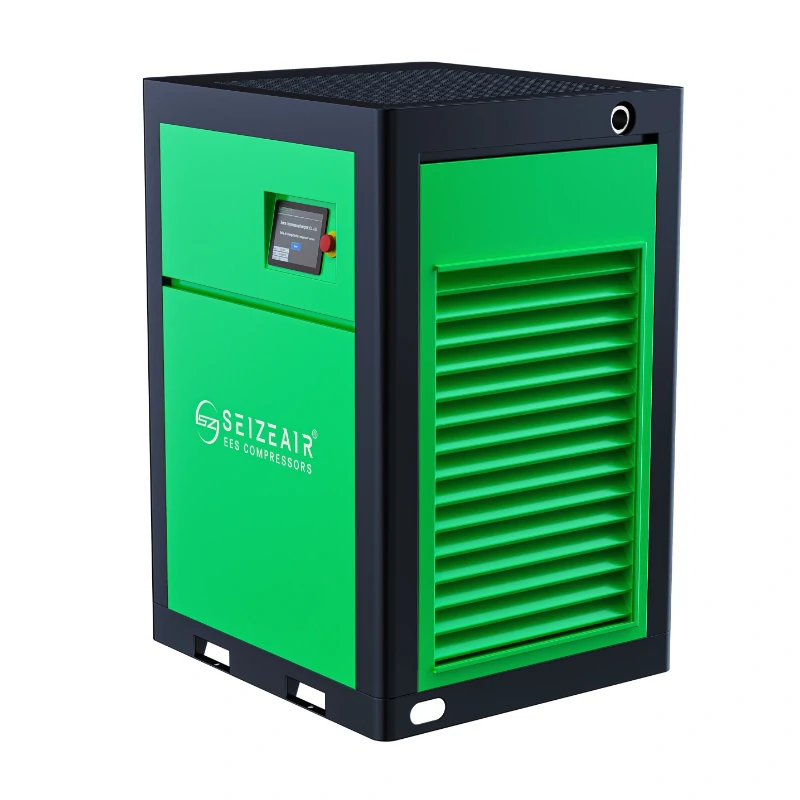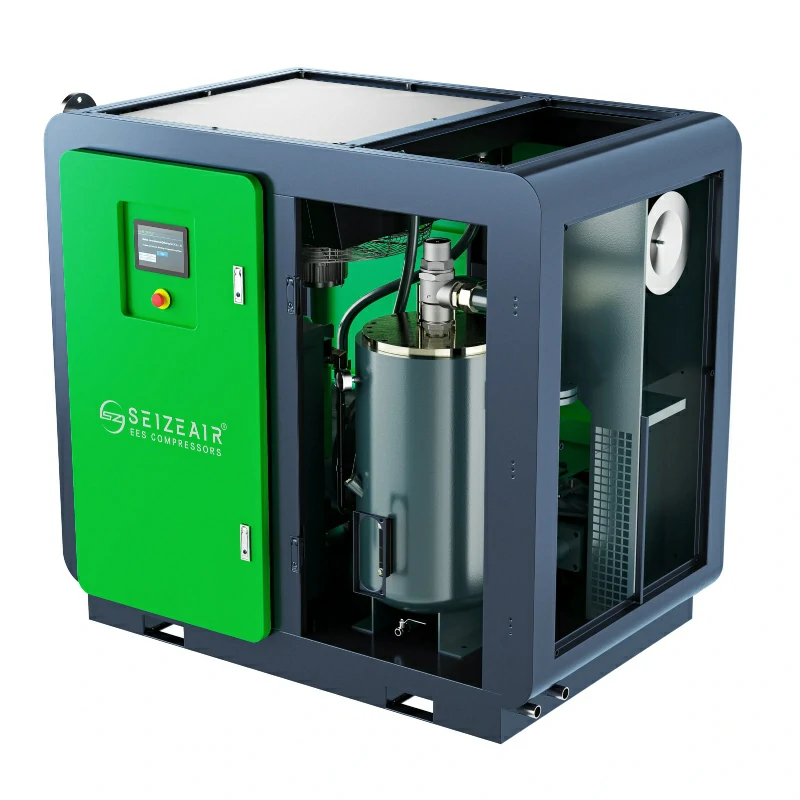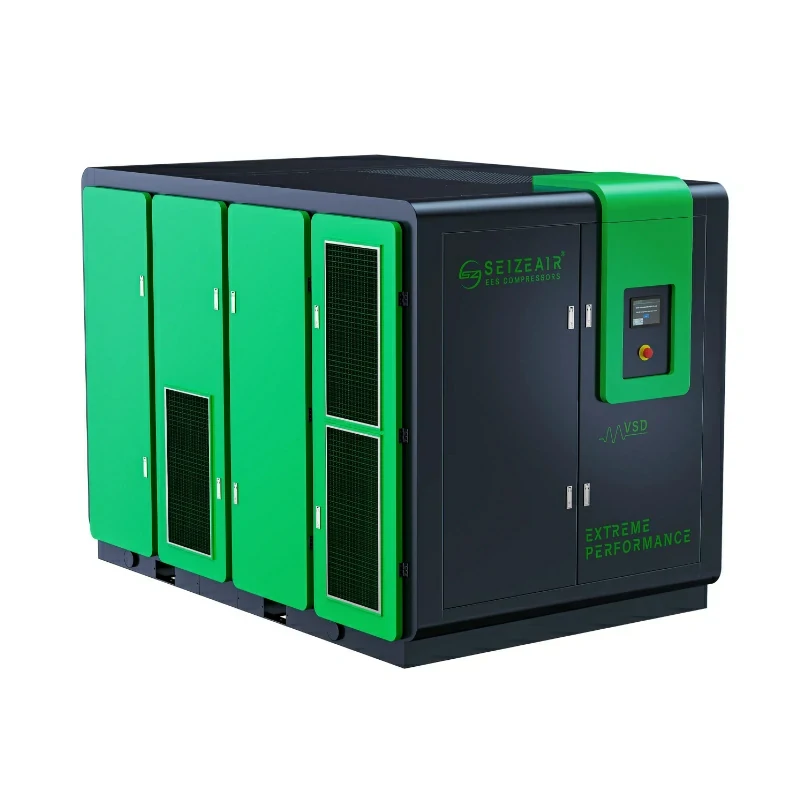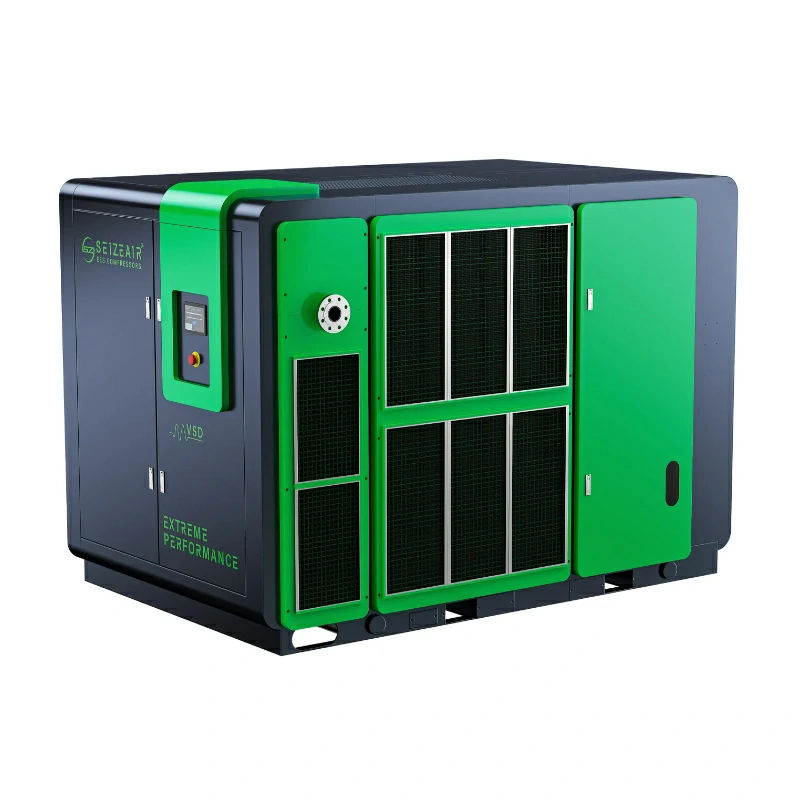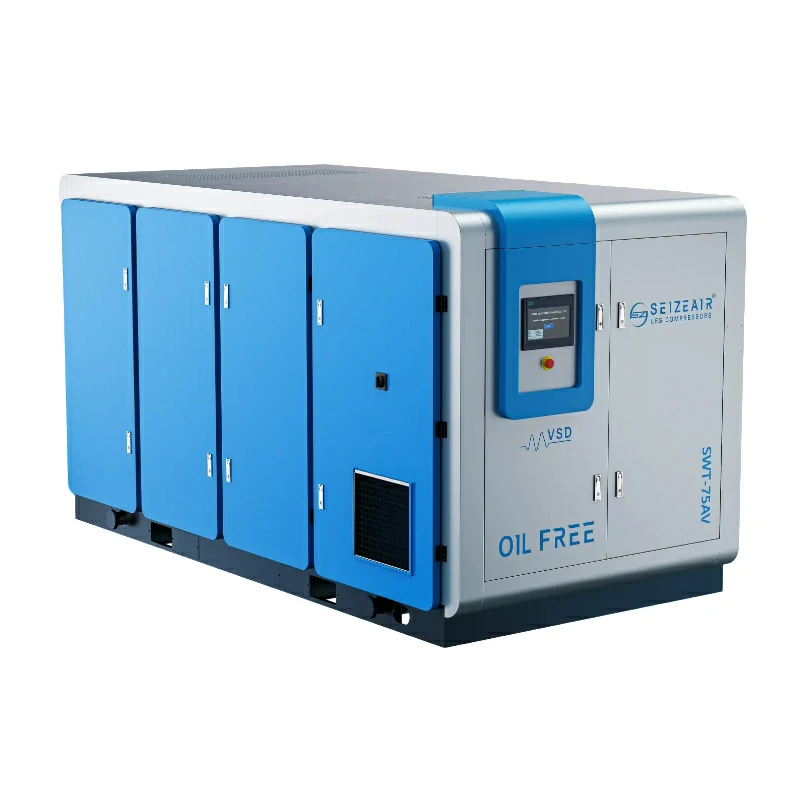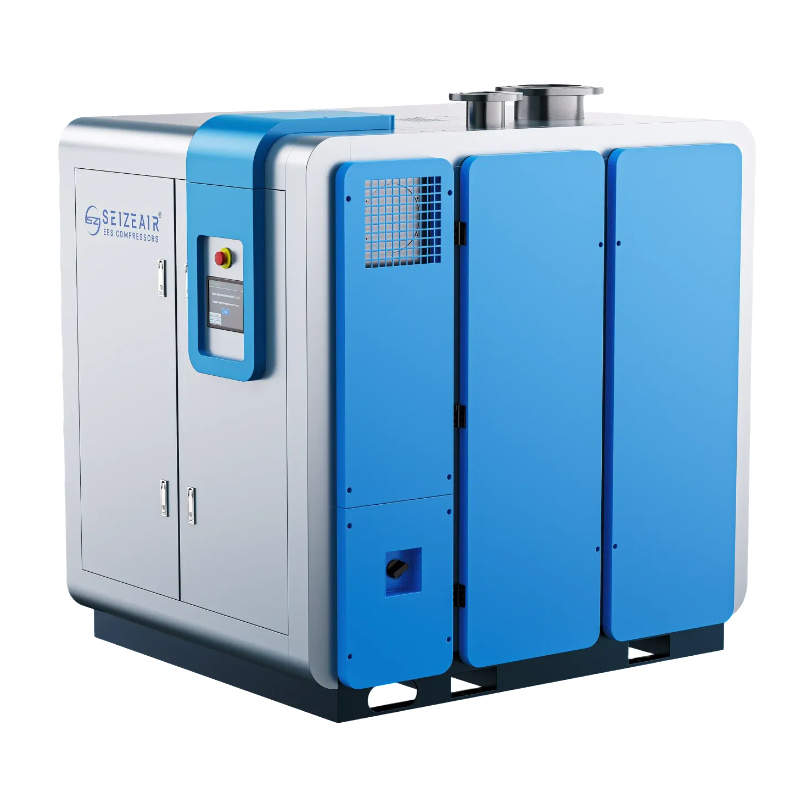


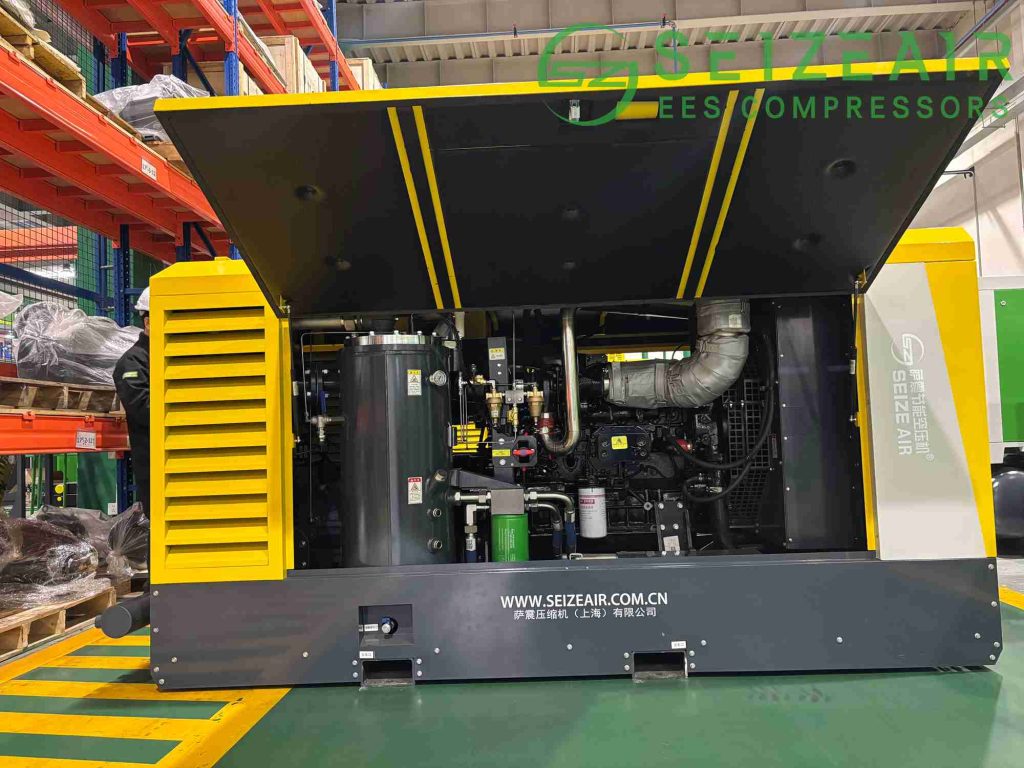
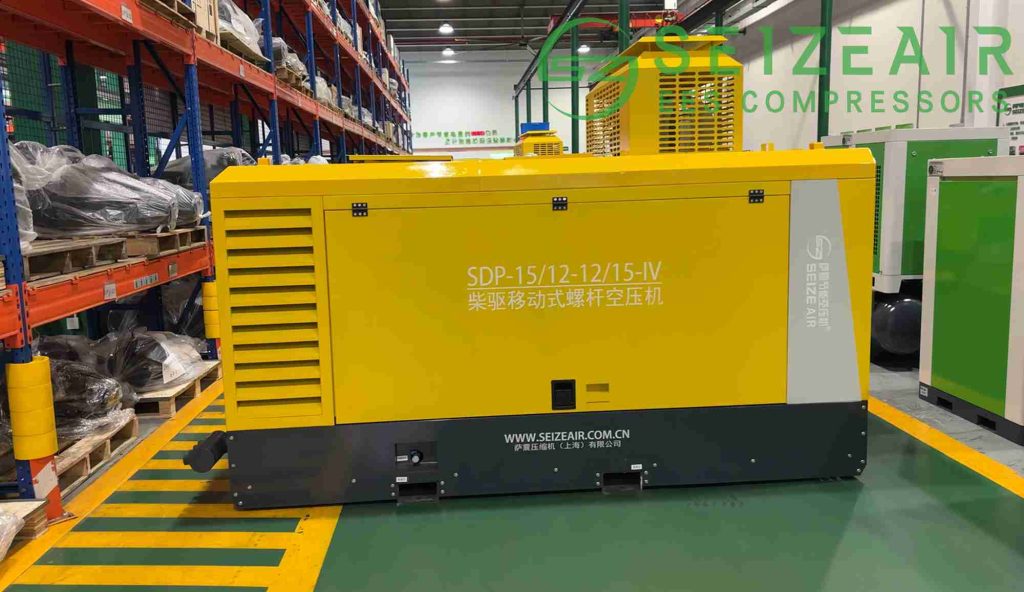
A skid mounted diesel air compressor is a diesel-driven rotary screw machine welded or bolted to a plain steel base frame, with no wheels and no tow bar, built to be lifted by crane or forklift and dropped wherever the air is needed. When buyers line it up against a trailer mounted unit, the decision rarely comes down to which machine is “better” on paper; it comes down to how your crew moves, fuels, anchors, and services compressed air across a season of work. This guide walks through the real trade-offs so you can spec the right package instead of guessing.
What Is a Skid Mounted Diesel Air Compressor, Really?
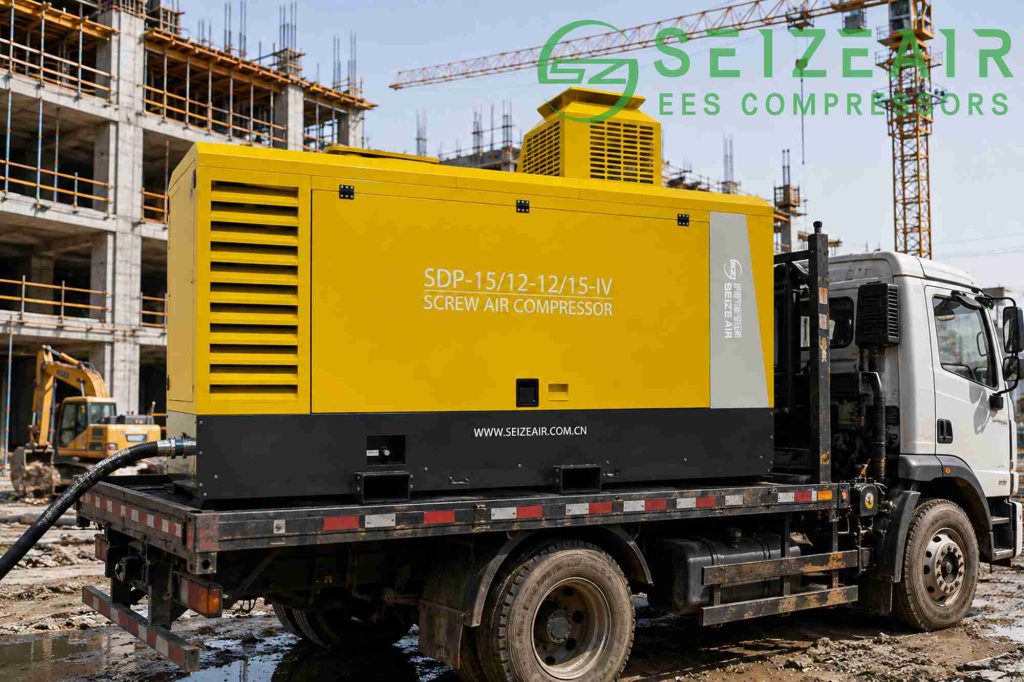
The word “skid” comes from the oil and gas world, where crews would mount pumps, separators, and generators on a rectangular steel frame so a single crane lift could drop a whole process package onto a location. A skid mounted diesel air compressor follows the same idea: a diesel engine, a rotary screw airend, the cooling system, the separator tank, and the controls all live on one rigid base. There is no running gear underneath. If you want it somewhere else, you pick it up.
That single design choice shapes everything else. Because there is no axle, no suspension, and no lights, the machine is lighter for the same horsepower, cheaper to build, and far easier to pack into a tight space, an ISO container, a ship deck, or a corner of a process plant. The trade-off is obvious: you cannot hook it behind a pickup and drive away. You need a crane, a forklift with enough capacity, or a flatbed truck and a way to load it.
Most skid diesel packages use an oil-injected rotary screw airend because that is the only technology that holds up to continuous, dirty, off-grid duty. You will see them rated anywhere from about 3 m3/min up to well past 30 m3/min, at pressures from 7 bar for general air tools up to 25 bar or more for deep drilling and pipeline work. Before we get into skid versus trailer, it helps to place both inside the wider world of portable and stationary air compressors, because a skid unit sits in the gray zone between the two: portable in spirit, stationary in form.
Skid Mounted vs Trailer Mounted: What Is the Actual Difference?
The easiest way to picture the gap is side by side.
  SKID MOUNTED                        TRAILER MOUNTED
  +------------------------+          +--------------------------+
  | diesel engine         |          | diesel engine            |
  | + screw airend        |          | + screw airend           |
  | on steel base frame   |          | on tandem axle + wheels  |
  | no wheels, no lights  |          | lights, brakes, fenders  |
  +------------------------+          +--------------------------+
            |                                     |
   lift by crane / forklift              tow behind a truck
   bolt or chain to a pad                on public roads, road-legal
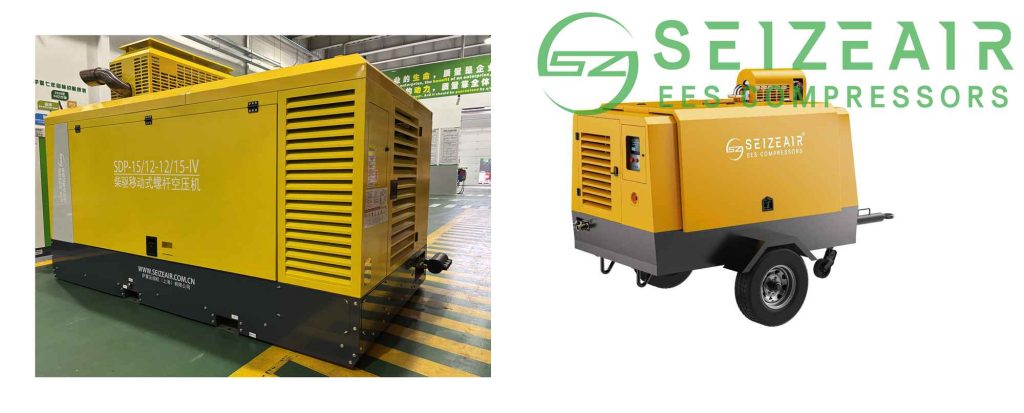
A pull behind air compressor carries its own mobility: axle, tires, lights, brakes, fenders, and a hitch. You hook it to a truck and drive. A skid unit carries none of that, so it is pure machine on a frame. The table below sums up where the two diverge in day-to-day field use.
| Factor | Skid Mounted Diesel Air Compressor | Trailer Mounted Unit |
|---|---|---|
| Mobility method | Crane, forklift, or flatbed truck | Towed behind a vehicle on public roads |
| Road legal as built | No (needs transport) | Yes, with lights, brakes, and tags |
| Weight for same HP | Lower (no running gear) | Higher (axle, tires, frame) |
| Setup time on site | Longer (lift, level, anchor) | Short (drop, level, start) |
| Footprint flexibility | Fits containers, decks, tight pads | Needs turning and parking room |
| Typical base cost | Lower per HP | Higher per HP |
Neither is “wrong.” They solve different logistics. The skid wins when the machine will sit in one place for months or when it has to fit inside something else. The trailer wins when it has to chase the work down a highway.
Which One Moves Easier on a Real Job Site — Skid or Trailer?
“Easier” depends on what is already on your site. If you have a crane or a telehandler and a flatbed, a skid is trivial to reposition: sling it, set it, chain it, done. On a drill rig pad or inside a plant, that is often faster than finding room to maneuver a 12,000 lb trailer. If you do not have lifting gear and the machine has to travel between sites on public roads, the trailer is the only sane choice. You cannot legally tow a bare skid, and renting a crane every time you move blows up your daily cost.
A detail people miss: trailers need a competent driver and a tow vehicle with the right rating. A 1,000 cfm trailer compressor can weigh over 10,000 lb loaded, which puts it past a half-ton pickup and into the territory of a real service truck with electric brakes. The skid needs none of that, but it needs the lift gear on both ends of the trip.
Is a Skid Mounted or Trailer Mounted Compressor Better for Mining and Drilling?
This is where the answer splits by how the hole is drilled. On a large, semi-permanent drill pad where the rig stays put for weeks, a skid mounted diesel air compressor is the natural fit. You crane it in once, anchor it, run it 24/7, and forget it. It takes less room than a trailer, has no tires to go flat in the dust, and you can stack other gear around it.
When the drilling moves hole-to-hole every day, or when you are doing geotech work across a spread-out site, the trailer earns its keep because the air follows the rig without a crane call each time. For high-pressure DTH and deep exploration work, the air volume and pressure matter more than the mount, which is why many crews spec a high pressure air compressor for mining and then decide the mount based on how often they relocate.
Real-world note: in remote oilfields the skid often wins by default. There are no roads worth towing on, so everything flies in by crane or rides a flatbed to the pad edge anyway. A skid package also survives being slung under a helicopter or onto a barge better than a trailer ever could.
Can You Run a Skid Mounted Diesel Compressor Without a Trailer?
Yes, and that is the whole point. The skid is designed to run with no wheels under it. Common setups:
- Concrete pad: bolt or epoxy-anchor it down for a long-term station.
- Flatbed truck: chain it to the deck and run it where the truck stops.
- ISO container or shelter: drop it inside for weather and noise protection.
- Vessel or barge deck: weld or bolt it for marine and dredging work.
- Process skid cluster: bolt several packages side by side into one plant module.
Because there is no axle to rust, no tires to check, and no suspension to wear, a skid left in one place for years often outlasts a trailer that gets dragged down a highway every week. The catch is that you must plan the lift and the anchor before you buy, not after.
What Size Skid Mounted Diesel Air Compressor Do You Actually Need?
Size by air volume, not by horsepower. HP is what the engine makes; CFM (or m3/min) is what your tools drink. Add up the air demand of everything that runs at the same time, then add a margin for pressure drop and future growth. A plain-text version of the field formula looks like this:
Total Required CFM = (Sum of All Concurrent Tools CFM) x 1.20
The nameplate on a specification data sheet will list free air delivery at a given pressure. Match that number to your total, not to the engine kW. A 200 cfm breaker and a 90 cfm scaler running together need roughly (200 + 90) x 1.20 = 348 cfm, so you spec a 350–400 cfm machine, not the biggest one on the lot. Oversizing wastes diesel; undersizing stalls the job.
Pressure matters as much as volume. General air tools want 6–7 bar. Sandblasting wants 7–8 bar with high flow. Down-hole drilling wants 10–25 bar. Pick a single-stage screw set for up to about 14.5 bar; go to a two-stage airend when you need more. If your work mixes low-pressure tools and high-pressure drilling, a variable speed drive unit that swings across the range will save fuel compared to running two separate machines.
How Much Does a Skid Mounted Diesel Air Compressor Cost?
Prices move with engine brand, airend stage, pressure, and emissions tier, but the bands below are a fair guide for new industrial units in 2026. A quick look at a typical price list tells the story: the skid version usually runs 10–20% cheaper than the same machine on a trailer, because you are not paying for axle, brakes, lights, and fenders.
| Free Air Delivery | Pressure Range | Typical New Skid Price Band (USD) | Common Use |
|---|---|---|---|
| 3–8 m3/min (105–280 cfm) | 7–8 bar | $12,000 – $28,000 | Small crews, utility repair |
| 10–18 m3/min (350–630 cfm) | 7–14.5 bar | $30,000 – $65,000 | Blasting, general construction |
| 20–33 m3/min (700–1155 cfm) | 8–14.5 bar | $70,000 – $130,000 | Quarrying, piling, big crews |
| 12–43 m3/min (420–1515 cfm) | 18–25 bar | $90,000 – $180,000 | Deep DTH drilling, pipelines |
Do not shop on sticker price alone. Fuel is where the money actually goes. A machine burning 5–8% less diesel over 4,000 hours can erase the price gap between two brands. That is why total cost of ownership, not the number on the quote, should drive the buy.
Skid Mounted vs Trailer Mounted: Which Lasts Longer in the Field?
A skid has fewer parts that wear from motion, so in a fixed location it tends to win on longevity. No tires to crack in the sun, no wheel bearings, no suspension that fatigues on rough roads. The frame still has to survive vibration, dust, and weather, but a well-built base with isolation mounts handles that for decades.
A trailer fights road shock every time it moves. Bearings, brakes, and lights fail from use, not just age. If the trailer is moved daily, budget for running-gear service on top of compressor service. If it is dropped and left for a season, the advantage narrows. The honest answer: for a machine that stays put, skid; for a machine that travels constantly, the trailer’s convenience usually justifies its shorter component life.
Do Skid Mounted Units Burn Less Fuel Than Trailer Mounted Compressors?
The mount does not change fuel burn much by itself; the engine, airend efficiency, and control system do. A modern electric mobile compressor beats both on energy where grid or generator power is clean and cheap, but off-grid you are on diesel either way. Where skids quietly win is duty cycle: because they are often set up for long continuous runs, pairing them with a variable speed drive pays off. A VSD scales engine and airend speed to live demand instead of running flat-out while the drill rod is being changed.
Field rule of thumb: fixed-speed diesel compressors can waste 20–30% of fuel during idle and low-demand stretches. Over a multi-month drilling campaign that gap is tens of thousands of dollars. So when you compare a skid and a trailer of equal size, look at the control system first, the mount second.
What Industries Rely on Skid Mounted Diesel Air Compressors?
The skid shows up anywhere the air has to be powerful, mobile in spirit, but fixed in practice:
- Oil and gas: remote well sites, pigging, and purge where roads do not reach.
- Mining and quarrying: semi-permanent drill pads and blasthole work.
- Construction: piling, shotcrete, and large-scale sandblasting.
- Pipeline services: purging and testing long runs in the field.
- Geothermal and water well: deep DTH drilling off-grid.
- Marine and dredging: deck-mounted packages on vessels and barges.
For operations that want the skid idea but need a weatherproof, walk-in enclosure, a containerized air compressor station bolts the same diesel screw package inside a 20- or 40-foot box. And when a job needs more than 14.5 bar, stepping up to a two stage diesel mobile compressor on the same skid base covers deep drilling without a separate high-pressure unit. Builders such as Seize Air ship both skid and trailer diesel units from the same platform, which keeps spare parts and service training simple across a mixed fleet.
How Do You Install and Anchor a Skid Mounted Air Compressor?
Setting the unit on a prepared pad is half the battle. Get it wrong and you fight vibration, noise, and alignment for years.
Practical steps that field crews use:
- Pour or level a pad that carries the loaded weight with margin; soft ground sinks and twists the frame.
- Set the skid on isolation mounts or rubber pads to cut structure-borne vibration.
- Anchor with epoxy bolts or weld-on clips rated for the operating weight.
- Route the exhaust away from intakes and from any enclosed workspace.
- Keep clear service access on at least two sides for oil, filters, and cooler cleaning.
- Confirm the air outlet size matches your hose; step-down adapters leak and cost you pressure.
How Do You Maintain a Diesel Screw Air Compressor Out in the Field?
Remote failures are expensive, so the schedule has to be disciplined. The table below is a sensible baseline for a skid diesel screw running in dust and heat; adjust to the engine and airend manual.
| Interval | What to Do | Why It Matters |
|---|---|---|
| Daily / pre-start | Check engine oil, compressor oil, coolant; drain water trap; inspect restraint and hoses | Catches low levels and loose fittings before they strand the crew |
| Every 250 hours | Engine oil and fuel filters; blow out pre-cleaners; inspect drive coupling | Dusty sites clog filters fast and starve the airend |
| Every 500 hours | Replace primary air filter and compressor oil filter; sample oil | Stops bypass valves opening and rotors running dirty |
| Every 2000 hours | Clean moisture separators and drains; full oil analysis; check rotors | Prevents water carryover down the drill string and early wear |
The single biggest field killer is dust. A centrifugal pre-cleaner that ejects most particles before the main filter, plus a restriction indicator your operators actually watch, will double filter life in a quarry. The second killer is skipped oil samples; a $40 lab test catches a failing airend months before it seizes.
Skid Mounted Diesel Air Compressor vs Trailer: What About Noise?
Both diesel units are loud because the engine and the cooling fans make noise you cannot fully silence without weight. The skid has one edge: with no road rules forcing a low, open profile, it is easier to drop inside a container or behind a built-up acoustic wall. A low noise air compressor discussion usually centers on enclosed, fixed installations, and the skid is the mount that lets you build that enclosure your way.
For urban or night work where the meter matters, ask for the tested dBA at 7 meters, not the brochure number, and plan a barrier. A trailer can take a factory canopy, but a skid inside a container will almost always read quieter at the property line.
Should You Rent or Buy a Skid Mounted Diesel Air Compressor?
If you search for a unit for sale near me and the job is a one-off six-week shutdown, renting is usually smarter: no capital, no long-term service contract, and the rental house eats the breakdown risk. If the machine will run most of the year, buying wins on cost per hour and on the simple fact that your own crew knows the unit.
Used skids are a strong play because the frame and airend outlast the engine hours; a unit with a rebuilt engine on a sound base can outwork a tired new one. Either way, confirm the emissions tier matches the sites you bid on, because an uncertified engine can bar you from municipal and federal work.
Five Mistakes Buyers Make When Choosing Between Skid and Trailer
- Sizing to horsepower instead of CFM, then watching tools starve at the nozzle.
- Forgetting the lift plan, so the “cheap” skid needs a crane rental nobody budgeted.
- Ignoring road law on trailers, and getting pulled over for missing brakes or tags.
- Buying fixed-speed when the duty cycle idles hard, then paying for it in diesel for years.
- Skipping the service footprint, so a filter or coupling becomes a two-week international shipment.
None of these are exotic. They are the boring details that decide whether the machine pays for itself or becomes a complaint.
Final Take and How to Get a Quote
If the machine will sit and run, pick the skid mounted diesel air compressor; if it has to chase the work down the road, pick the trailer. Size to air volume, protect the duty cycle with a good control system, and plan the lift and anchor before the truck arrives. That is most of the battle.
Ready to spec the right package for your site? Reach out to Seize Air’s application engineers with your tool list, working pressure, and how often you relocate, and we will size the skid or trailer, match the emissions tier to your sites, and turn around a detailed quote. You can contact us through the form on seize-air.com or email ningningren09@gmail.com — tell us the job and we will help you get the air right the first time.