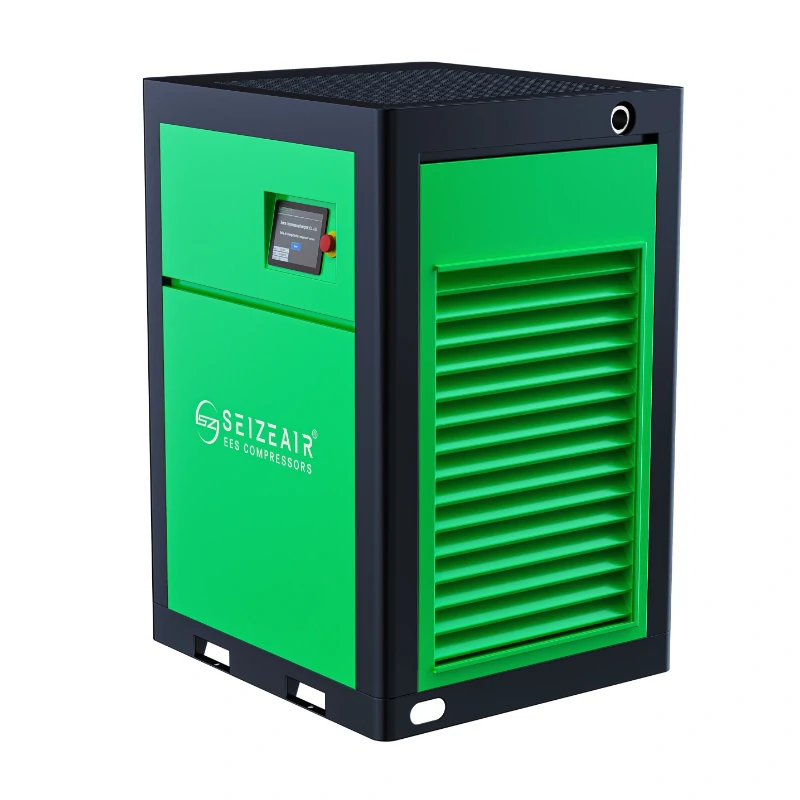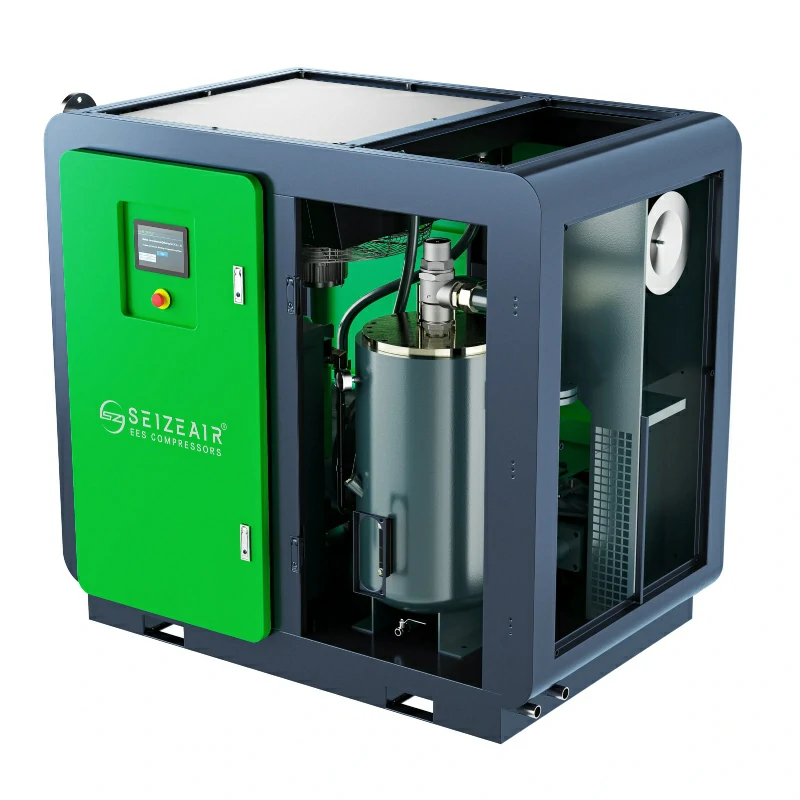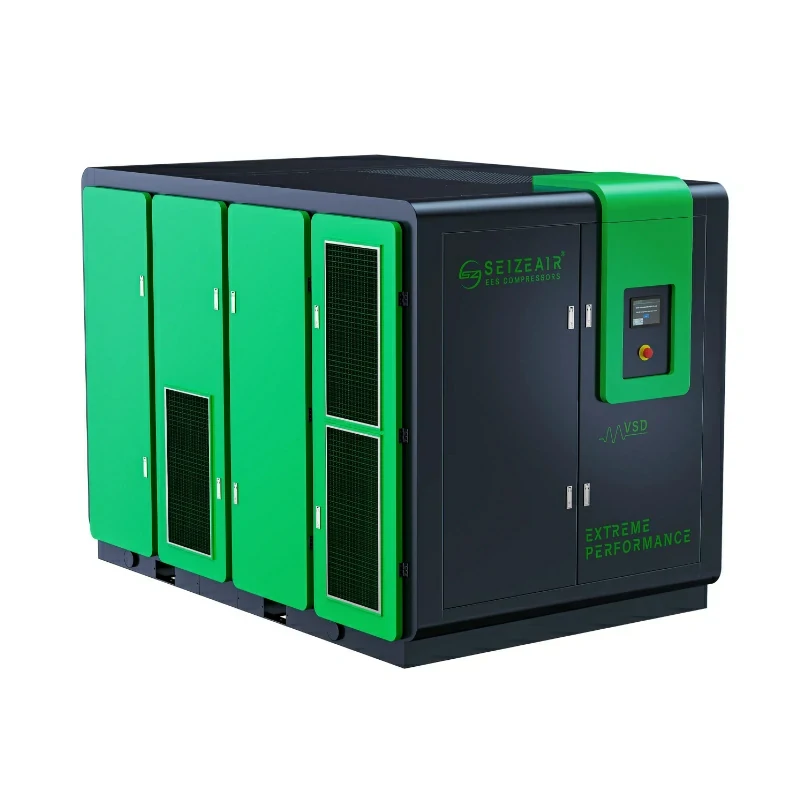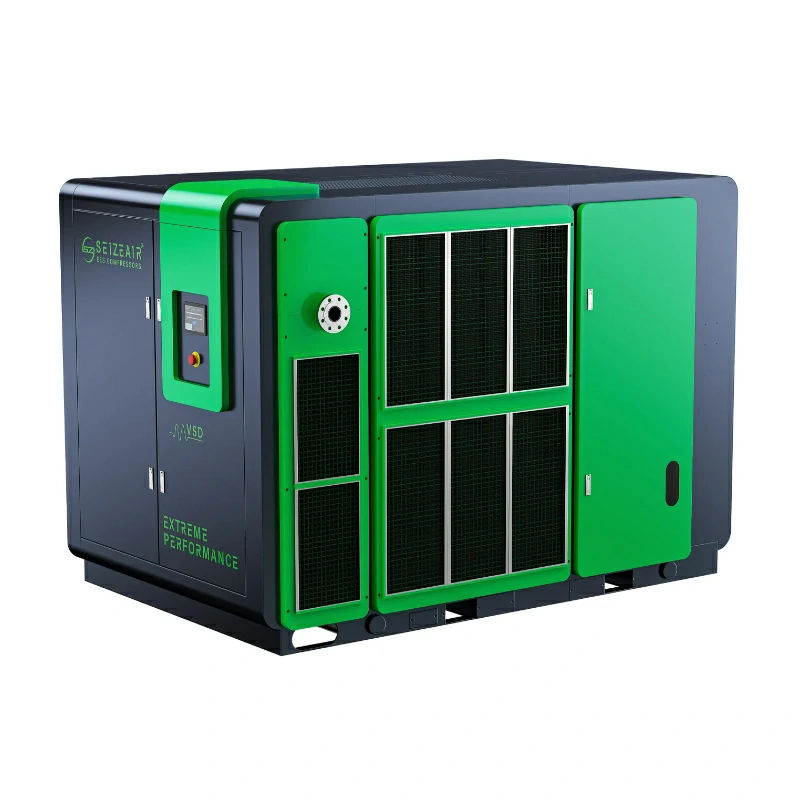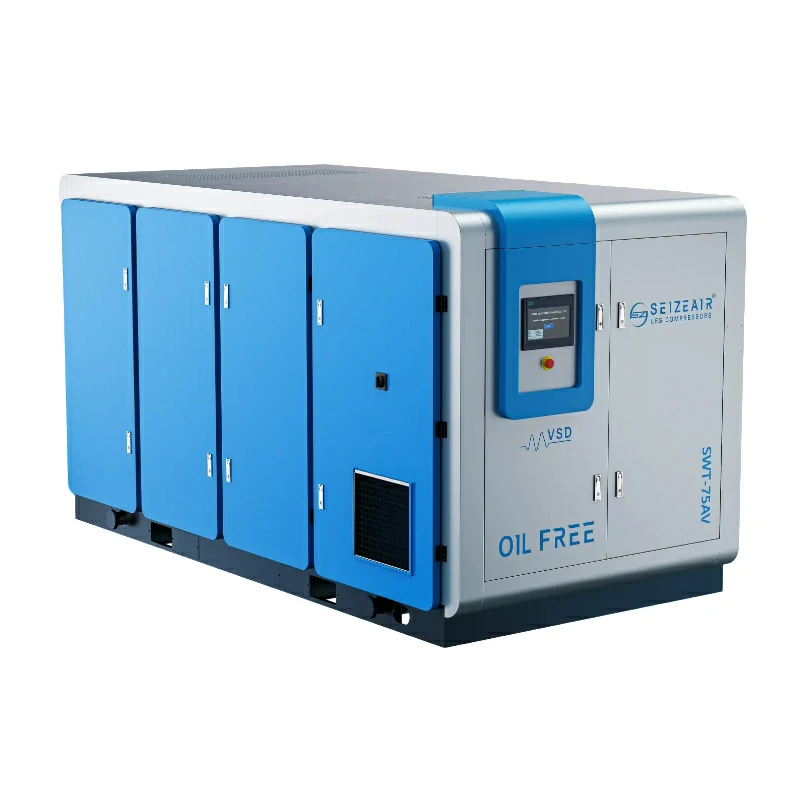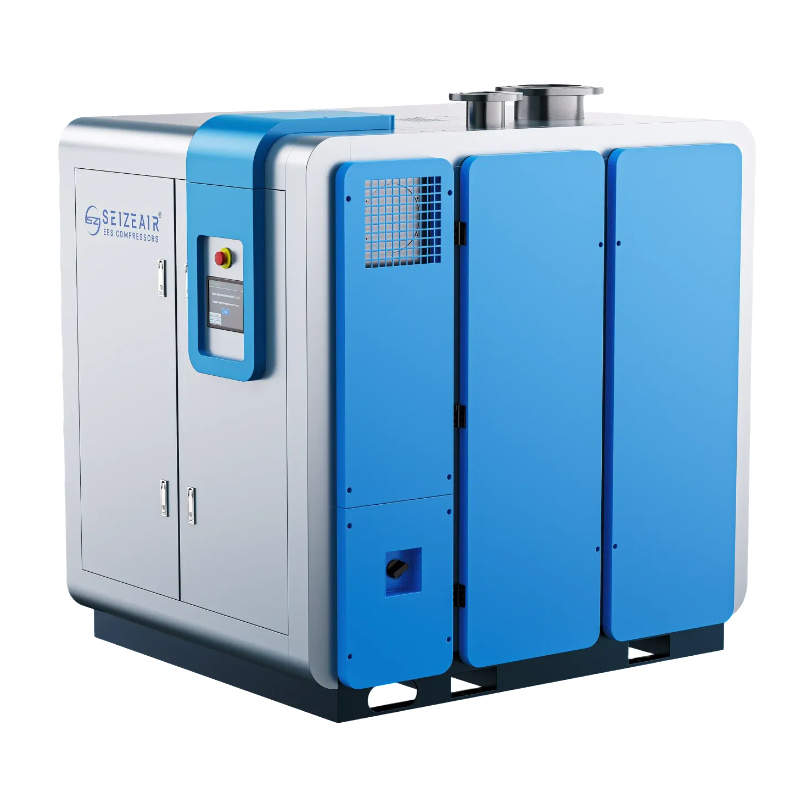


A low pressure air compressor moves bulk powders, granules and flakes through a pipeline using a gentle, high-volume air stream instead of a high-pressure blast. Plants that handle cement, fly ash, flour, plastic pellets or pharmaceutical powder rely on this approach because it keeps the product intact, limits dust leaks and draws far less power than throttling a standard 7–10 bar unit down to conveying pressure. The sections below cover how these machines fit into pneumatic conveying, the pressure and flow numbers that actually matter on the floor, and how to size and select one without overspending.
What Is a Low Pressure Air Compressor?
Most general-purpose rotary screw compressors are built to deliver air at 7, 8 or 10 bar because that covers the widest mix of tools and processes. A low pressure air compressor is the opposite: it is engineered from the airend outward to produce a large volume of air at a much lower discharge pressure, typically somewhere between 1.5 and 5 bar. The rotor profile, the built-in volume ratio and the oil-injection rate are all tuned so the machine does not waste energy over-compressing air that a process only needs at two or three bar.
The payoff shows up the moment you stop using a pressure-reducing valve to choke a high-pressure unit down to conveying pressure. That valve throws away exactly the energy spent reaching the higher pressure. A machine designed for the lower band skips that waste entirely, which is why dedicated low pressure packages have become the default in bulk-handling plants rather than a niche curiosity.
| Compressor class | Typical discharge pressure | Where it is normally used |
|---|---|---|
| Standard industrial screw | 7 – 10 bar (100 – 145 psi) | Air tools, instrumentation, general plant air |
| Low pressure screw / piston | 1.5 – 5 bar (22 – 73 psi) | Pneumatic conveying, aeration, fluidization, bag-filter pulse |
| Positive displacement blower | 0.3 – 1.0 bar (4 – 15 psi) | Fine-bubble aeration, light-duty fluffing |
| Centrifugal blower / fan | Below 0.5 bar | High-volume, very-low-pressure ventilation |
How Does a Low Pressure Air Compressor Work in Pneumatic Conveying?
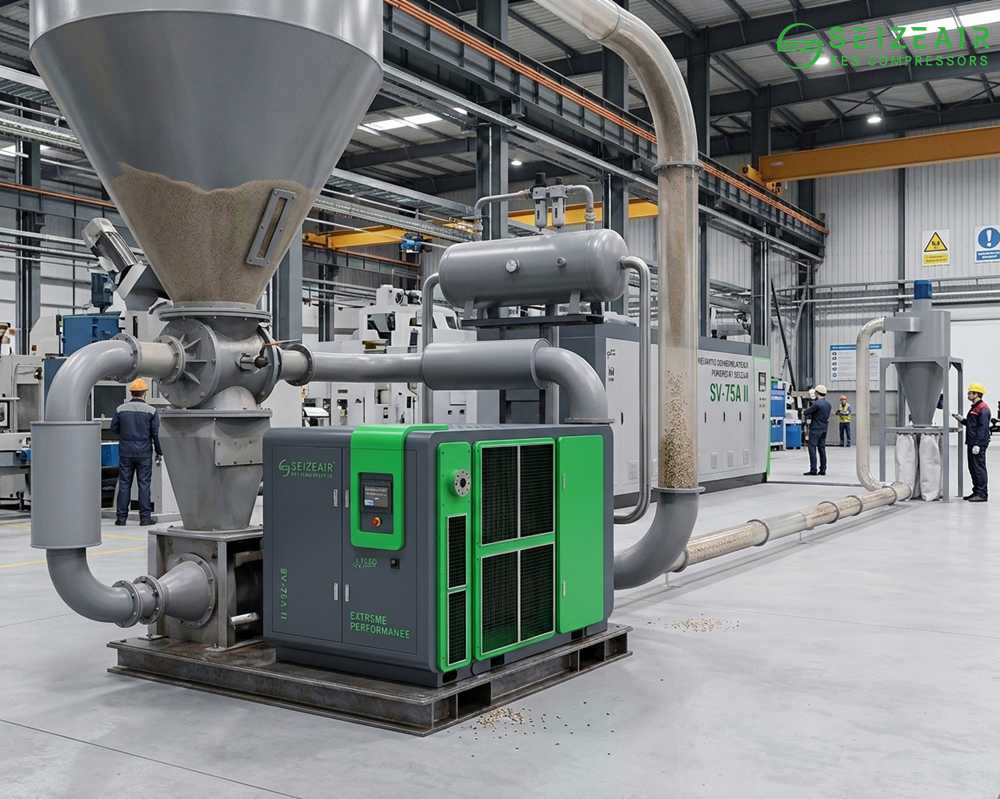
Pneumatic conveying is just controlled transport of solids inside a pipe, with air doing the carrying. The compressor supplies a steady, low-pressure air stream that enters the line at an injector or rotary valve, picks up the material and pushes it toward a receiving silo, cyclone or baghouse. Because the pressure is low, the air velocity can be kept high enough to keep particles suspended without shredding fragile product or scouring the pipe wall.
The compressor’s job is to hold that air volume steady against changing backpressure as the line fills and empties. A standard unit fighting its own pressure-reducing valve tends to surge; a machine built for the band stays flat. That stability is what prevents the two headaches every plant manager dreads in conveying: line bridging (a stuck plug) and flooding (material arriving faster than the receiver can take it).
A simple way to picture the loop:
[Feed hopper] --(rotary valve / injector)--> [Conveying line]
                                               ^
                                               |
                                [Low pressure air compressor] --> [Aftercooler / filter]
                                               |
[Process silo] <-- [Bag filter] <-- [Cyclone receiver] <-- (material + air)
What Is Pneumatic Conveying and Why Does Pressure Matter?
Two main methods dominate bulk handling, and the pressure band you need depends on which one you run. Dilute phase keeps the material suspended in fast-moving air at lower solids concentration; dense phase pushes it as a slow plug or slug at higher concentration. Both can run on a low pressure air compressor, but the operating point and the pipe design are different.
Pressure matters because it sets the air density, and air density sets how much material a given volume of air can carry. Push too little pressure and the line drops out; push more than the process needs and you burn electricity for nothing while risking particle breakage. Getting the band right is the single biggest lever on both reliability and cost.
Dilute Phase vs Dense Phase: Which Needs a Low Pressure Air Compressor?
This is the question most specifiers actually argue about, so it is worth laying out side by side. Dilute phase is the older, simpler method and suits most free-flowing powders. Dense phase shines when the product is friable, abrasive or when you want to keep air consumption down on a long run.
| Factor | Dilute phase | Dense phase |
|---|---|---|
| Air pressure at picker | 1.5 – 3.0 bar | 0.8 – 2.0 bar |
| Air velocity in line | High (keeps solids suspended) | Low (plug moves slowly) |
| Solids loading ratio | Low, roughly 5 – 15 | High, roughly 30 – 80 |
| Best for | Cement, fly ash, plastic pellets, flour | Fragile food powder, abrasive minerals |
| Pipeline wear | Moderate at bends | Lower per ton moved |
| Compressor type | Low pressure screw or blower | Low pressure screw with VFD control |
In practice, a variable-speed low pressure screw is the most forgiving choice because it can hold the pressure-flow curve the line wants as the batch progresses, instead of hunting around a fixed setpoint.
Low Pressure vs High Pressure Air Compressor:
The difference is not just the number on the gauge. A high pressure air compressor carries a higher built-in volume ratio and a smaller rotor-to-discharge geometry, which is efficient at 8–10 bar and wasteful at 2 bar. Run it at conveying pressure through a valve and you pay for compression you immediately throw away. A low pressure unit flips that: it is slightly less efficient if you ever needed 10 bar, but exactly right where conveying lives.
For a conveying line the math is blunt. If your process needs 2.5 bar and 40 m3/min, a derated 8-bar screw might pull around 7.3 kW per m3/min, while a purpose-built low pressure screw sits near 5.1 kW per m3/min. Over a year of continuous running that gap is a five-figure electricity bill, not a rounding error.
Why a Low Pressure Screw Air Compressor Beats a Blower for Conveying
Blowers are cheap and simple, and for light aeration they are hard to beat. But once conveying pressure climbs past about 1 bar, a Roots or centrifugal blower loses efficiency fast and the flow starts to sag as backpressure rises. That is exactly where a low pressure screw air compressor takes over: it holds volume almost flat across the whole 1.5–3 bar conveying window, so the line does not stall when a batch gets sticky.
Builders such as Seize Air size the airend and rotor geometry for 2–5 bar duty, which keeps internal leakage low and lets the package replace a blower on longer or more demanding runs without a separate booster stage. For cement terminals and fly-ash lines that used to fight plug formation, the steadier pressure alone often pays back the upgrade inside a year.
Where a blower still wins is very-low-pressure aeration below 0.8 bar, and that is where a magnetic levitation centrifugal blower earns its place — quiet, oil-free and efficient at the bottom of the pressure range. Many plants end up running both: a screw for conveying, a blower for tank aeration.
What Pressure Range Do You Need for Cement, Powder, and Fly Ash?
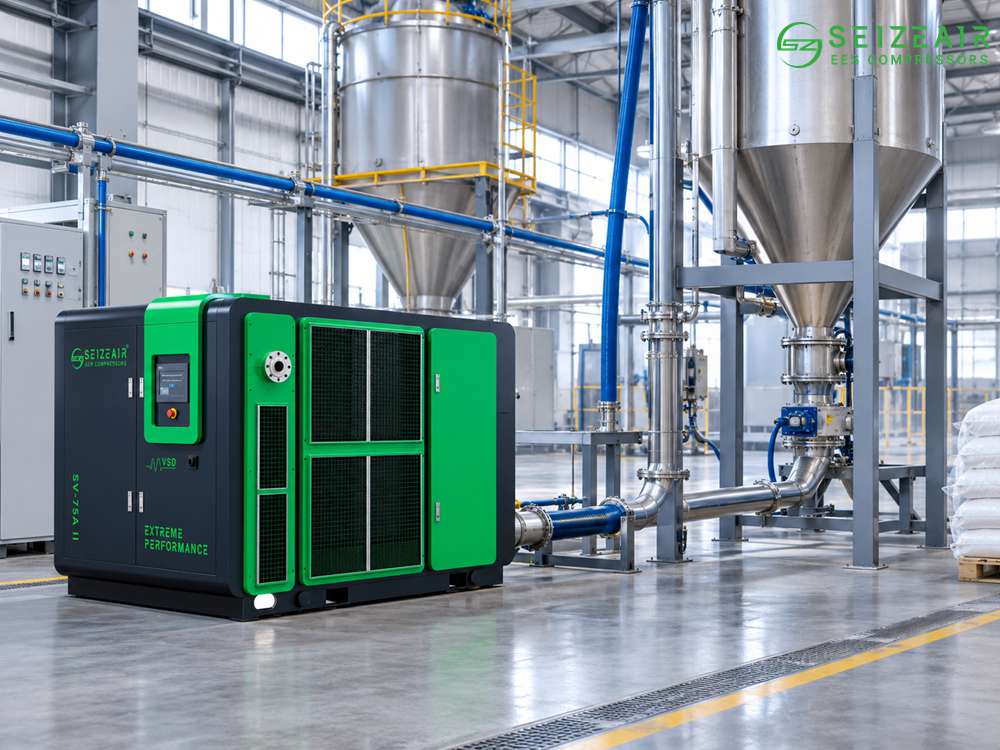
There is no single “conveying pressure” because each material behaves differently in the pipe. The table below reflects what plants running these lines typically target at the compressor discharge, before line losses.
| Material | Common discharge pressure | Notes |
|---|---|---|
| Cement powder | 0.8 – 2.5 bar | Dense or dilute phase; moisture control matters |
| Fly ash | 1.0 – 2.5 bar | Abrasive; watch bend wear |
| Flour / starch | 1.5 – 2.5 bar | Friable; keep velocity moderate |
| Plastic pellets | 2.0 – 3.0 bar | Free-flowing; dilute phase works well |
| Pharma / food powder | 1.5 – 2.5 bar | Oil-free air usually required |
These are starting points, not rules. Line length, number of bends, elevation gain and particle size all shift the number, which is why the next step is a flow calculation rather than a catalogue guess.
Low Pressure Air Compressors for Food and Pharmaceutical Conveying
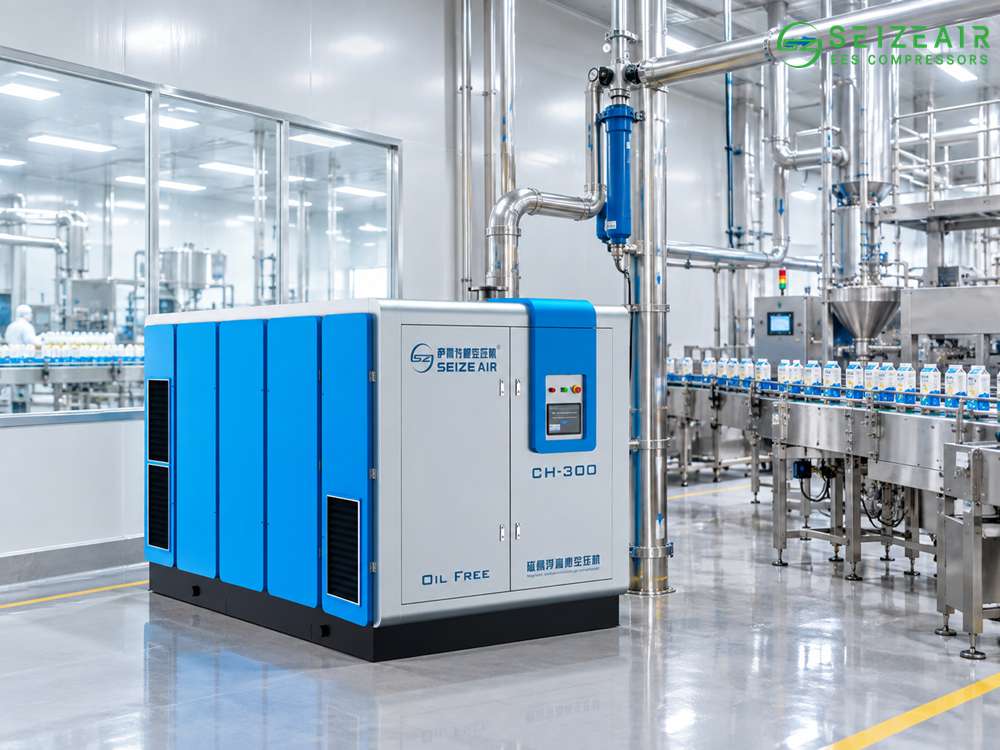
When the conveyed material ends up in a product people consume, oil in the air is a contamination risk you cannot accept. An oil-free screw air compressor delivers Class 0 quality air that meets the hygiene bar for food and pharma lines without downstream carbon filters doing all the work. For many factories this is the deciding factor between a screw and a lubricated unit, even when the lubricated one would be a little cheaper to buy.
The same steady low-pressure stream that protects cement quality also protects delicate ingredients from caking and heat damage. In a flour or infant-formula line, keeping the air dry and oil-free is what stops a batch from clumping inside the pipe and choking the receiver.
How to Calculate Air Flow (CFM) for Pneumatic Conveying
You do not need a simulation to get close. Start from the material you must move per hour and the solids loading ratio the method allows, then back out the free air flow. The relationship in plain terms:
Free air flow Q (m3/min) = Material feed rate W (kg/h) divided by (Solids loading ratio mu times Air density rho (kg/m3))
As a working line: Q = W / (mu × rho)
At roughly 2 bar and 20 C, air density rho is about 2.4 kg/m3.
Example: moving 4000 kg/h of cement at mu = 12 gives Q = 4000 / (12 × 2.4) = about 139 m3/min of free air.
Convert to CFM by multiplying m3/min by 35.3. That 139 m3/min is roughly 4900 CFM. Always add 15–25 percent margin for line losses, bends and future throughput. If the number looks large, remember that conveying is a high-volume, low-pressure job by nature — which is exactly why a industrial air compressor sizing exercise should start from flow, not from pressure.
Specific power is the other number worth writing down:
Specific power SP (kW per m3/min) = Motor power P (kW) divided by Free air delivery Q (m3/min)
Lower SP means more air per kilowatt, and that is the figure to compare between quotes.
Why Dedicated Low Pressure Units Cut Power Bills
The low pressure air compressor energy saving case is straightforward once you stop paying to over-compress. Pulling air down from 8 bar to 2 bar through a valve throws away most of the compression work; a dedicated low pressure screw avoids it. Field numbers from bulk-handling retrofits routinely show 20–35 percent lower energy on the same conveying duty.
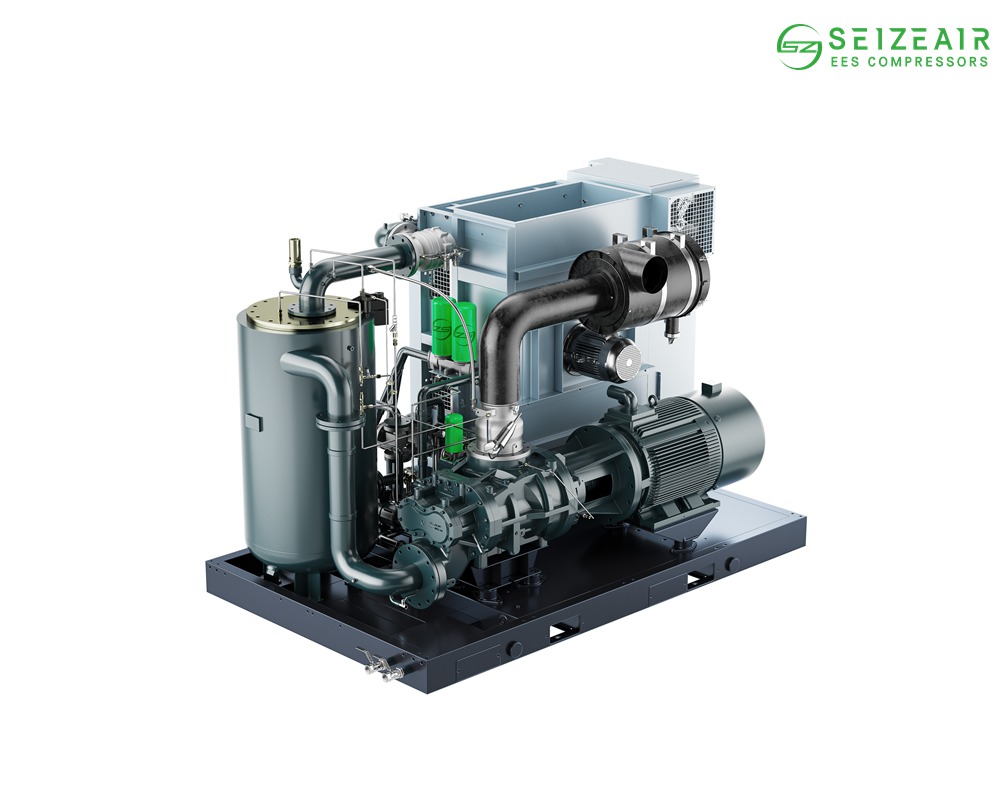
A permanent magnet low pressure screw from Seize Air pairs that geometry with a VFD so the motor only draws what the line demands at any moment. On a line with uneven batches — most of them — that part-load efficiency is where the second layer of savings comes from, because the compressor is not parked at full speed between batches.
Moisture and Dew Point: Protecting Moisture-Sensitive Materials
Compressing air squeezes water out of it, and on a humid site that moisture will travel down the line and cake your product. Aftercooling plus a refrigerated air dryer drops the dew point low enough that cement, flour and similar powders reach the silo dry. For plants in tropical or coastal locations this step is not optional — it is the difference between a clean run and a line that clots every afternoon.
If the product is food- or pharma-grade, pair the dryer with a sterile filter so the air is both dry and clean. The extra stage costs little next to the value of a rejected batch.
How to Choose the Right Low Pressure Air Compressor for Your Line
Selection is mostly discipline: write down the duty, then match a machine to it instead of letting a catalogue number lead. The checklist below covers the points that actually change the outcome.
| Check | What to pin down |
|---|---|
| Material | Particle size, abrasiveness, moisture sensitivity, friability |
| Throughput | Peak and average mass flow in kg/h or t/h |
| Pressure band | Discharge pressure needed at the picker, plus line losses |
| Air quality | Oil-free required? Dew point target? |
| Duty cycle | Continuous, or batched with idle gaps? |
| Control | Fixed speed enough, or VFD for part-load saving? |
Hand that list to a supplier and the quote you get back will actually fit the line. Skip it and you will likely end up with either an undersized unit that bridges or an oversized one that wastes power all shift.
Maintenance Tips to Keep a Low Pressure Conveying System Running
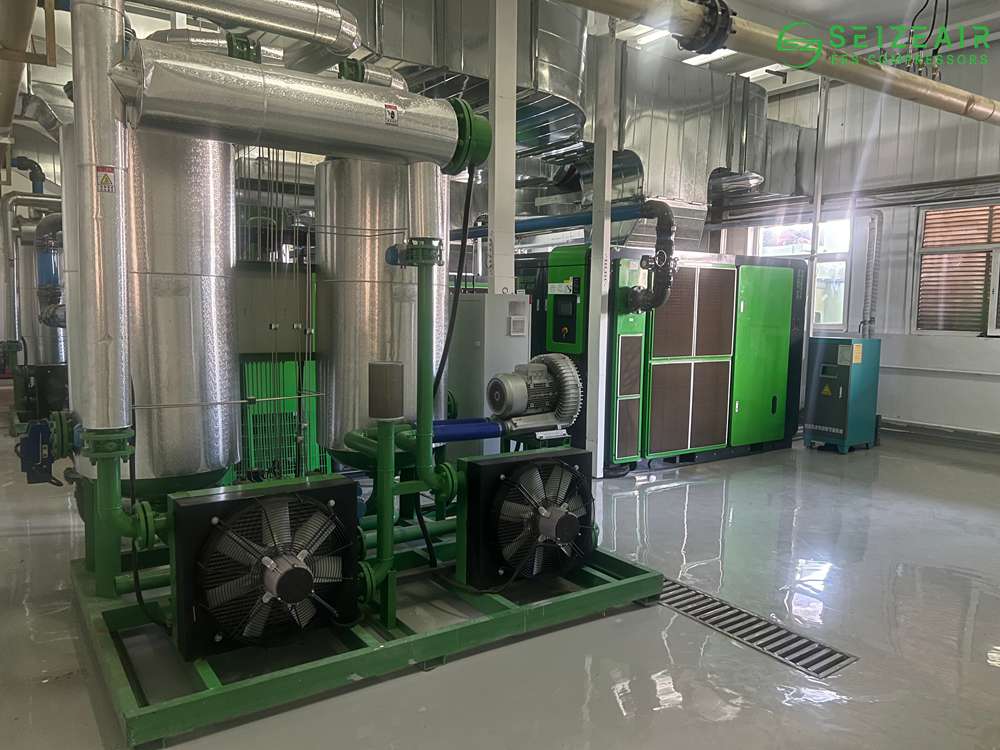
A low pressure screw is not high-maintenance, but the conveying environment is dirty by definition, so a few habits keep it alive. Change the air intake filter on the schedule the dust load demands — in a cement or fly-ash plant that is more often than the book says. Watch the oil-analysis trend on lubricated units; the airend tells you early when something is wrong. Check the aftercooler and dryer daily in humid weather so moisture never reaches the product. And log power draw; a slow creep upward is the first sign of a leaking valve or a fouled inlet.
None of this is exotic. The plants with the fewest conveying stoppages are the ones that treat the compressor as process equipment, not a background utility.
Common Mistakes When Sizing a Low Pressure Conveying Compressor
The first mistake is borrowing a number from a different material. Cement and flour convey nothing alike, and a pressure that works for one will bridge the other. The second is forgetting line losses: the discharge pressure at the compressor is not the pressure at the picker, and elevation plus bends eat a surprising amount. The third is buying on headline bar pressure alone and ignoring specific power, which is where the real cost lives over the machine’s life.
The last one is subtler — sizing for average flow and forgetting peaks. Conveying lines surge when a silo dumps; size for the surge, not the mean, or the receiver backs up exactly when you are behind on orders.
Need a low pressure air compressor sized for your conveying line?
If you are planning a new bulk-handling line or retrofitting an old blower, contact our engineering team with your material, throughput and line layout. We will size the pressure and flow properly, flag the moisture and air-quality steps your product needs, and put together a package that fits the duty instead of a generic catalogue number.