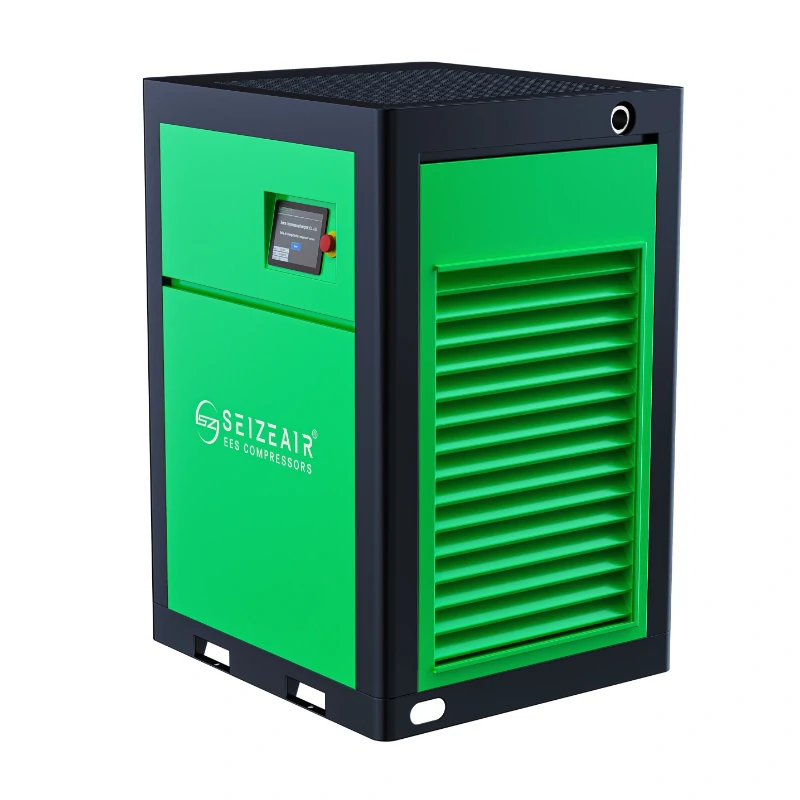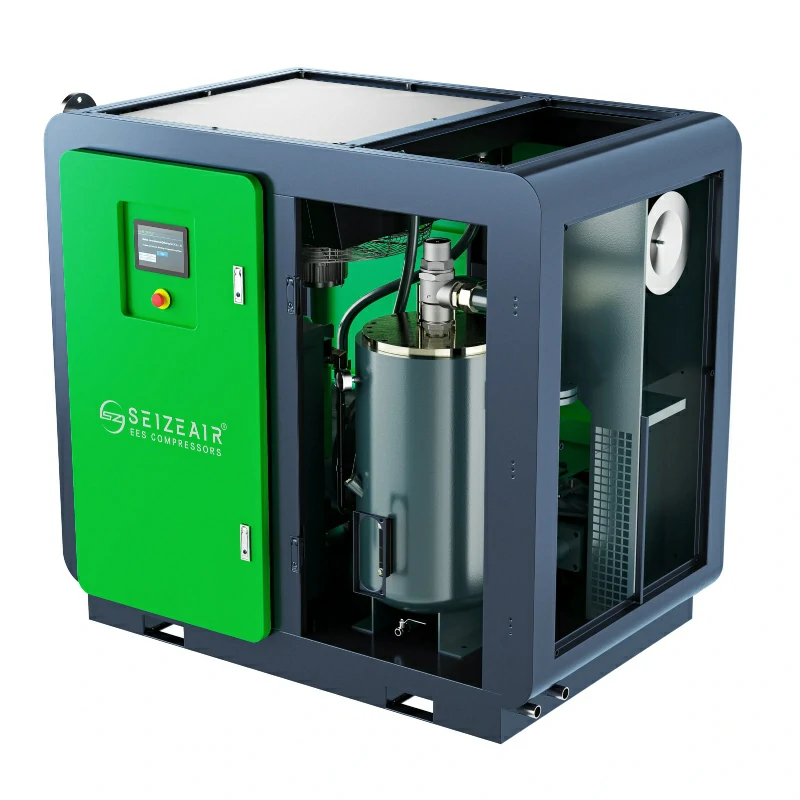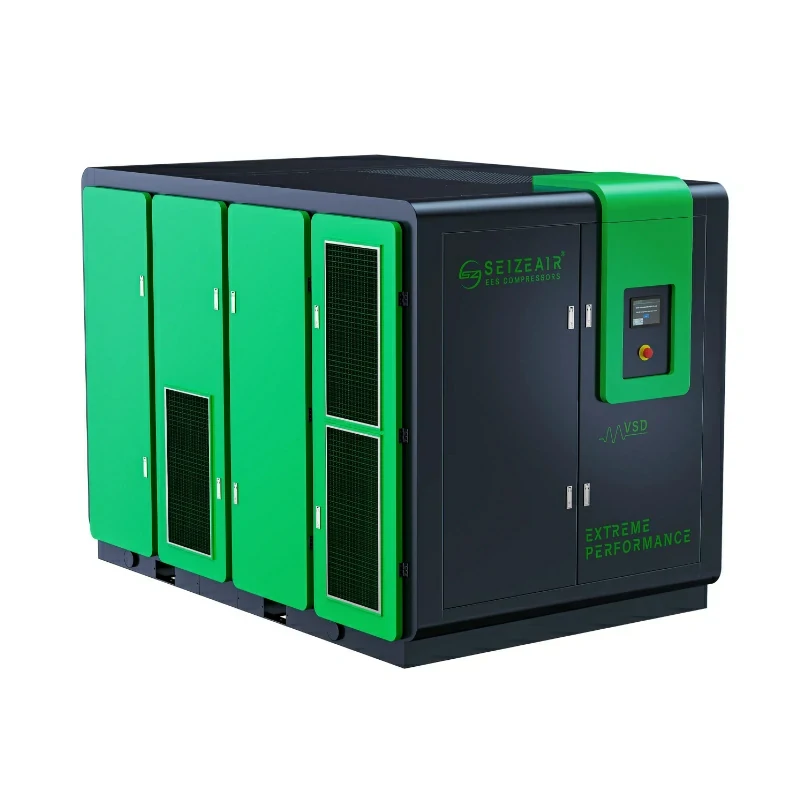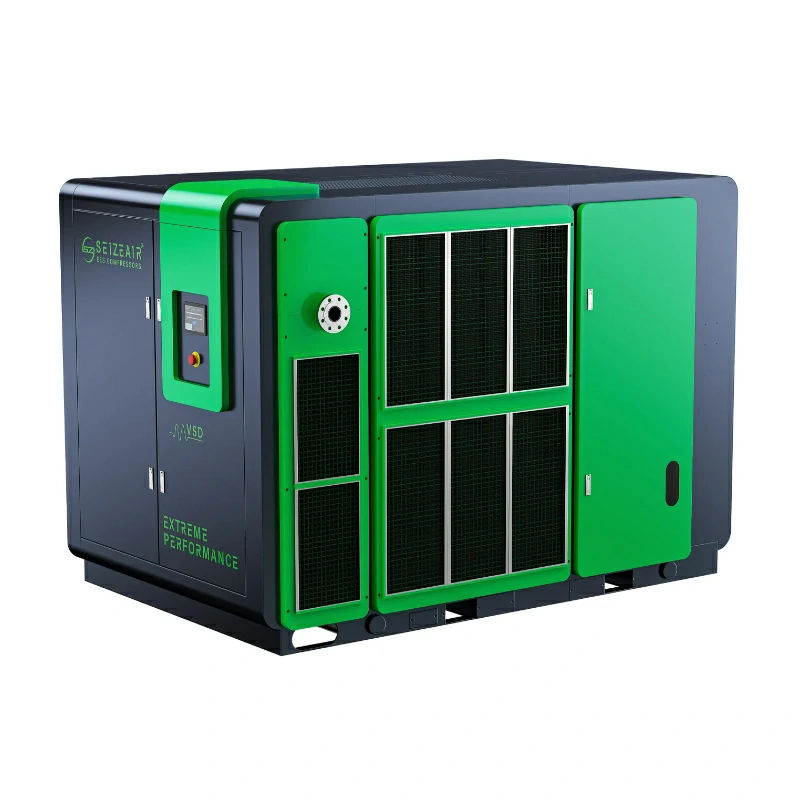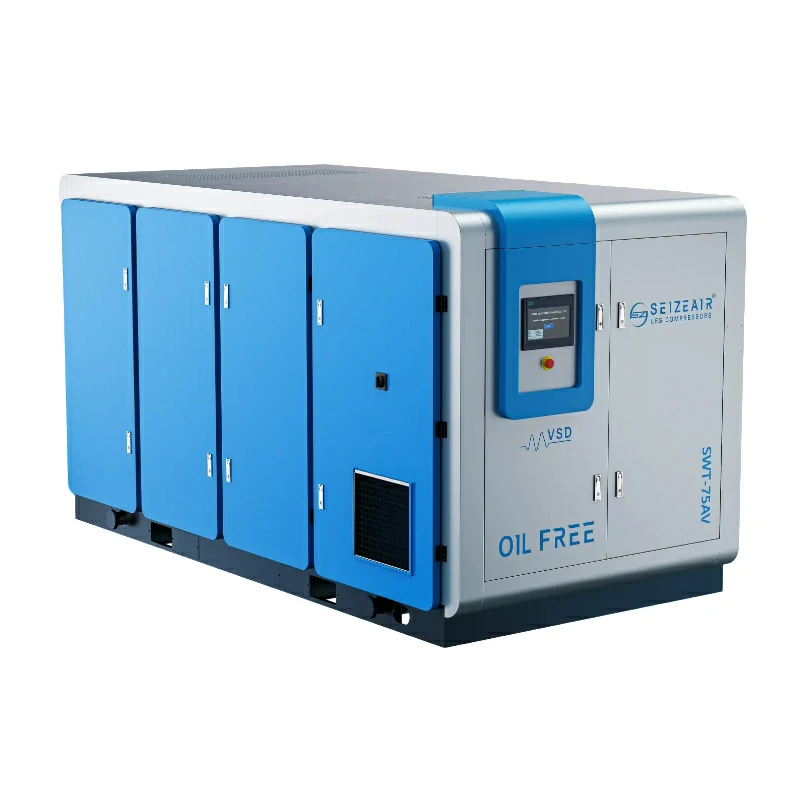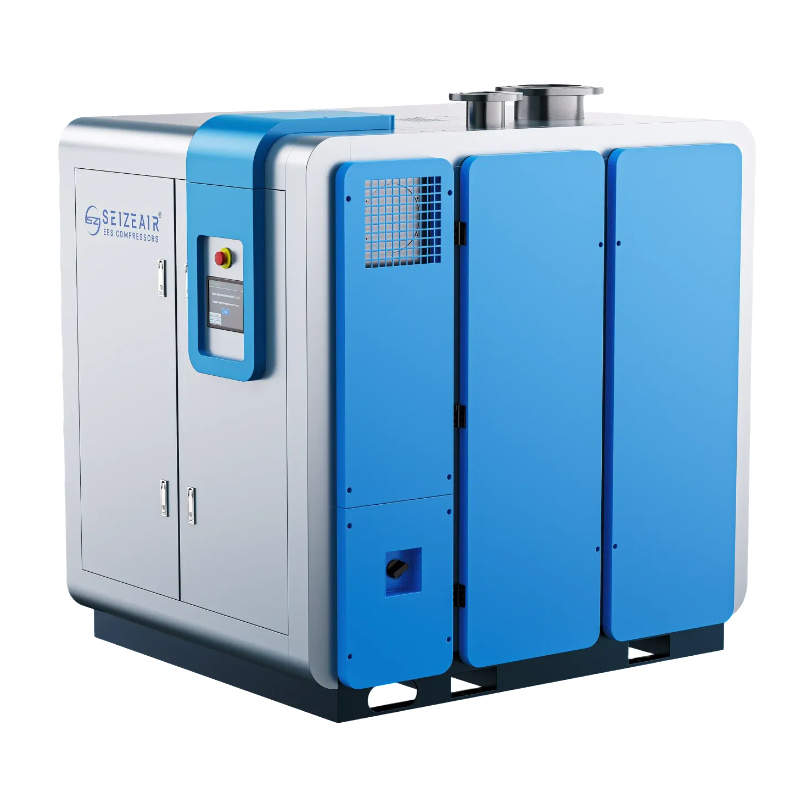


A scroll air compressor earns its place in dental clinics, laboratories and food plants because it delivers clean, oil-free air at a low noise level without the bulk of a rotary screw machine. If you are weighing a scroll air compressor against a rotary screw unit, the choice really comes down to how much air you need, how clean that air must be, and whether your demand runs steady or in fits and starts. This guide breaks down the real-world differences so you can pick the right technology instead of the one a sales sheet happens to push.
What Is a Scroll Air Compressor?
A scroll air compressor is a type of positive-displacement machine, but it looks and behaves nothing like the piston compressors most people picture. Inside the shell there are two spirals, sometimes called scrolls. One sits still. The other orbits around it in a tight, precise path without actually rotating. As the moving scroll traces its circle, it traps pockets of air at the outer edge, then squeezes those pockets inward toward the center. By the time the air reaches the middle, it has been compressed and is pushed out through the discharge port.
The clever part is that the two spirals never touch during compression. In an oil-free scroll air compressor, that non-contact design means there is no metal grinding on metal and, just as important, no oil in the air path. The result is Class 0 quality air straight out of the machine, which is exactly why you find scroll units tucked under dental chairs, inside laboratory benches and behind pharmacy clean rooms.
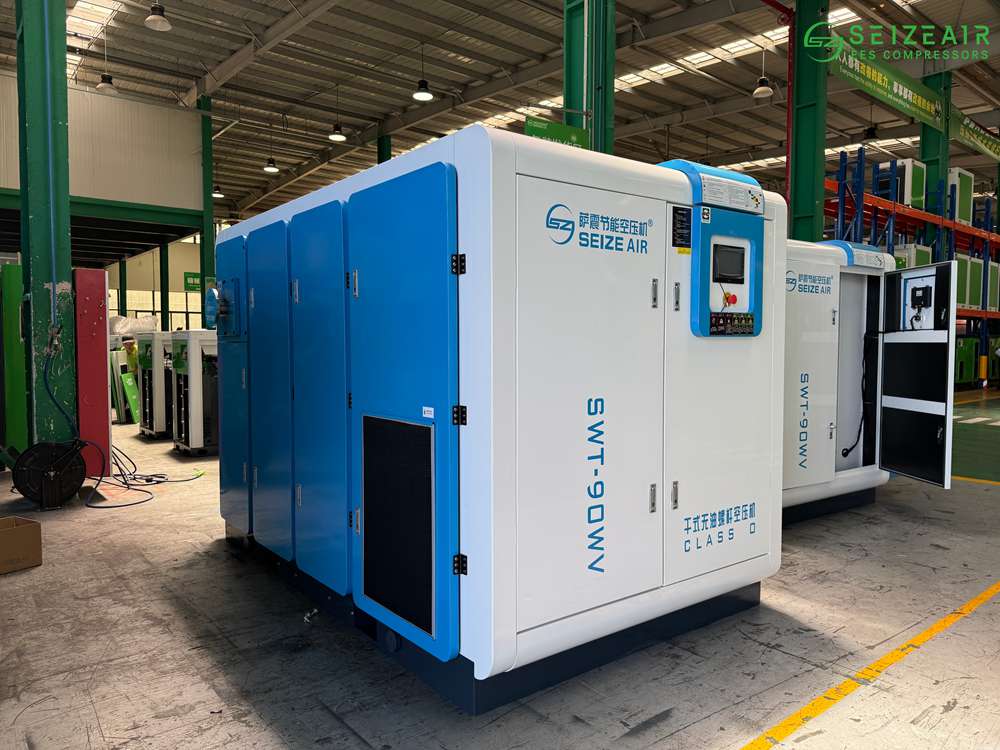
Because there are so few moving parts and no valves to slam shut, a scroll unit runs smoothly and quietly. It also handles part-load demand well, which is the normal state of affairs in most smaller facilities. You are not buying a machine built to run flat-out for twenty years; you are buying one built to sip air when you only need a little.
How Does a Scroll Air Compressor Work?
The working principle is easier to see than to describe. Air enters at the rim of the spiral pair. The orbiting scroll forms a sealed crescent-shaped pocket with the fixed scroll. That pocket is not static. It closes off from the intake, then shrinks as it travels inward, which raises the pressure. Several pockets exist at once, each at a different stage of compression, so discharge is continuous rather than pulsed.
        _________
       /         \        fixed scroll (stationary wrap)
      |  ~~~~~~~  |
      | |       | |      orbiting scroll (offset, no rotation)
      | |  ***  | |      *** = trapped air pocket
      |  \_____/  |
       \_________/
  intake at rim --> pocket shrinks inward --> discharge at center
Two things follow from this geometry. First, compression happens in many small steps, so the discharge is almost pulsation-free. Second, because the wraps do not touch, an oil-free design keeps the air path completely dry and clean. The trade-off is flow. A single scroll wrap can only move so much air, so scroll machines are happiest in the low-to-mid flow range, roughly a few cubic feet per minute up to around 30 CFM per module before you start ganging multiple compressors together.

What Is a Rotary Screw Compressor?
A rotary screw air compressor takes a different route to the same destination. Two long, meshing rotors sit inside a housing. Air is drawn in at one end, trapped in the grooves between the rotors and the casing, and carried along as the screws turn. The decreasing space toward the discharge end squeezes the air. Most screw machines are oil-injected: the oil cools, seals and lubricates the rotors, which is why they can run continuously for years without breaking a sweat.
Screw compressors are the workhorses of industry. They scale from small workshop units to massive plant systems pushing hundreds of CFM around the clock. Where a scroll unit is delicate and clean, a screw unit is blunt and tireless. That contrast is the heart of the buying decision, and we will keep coming back to it.
Scroll Air Compressor vs Rotary Screw: The Core Differences
Before we go deeper, here is the side-by-side view that most buyers actually care about. Numbers vary by model and manufacturer, but the pattern holds across the industry.
| Feature | Scroll Air Compressor | Rotary Screw Compressor |
|---|---|---|
| Oil in air path | None in oil-free designs (Class 0) | Oil-injected unless specified oil-free |
| Typical flow range | ~3 to 30 CFM per module | ~20 to 2,000+ CFM |
| Sound level | ~50 to 65 dB(A) | ~65 to 80+ dB(A) |
| Duty cycle | Intermittent to medium | Designed for 24/7 continuous |
| Footprint at low flow | Compact, often bench or wall mounted | Larger skid, needs plant space |
| Part-load efficiency | Good with modulation / variable speed | Excellent with VSD, poor fixed-speed at low load |
| Moving parts | Very few | More, but robust |
| Best fit | Clean air, low flow, quiet sites | High flow, dirty duty, continuous run |
Is a Scroll Compressor Better Than a Rotary Screw?
The honest answer is that neither is “better” in the abstract. They solve different problems. A scroll compressor is better when you need a modest, steady trickle of absolutely clean air and you cannot tolerate a loud machine in a occupied room. A rotary screw is better when your plant breathes air the way a forge breathes oxygen: constantly, heavily, and without apology.
Where people get burned is treating the question like a spec-sheet race. A screw compressor will almost always win on raw CFM and will laugh at a scroll unit asked to run three shifts straight. But put that same screw unit in a dental surgery where it runs ten minutes an hour, and you have paid for capacity you will never use while dealing with noise and oil management you did not need. Match the machine to the duty, not to the brochure.
Energy Efficiency and Running Costs
Electricity is where compressors quietly eat your budget. A compressor’s purchase price is a rounding error next to the power bill over its life. The math is not complicated:
Annual electricity cost = Motor power in kW x Running hours per year x Electricity rate in $/kWh
Required motor power (kW) approx = (CFM x Pressure in bar x 100) / (6000 x efficiency factor)
Duty cycle percent = (Minutes running per hour) / 60 x 100
Scroll units tend to be efficient at the low end because they modulate down gracefully when demand drops. A permanent magnet variable frequency screw compressor is the screw world’s answer: it trims motor speed to match demand instead of dumping excess air. If your load is stable and high, the screw wins on total energy. If your load is spiky and low, the scroll keeps you from paying to compress air you never use.
| Scenario | Scroll (modulating) | Screw (fixed speed) | Screw (VSD) |
|---|---|---|---|
| 10 CFM, 30% duty | Low waste, cheap to run | Poor, blows off idle air | Good but oversized |
| 40 CFM, 80% duty | Reaches flow limit | Strong, simple | Best efficiency |
| 150 CFM, 100% duty | Not viable | Excellent | Excellent |
Oil-Free Air: Why Scroll Compressors Lead in Clean Applications
If your process cannot tolerate a single drop of oil, the conversation changes. Food packaging, breathable medical air, pharmaceutical filling and semiconductor lines all demand Class 0 air. An oil-free screw air compressor can deliver that at high flow, but at low flow the scroll is simpler, cheaper and quieter. For a small lab or clinic, an oil-free scroll is often the only sensible choice.
The broader family of oil-free air compressors covers both technologies, and the right pick depends on how much clean air you move. Scroll owns the bottom of that range; oil-free screw takes over above it. Knowing which side of the line you sit on saves you from either under-buying or over-spending.
Noise, Vibration and Footprint
A scroll air compressor’s noise level is one of its strongest selling points. Many models sit in the low 60 dB(A) range, which is quieter than a normal conversation. You can put one in a room where people work without building a sound enclosure. A screw compressor, even a decent one, usually starts in the high 60s and climbs from there, and at plant scale it wants its own room.
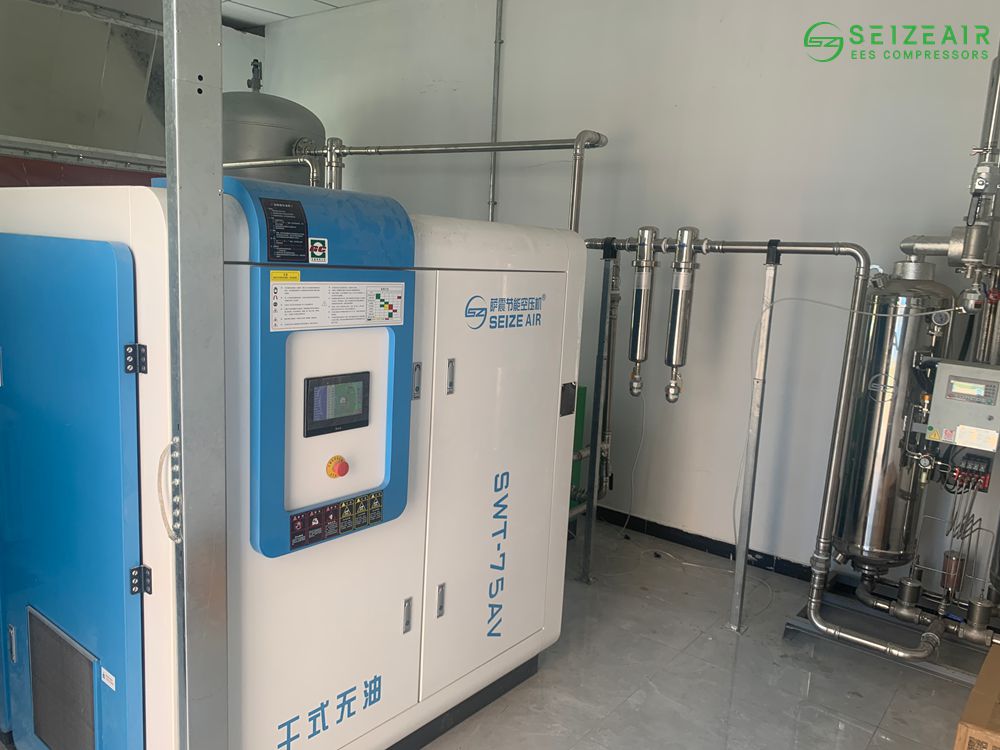
Vibration is similarly mild. With no reciprocating piston, there is no thump every cycle. That matters in labs with sensitive instruments and in clinics where patients notice everything. Footprint follows the same logic: at low flow a scroll unit is a fraction of the size of a screw skid, which is why you see them bolted to walls and tucked into cabinets.
Where a Scroll Air Compressor Shines
The clearest wins for a scroll air compressor are places where air must be clean, quiet and modest in volume:
- Dental clinics and surgeries – low flow, oil-free, must be silent behind the chair.
- Medical and research laboratories – clean air for instruments, no contamination risk.
- Pharmacies and clean rooms – Class 0 air for filling and packaging.
- Food and beverage lines – oil-free contact air for sorting, blowing and packaging.
- Small CNC and laser tables – where cutting needs clean dry air but not huge volume.
- Electronics and optics – particle-free air protects delicate parts.
Where Rotary Screw Wins
Hand a rotary screw compressor a brutal, never-ending job and it is in its element. Continuous manufacturing, pneumatic conveyors moving tons of material, textile plants, mining sites and any process that runs multiple shifts straight all favor the screw. A high-pressure air compressor built on screw technology also covers applications a scroll simply cannot reach, such as PET blowing and high-pressure testing.
The screw’s advantages are capacity, endurance and resilience. It shrugs off dust, heat and round-the-clock demand. If your worst day is also your normal day, buy a screw.
Scroll vs Reciprocating: A Quick Comparison
Plenty of small shops still run piston (reciprocating) compressors, so it is worth a word. A piston compressor is cheap up front and pushes a lot of air for its size, but it pulses, it is loud, it needs oil, and it wears out valves and rings through constant stop-start cycles. A scroll unit gives you smoother output, cleaner air, far less noise and a longer quiet life between services. If you are choosing between scroll and piston for any clean or occupied space, scroll wins on almost every measure except initial price.
How Long Does a Scroll Air Compressor Last?
Lifespan is where the few-parts design pays off. A well-maintained scroll air compressor commonly delivers 20,000 to 40,000 hours of service, and many run longer. The usual wear item is the tip seal on the orbiting scroll, which is a scheduled replacement rather than a breakdown. Compare that with a reciprocating unit, where valves and rings age visibly within a few thousand hours of hard use, and the scroll’s calm durability is obvious.
Life expectancy depends on three things: keeping the intake air clean, not running the unit past its duty rating, and changing filters on time. Do those and the machine will likely outlast the equipment it feeds.
Scroll Air Compressor Maintenance: What You Actually Do
One of the quiet benefits of a scroll unit is how little it asks of you. There are no valves to lap, no rings to replace, no belts on most designs. The routine is mostly about air quality going in:
- Replace the intake air filter on the manufacturer schedule.
- Check and replace tip seals at the recommended hour interval.
- Keep the cooling fan and vents clear of dust.
- Verify discharge pressure and listen for changes in tone.
- Drain any downstream separator or tank if your setup has one.
For the full service checklist and torque values, our air compressor maintenance guide walks through every step. The short version: a scroll unit is about as close to fit-and-forget as compressed air gets.
Sizing It Right
Buying the wrong size compressor is the most common and most expensive mistake in this whole field. Start with two numbers: how much air your tools or process need (CFM), and at what pressure (bar or psi). Then be honest about how often you actually use that air.
Required flow (CFM) = Sum of tool consumption x 1.2 (diversity margin)
Duty cycle percent = (Minutes running per hour) / 60 x 100
If your duty cycle is below about 60 percent and your flow is under 30 CFM, a scroll is almost certainly your answer. If duty climbs past 80 percent or flow passes 40 CFM, a screw starts to make sense. The overlap zone between 30 and 50 CFM is where you should sit down with the energy math above and a real load profile, not a guess.
Scroll vs Screw for Laser Cutting and CNC
Laser cutting tables need clean, dry, oil-free air to protect the lens and the cut quality. Low-power and occasional-use tables fit a scroll unit neatly: enough flow, perfectly clean, quiet on the shop floor. High-power lasers running all day need volume that pushes you toward an oil-free screw with proper drying. The deciding factor is again duty and flow, not the technology’s reputation. A shop cutting for two hours a day does not need the same machine as one cutting sixteen.
Common Mistakes Buyers Make
- Buying on sticker price alone. Energy cost dwarfs purchase price over the life of the unit.
- Ignoring duty cycle. A screw sized for continuous run is wasteful at 20 percent duty; a scroll pushed past its rating fails early.
- Forgetting air treatment. Even oil-free air needs drying and filtration for many processes.
- Assuming louder is tougher. Quiet scroll units are rugged where it counts and gentle where it helps.
- Skipping the load profile. Measure what you actually use before you size anything.
Which One Do You Need? A Decision Checklist
Use this to land the decision without overthinking it.
| If your situation is… | Choose | Reason |
|---|---|---|
| Under 30 CFM, clean air, occupied room | Scroll | Quiet, oil-free, compact |
| Continuous 24/7, high CFM | Rotary screw | Endurance and capacity |
| Spiky low demand, oil-free needed | Scroll | Modulates, no waste |
| High-pressure or PET blowing | Screw (high-pressure) | Reaches pressures scroll cannot |
| Small dental or lab use | Scroll | Class 0, silent, tiny |
Ownership Cost Breakdown
Here is the shape of what you pay, because the up-front number is the least important one.
| Cost type | Scroll | Rotary screw |
|---|---|---|
| Capital (purchase) | Lower at low flow | Higher, scales with size |
| Installation | Minimal, plug and play | Bigger, may need room/piping |
| Energy (life) | Low if duty is low | Low per CFM at high duty |
| Maintenance | Very low | Low but more frequent |
| Air treatment | Often built-in for oil-free | Separate dryer/filter needed |
Conclusion
A scroll air compressor is the right call whenever you need clean, quiet, modest-volume air and your demand is anything less than relentless. A rotary screw earns its keep the moment flow and duty climb past the scroll’s comfortable limit. Pick by load profile, not by habit, and the machine will pay you back in lower energy bills and fewer headaches. Seize Air builds both technologies, so the advice above is not a push toward one shelf.
If you are still unsure where your duty cycle and flow actually land, contact our engineering team with your tool list and we will size the system properly before you spend a cent. A twenty-minute call beats a five-year mistake.