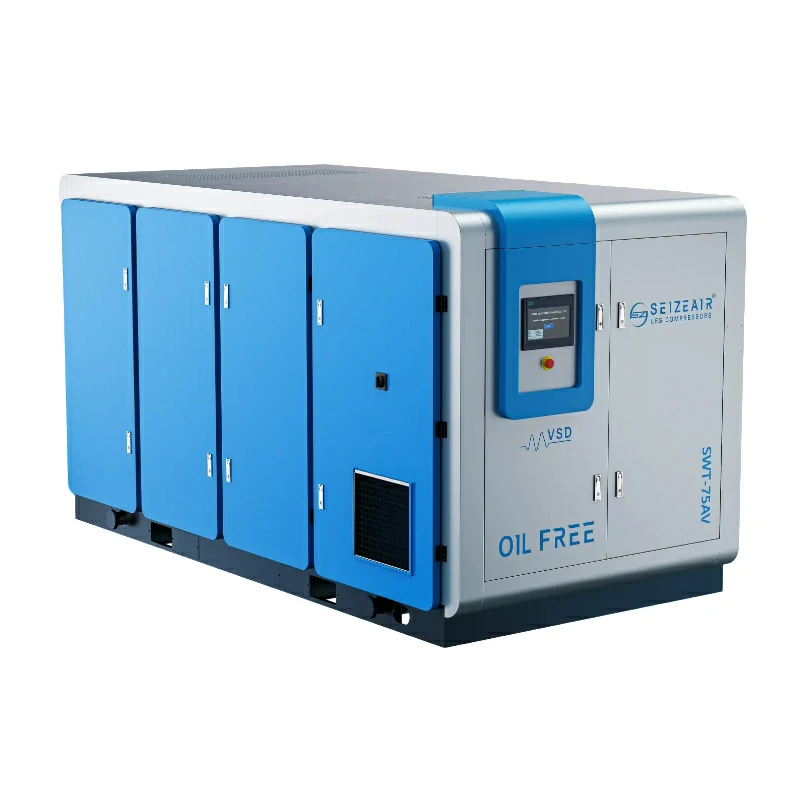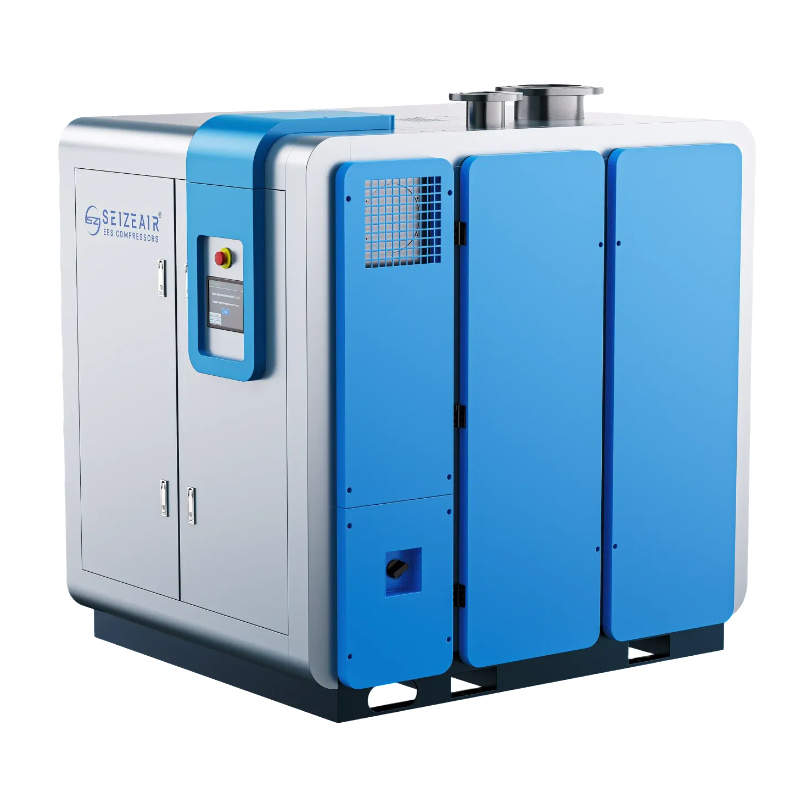


Before buying a 20 hp air compressor, evaluating your facility’s electrical infrastructure is the single most critical step to avoid burned-out motors, tripped main breakers, or costly grid upgrades. This comprehensive guide breaks down the exact 20 hp air compressor electrical requirements, comparing 3-phase vs. single-phase setups, wire gauges, and breaker sizing to protect your equipment and operational budget.
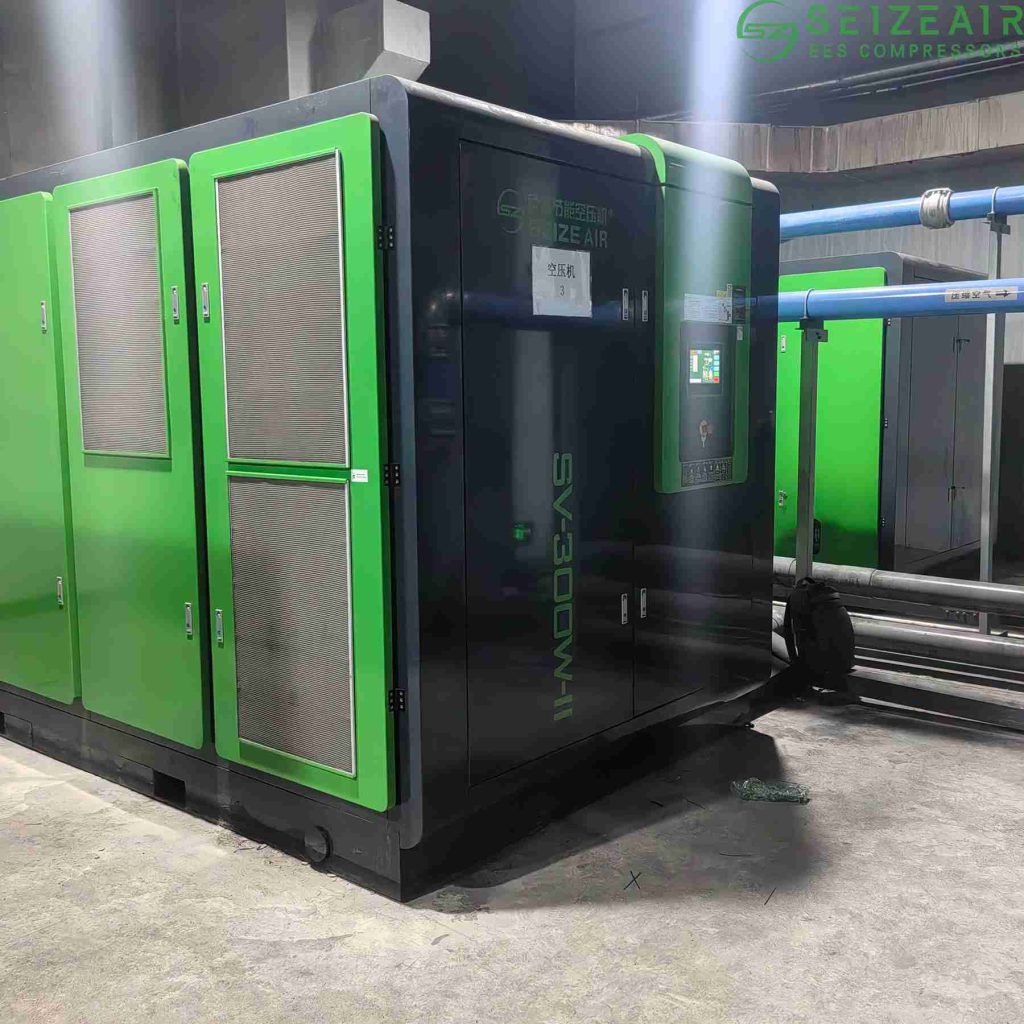
What are the exact full load amps for a 20 hp air compressor?
If you ask an equipment salesman this question, they will likely flip open a general catalog, read off a single number, and tell you you’re good to go. But if you talk to a field engineer who has spent decades diagnosing burned-out motor windings, you’ll get a very different answer: “It depends on your actual operating voltage, your power factor, and how much your voltage drops when the machine shifts into full load.”
From a pure engineering standpoint, 1 mechanical horsepower is equal to 746 Watts.
Total Theoretical Power = 20 hp * 746 W = 14,920 Watts (roughly 15 kW)
However, that is theoretical. In the real world, no electric motor operates at 100% efficiency. Heavy-duty industrial motors running a 20 hp air compressor typically operate between 88% and 92% efficiency. Furthermore, we must account for the power factor (PF), which measures how effectively the motor converts incoming current into actual working torque.
When you account for these real-world losses, a 20 hp motor doesn’t draw 15 kW—it actually demands close to 18 to 19 kW of electrical power from your grid. If your plant is located at the end of a utility distribution loop where the local line voltage regularly sags from 230V down to 212V under heavy municipal load, the running amperage will climb even higher to compensate for the lower voltage.
To help system integrators and electrical contractors design a safe, compliant supply circuit, the table below maps out the estimated 20 hp rotary screw air compressor amps (Full Load Amps, or FLA) across the most common commercial voltages:
| Phase Configuration | Nominal Supply Voltage | Real-World Full Load Amps (FLA) | Recommended Dedicated Circuit Breaker |
| Single-Phase (1-Phase) | 230V | 80A – 88A | 110A – 125A (Time-Delay) |
| Three-Phase (3-Phase) | 208V | 54A – 58A | 70A – 80A |
| Three-Phase (3-Phase) | 230V | 48A – 52A | 65A – 70A |
| Three-Phase (3-Phase) | 460V / 480V | 24A – 26A | 35A – 40A |
Note: Look closely at the data. Premium industrial units, such as those designed by Seize Air, utilize oversized high-efficiency air-ends that deliver higher CFM per kW. This optimized design helps keep your running amperage at the lower end of these technical brackets.
Can you run a 20 hp electric motor on single phase power safely?
From a technical integration standpoint, the short answer is yes. You can buy a single-phase 20 hp motor, wire it up, and press the start button. But if you ask a financial controller or a plant facility manager whether it’s a smart decision, they will warn you that running a machine of this scale on a single-phase grid is an incredibly expensive uphill battle.
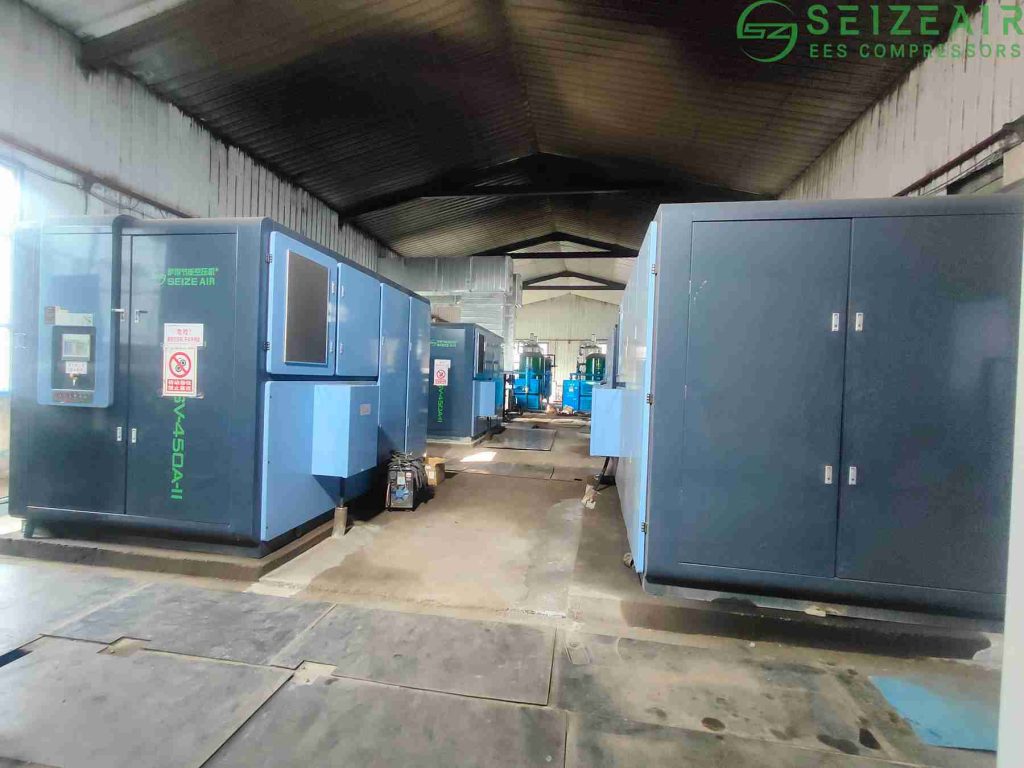
The primary obstacle is sheer current volume. As highlighted in our electrical data table, a 20 hp air compressor configured for 230V single-phase power pulls a massive 80 to 88 Amps under full operating load.
The National Electrical Code (NEC) dictates that any dedicated branch circuit supplying a continuous motor load must be sized at 125% of the motor’s nameplate FLA.
Minimum Circuit Capacity = 88A * 1.25 = 110 Amps
This means you must install a dedicated 110-Amp or 125-Amp breaker exclusively for this air compressor. Now, look at this from a business owner’s perspective: a large portion of commercial workshops and rural fabrication facilities only have a total building electrical service of 200 Amps. Occupying 110 Amps of that capacity for a single machine means you have less than half of your building’s power left to run your CNC machines, welding stations, plasma cutters, lighting, and HVAC systems. It creates a critical operational bottleneck.
Why does a 20 hp single phase air compressor draw so many amps during startup?
This is where the difference between 3 phase vs single phase motor reliability becomes painfully obvious on the workshop floor. Every time an electric motor starts up from a dead stop, it must overcome both its own internal mechanical inertia and the residual pressure trapped inside the compressor pump cycles.
To break that inertia, a single-phase motor requires a massive initial surge of electrical energy, commonly referred to in the field as Locked Rotor Amps (LRA) or inrush current. For a single-phase motor, this startup spike can easily reach 4 to 6 times the normal running amperage.
Inrush Current Spike = 88A * 5 = 440 Amps
For a fraction of a second, your 20 hp air compressor is demanding 440 Amps from your electrical panel. If your line infrastructure isn’t perfectly engineered, this extreme power draw causes an immediate, severe voltage drop throughout your entire building.
The physical symptoms are instantly recognizable: the shop lights dim heavily every time the compressor cycles on. But the hidden danger is much worse for sophisticated systems. That sudden voltage sag can instantly cause nearby computerized machinery, laser cutters, or robotic cells to throw low-voltage faults, corrupting active production software and halting your assembly lines entirely.
What size wire and breaker do I need for a 20 hp compressor setup?
Never let a general contractor guess at these specs to save a few bucks on copper. Under-sizing your wire gauge will turn your electrical conduit into a long, hidden heating element that degrades conductor insulation over time and presents a severe fire hazard. Conversely, under-sizing the breaker will result in constant nuisance tripping, stopping your production right when your facility is running at peak capacity.
To calculate the proper conductor size, we use the 125% safety multiplier mandated by the NEC for continuous motor loads.
Target Line Ampacity = Motor FLA * 1.25
- For 230V Single-Phase (88A FLA): 88 * 1.25 = 110A required capacity. To handle this safely without excessive heat build-up, you must run a minimum of AWG 2 Copper Wire rated for 75 degrees Celsius inside the conduit.
- For 230V Three-Phase (52A FLA): 52 * 1.25 = 65A required capacity. This drop allows you to safely use a much thinner AWG 6 Copper Wire.
- For 460V Three-Phase (26A FLA): 26 * 1.25 = 32.5A required capacity. At this high voltage, you can easily use standard, highly flexible AWG 10 Copper Wire.
Here is a simplified, actionable field guide for your electrical team:
| Operational Voltage & Phase | True Motor FLA | Minimum Copper Wire Size (Max 100ft Run) | Required Panel Breaker Type |
| 230V Single-Phase | 88 A | AWG 2 | 110A – 125A Dual-Element Time-Delay |
| 208V Three-Phase | 56 A | AWG 4 | 80A Standard Industrial |
| 230V Three-Phase | 50 A | AWG 6 | 70A Standard Industrial |
| 460V Three-Phase | 25 A | AWG 10 | 35A – 40A Standard Industrial |
Distance and Voltage Drop
The specification chart above assumes a standard installation where the compressor sits within 100 feet of your main electrical panel. If your building layout requires the air compressor room to be located 200 or 300 feet away from the service entrance, you must upsize your wire gauge by at least one full size to mitigate voltage drop over distance.
Running a 20 hp air compressor on an undersized wire run causes a permanent voltage drop at the motor terminals. The motor will run noticeably hotter, and its service life will be cut in half. High-end industrial units, such as Seize Air smart rotary screw systems, feature integrated phase and voltage monitoring controls. If your building wiring drops the incoming voltage below safe operating thresholds, the system will trigger a protective shutdown before the motor burns out, saving you from a multi-thousand-dollar motor rewind bill.
What is the best alternative if my shop lacks 3-phase power?
If your facility is located in a rural development or a commercial park where the utility company wants $15,000 to drop a true 3-phase power line to your building, do not panic. As system integrators, we have deployed three proven alternative strategies to run a high-capacity air system without breaking the bank.
The Rotary Phase Converter (RPC)
A rotary phase converter takes your incoming single-phase power lines and uses a specialized generator/idler motor to synthesize a true third leg of electricity. This creates clean, balanced 3-phase power for your workshop. However, you must size the converter carefully: because of the extreme inrush current we discussed earlier, you cannot use a 20 hp phase converter to run a 20 hp compressor. A safe rule of thumb is to double the capacity—you will need a 40 hp RPC to reliably start and run a 20 hp air compressor.
The Variable Frequency Drive (VFD) Soft-Start
A VFD is a highly sophisticated electronic device that takes single-phase alternating current, converts it into direct current (DC), and then reconstructs it into a smooth, adjustable 3-phase AC output. The massive benefit of a VFD is that it completely eliminates the dangerous startup current spike. It ramps the motor up slowly over several seconds, keeping your startup amps well within safe limits.
Twin 10 hp Compressors in Tandem
Instead of buying a single massive 20 hp air compressor, many smart shop owners install two separate 10 hp single-phase air compressor units piped into a shared main air receiver tank. By utilizing a smart sequencing control switch, the second unit only fires up if your team is consuming air faster than the first unit can produce it. This setup gives you built-in system redundancy, a far lower combined startup amp draw, and lets you work on standard 50-Amp circuits that are easily available in any basic electrical panel.
Why is my 20 hp air compressor tripping the breaker on startup?
When a customer calls a field service technician complaining that their newly installed compressor is tripping the main circuit breaker immediately upon startup, the issue almost always stems from one of two common, non-motor problems:
Wrong Breaker Selection
Many general electrical contractors mistakenly install standard, fast-acting commercial circuit breakers. When the motor tries to start and demands that massive fraction-of-a-second inrush current, the fast-acting breaker assumes there is a dead short circuit and trips instantly. To solve this, you must install a dedicated dual-element, time-delay breaker (often labeled as a motor-start breaker) that is specifically designed to ignore the initial startup spike while still providing robust thermal protection against long-term overloads.
A Faulty or Clogged Unloader Valve
When an air compressor completes its cycle and stops running, a small component called an unloader valve opens up to vent the highly compressed air trapped in the line between the compressor pump and the check valve. This leaves the compressor head at zero pressure.
If this valve gets clogged with carbon buildup or suffers a mechanical failure, that high pressure remains trapped against the pistons or screws. The next time the motor tries to spin, it has to fight against full tank pressure. The motor stalls, the amperage immediately spikes to maximum Locked Rotor Amps, and the breaker trips within two seconds to save the building from an electrical fire.
Conclusion
Balancing setup costs against long-term plant efficiency is crucial before finalizing your 20 hp air compressor installation. While 3-phase power remains the industrial gold standard for maximizing motor reliability, a single-phase layout can operate safely with proper heavy-gauge wiring. By choosing premium, high-efficiency equipment like Seize Air rotary screw systems, you safeguard your facility from costly voltage sags and ensure consistent production power.
Unsure if your shop’s electrical panel can safely handle a 20 hp air compressor? Contact our technical engineering team today for a custom facility power assessment and a tailored equipment quote.