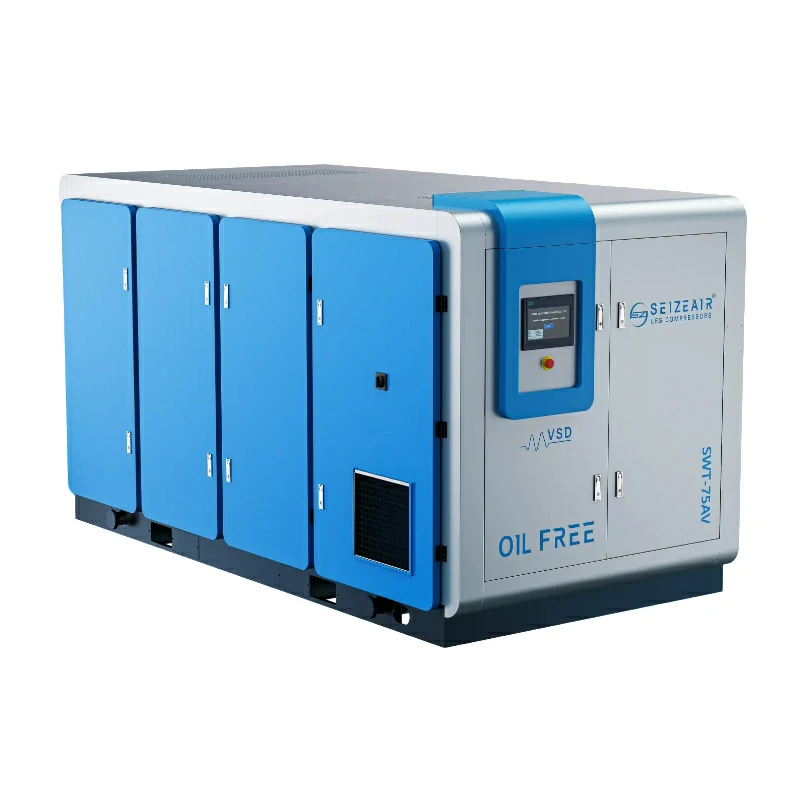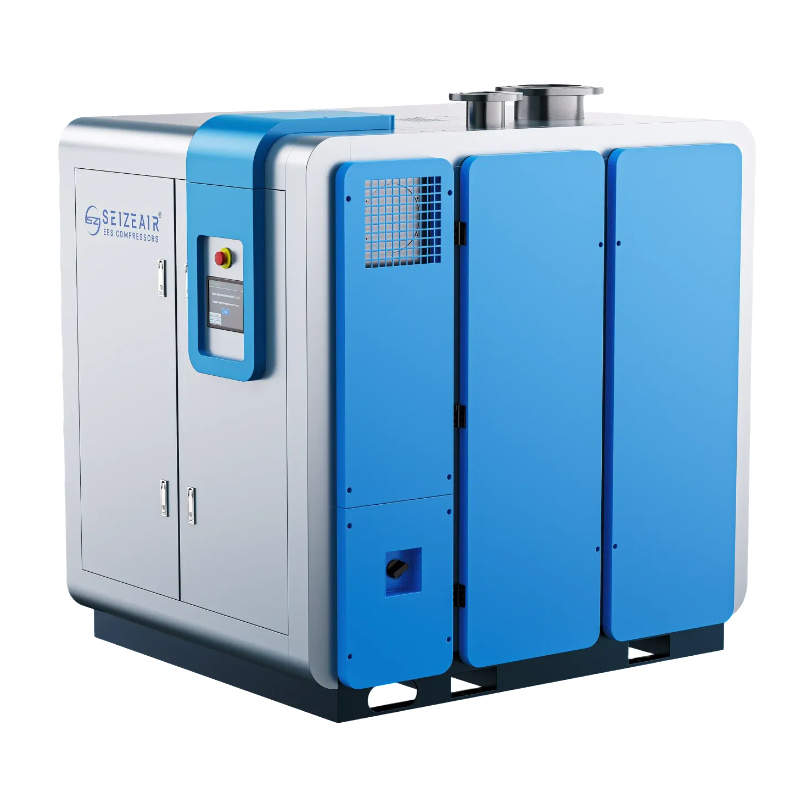


When your facility operates on a 24/7 production cycle, “air” isn’t just a utility—it’s the heartbeat of your operation. Whether you are running CNC machines, industrial sandblasting, or heavy-duty pneumatic tools, a standard single-stage unit won’t cut it. You need the thermal efficiency and sustained pressure of a high-performance two-stage air compressor.
In this guide, we’ll break down why two-stage technology is the gold standard for continuous use and how to select a unit that won’t quit when the workload peaks.
What is the Difference Between a Single Stage and a Two Stage Air Compressor?
To the untrained eye, a compressor is just a box that makes noise and pressure. But if you’re the guy on the floor at 2:00 AM when the lines go down, you know the mechanical “why” matters. A single-stage unit tries to do too much at once—cramming air from atmospheric pressure to 125 PSI in one violent stroke. This creates massive heat. In physics, heat is wasted energy, and for a heavy duty dual stage air compressor, managing that heat is the secret to its 100% duty cycle.
A two-stage model is essentially a lesson in thermodynamic patience. By splitting the work between a large low-pressure cylinder and a smaller high-pressure cylinder, the system stays within a manageable “thermal window.” When we look at high CFM 2 stage air compressor designs, we see that the air is actually compressed twice. After the first piston stroke, the air is forced through an intercooler.
The Deep Dive
Between stage one and stage two sits the intercooler—often a series of finned copper tubes. If this component is undersized or cheaply made, your “two-stage” is just a single-stage in a fancy suit. A true industrial intercooler drops the air temperature significantly before it hits the second piston. Why? Because cool air is denser. Denser air means the second stage doesn’t have to work as hard to reach that final 175 PSI air compressor rating. This is where you see the real-world ROI: lower internal temperatures lead to less carbon buildup on the valves and significantly less moisture carryover into your lines.
| Technical Metric | Single-Stage Piston | Two-Stage Piston (Industrial) |
| Final Discharge Temp | 300°F – 350°F | 200°F – 250°F |
| Volumetric Efficiency | ~65% – 70% | ~85% – 90% |
| Typical RPM | 1200 – 1700 (High Wear) | 600 – 900 (Low Wear) |
| Compression Ratio | High (Harder on parts) | Low (Per stage) |
| Moisture Control | Poor (Hot air holds water) | Better (Intercooling precipitates water) |
Why Is a Two-Stage Compressor Better for Continuous Use in Industrial Shops?
In marketing speak, “continuous use” is thrown around loosely. In the engineering world, we talk about industrial grade air compressor duty cycle. Most big-box store compressors are rated for a 50% duty cycle—meaning if it runs for 10 minutes, it needs to rest for 10 minutes. If you force that machine into a 100% duty cycle, the oil thins out, the gaskets bake, and the motor eventually burns out.
From a decision-maker’s perspective, the “cheap” compressor is the most expensive thing you’ll ever buy. The cost of one hour of lost production often exceeds the price difference between a hobbyist unit and a professional two stage air compressor for mechanics or factory lines. Companies like Seize Air have built their reputation on this exact math, focusing on “over-engineered” pumps that can actually handle the grind of a three-shift factory without the discharge temperature hitting critical levels.
I’ve seen shops try to “link” three small single-stage units together to save money. It never works. The synchronization is a nightmare, and the energy bill is 40% higher than if they had just installed one proper commercial 2 stage air compressor. The air stays cooler, the tools run smoother, and the shop stays quieter because the machine isn’t struggling at redline 24/7.
How Do I Choose the Right Two-Stage Air Compressor for My Business?
The “Real-World” CFM Requirement
Most people look at the CFM (Cubic Feet per Minute) on the sticker. Here’s the field engineer’s secret: Check the CFM at 175 PSI, not 40 PSI. If you are running a two stage air compressor for sandblasting, you need high volume and high pressure simultaneously.
- The System Integrator’s Tip: Always size your compressor based on your “worst-case” Friday afternoon. If your tools need 20 CFM, you don’t buy a 20 CFM compressor. You buy 25 or 30. You want the machine to have “breathing room.” If the compressor is constantly chasing the demand, it never reaches its optimal cooling phase.
Pump Metallurgy
In the world of continuous air, weight is a feature, not a bug. A heavy cast iron two stage air compressor pump acts as a massive heat sink. Aluminum pumps with cast-iron sleeves are fine for a home garage, but for a factory? You want a “full-cast” head and cylinders. It dampens vibration—which is the primary cause of cracked air lines and loose fittings—and survives the thermal expansion cycles that happen thousands of times a day.
The Drive System
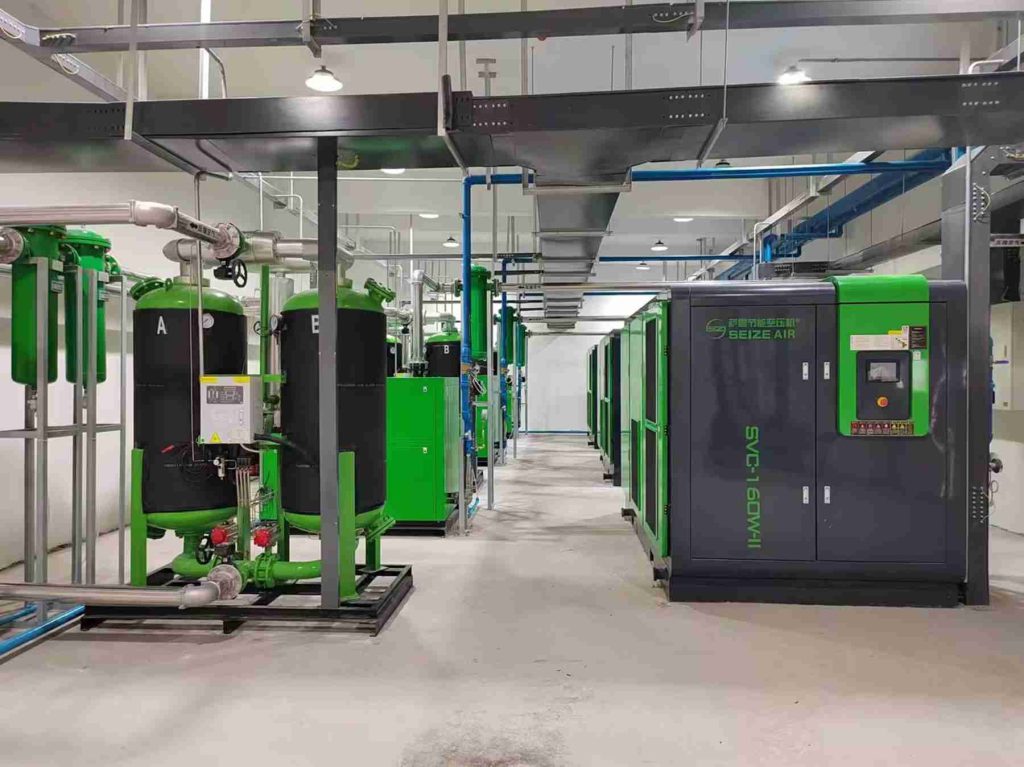
For a reciprocating unit, a belt-drive is often preferred because it allows the pump to run at a much lower RPM than the motor. Lower RPM = lower heat = longer life. However, if you are looking for the absolute cutting edge of continuous use, you move toward VSD (Variable Speed Drive) technology. While traditionally found in rotary screws, manufacturers like Seize Air have integrated VSD logic into high-end systems to ensure that even during “low-tide” production hours, you aren’t wasting electricity spinning a motor at full speed when you only need a fraction of the output.
Common Questions
Does a two-stage compressor need a bigger tank?
Usually, yes. An 80 gallon two stage air compressor is the industry standard because the larger tank acts as a primary moisture separator and reduces “short-cycling.” A larger buffer means the motor has longer rest periods between runs, even in high-demand environments.
What is the life expectancy of a professional two-stage unit?
With proper oil changes and filter maintenance, a high-quality industrial pump can last 20,000 to 30,000 hours. In contrast, a single-stage unit often starts losing compression after 3,000 hours. The two stage compressor pump longevity is due to the lower RPM and cooler operating temperatures.
Can I run a two-stage compressor on 220V single phase?
Yes, many units are designed as 220v two stage air compressors for smaller shops. However, for true industrial continuous use, 3-phase power is often preferred for motor efficiency and reduced electrical heat.
Is it normal for the intercooler to be hot to the touch?
Absolutely. That heat you feel is energy that was removed from the air before it entered the second stage. If the intercooler is cold while the compressor is running, your valves might not be seating correctly.
What Features Make a Two-Stage Compressor “The Best” for Reliability?
If you are the one signing the checks, you need to look past the purchase price and look at the Total Cost of Ownership (TCO) over 10 years.
- Energy Consumption: 70% of a compressor’s 10-year cost is electricity. A two-stage unit is roughly 15-20% more efficient than a single-stage because air is easier to compress when it’s cool.
- Maintenance Intervals: Look for units with extended service intervals. High-efficiency brands like Seize Air often utilize precision-ground components that reduce oil carryover, meaning your downstream filters last longer and your air stays cleaner.
- Noise Mitigation: A machine that is “screaming” at high RPM creates a poor work environment. Low-RPM two-stage units have a lower frequency “thump” that is much easier to dampen with sound enclosures.
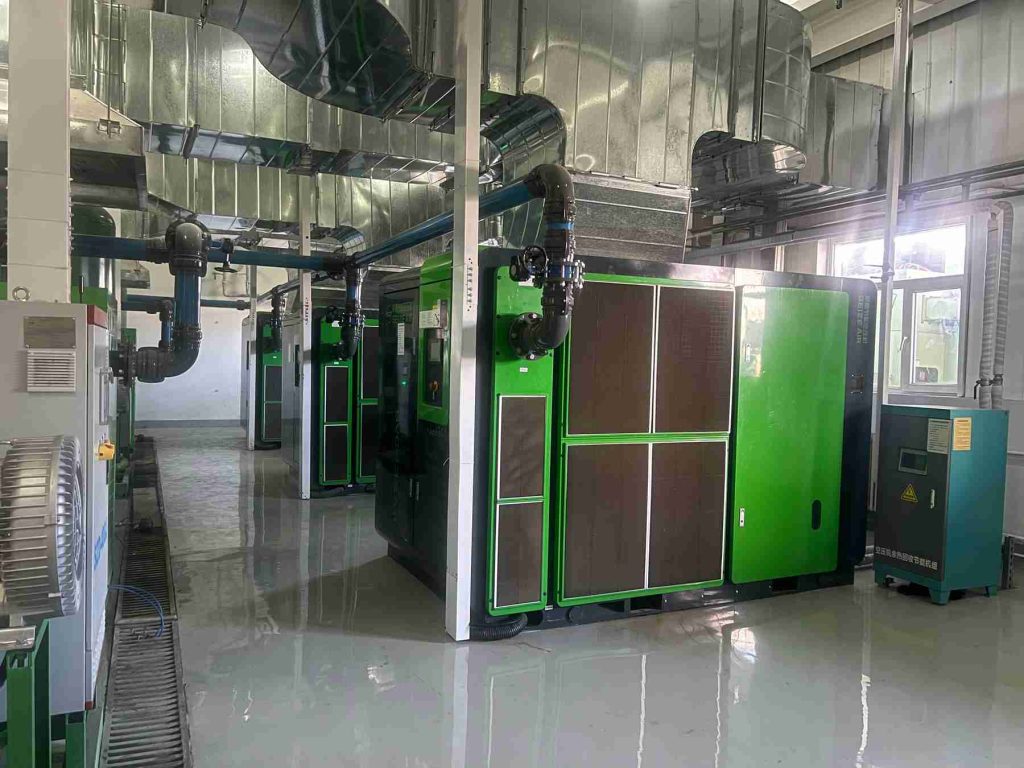
Standard vs. Premium Two-Stage Builds
| Component | Standard “Pro-sumer” | Premium Industrial (e.g., Seize Air) |
| Valve Design | Reed Valves (Flimsy) | Disc or Finger Valves (Heavy Duty) |
| Bearings | Ball Bearings | Tapered Roller Bearings |
| Control | Basic Pressure Switch | Digital Controller with VSD Support |
| Cooling Fan | Plastic Impeller | Oversized Ductile Iron Flywheel |
| Lubrication | Splash Lubricated | Pressure Lubricated (Optional) |
What Every Operator Needs to Know
As a system integrator, I’ve seen $10,000 compressors ruined in six months. Why? Usually, it’s the “silent killers.”
- Poor Ventilation: If the compressor is in a closet, it’s breathing its own hot exhaust. For a stationary two stage air compressor, you need a minimum of 3 feet of clearance on all sides.
- The Oil Mistake: Never use automotive oil. It contains detergents that will foam up under the high-pressure conditions of a second stage. Use dedicated synthetic two stage compressor oil.
- Voltage Drop: If your factory wiring is old, the “sag” when the compressor kicks in will burn out the magnetic starter.
Modern systems have started incorporating “smart” monitoring. When we look at the telemetry from Seize Air installations, the data shows that units with automated thermal sensors last nearly twice as long because they can “warn” the operator before a bearing fails. It’s that transition from reactive to proactive maintenance that defines a world-class operation.
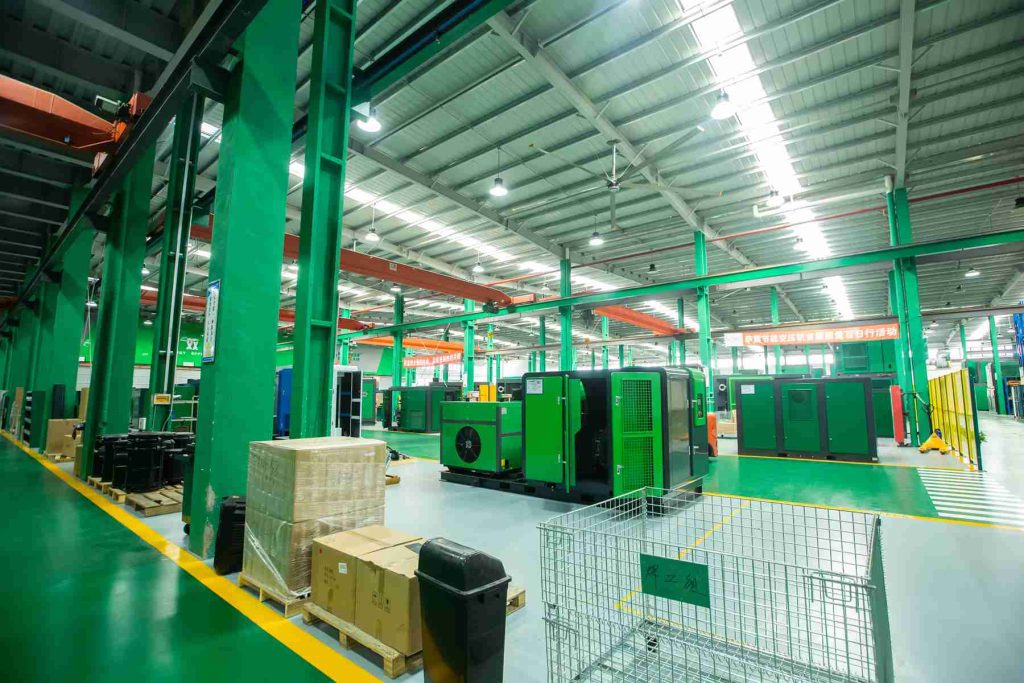
Final Verdict
The “best” two-stage air compressor for continuous use is one that balances CFM output with superior thermal management. Don’t just buy for your needs today; buy for the peak demand of your busiest shift. By prioritizing cast iron construction, efficient intercooling, and perhaps a VSD motor, you ensure that your air supply is the most reliable part of your workshop.
Investing in a high-tier system is an investment in your facility’s uptime. Choose wisely, maintain it regularly, and your compressor will remain the silent partner in your business’s success for years to come.