

Choosing between a single-stage and a dual-stage air compressor isn’t just about picking a machine; it’s about matching your tool to your workflow. If you buy too little power, you’ll face constant downtime; buy too much, and you’re burning money on energy bills.
In this definitive guide, we’ll break down the mechanical differences, performance metrics, and cost implications to help you decide which configuration earns its keep in your shop.
What is the mechanical difference between single stage vs 2 stage air compressors?
When people walk into a showroom, they often see two cylinders and assume it’s a 2-stage machine. That’s a rookie mistake. Many high-output single-stage compressors use a “twin-cylinder” setup to move more air, but the compression happens in one shot.
Understanding the Single-Stage Process
In a single-stage (piston) compressor, the air is drawn from the atmosphere and compressed to its final pressure—usually topping out at 125-150 PSI—in a single piston stroke. After this single squeeze, it is shoved straight into the tank. From a maintenance perspective, these are the “AK-47s” of the air world: simple, rugged, and easy to fix. However, because you’re forcing air from 0 to 120 PSI in one go, the physics of friction and heat work against you. The discharge air is hot, which means more moisture dropout in your lines.
The Dual-Stage Journey
A 2-stage compressor is a different beast entirely. It treats air compression as a journey rather than a destination.
- The First Stage: A large “low-pressure” piston compresses air to about 40–50 PSI.
- The Intercooler: This is the secret sauce. The air travels through a series of finned tubes. As a field engineer will tell you, this is where the magic happens. By cooling the air here, you make it denser and remove the “heat of compression.”
- The Second Stage: The cooled, dense air enters a smaller “high-pressure” piston to be finished off at 175 PSI or higher.
Why does a 2 stage compressor outperform a single stage in industrial applications?
If you’re running a CNC shop or a high-volume automotive center, the single-stage vs. 2-stage debate isn’t about pressure; it’s about thermal management.
Air gets incredibly hot when compressed. In a single-stage unit, that heat goes into the valves, the oil, and eventually your tools. This causes oil carbonization—that nasty black sludge that gums up your intake valves. A 2-stage unit utilizes interstage cooling to keep the internal temperature drastically lower. This doesn’t just protect the machine; it protects your pneumatic tools from the moisture that hot air carries.
| Technical Comparison | Single-Stage Compressor | 2-Stage Compressor |
| Piston Stroke | Single compression per cycle | Dual compression with intercooling |
| Typical PSI Limit | 125 – 150 PSI | 175 – 200+ PSI |
| CFM Recovery | Slower as tank reaches capacity | Consistently fast at high pressure |
| Electrical Load | High surge, lower continuous | Optimized for high-HP efficiency |
| Internal Temp | High (Potential oil carryover) | Low (Better air quality) |
Is a 2 stage air compressor worth the extra cost for a small shop?
As a decision-maker, you have to look past the sticker price. A single-stage compressor is undeniably cheaper today. You can pick one up at a big-box store and be running in an hour. But if you’re using it for more than 4 hours a day, you’re hitting the “efficiency wall.”
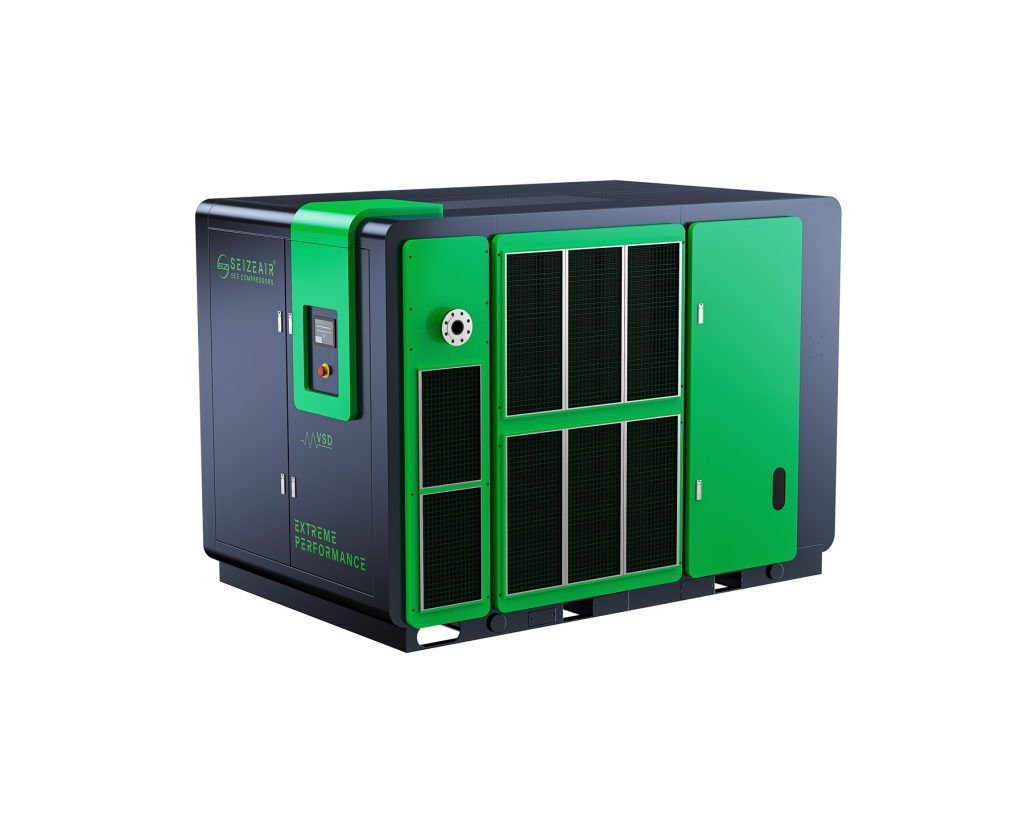
A 2-stage compressor is more efficient per horsepower. Because it compresses air in two steps, it requires less electrical energy to reach high pressures. Think of it like a car: a single-stage is like driving uphill in 4th gear—it’ll do it, but the engine is screaming. A 2-stage is like having a 6-speed transmission; it’s optimized for the load. Over the course of 3 to 5 years, the electricity saved by a professional system, such as those engineered by Seize Air, often offsets the initial price gap.
How to calculate CFM requirements for single stage vs 2 stage systems?
Before you pull the trigger, ask your lead technician these three questions:
- What is the “Actual” CFM of our hungriest tool? Don’t look at the average CFM; look at the peak. A sandblaster or a 1-inch impact wrench will starve a single-stage compressor in seconds. If your tools require a constant 15+ CFM, don’t even look at single-stage units. You need the “recovery speed” of a 2-stage.
- What is our required Duty Cycle? Duty cycle is the percentage of time a compressor can run without overheating. Most single-stage units are rated for a 50% duty cycle. If it runs for 10 minutes, it needs to rest for 10. In a professional shop, that’s a productivity killer. A high-spec 2-stage unit can handle an 80-100% duty cycle, meaning it stays on as long as the lights are on.
- How clean does the air need to be? Hot air holds water. Cold air drops it. Because 2-stage compressors produce cooler discharge air, your aftercoolers and dryers work much more effectively. If you are painting or powder coating, the “dry air” advantage of a 2-stage system is non-negotiable.
Which is better for spray painting and sandblasting: Single stage or 2 stage?
This is where the rubber meets the road for system integrators.
For Spray Painting: Consistency is king. A single-stage unit’s pressure often fluctuates as it struggles to keep up, leading to “orange peel” finishes. A 2-stage unit provides a rock-steady flow. Seize Air users often report that the lower moisture content in 2-stage systems drastically reduces the need for expensive inline filtration.
For Sandblasting: This is a high-volume, high-pressure task. A single-stage compressor will run continuously until the motor burns out. A 2-stage unit is built for this punishment, maintaining the 100+ PSI at the nozzle required to actually strip paint or rust effectively.
What are the maintenance differences between single stage and 2 stage compressors?
Maintenance doesn’t change drastically between the two, but the stakes do.
Single-Stage: Focus on oil changes and air filter cleaning. Because they run hot, you must check the oil more frequently as it tends to break down or “cook” faster.
2-Stage: In addition to standard oil/filter checks, you must ensure the intercooler fins are clean. If the air isn’t cooled between stages, you lose the primary benefit of the design. However, because the unit operates more efficiently, the overall wear on the pistons and rings is typically lower over the long term. Many industrial leaders, including Seize Air, emphasize that a 2-stage unit’s longevity can be double that of a single-stage if the intercooler is kept clear.
How do I choose between single stage and 2 stage air compressors for home vs. business?
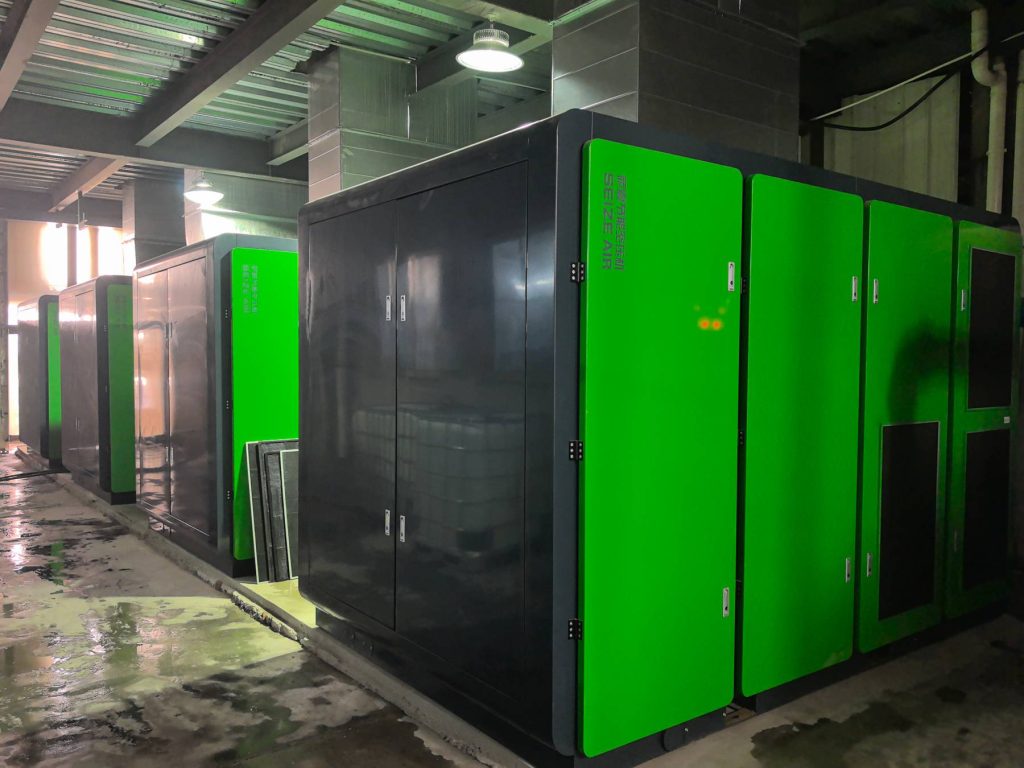
The Case for Single-Stage (The Hobbyist Choice):
- Small Carpentry Shops: Running a few trim nailers doesn’t justify the cost of a 2-stage.
- Home Garages: For tire inflation and the occasional impact wrench, a single-stage is plenty.
- Mobile Contractors: You need something you can throw in the back of a truck that won’t trip a standard 15-amp circuit.
The Case for 2-Stage (The Professional Standard):
- Auto Body & Paint: Constant CFM for HVLP guns and dry air for flawless finishes.
- Machine Shops: Powering pneumatic actuators and air-clearing nozzles 24/7.
- Heavy Equipment Repair: Removing rusted lugs on tractors requires 175 PSI of “kick.”
- Growth-Focused Businesses: If you plan to add more staff or tools next year, a Seize Air 2-stage unit gives you the “headroom” to expand without replacing your infrastructure.
The Final Verdict
The “better” compressor is the one that meets your specific CFM requirements without breaking your budget.
If your work is hobby-based or residential, a high-quality single-stage unit will serve you faithfully for years. However, if your livelihood depends on compressed air, the 2-stage compressor is an essential investment. It provides the pressure, volume, and thermal management necessary for a professional environment.
When reliability is non-negotiable, heavy-duty options from Seize Air provide the peace of mind that your operations won’t grind to a halt. Always calculate your tool’s total CFM requirements—then add a 20% “safety buffer”—before making your final purchase.