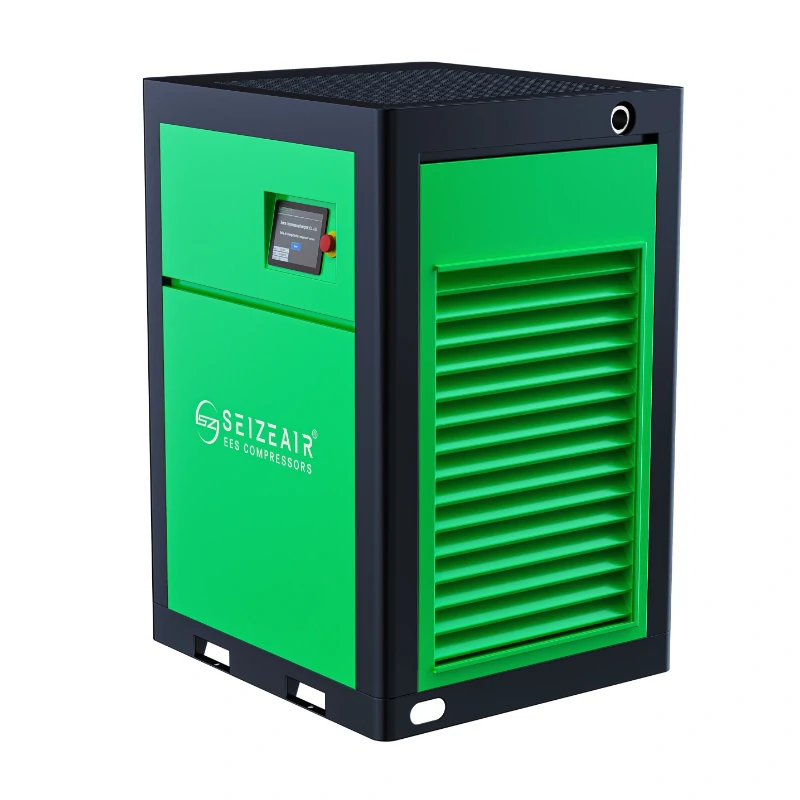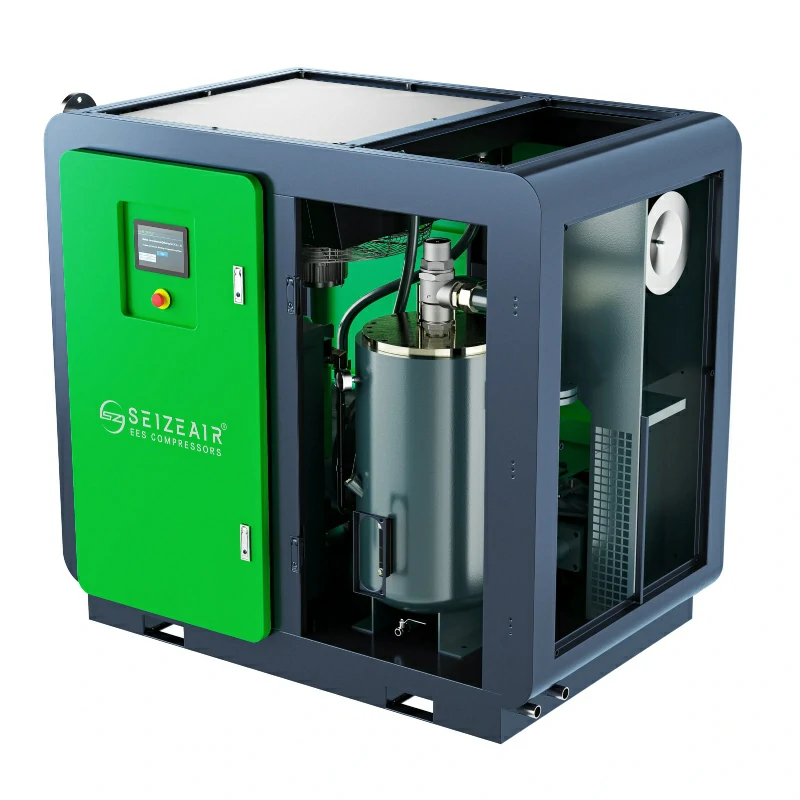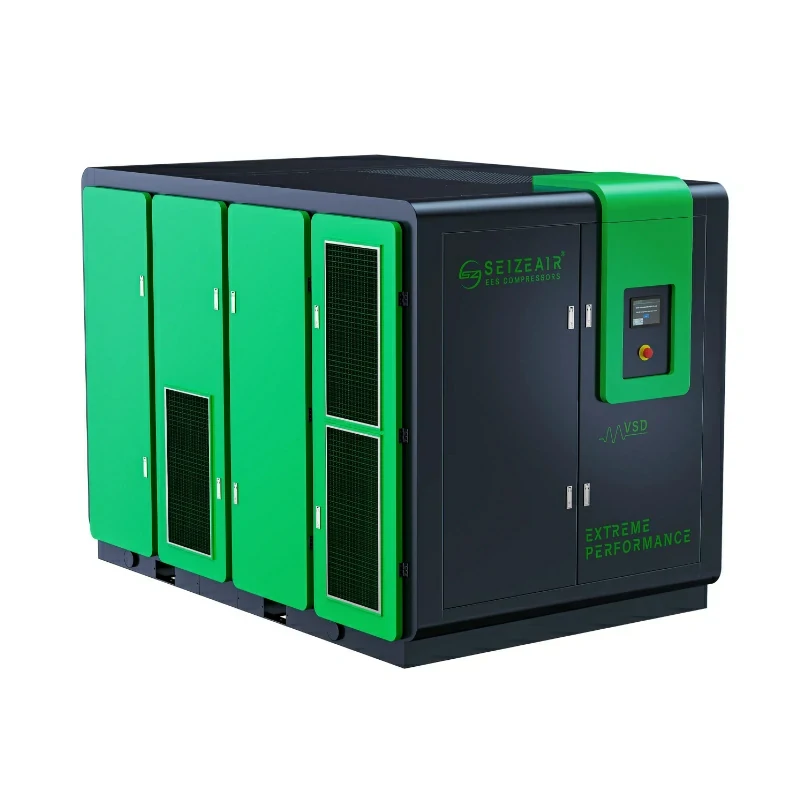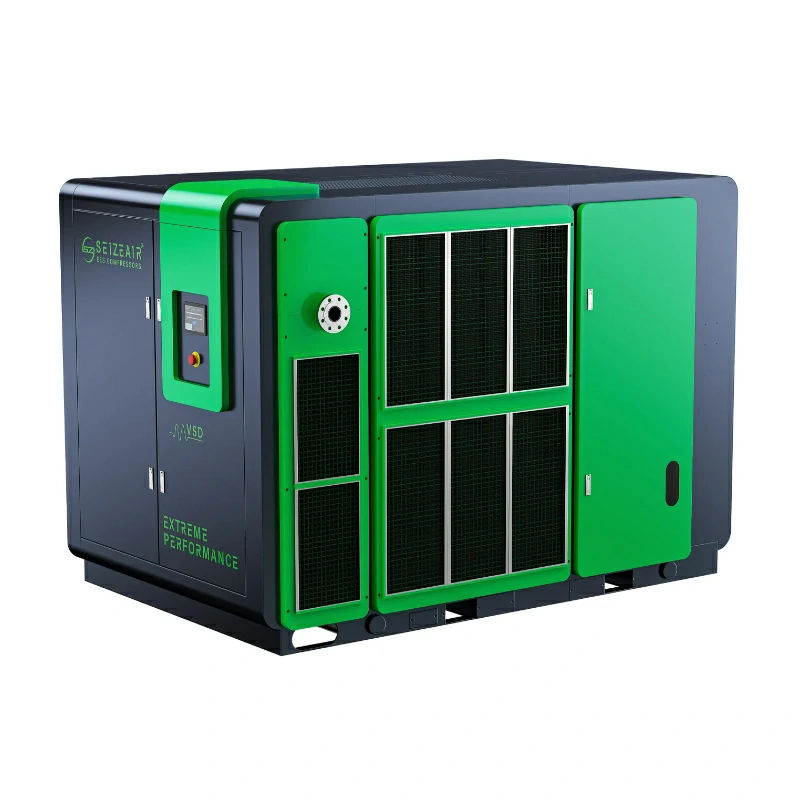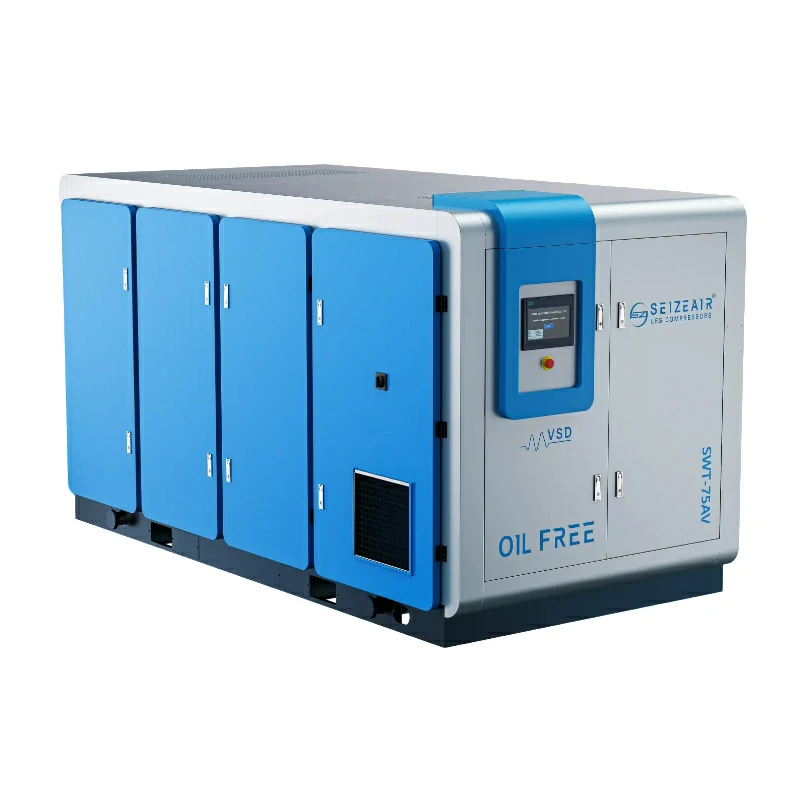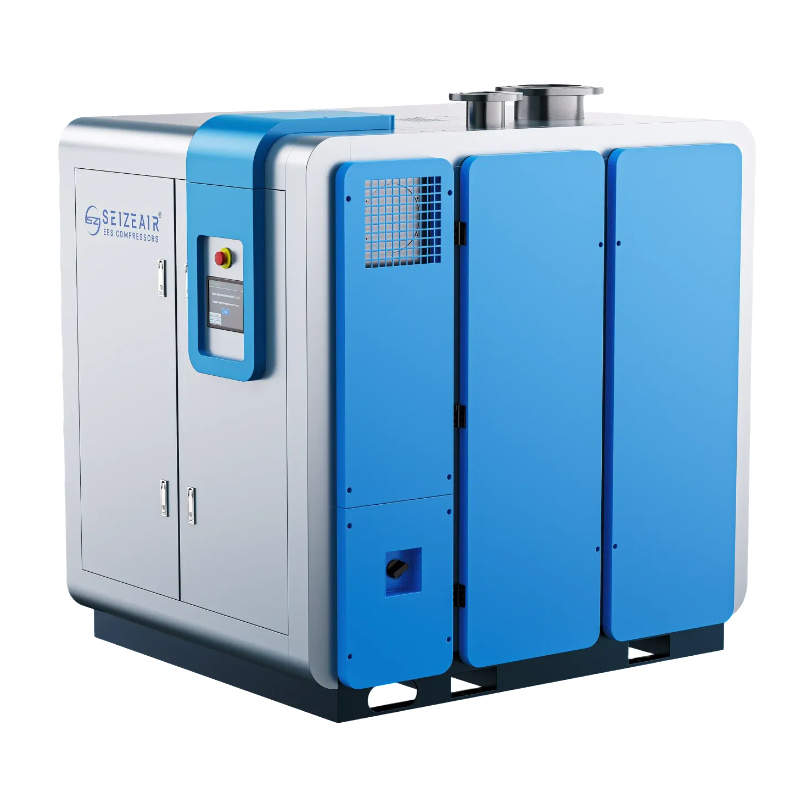


A class 0 air compressor is the only air compressor grade that, by definition under ISO 8573-1, guarantees zero oil in your compressed air stream. When you start comparing a water-injected Class 0 unit with a dry oil-free Class 0 unit, the choice quickly stops being about “oil or no oil” and becomes about cooling method, lifecycle cost, and which failures your process can actually tolerate. This guide walks through how each technology works, where it fits, and how to pick the right one without overspending.
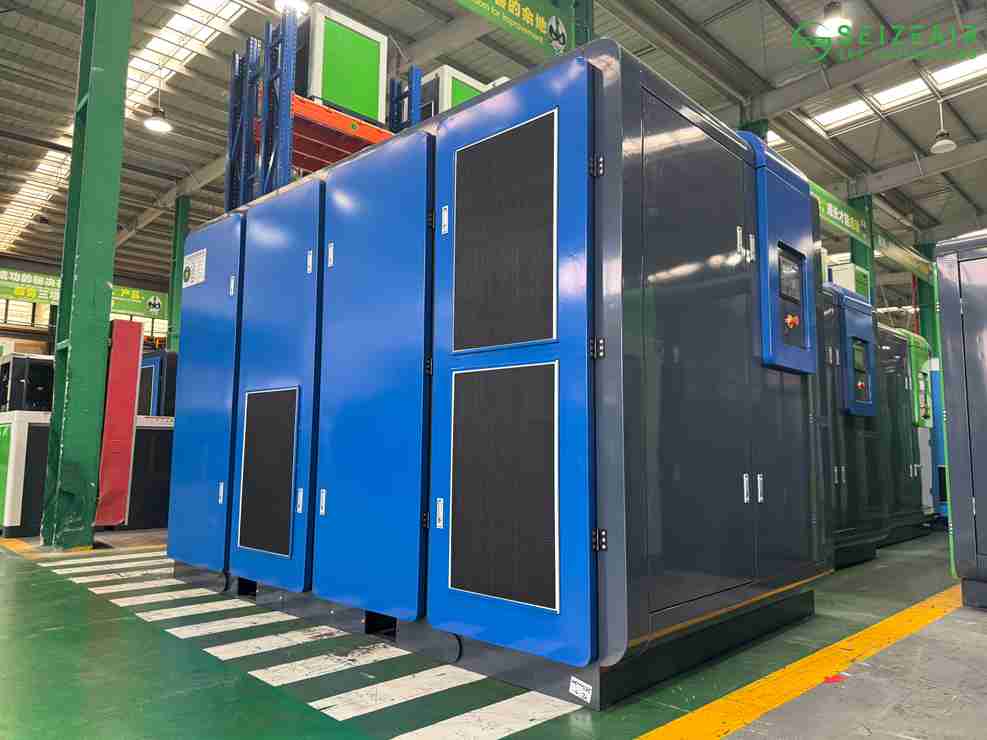
What Is a Class 0 Air Compressor and Why Does It Matter?
ISO 8573-1 sorts compressed air by how much contaminant it carries. One of those contaminants is total oil, and it is split into classes 0 through 4. A what is a class 0 air compressor question usually comes from a buyer who has been told “you need oil-free,” but oil-free and Class 0 are not the same claim. Class 0 is a purity outcome measured at the point of use; oil-free describes how the machine is built.
The part that surprises people: Class 0 is the only class with no fixed numeric ceiling. The standard lets the supplier and user agree a limit, almost always written as below 0.01 mg/m3 of total oil, because any oil that a lab can detect can ruin a batch or fail an audit. That is why class 0 compressed air quality shows up as a hard requirement in food, beverage, dairy, pharmaceutical, medical breathing-air, electronics, optics, and paint lines rather than as a nice-to-have.
Here is the full oil-purity scale from the standard, written out so you can see where Class 0 sits:
ISO 8573-1 total oil limit, mg/m3 (max)
Class 0 : user-defined, normally below 0.01
Class 1 : 0.01
Class 2 : 0.1
Class 3 : 1
Class 4 : 5
If a spec sheet says “oil-free” but quotes Class 1, it is not Class 0. Keep that distinction in your procurement checklist.
Is a Class 0 Air Compressor Really Oil-Free?
The search “is a class 0 air compressor oil free” is the most common follow-up, and the honest answer is “at the air end, yes; in the whole machine, it depends.” Both water-injected and dry Class 0 compressors keep oil out of the compression chamber. In a water-injected machine, water does the sealing and cooling. In a dry machine, the rotors run with no oil in the chamber and are timed by external gears.
The catch is the gearbox. Many dry units have an oil-lubricated timing gear that is fully sealed from the air path, so the delivered air stays Class 0 as long as the seal holds. A class 0 oil free air compressor therefore means “no oil contacts the air,” not “the machine contains no oil anywhere.” Always ask where the oil is and how it is separated from the airstream.
How Does a Water-Injected Class 0 Compressor Work?
In a water lubricated class 0 compressor, a measured stream of water is injected straight into the compression chamber. The water cools the air as it is squeezed, washes away fine particles, and forms a film between the rotors so they never touch metal-to-metal. Because water carries heat away so well, discharge temperatures stay low, often around 50 to 60 degrees C, which keeps the whole train gentle on seals and bearings.
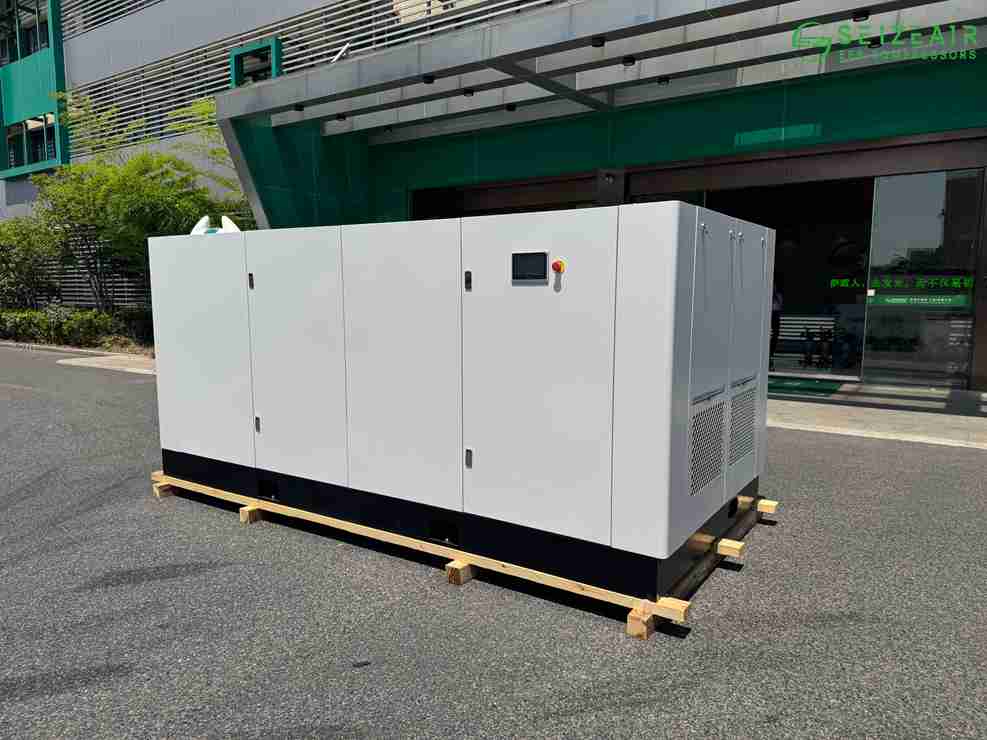
The air then passes through an oil-water separator that strips the injected water, gets cooled in an aftercooler, and moves on to treatment. Most water-injected Class 0 screws are single-stage, which keeps the moving-part count down. The class 0 air compressor working principle here is best read as “compression plus in-chamber washing,” and that washing step is exactly why these units are popular in food and beverage where the air touches the product.
Air path, written simply:
Intake -> Water injection + compression -> Oil-water separator
      -> Aftercooler -> Receiver -> Downstream filtration
How Does a Dry (Oil-Free) Class 0 Compressor Work?
A dry class 0 air compressor vs oil free comparison often confuses buyers because “dry” and “oil-free” get used as if they mean the same thing. A dry Class 0 screw uses two rotors timed by external gears, with no oil in the chamber and a protective coating (often PTFE-based) on the rotors. Compression heats the air hard, discharge temperatures commonly reach 180 to 200 degrees C, which has a useful side effect: the heat bakes off moisture and suppresses microbial growth inside the element.
Because the temperature is high, a robust aftercooler is non-negotiable, and two-stage designs are common when you need higher pressure. The trade for that simplicity is more electrical energy turned into heat, most of which must be removed downstream. An oil-free screw air compressor of this type is the default choice where water management is difficult, such as cold sites, remote plants, and cleanrooms that cannot handle extra condensate.
Water-Injected vs Dry Class 0
The table below puts the two technologies next to each other so the differences are easy to weigh before you read the deeper sections.
| Factor | Water-injected Class 0 | Dry oil-free Class 0 |
|---|---|---|
| Lubrication / cooling | Water injected into chamber | No oil in chamber; rotors coated |
| Typical discharge temp | 50 to 60 C | 180 to 200 C |
| Common stages | Usually single-stage | Often two-stage at higher pressure |
| Air quality at source | Class 0, washed clean | Class 0, heat-sterilized path |
| Water consumption | Yes, needs treatment | None |
| Part-load efficiency | Strong with VSD | Strong with VSD; more cooling load |
| Maintenance focus | Water system, separator, seals | Rotor coating, aftercooler, gears |
| Best pressure range | Up to about 13 bar | Up to 15 bar and beyond |
| Capital cost | Moderate | Moderate to higher |
| Microbe control | Washing + downstream | High heat inside element |
Which Industries Need a Class 0 Air Compressor?
Not every plant needs Class 0. General workshops running pneumatic tools usually sit fine at Class 1 or 2. The industries below cannot take the risk, and each leans toward one technology for practical reasons.
| Industry | Usually recommended | Why Class 0 is required |
|---|---|---|
| Food and beverage | Water-injected or dry | Air touches product, packaging, and blowing; any oil taints taste and fails audits |
| Pharmaceutical | Dry, tightly controlled | Air is treated as an additive; microbial and hydrocarbon limits are strict |
| Electronics and optics | Dry | Oil film ruins wafers, lenses, and coatings at microscopic scale |
| Medical / breathing air | Dry with full treatment | Direct patient risk; certified hydrocarbon and odor limits |
| Painting and coating | Dry | Oil causes fish eyes and weak adhesion on finishes |
| Chemical labs | Dry or scroll | Small, clean, low-flow air where contamination voids results |
For pharma lines, review our guide on air compressor for pharmaceutical selection before you size the element. Food plants should read the air compressor for food industry notes, because the rules for direct and indirect contact air are different and change the dryer spec.
Water-Injected Class 0 Compressors
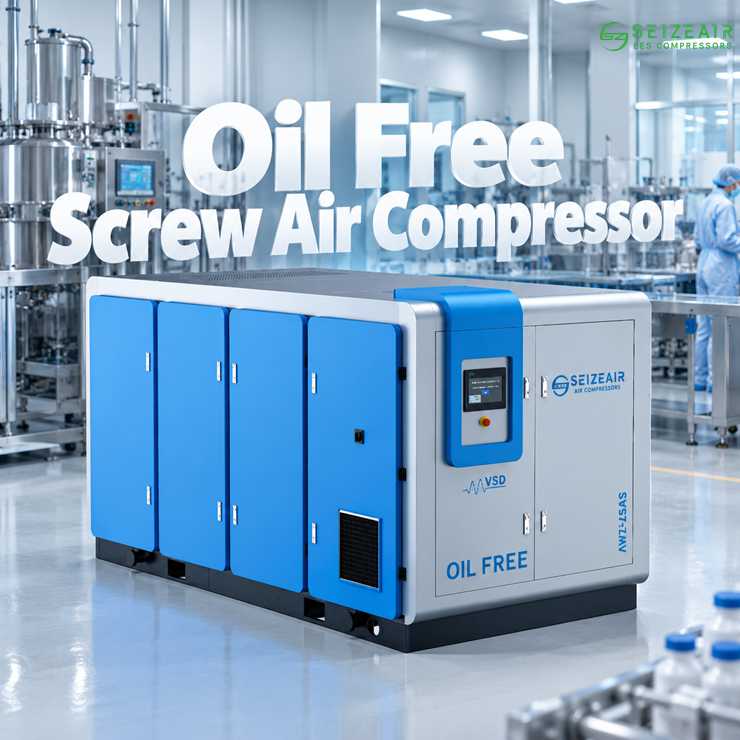
The oil-free water-lubricated screw air compressor family is the quiet workhorse of food and beverage plants. The low discharge temperature means less stress on every downstream component, and the in-chamber wash gives you clean air at the source rather than relying only on filters to catch oil later.
Strengths: lower running temperature, simple single-stage design, excellent cooling in hot ambient plants, and strong part-load behavior with a variable-speed drive. Limits: you must manage the water loop, treat the separated water, and handle the extra condensate, which is awkward in freezing sites and adds a small recurring consumable cost. For a deeper look at where this technology pays off, see our write-up on the oil-free water-injected compressor.
Seize Air’s water-lubricated models are built for continuous food-grade duty, but the right call still depends on your water quality and ambient conditions, not just the compressor spec.
Dry Class 0 Compressors
A dry oil free class 0 compressor wins on simplicity of site services: no water loop, no condensate from the compressor itself, and easy operation in cold or remote locations. The high internal temperature is a feature, not a bug, because it keeps the element hostile to microbes.
Strengths: no water system to maintain, lower risk in freezing climates, straightforward condensate handling, and good scalability to higher pressure. Limits: you pay for that heat in cooling energy and aftercooler duty, and the rotor coating is a wear item that eventually needs attention. For low-flow, clean applications such as labs and small instrument air, oil-free scroll compressors deliver dry Class 0 air in a compact, low-noise package.
Class 0 vs Class 1 Air Compressor
Buyers often ask about class 0 vs class 1 air compressor because Class 1 equipment is cheaper and the numbers look close. They are not close where it matters. The table shows why “almost zero” is still a contamination risk in a sensitive process.
| Class | Max total oil (mg/m3) | Typical use | Risk if used in sensitive process |
|---|---|---|---|
| 0 | User-defined, normally below 0.01 | Food, pharma, electronics, breathing air | None by design |
| 1 | 0.01 | General plant, non-contact tools | Oil detectable; taint or defect possible |
| 2 | 0.1 | Rough pneumatic duty | Clear contamination risk |
| 3 | 1 | Non-critical air | Unsuitable for product contact |
Class 1 allows up to 0.01 mg/m3 of oil; Class 0 commits to a limit below that, agreed and proven by test. In a chocolate enrober or a vial-filling line, that gap is the difference between passing and recalling.
How Much Does a Class 0 Air Compressor Cost to Run?
The purchase price is a small slice of the story. Energy is where Class 0 units live or die, because both technologies are more expensive to run than oil-flooded screws. The running cost is straightforward to estimate with one plain formula:
Annual electricity cost ($) = Motor power (kW) x Annual running hours x Electricity price ($/kWh)
Specific power (kW per m3/min) = Rated motor power / Free air delivery (m3/min)
Worked example: a 55 kW unit running 6,000 hours a year at 0.12 $/kWh costs 55 x 6000 x 0.12 = 39,600 dollars a year in electricity alone. A 5 percent improvement in specific power saves about 1,980 dollars annually, which over a ten-year life dwarfs the difference in sticker price. Water-injected designs often post a slightly lower specific power because they shed heat with water instead of air, while dry units spend extra energy on the aftercooler.
What Drives Total Cost of Ownership?
Capital cost is visible; the rest hides in operation. The table below is a planning aid, not a quote, and the weights shift with your duty cycle and climate.
| Cost element | Water-injected Class 0 | Dry oil-free Class 0 |
|---|---|---|
| Energy | Often slightly lower SP | Higher cooling load |
| Water treatment | Recurring cost | None |
| Consumables | Separator, seals, filters | Filters, rotor coating |
| Rotor coating | Not applicable | Replacement every several years |
| Cooling infrastructure | Water system | Larger aftercooler, possible dryer load |
| Downtime risk | Water loop failure | Coating or gear failure |
The class 0 air compressor maintenance cost question is really a question of which consumable your team would rather manage: a water loop or a rotor coating. Both are predictable; neither is free.
How to Choose the Right Class 0 Compressor for Your Application?
A good selection is a short checklist, not a guess. Run through these in order:
1. Contamination risk: does the air touch the product, a surface, or just a tool? Product contact pushes you to Class 0 without debate.
2. Water availability and climate: if you cannot easily treat water or the site freezes, dry wins.
3. Pressure and flow: very high pressure favors dry two-stage; mid-pressure bulk air fits either.
4. Duty cycle: continuous heavy duty rewards the lower specific power; intermittent duty rewards simplicity.
5. Budget vs TCO: price the energy and consumables over ten years, not the invoice.
6. Downstream air treatment: match the dryer and filter to the dew point and purity you must hold.
Seize Air application engineers typically start this with a compressed-air audit, because the right answer depends more on your process than on any brochure claim. A best class 0 oil free air compressor is the one that matches these six points, not the one with the boldest headline.
How to Verify Class 0 Certification?
Claims are cheap; test reports are not. When a supplier says “Class 0,” ask for the class 0 air compressor certification ISO 8573-1 paperwork and check three things. First, was the test done at your operating flow and pressure, or at a flattering point? Performance drifts with load. Second, was it run by an independent lab, not a self-declaration? Third, does it cover the whole air system or only the compressor? A Class 0 element behind a contaminated tank is not Class 0 at the point of use. Keep the report on file; auditors will ask for it.
Class 0 Air Compressor Maintenance: What to Expect?
The class 0 air compressor maintenance cost and effort differ by type. Water-injected units need attention to the water loop: separator condition, bacterial treatment where required, seal checks, and periodic cleaning of the injection path. Dry units shift that effort to the element and cooling side: rotor-coating inspection, aftercooler cleaning, gearbox oil on a long sealed interval, and bearing surveillance.
Neither type wants neglected filters. A clogged downstream filter raises differential pressure, wastes energy, and can pull contaminants backward into clean air. Build the service interval around measured pressure drop, not the calendar alone.
Common Mistakes When Buying a Class 0 Air Compressor
The same errors repeat across buyers. Buying on capital price and ignoring ten-year energy cost is the biggest. Assuming the compressor alone delivers Class 0, then pairing it with a weak dryer, is the second. Oversizing “for safety” loads the unit into inefficient regions. Forgetting local condensate and water-discharge rules creates compliance headaches later. And skipping certification at the real operating point leaves you with a claim you cannot prove. A class 0 air compressor for electronics or food line lives or dies on these details, not on the headline spec.
Air Treatment After the Compressor
Class 0 at the element is necessary but not sufficient. You still need particulate and odor control sized to your process, and often a dryer to hit the dew point. A precision filter removes the fine solids and aerosols that would otherwise accumulate, while an adsorption dryer pulls the dew point down for sensitive lines. Specifying these together with the compressor is what actually holds Class 0 at the point of use.
Where the Technology Is Heading
Two trends matter for buyers today. Variable-speed drives are now standard on quality Class 0 units, because part-load efficiency is where most plants actually run. And remote monitoring is moving from luxury to baseline, letting you track specific power, filter differential, and coating or water-loop health before they become failures. Neither changes the core choice, but both shrink the lifetime cost gap between the two technologies.
Not sure which Class 0 unit fits your plant?
Send us your flow, pressure, duty cycle, and the air purity your process must hold. The Seize Air team will size a water-injected or dry Class 0 air compressor to your real operating point and walk you through the total cost of ownership before you commit. Reach out through our contact page to start your specification.