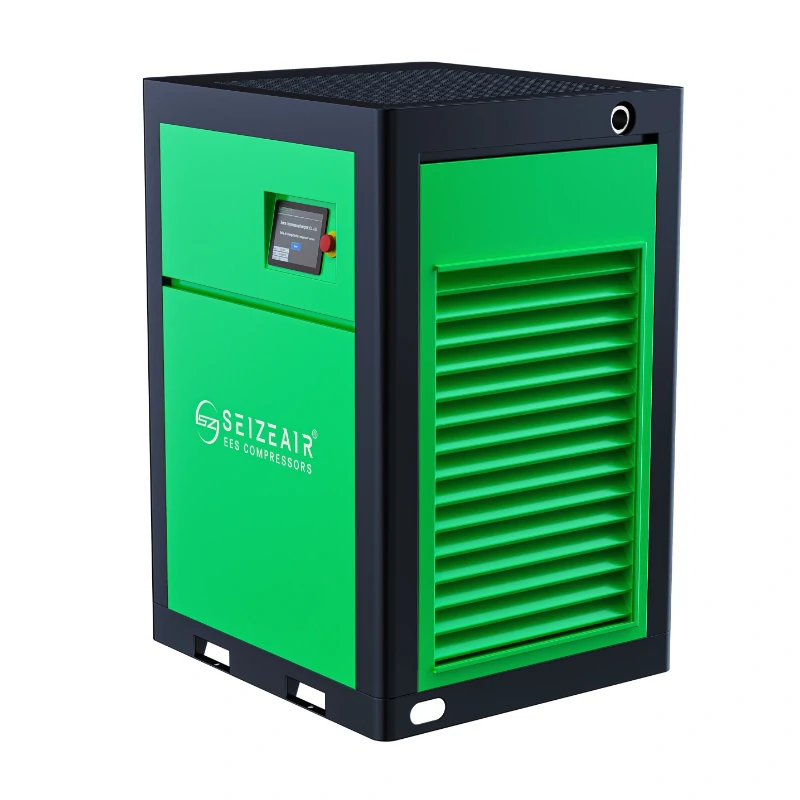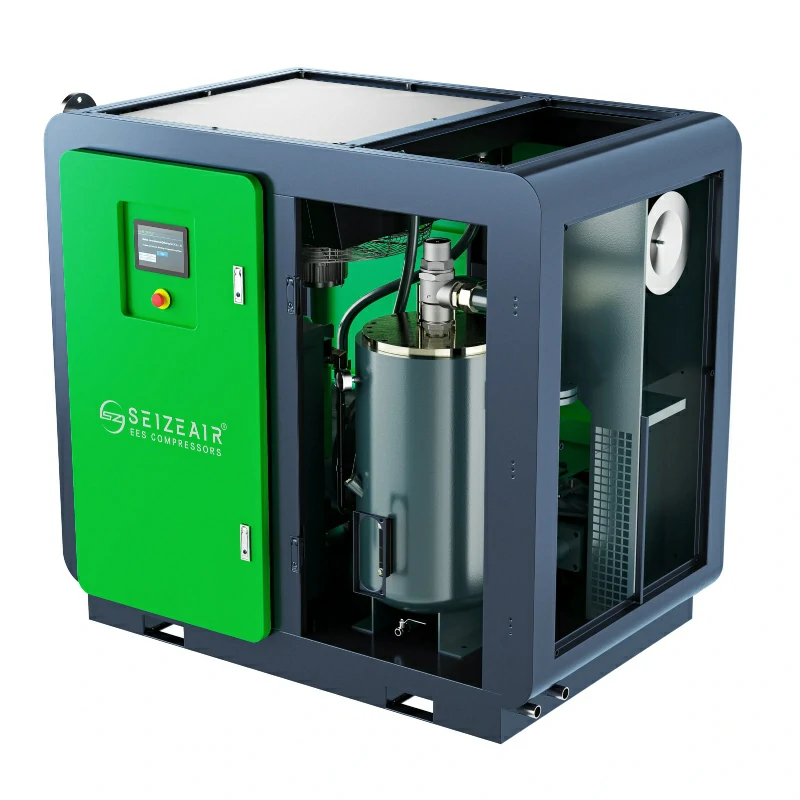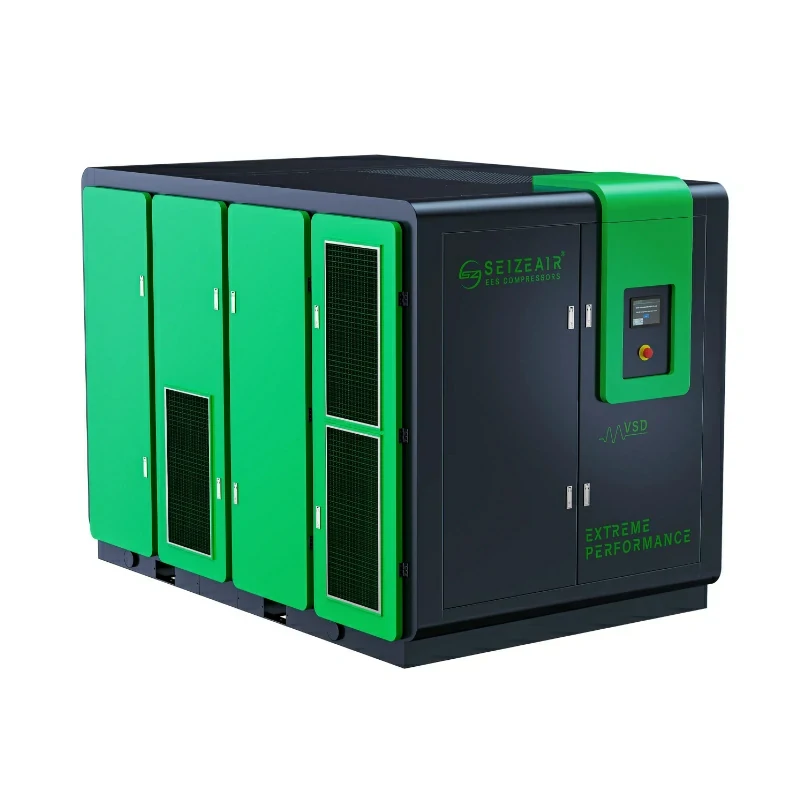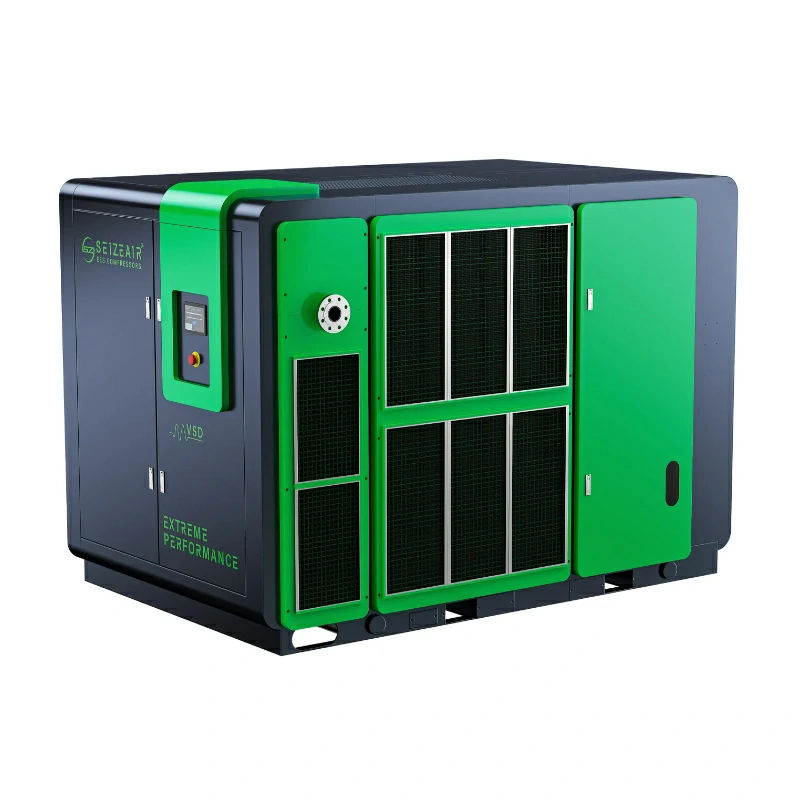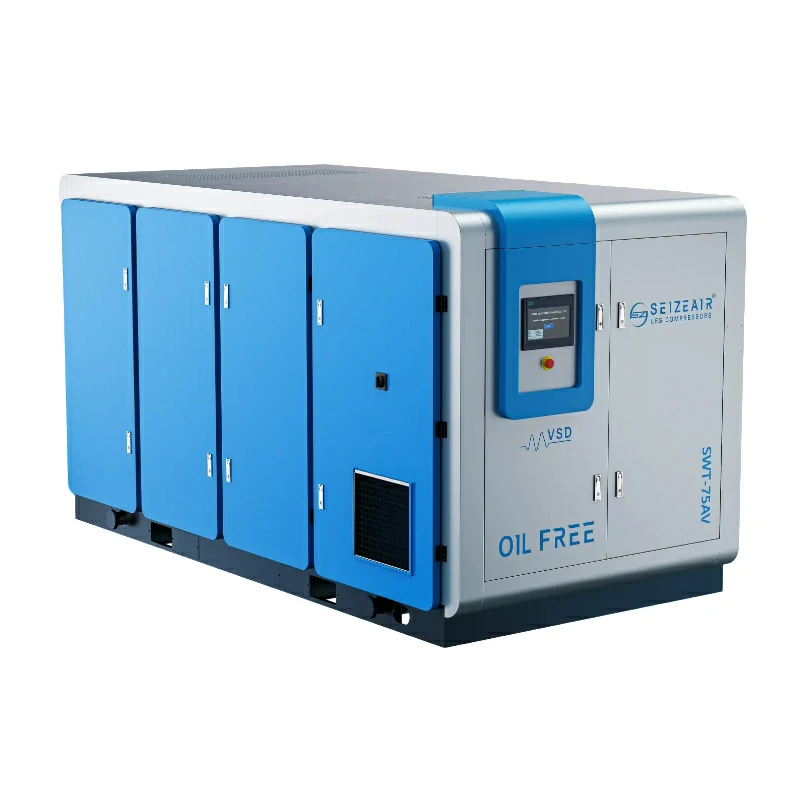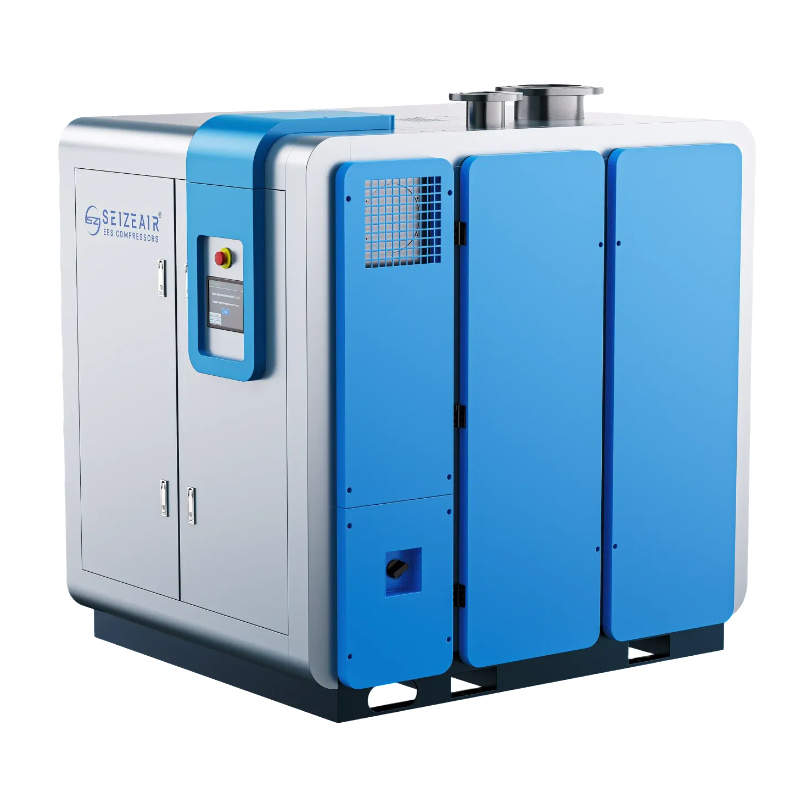


A class zero air compressor delivers compressed air with no tolerated liquid or aerosol oil under ISO 8573-1, which is the baseline most microelectronics fabs quietly depend on when a single hydrocarbon molecule can wreck an entire wafer batch. This guide explains what Class 0 actually means, how oil-free machines reach it, why chip plants cannot compromise, and how to specify a system that keeps cleanroom air genuinely pure from the compressor all the way to the tool.
What Is a Class Zero Air Compressor, Exactly?
Start with the wording, because it trips up a lot of buyers. “Class 0” is not a measured number you read off a gauge. It is a contractual promise. Under ISO 8573-1, the standard that grades compressed air purity, Class 0 is the grade reserved for when the user and the equipment supplier agree on a limit stricter than anything the standard formally lists. In plain terms, a class zero air compressor is warranted to produce air with oil contamination below the already tiny Class 1 ceiling of 0.01 mg/m3, and in practice most suppliers treat Class 0 as “effectively zero oil, verified by test.”
That distinction matters for microelectronics. A photolithography scanner or a wire bonder does not care about a supplier’s marketing language; it cares about whether oil aerosols, vapors, and droplets are sitting in the air line. When spec sheets say “Class 0,” they are saying the oil pathway has been designed out of the system, not merely filtered at the end. The phrase class 0 compressed air therefore describes an outcome, not a single component.
If you have ever typed what is class 0 air compressor into a search box, the short answer is: it is the cleanest recognized grade of compressed air, used where any oil is unacceptable. The long answer is the rest of this article.
The ISO 8573-1 Standard Behind Class 0
ISO 8573-1 splits contaminants into three families: particles (solid dust and flakes), water (both vapor and liquid), and oil (aerosol, liquid, and vapor). Each family gets its own numbered purity class. For oil, the scale runs from Class 0 at the top down to Class 4, and the numbers represent the maximum allowable concentration. The reason people search for an iso 8573-1 class 0 air compressor specifically is that Class 0 is the only grade where the standard itself steps back and says “you and your supplier define the limit.”
Here is how the oil classes stack up. Note that Class 0 sits above the table, by agreement:
| Purity class (oil) | Max total oil (mg/m3) | Typical interpretation |
|---|---|---|
| Class 0 | < 0.01 (by agreement) | Effectively oil-free, supplier-warranted, verified by test |
| Class 1 | 0.01 | Trace, acceptable for sensitive processes |
| Class 2 | 0.1 | Light industrial, general plant air |
| Class 3 | 1 | Ordinary workshop pneumatic tools |
| Class 4 | 5 | Non-critical, lubricated systems |
Water and particles have their own classes alongside oil, so a real specification reads something like “Class 0 | Class 2 | Class 1” for oil, water, and particles respectively. For a fab, the oil slot is the one that usually demands Class 0; the others depend on your local humidity and the cleanroom rating.
Is Class 0 the Same as Oil-Free? Clearing Up the Confusion
This is the question that causes the most expensive mistakes. An oil free class 0 screw compressor uses a compression chamber with no oil in contact with the air, so it cannot inject lubricant into the stream the way a lubricated machine does. That makes oil-free the method. Class 0 is the verified result. They are related but not identical.
Here is the catch that bites first-time buyers: you can run a perfectly oil-free compressor and still fail Class 0 if the downstream piping, old receivers, or poorly maintained dryers have soaked up oil from a previous lubricated system. Oil films and vapor pockets linger for years. So “oil-free” describes the machine; “Class 0” describes the air at the point of use, and getting there means watching the whole train, not just the compressor.
The practical takeaway for anyone comparing an oil free air compressor for cleanroom use: confirm the Class 0 claim covers the delivered air, not just the compressor outlet. Ask for a test certificate measured at your line, not at the factory flange.
Which Industries Actually Need Class 0 Air?
Class 0 is not reserved for chip plants. It shows up anywhere oil in the air causes product loss, regulatory failure, or safety risk:
- Pharmaceuticals and biotech — where air touches product or packaging and cGMP rules apply.
- Food and beverage — bottling, nitrogen flushing, and pneumatic conveyors.
- Microelectronics and semiconductors — the focus of this article.
- Aerospace and medical device — where trace contamination is a failure mode.
The life-science angle is worth a look if your site also serves those lines; our piece on Class 0 air compressor pharmaceutical solutions walks through the validation side. And for the chip side specifically, our guide to air compressor for the electronics industry covers fab layouts and tool-specific air demands in more detail.
Why High-Precision Microelectronics Cannot Risk Anything Less
A modern logic die is built from features measured in single-digit nanometers. At that scale, a stray oil aerosol is not a nuisance; it is a defect. Oil films on a wafer surface change how photoresist adheres, leave bridging defects after etch, and quietly drag down yield across thousands of dies. When you are shipping parts that cost more per square centimeter than the machine that makes them, a class zero air compressor for semiconductor lines stops being a luxury and becomes basic insurance.
The problem is compounding. Contamination in compressed air does not announce itself. It shows up as a slow, mysterious yield drift that engineers chase for weeks before someone thinks to test the instrument air. By then the lost wafers are already in the scrap bin. That is why cleanrooms treat class 0 air for chip manufacturing as table stakes, and why fabs specify contaminant free compressed air electronics requirements into every new tool installation.
Here is what each contaminant family does to a fab line:
| Contaminant | Where it comes from | What it does to microelectronics |
|---|---|---|
| Oil aerosol / vapor | Lubricated compressors, old pipe films | Photoresist failure, etch bridging, yield loss |
| Sub-micron particles | Intake, wear, rust | Mask defects, short circuits, dead pixels |
| Water / condensation | Humid intake, poor drying | Corrosion on leads, oxidation, test failures |
| Microbial growth | Stagnant receivers, warm lines | Biofilm in lines, intermittent contamination |
Class 0 vs Class 1: How Much Contamination Is Too Much?
The gap between Class 0 and Class 1 sounds tiny on paper, 0.01 mg/m3 of oil, but in a sensitive process that “tiny” gap is the difference between a line that runs clean and one that throws random defects. A class 0 vs class 1 air compressor decision usually comes down to one question: can a single defect cost more than the price difference of the machine? In microelectronics, the answer is almost always yes.
Class 1 is perfectly fine for many industries, and nobody should pay for Class 0 where it is not needed. But once your product is measured in nanometers and your reject cost is measured in six figures per batch, the warranty of “below measurable oil, by agreement” that Class 0 provides is the only honest answer. It removes the argument about whether the air was clean enough, because the supplier has contractually taken ownership of that limit.
How a Class Zero Oil-Free Compressor Actually Works
Reaching Class 0 is less about one magic part and more about choosing a compression technology that never puts oil where the air goes, then protecting that air on the way to the tool. The main routes fabs use:
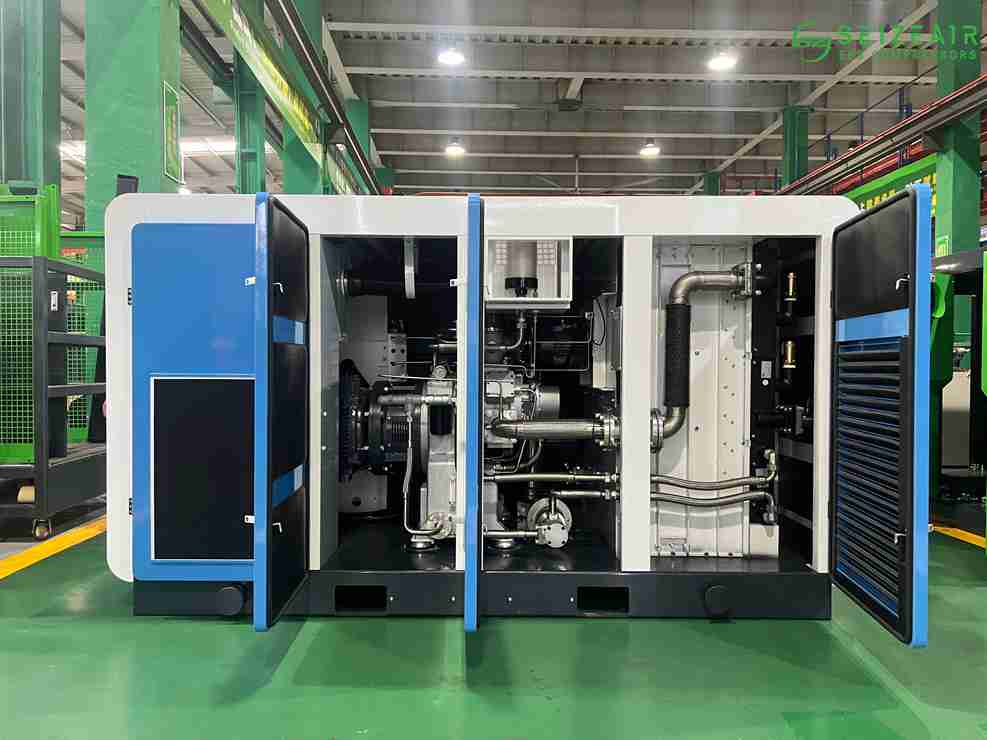
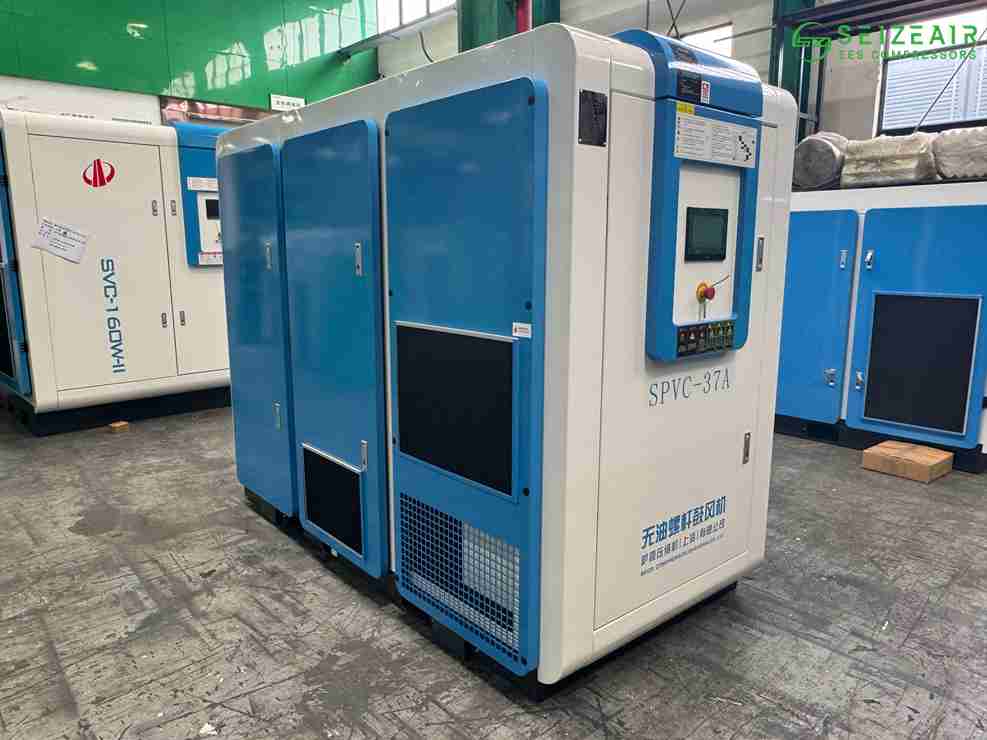
- Oil-free screw — two rotors mesh with timing gears keeping them apart, so no oil touches the air. The workhorse for most fabs is the oil-free screw air compressor, which handles mid-to-large flows with steady pressure.
- Water-lubricated screw — instead of oil, water cools and seals the rotors. Even if a trace reaches the air, it is water, not hydrocarbon. The water-lubricated oil-free screw air compressor is popular where plants want a harmless fallback lubricant.
- Scroll — two spirals compress air in sealed pockets with no metal-to-metal oil contact. At the low-flow, ultra-clean end, oil-free scroll compressors are a favorite for localized cleanroom tooling and metrology.
The technology choice shapes the rest of the system. Here is a quick comparison of the three main Class 0 routes:
| Technology | Typical flow range | Best fit in a fab | Key trade-off |
|---|---|---|---|
| Oil-free screw | Medium to large | Central utility air, bulk instrument air | Higher capital, very stable output |
| Water-lubricated screw | Medium | Where water-as-lubricant is preferred | Water treatment and drainage overhead |
| Oil-free scroll | Small, point-of-use | Metrology, localized clean benches | Limited capacity per unit |
Seize Air’s oil-free portfolio spans screw, water-lubricated, and scroll designs, so the same supplier can feed both the central utility ring and a sensitive point-of-use tool without mixing technologies you cannot service together.
The Air Treatment Chain
No Class 0 system stops at the compressor. The air travels through a chain of treatment before it is safe at the tool. In text form, the path looks like this:
Intake (filtered)  ->  Oil-free compressor  ->  Aftercooler
     ->  Refrigerated dryer  ->  Adsorption dryer (optional, deep dew point)
     ->  Coalescing pre-filter  ->  Precision filter  ->  Point-of-use filter
     ->  Cleanroom tool
Each step removes one family of contaminant: cooling drops bulk water, dryers pull dew point down, and filters strip particles and any residual oil vapor. Skipping a stage is how “oil-free” becomes “not Class 0.”
Keeping Class 0 Purity: Air Treatment and Monitoring
Once the compressor is oil-free, the battle moves downstream. Three elements keep the air at Class 0 at the point of use.
Dryers. A refrigerated air dryer handles the bulk moisture load, typically down to about +3 C pressure dew point, which is enough for most fabs. Where deeper dryness is needed, a desiccant dryer takes over. Sizing these right is its own discipline; our compressed air dryer selection guide breaks down the math.
Filters. A final precision filter at the point of use is non-negotiable. Coalescing filters catch oil mist; particulate filters catch dust down to sub-micron sizes. In a fab you often stack two stages right before the tool so a single clogged element never becomes a contamination event.
Monitoring. Class 0 is a promise you have to keep proving. Online oil vapor monitors and periodic particle counts at the point of use turn “we think it is clean” into “we can show you the number.” For fabs under audit, that paper trail is worth as much as the hardware.
| Stage | Target | Why it matters for Class 0 |
|---|---|---|
| Aftercooler | Drop bulk water | Protects dryers, cuts load |
| Refrigerated dryer | +3 C dew point | Removes most water vapor |
| Coalescing filter | Oil mist removal | Catches any residual aerosol |
| Precision filter | Sub-micron particles | Final clean before the tool |
Specifying a Class Zero System for Your Fab
Buying the right class zero air compressor starts with three numbers: required flow in cubic feet per minute or liters per second, required pressure in bar or psi, and the pressure dew point your cleanroom demands. Add a fourth, often forgotten, number: redundancy. Fabs rarely tolerate a total air stoppage, so many run two smaller oil-free units in rotation rather than one oversized machine.
A simple sizing sanity check you can do today:
Required compressor flow  =  sum of tool flow  x  1.25 (leakage + future growth margin)
Required dryer capacity   =  compressor flow  x  1.15 (safety margin)
Filter rating            =  particle size at least one decade below your smallest feature
Those margins are not padding; they absorb the real-world leakage every plant has and leave room for the next tool you have not bought yet. Specifying tight saves money up front and costs yield later.
Common Myths About Class 0 Compressed Air
A few beliefs keep circulating that cost fabs money:
“Oil-free means Class 0.” Only if the entire air path is verified. Old piping alone can fail you.
“Class 0 is overkill for our line.” Maybe. But the cost of one scrapped high-value batch usually dwarfs the price gap, and the gap is smaller than people think once you factor energy and downtime.
“A big filter at the end fixes everything.” Filters remove what is there; they cannot undo oil that has already dissolved into the air stream or soaked into a receiver. The compressor design does the heavy lifting.
Cost, Energy, and ROI Considerations
Oil-free Class 0 machines used to carry a steep premium, and they do still cost more than a basic lubricated unit. But the ROI math for microelectronics is unusual: the machine is cheap compared to what it protects. A single contaminated batch of advanced wafers can exceed the entire compressor budget. Energy is the longer-term line item. Oil-free screws have improved sharply, and when paired with variable-speed drives they track load closely instead of dumping energy at part flow.
The honest framing is total cost of ownership, not sticker price. Factor in the avoided scrap, the avoided audit failures, and the avoided downtime, and a class 0 oil free air compressor usually pays for the premium quickly in a fab environment.
Choosing the Right Partner for Class 0 Air
Getting to Class 0 is engineering, not a checkbox. It means picking the right oil-free technology, designing the treatment chain around your cleanroom’s actual dew point and particle targets, and then proving the air stays clean with monitoring and test certificates. The compressor is the start of that story, not the end.
If you are specifying a class zero air compressor for a new line, a retrofit, or a cleanroom expansion, the fastest path is to talk through your flow, pressure, and purity targets with engineers who have shipped these systems. Reach out to our team at Seize Air and we will help you size, validate, and document a Class 0 air supply that holds up under audit and under production. Tell us about your fab, your tools, and your yield goals, and we will map the right oil-free configuration to them.