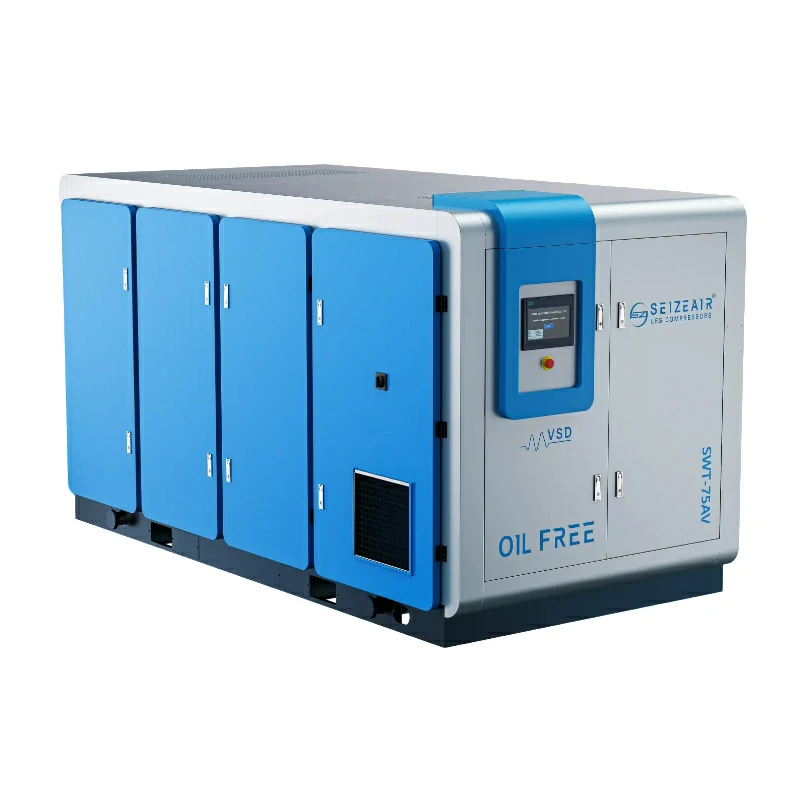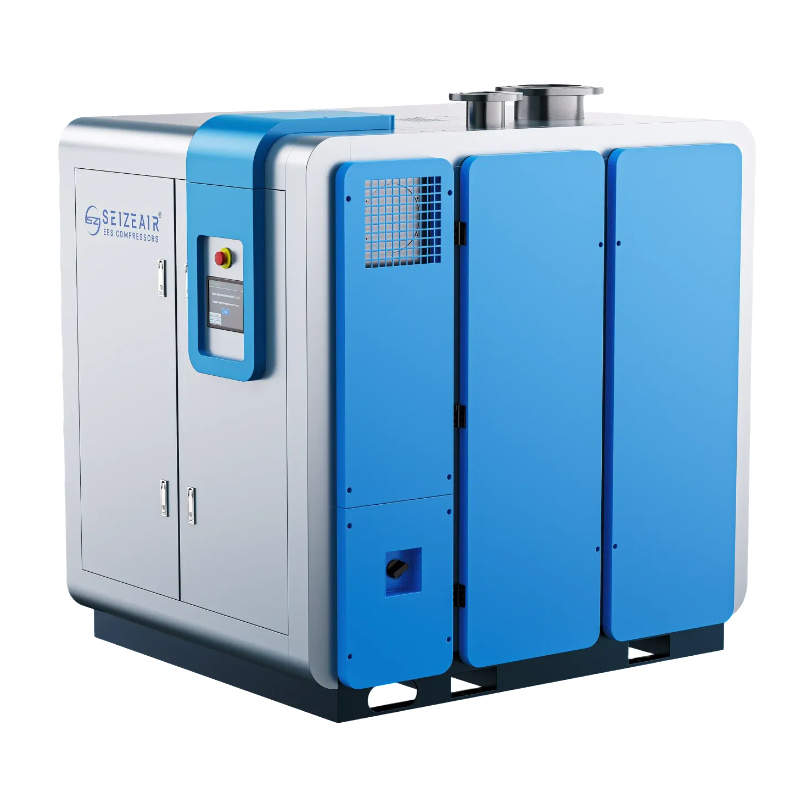


In the world of industrial air production, the debate between direct drive compressors and belt-driven units often comes down to one factor: transmission efficiency. While belt-driven models have historically dominated the market due to lower initial costs, the shift toward high-performance, energy-saving systems has made direct drive the gold standard for modern factories.
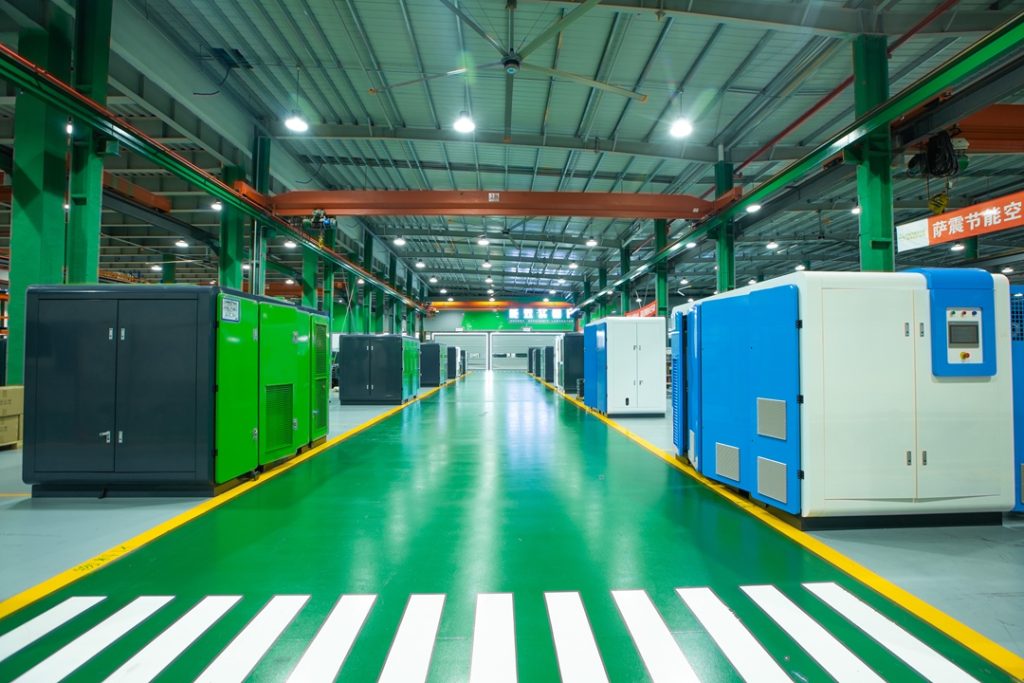
What is a Direct Drive Compressor and how does it work?
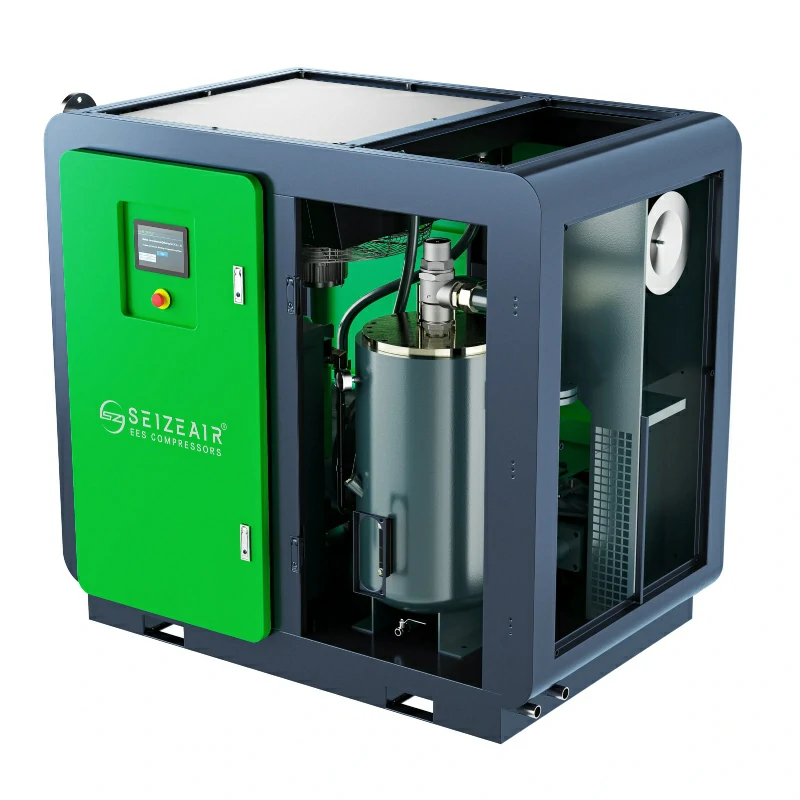
A direct drive compressor features a motor connected directly to the pump (air end) via a solid or flexible coupling. Unlike traditional setups, there are no belts to tension and no pulleys to align. This 1:1 power transmission ratio ensures that every kilowatt of energy consumed by the motor is utilized to generate compressed air.
From a mechanical standpoint, this design eliminates “radial load”—the sideways pulling force that belts exert on motor shafts. By switching to a direct coupled screw compressor, you move the stress from a side-pulling motion to a perfectly balanced axial rotation. This fundamentally changes the wear profile of the machine, shifting it from a high-maintenance “wear and tear” asset to a long-term piece of infrastructure.
The 1:1 Power Transmission Advantage
The primary reason engineers favor direct drive systems is the elimination of transmission loss. When you use a belt, you aren’t just moving air; you are fighting physics.
- The Belt Drive Tax: Even a perfectly tensioned belt system loses roughly 2% to 5% of energy due to friction and heat. In a real-world shop environment—where dust, humidity, and heat are present—that loss often climbs to 8%.
- Direct Drive Efficiency: By using a flexible coupling or a direct shaft connection, energy loss is virtually zero.
From a system integrator’s perspective, this isn’t just about the 3% difference on paper. It’s about “parasitic load.” If you are running a 100 hp direct drive air compressor for 8,000 hours a year, that 3% to 5% loss represents thousands of dollars literally disappearing into thin air as heat. If you’re a facility manager looking at a 10-year horizon, the belt drive starts to look like a high-interest loan you never intended to take out.
Seize Air engineers often point out that the energy saved in a direct drive configuration can often pay for the machine’s entire maintenance budget for the year. It’s a cleaner, more direct path from the electrical socket to the tool on the floor.
| Feature | Belt-Driven Compressor | Direct Drive Compressor |
| Transmission Loss | 3% – 8% (Heat & Friction) | < 0.5% (Mechanical Coupling) |
| Energy Consumption | Higher per CFM produced | Optimized / Lowest in class |
| Variable Speed Support | Poor (Slip risk at low Hz) | Excellent (Linear torque) |
| Mechanical Complexity | Multiple moving wear parts | Single-axis simplified drive |
Are Direct Drive Compressors More Reliable for Heavy-Duty Use?
When running a 24/7 production line, reliability is the only metric that truly matters. A belt-driven unit is inherently “stressed.” The very mechanism that transfers power—tension—is also its greatest weakness.
The Problem of Side-Loading and Bearing Life
In a belt system, the motor pulls on the air end from the side. This creates a “radial load” on the bearings. Imagine holding a heavy bucket with your arm stretched out to the side rather than holding it straight down; your shoulder wears out faster. This is exactly what happens to air end bearings in belt-driven units.
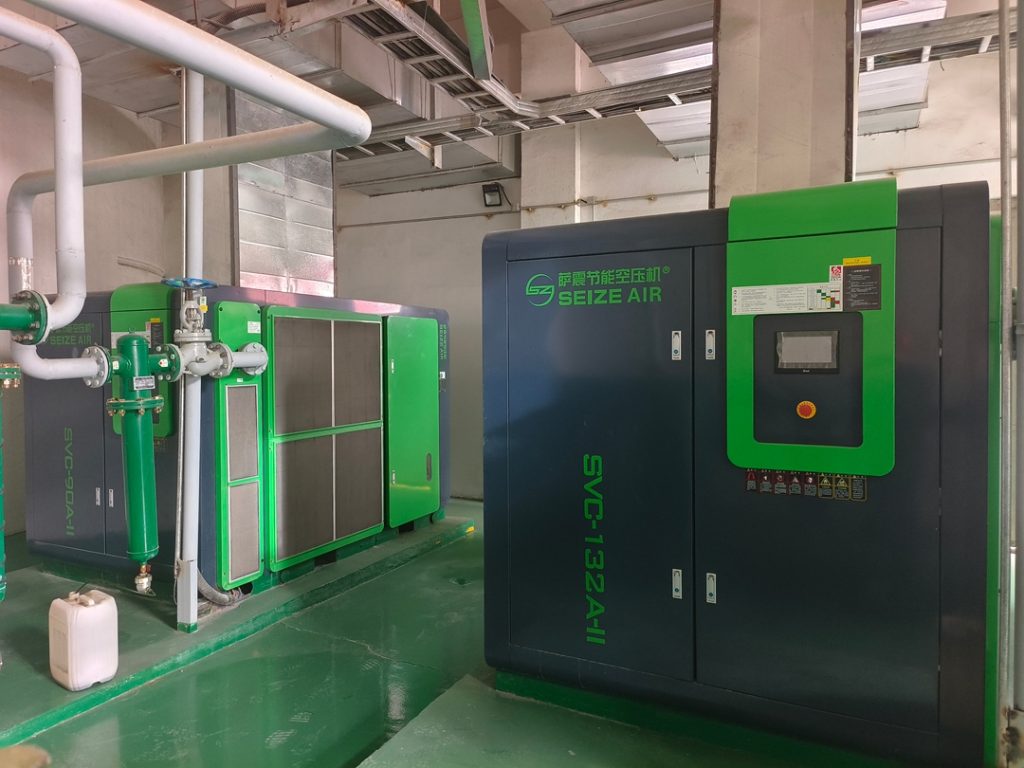
In contrast, a direct drive screw compressor aligns the motor and air end shafts perfectly on a single axis. This axial alignment balances the load, significantly extending the lifespan of the bearings and the motor. Systems engineered by specialists like Seize Air often utilize high-precision couplings that further dampen vibration. This means the internal components aren’t just working; they are working in a harmonious, low-stress environment.
Real-World Failure Points
Field engineers see it all the time: a belt snaps at 2:00 AM on a Friday. Production stops. The “savings” from buying a cheaper belt-driven unit vanish in the first hour of downtime. When looking for a low maintenance air compressor for industrial use, direct drive units remove this specific failure point entirely. You cannot have a belt failure if there is no belt. Furthermore, you avoid the gradual degradation of performance; a belt starts losing efficiency the second it begins to stretch, whereas a direct coupling stays at 100% efficiency until the day it’s retired.
Maintenance Costs
If you look at the Total Cost of Ownership (TCO), the direct drive architecture wins by a landslide. Many buyers fixate on the “sticker price,” but the real cost of a compressor is the electricity and the technician’s hourly rate over five years.
- The Hidden Cost of “Simple” Maintenance: People think belts are easy to fix. They are. But they are also easy to ignore. A belt that is 5% loose won’t stop the machine, but it will kill your efficiency. You end up paying for that laziness every time the electric bill arrives.
- Pulley Wear and Misalignment: It’s not just the belts. Pulleys (sheaves) wear down over time, developing grooves that eat through new belts even faster. Replacing pulleys requires specialized alignment tools and laser levels that many shops don’t have.
- Oil Contamination and Air Quality: In some older designs, belt dust (shredded rubber) can actually find its way into the cooling system or air intake. For clean-room environments or food-grade applications, a direct drive oil-injected compressor provides a much cleaner external environment by eliminating rubber particulates.
Annual Maintenance Checklist Comparison
| Maintenance Task | Belt Drive | Direct Drive |
| Check Tension | Monthly (Mandatory) | Not Required |
| Pulley Alignment | Quarterly (Laser Check) | Not Required |
| Belt Replacement | Every 2,000–4,000 hrs | Never |
| Coupling Inspection | N/A | Every 8,000 hrs (Visual) |
| Bearing Lubrication | High Frequency (Side-load) | Standard |
Noise Reduction and Workplace Environment
Is a direct drive compressor quieter? Generally, yes. Much of the high-pitched “whine” or “chirp” associated with industrial compressors comes from belt friction and air turbulence around the pulleys.
Modern factories are moving toward “point-of-use” compressed air, where the compressor sits on the shop floor rather than in a separate, sound-proofed bunker. In this scenario, decibel levels are a health and safety issue. Direct drive units operate with a smoother, lower-frequency hum. For instance, Seize Air’s centrifugal and screw units are specifically designed with enclosed direct-drive housings to keep noise levels well below OSHA thresholds. By choosing a quiet direct drive rotary screw compressor, you improve worker comfort and reduce the need for expensive acoustic room treatments.
Why VSD and Direct Drive are Inseparable
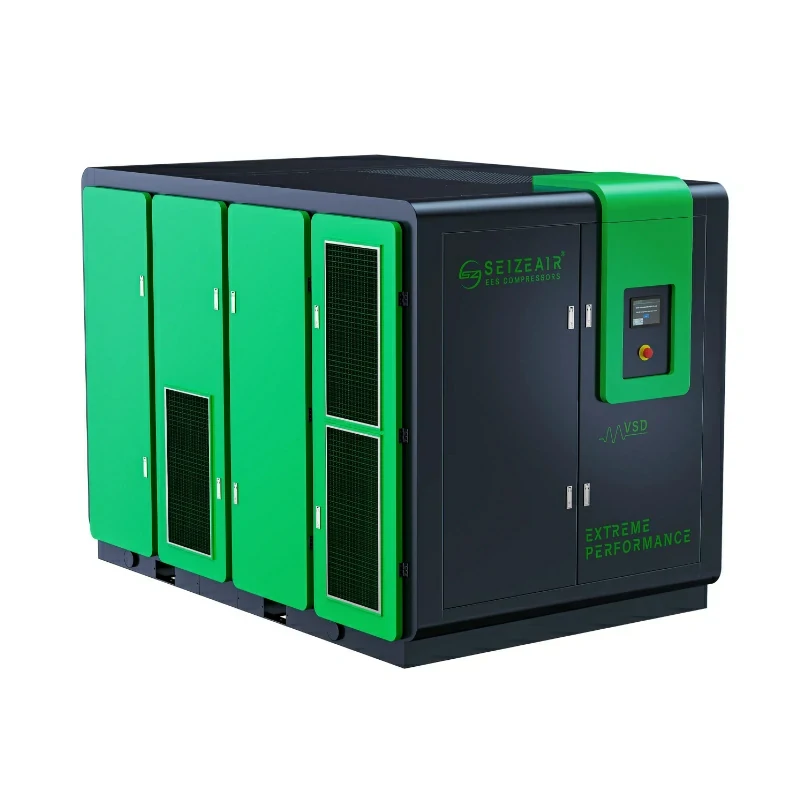
If you are considering a Variable Speed Drive (VSD) compressor, do not buy a belt-driven version. It is a fundamental mismatch of technologies. A VSD direct drive compressor is the only way to truly capture the energy savings promised by frequency inverters.
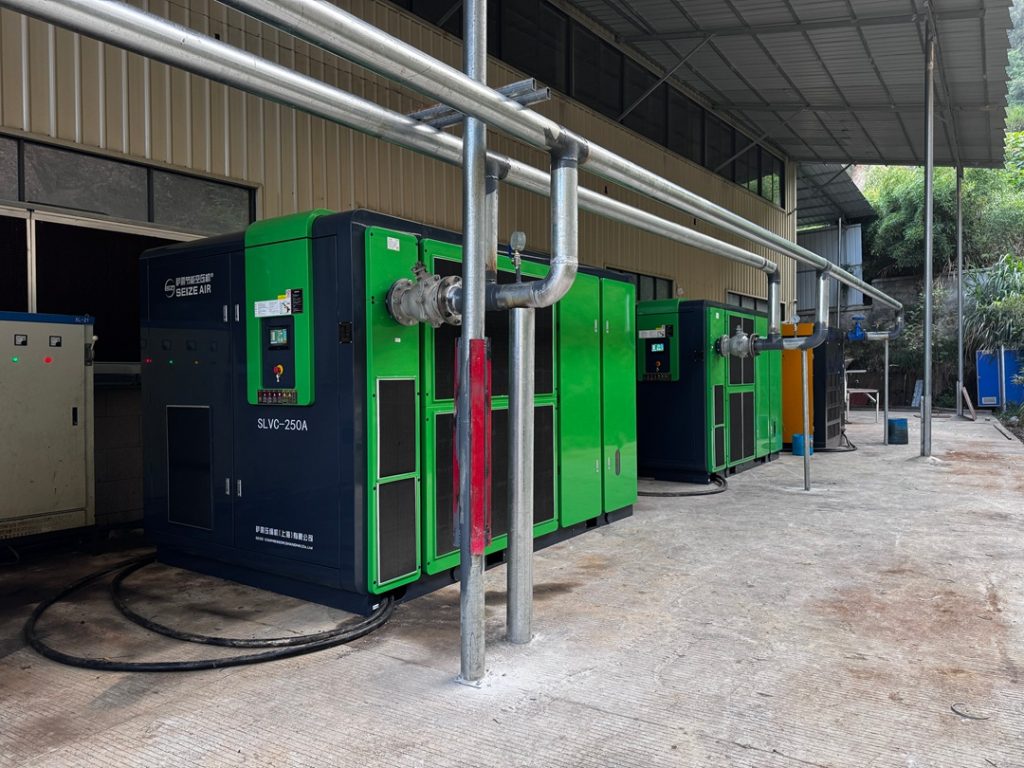
VSD units constantly change motor speed to match air demand. A belt drive struggles with this because:
- Torque Spikes at Start-up: When a VSD motor ramps up quickly, the inertia can cause the belt to slip momentarily, creating heat and wear.
- Harmonic Resonance: Every belt has a “natural frequency.” As the VSD sweeps through different speeds, it can hit a vibration point that causes the belt to whip violently, leading to rapid wear and potential bearing damage.
A direct drive compressor handles VSD with ease. Because the connection is rigid and balanced, the motor can ramp from 15% to 100% speed instantly without any mechanical drama. This is why brands like Seize Air almost exclusively use direct-drive configurations for their high-end energy-saving models. The response to air demand is instantaneous, and there’s no “slippage” lag.
Common Industry Questions
Do direct drive compressors have variable speeds?
Yes. In fact, direct drive is the ideal partner for Variable Speed Drive (VSD) technology. Because the connection is rigid, the motor can ramp up or down instantly to match air demand without worrying about belt slip at high torque or low speeds. This makes the direct drive vs belt drive air compressor debate very one-sided when energy rebates are on the line.
Can I convert a belt drive compressor to direct drive?
Technically, no. The internal casting and alignment of the motor and air end are fundamental to the machine’s design. If you are looking for higher efficiency, it is far more cost-effective to upgrade to a purpose-built direct drive unit rather than attempting a retrofit that will likely suffer from catastrophic vibration issues.
Is the initial cost of direct drive worth it?
While the upfront price might be 10–15% higher than a budget belt-drive unit, the energy savings alone usually provide a Return on Investment (ROI) within 12 to 18 months. When you factor in the reduced downtime, the “cheaper” belt drive often becomes the more expensive machine over a 5-year period. For businesses looking for a heavy duty direct drive air compressor, the capital expenditure is quickly offset by the lower operational expenditure.
The Role of the Coupling
In a high-end direct drive compressor, the “spider” or flexible coupling acts as a fail-safe. Think of it as a mechanical fuse.
If the air end were to seize (perhaps due to a catastrophic oil failure or a foreign object), the flexible coupling is designed to shear or absorb the impact, preventing the motor’s kinetic energy from destroying the shaft. Replacing a $100 coupling element every few years during a routine 8,000-hour service is a small price to pay for protecting the $15,000 heart of your system.
The precision of these couplings in Seize Air machines ensures that even if there is a micro-alignment issue caused by floor settling or thermal expansion, the machine continues to run smoothly without destroying its bearings. This is a critical component in any direct drive screw air compressor guide, as it represents the single point of failure that actually protects your investment.
Why “Permanent Magnet” Direct Drive is the Future
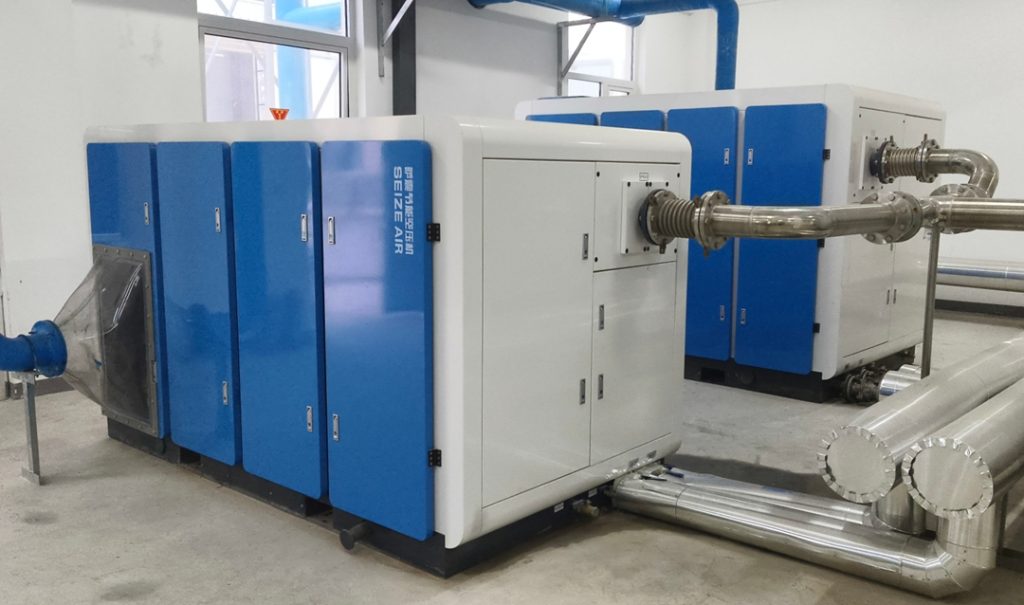
The evolution of the direct drive compressor has led to the Permanent Magnet (PM) motor. This is the “Tesla” of the compressor world. Unlike standard induction motors, PM motors don’t have bearings on one side—the motor rotor is mounted directly onto the protruding shaft of the air end.
- Integrated Design: It eliminates the coupling entirely. The motor and the pump are effectively one single moving part. This is often called an integrated direct drive compressor.
- Zero Bearings in the Motor: This removes yet another wear part, further reducing the friction and maintenance requirements.
- Constant Torque: Maintains high efficiency even at very low RPMs, where traditional motors get hot and lose power.
Performance Data: PM Direct Drive vs. Standard Belt Drive
| Metric | Standard Belt Drive | PM Direct Drive (Seize Air Grade) |
| Motor Efficiency | IE2 / IE3 | IE4 / IE5 |
| Startup Torque | Moderate | Exceptional (Instant Air) |
| Turndown Ratio | 40% – 100% | 15% – 100% |
| Cooling Method | Air Cooled | Often Oil-Cooled (Superior) |
Which One Should You Choose?
If your application is light-duty, intermittent, or you are on a very tight initial budget, a belt-driven compressor may suffice. However, for any professional industrial application where energy costs exceed $500 a month, the direct drive compressor is the superior choice.
By eliminating the mechanical weaknesses of belts, you gain a machine that is quieter, more reliable, and significantly cheaper to operate. As global energy standards tighten, moving to a direct-drive system—especially one optimized by a specialist like Seize Air—is the smartest move for your bottom line.