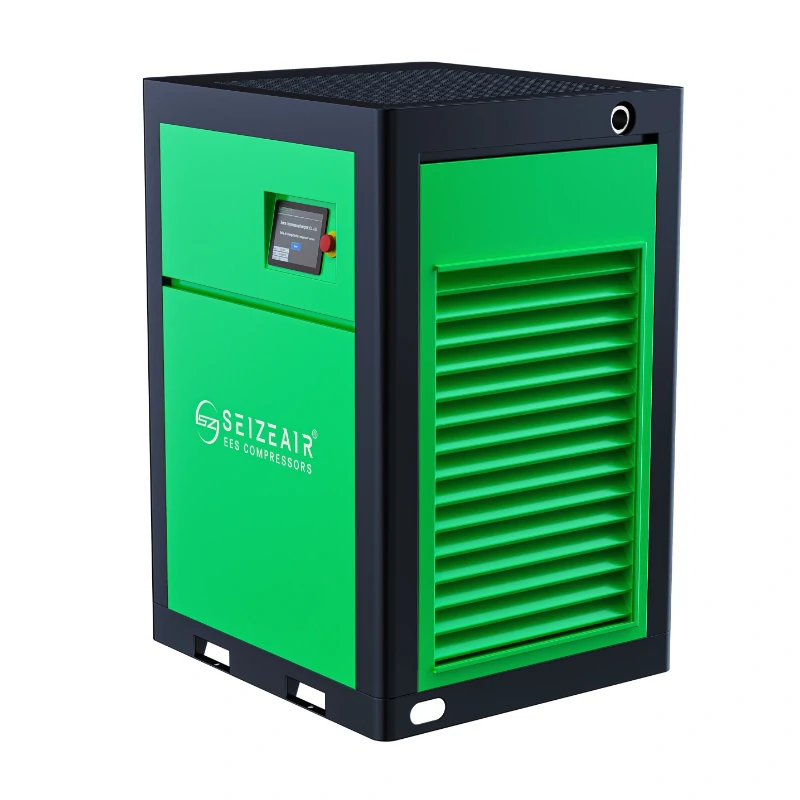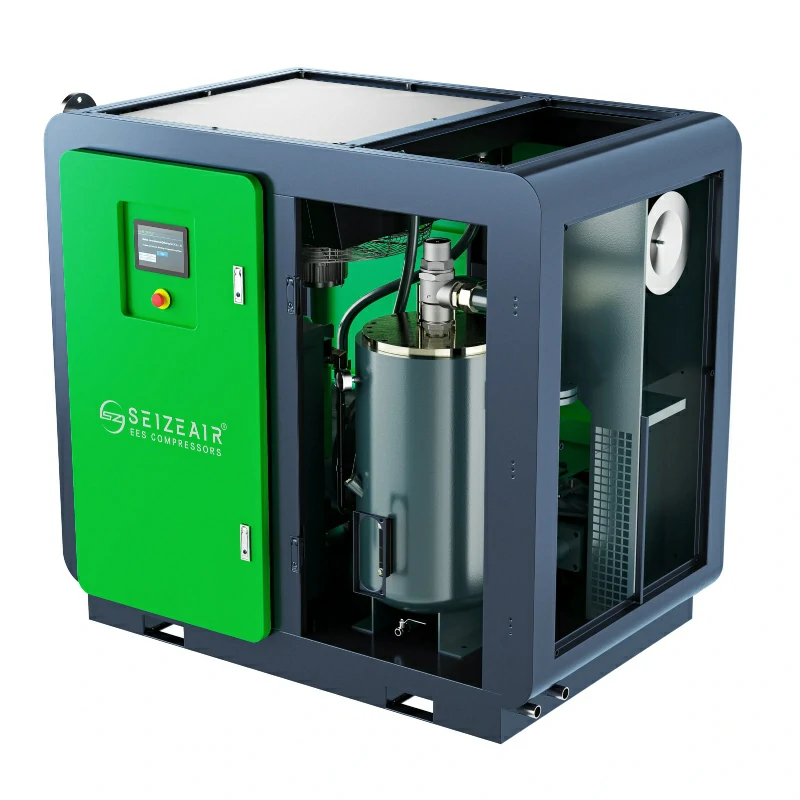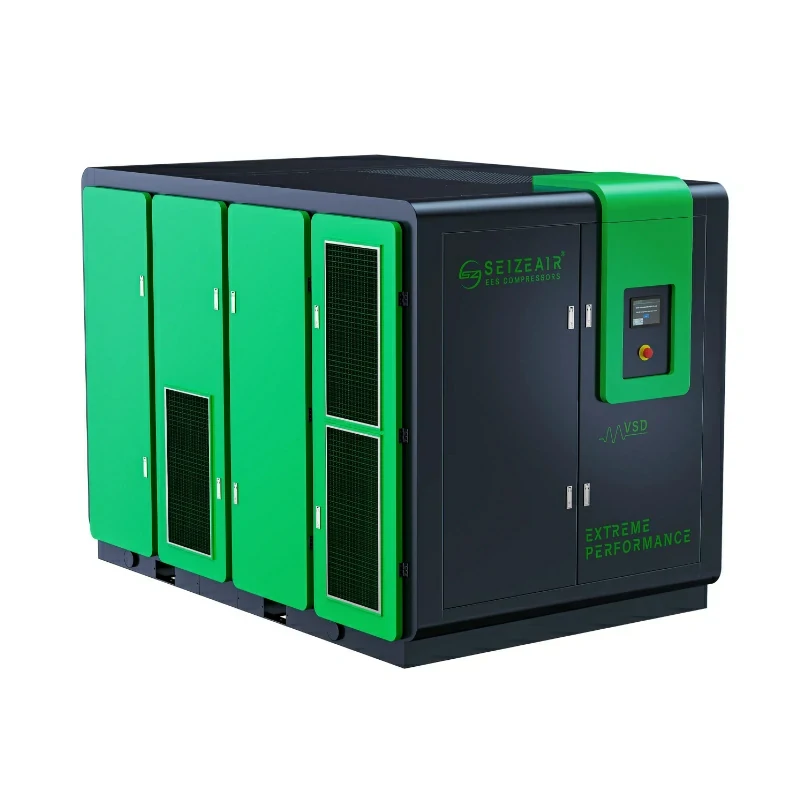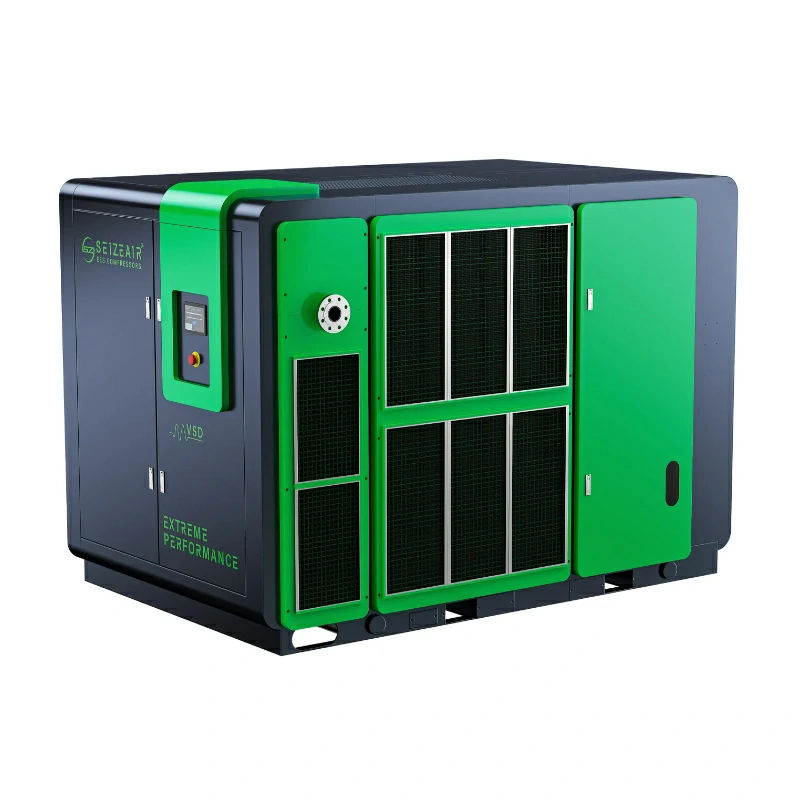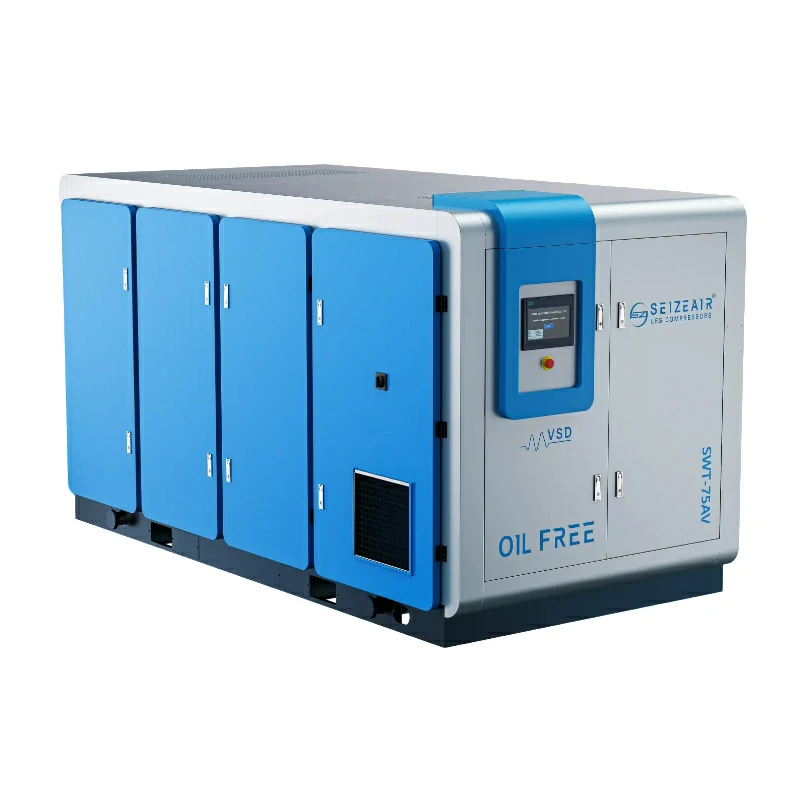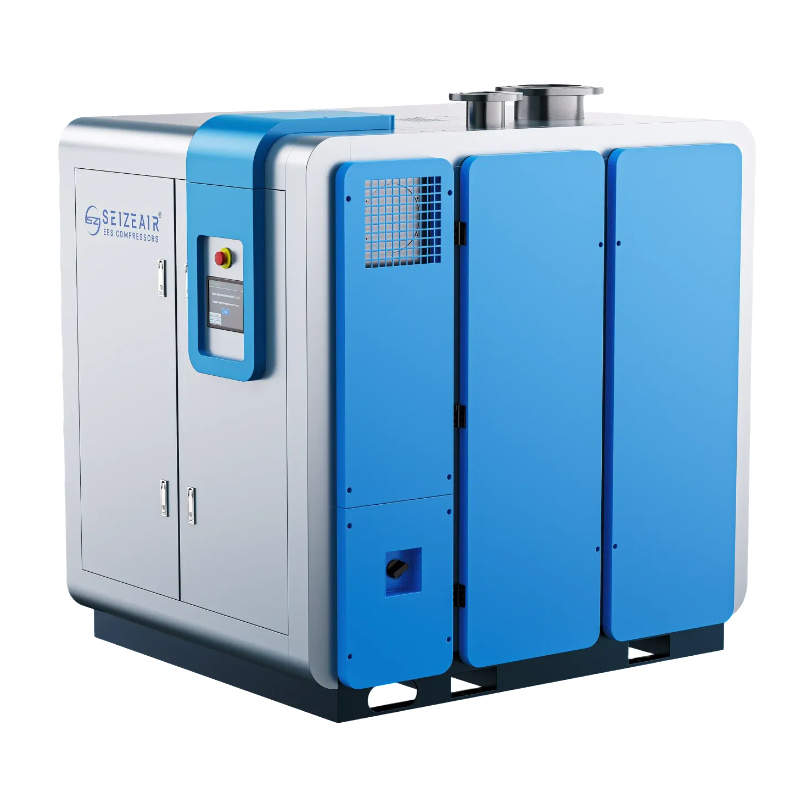


An industrial screw compressor delivers high-volume continuous compressed air for modern automated factories, whereas a piston compressor provides intermittent high-pressure bursts for smaller, periodic tool applications. Selecting between a high-efficiency continuous rotary screw air system and a traditional reciprocating piston unit requires a deep engineering analysis of mechanical air-end design, continuous duty cycle limits, real-world CFM delivery per horsepower, specific power performance (kW/100 CFM), and total lifecycle ownership costs. This comprehensive industry guide provides plant engineers and operations managers with the technical insights needed to choose the exact compression setup for their facility’s air demand profile.
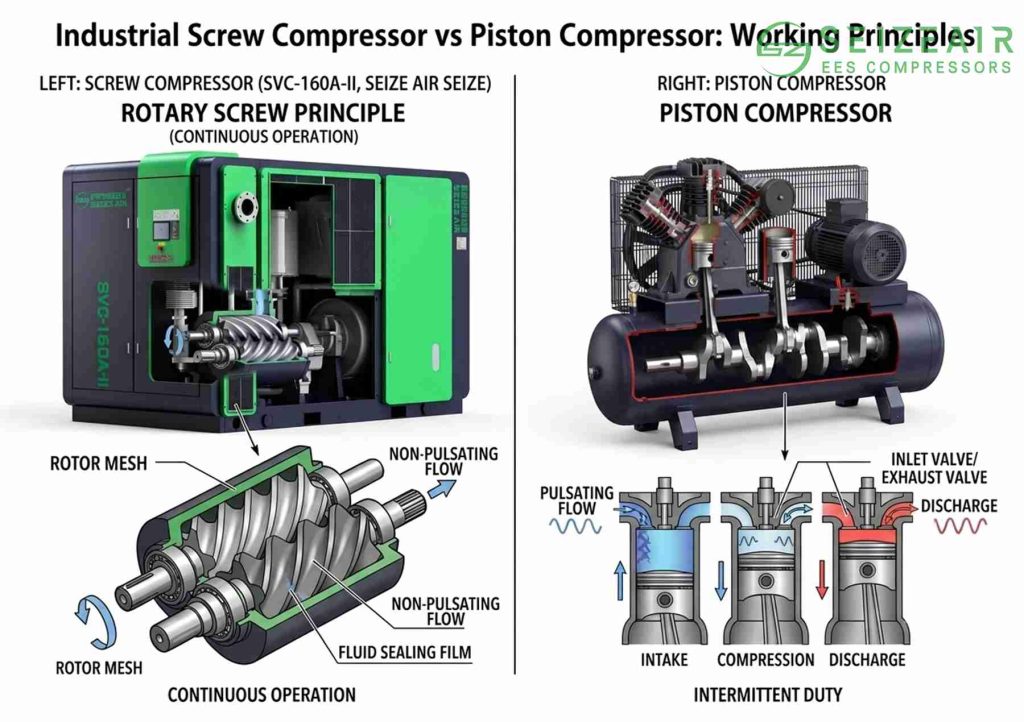
1. How Does Rotary Screw Mechanism Compare to Piston Cylinder Principles?
Understanding how each machine physically generates pressure explains why they exhibit dramatically different performance profiles under heavy industrial workloads.
The Rotary Screw Air-End Mechanism
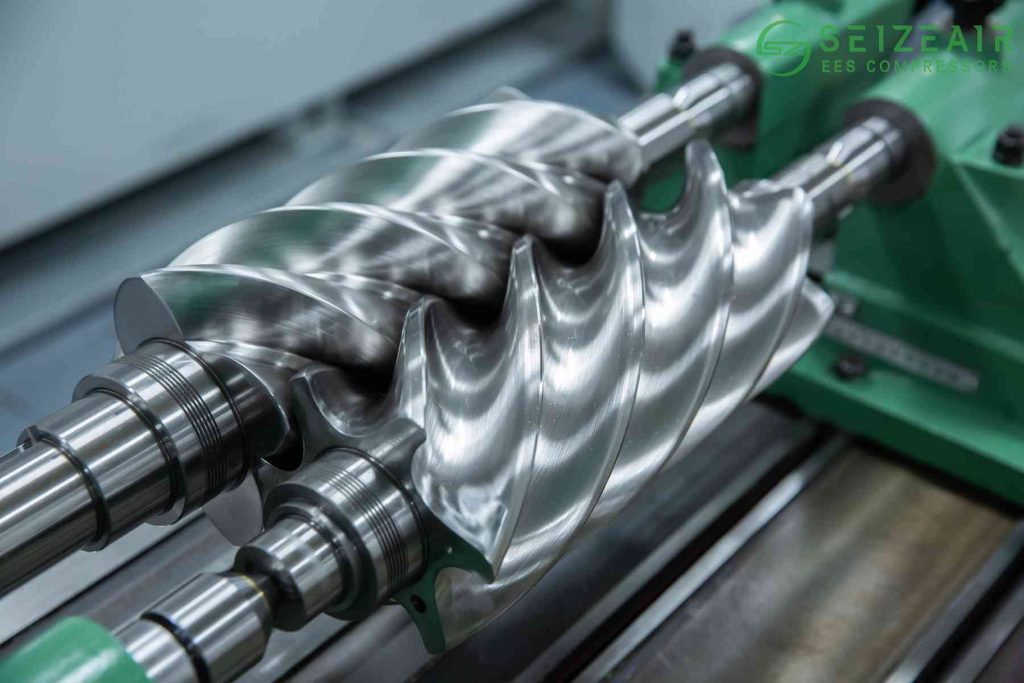
An industrial screw compressor is a positive displacement machine that compresses air using two high-precision intermeshing helical rotors—a convex male rotor and a concave female rotor—housed within a heavy-duty cast-iron casing. As the main electric motor drives the male rotor, air enters through the intake regulator valve into the suction chamber. The continuous rotation sweeps trapped air along the helical flutes, decreasing the physical volume between the rotors and increasing static pressure before discharging through the outlet port.
Because the twin rotors are separated by a micro-thin film of cooling fluid and never make direct metal-to-metal contact, mechanical friction is remarkably low. This continuous swept-volume rotation delivers a pulse-free stream of compressed air without the harmonic vibration and sudden pressure spikes associated with reciprocating machinery.
The Reciprocating Piston Mechanism
A piston compressor operates on a crank-slider kinematic principle similar to an automotive internal combustion engine. An electric motor rotates a weighted crankshaft, driving a connecting rod that moves a piston up and down inside a machined cylinder block. On the downward intake stroke, low pressure inside the cylinder opens a flexible suction reed valve, pulling ambient atmospheric air into the compression chamber. As the crankshaft rotates past bottom dead center, the piston travels upward, sealing the intake valve and compressing the air until internal force pushes open the discharge valve to dump air into a receiver tank.
Because the heavy internal piston assembly comes to a complete mechanical stop and reverses direction at the end of every stroke (typically 800 to 1,200 cycles per minute), reciprocating compressors generate substantial vibration, localized thermal friction, and a pulsating air flow.
2. What Is the Difference Between 100% Continuous Duty Cycle and Intermittent Operation?
Can a piston air compressor run non-stop like a rotary screw unit? In short: no. Thermal limits and duty cycle ratings form one of the most critical structural barriers separating these two compressor types.
100% Continuous Duty Cycle Tolerances
An industrial screw compressor is engineered to operate at a 100% continuous duty cycle, running 24 hours a day, 365 days a year under full mechanical load without thermal failure. In fact, operating a rotary screw machine continuously at stable operational temperatures (typically regulated between 80°C and 95°C / 176°F and 203°F) is ideal for its health. This steady thermal state prevents atmospheric moisture from condensing inside the fluid cooling loop and causing bearing corrosion. An integrated oil-injection circuit continuously seals internal rotor gaps while sweeping away compression heat via thermal bypass valves and air-to-oil heat exchangers.
50% to 70% Intermittent Duty Cycle Constraints
Standard single-stage and two-stage reciprocating piston compressors are limited to intermittent duty cycles, generally rated between 50% and 70%. The sliding friction generated between piston rings and cylinder walls, combined with residual heat trapped in the valve plate, causes rapid thermal buildup. If a standard piston compressor is pushed past its 60-70% duty cycle threshold, internal temperatures destroy the compressor oil, form hard carbon deposits on intake valves, score cylinder walls, and burn out the drive motor. A piston compressor requires regular resting downtime (such as 10 minutes off for every 20 minutes of runtime) to dissipate heat before starting its next cycle.
| Performance Metric | Industrial Screw Compressor | Reciprocating Piston Compressor |
| Max Duty Cycle Tolerance | 100% Continuous (24/7/365 Non-Stop) | 50% – 70% Intermittent Duty |
| Air Delivery Profile | Pulse-free, uniform discharge pressure | Pulsed airflow, relies heavily on receiver tank |
| Cooling System Design | Fluid-injected radiator circuit with thermal valve | Air-cooled cylinder fins or flywheel fan |
| Operating Temperature Band | Fast stabilization, controlled thermal range | High temperature spikes during extended run times |
| Ideal Load Profile | Continuous multi-shift manufacturing plants | Low-frequency, intermittent high-pressure bursts |
3. How Much CFM Air Output Does an Industrial Screw Air Compressor Deliver Per Horsepower?
Comparing motor horsepower (HP) ratings across both technologies often leads to inaccurate sizing, because a 10 HP piston unit does not deliver the same volume of usable air as a 10 HP industrial screw compressor.
=================================================================
              AIRFLOW VELOCITY & PULSATION PROFILE
=================================================================

Rotary Screw Air Output:
Pressure -------------------------------------------------------- (Steady Baseline)
         Continuous 100% Usable Volume Stream

Piston Air Output:
Pressure --/\--/\--/\--/\--/\--/\--/\--/\--/\--/\--/\--/\--/\---- (Pulsing Waveform)
         Requires Massive Tank Buffer to Dampen Pulses
=================================================================
Volumetric Efficiency and Real-World CFM Output
Rotary screw air-ends achieve exceptionally high volumetric efficiencies, generally ranging between 85% and 95%. Because internal rotor clearances are tightly toleranced and continuously sealed by an oil membrane, nearly all atmospheric air pulled into the air-end gets compressed and delivered directly to the plant distribution system.
By contrast, reciprocating pistons suffer from clearance volume losses (the trapped air remaining between the piston crown and the valve plate at top dead center), valve blow-by, and intake throttling resistance. Consequently, piston volumetric efficiency drops down to roughly 65% to 75%.
- Piston real-world air output rule of thumb: Delivers ~3.0 to 4.0 CFM per Horsepower at 100 PSI (e.g., a 10 HP piston unit yields ~35–40 CFM).
- Rotary screw air delivery per HP output: Delivers ~4.5 to 5.2 CFM per Horsepower at 100 PSI (e.g., a 10 HP screw unit yields ~48–52 CFM continuous airflow).
A 25 HP industrial screw compressor produces significantly more usable air volume than a 25 HP piston compressor, supplying heavy-demand pneumatic equipment while consuming equal or lower grid power.
Pressure Range Capabilities
While rotary screw air compressors excel at delivering continuous volumes of low-to-medium pressure air (70 PSI to 190 PSI / 5 to 13 bar), multi-stage piston units dominate ultra-high-pressure applications. A multi-stage high pressure piston compressor system can stack compression ratios across cascading cylinders to achieve pressures from 250 PSI up to 5,000+ PSI (17 to 350+ bar), making them essential for specialized applications such as PET bottle stretch blow molding, CNG filling stations, or scuba tank charging.
4. Rotary Screw Energy Efficiency vs Piston: What Is the Total Cost of Ownership (TCO)?
Electrical power consumption accounts for 70% to 80% of an industrial compressor’s total lifetime operational costs. The upfront equipment purchase price represents only a small fraction of total lifetime expenditure over a 5-to-10-year period.
Specific Power Consumption (kW per 100 CFM)
Specific power is the ultimate industrial benchmark for air system efficiency—measuring how many kilowatts of electrical power are consumed to deliver 100 CFM of compressed air (expressed as kW/100 CFM).
Because rotary screw rotors move air continuously without valve friction, piston ring drag, or stopping/reversing forces, their specific power ratings are up to 25-35% lower than piston units under medium-to-heavy continuous facility loads.
Variable Frequency Drive (VFD) Energy Savings
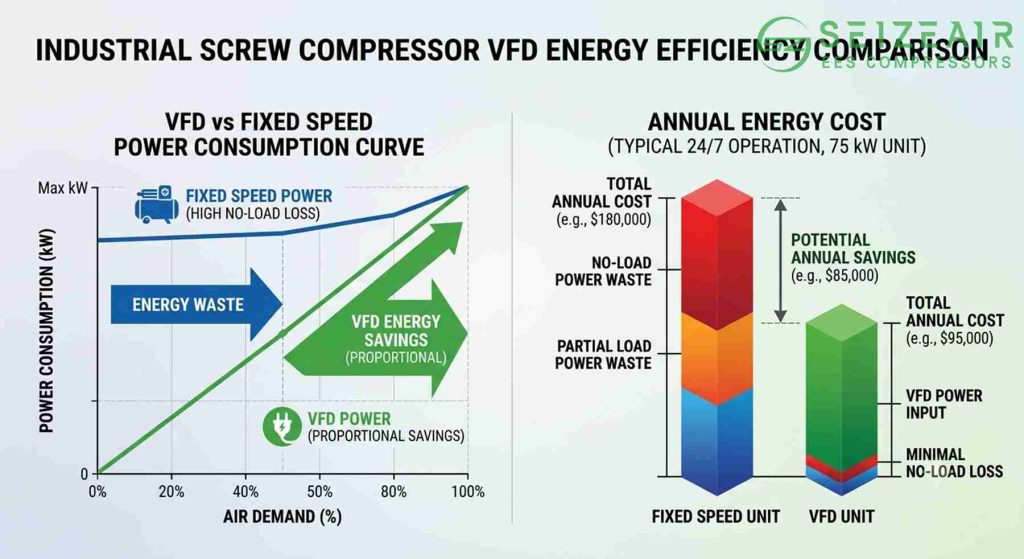
Factory air demand fluctuates throughout a typical production shift as automated machinery cycles on and off. Fixed-speed air compressors must switch between full load and wastefully spinning in unloader mode (consuming up to 30-40% of full-load power while producing zero compressed air).
Rotary screw units easily accommodate variable frequency drive rotary screw air compressor configurations. A VFD inverter modulates motor input frequency and voltage to match motor RPM directly to real-time plant air consumption, cutting electrical draw proportionally.
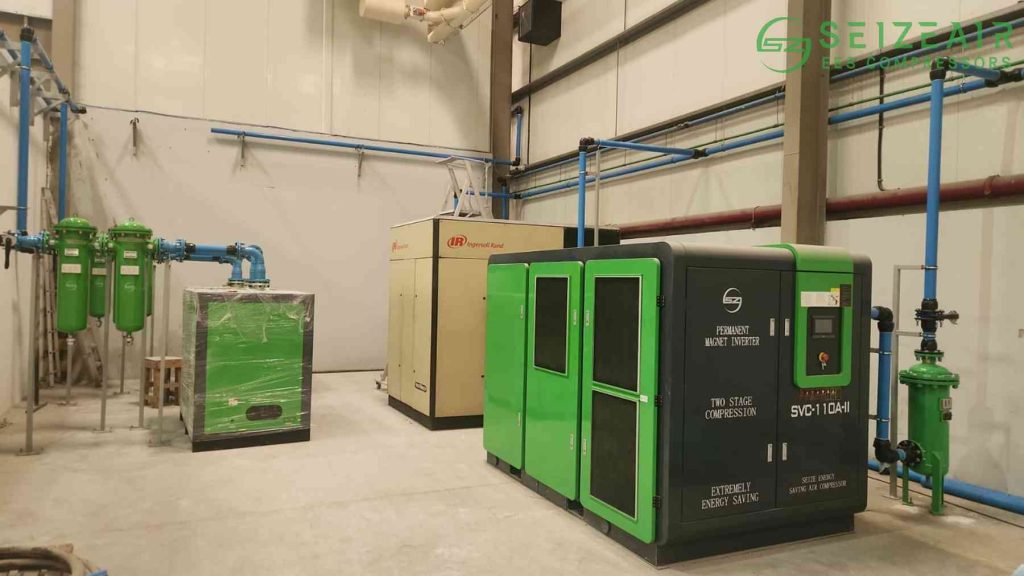
To maximize facility energy savings, engineering manufacturers like Seize Air incorporate advanced dual-stage permanent magnet VFD screw technology into their systems. This engineering design eliminates unloader losses entirely and lowers electric power consumption during partial-load demand states.
| Cost & Efficiency Metric | Reciprocating Piston (50 HP Equivalent) | Fixed-Speed Industrial Screw (50 HP) | VFD Industrial Screw Compressor (50 HP) |
| Initial Purchase Price (CapEx) | Low upfront investment ($) | Medium-High investment ($$$) \vert{} Premium investment ($$$$) | |
| 5-Year Electrical Energy Cost | Highest operational expense ($$$$) \vert{} Moderate operational expense ($$$) \vert{} Lowest operational expense ($$) | ||
| Unloaded Idle Power Loss | Heavy cyclic start/stop energy loss | Moderate blowdown/unloaded loss | Minimal / Zero idle waste |
| Energy Payback ROI Horizon | N/A | 12 – 18 Months | 8 – 14 Months |
5. Industrial Screw Compressor Noise Levels, Vibrations, and Floor Space Requirements
Factory floor layout and OSHA workplace regulations demand strict acoustic and mechanical vibration control to protect workforce health and equipment stability.
Decibel Noise Output
- Piston Compressor Noise Levels: Reciprocating piston strokes, intake valve slap, and mechanical vibration produce intense operational sound levels ranging from 80 dB(A) to over 95 dB(A). A large piston unit usually requires a separate isolated compressor house, distant exterior pad mounting, or mandatory hearing protection for nearby shop technicians.
- Industrial Screw Enclosure Noise Levels: Rotary screw units feature smooth rotary motion housed within heavy-gauge, sound-attenuated acoustic enclosures. Sound ratings drop down to 62 dB(A) to 72 dB(A). This allows safe installation directly on the production floor adjacent to machine operators or CNC equipment without elevated acoustic risk.
Floor Space Footprint and Base Foundation Needs
Piston units generate heavy, unbalanced reciprocating forces that transmit vibration into surrounding building structures. They require reinforced concrete foundation pads or heavy isolation mounts to prevent floor cracking and structural fatigue over time.
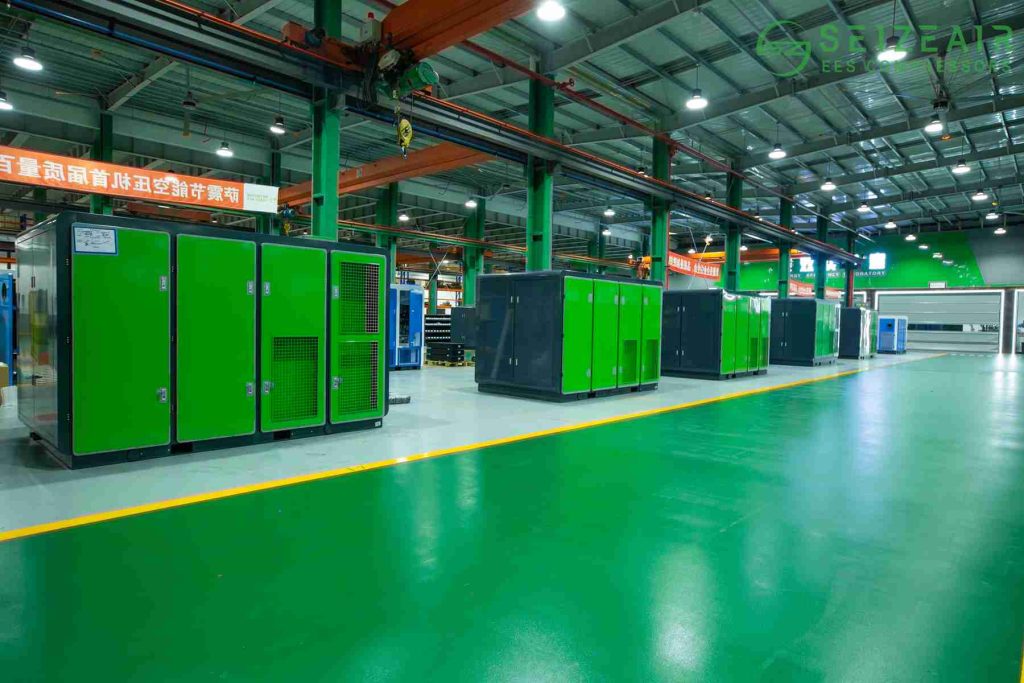
Conversely, an industrial screw compressor operates with complete rotational dynamic balance. The integrated cabinet design incorporates a compact footprint, allowing the unit to sit directly on standard industrial concrete floors without dedicated foundation mounting.
6. Air Quality, Oil Carryover, and Air Treatment Equipment Needs
Downstream pneumatic equipment—including precision CNC machinery, automated packaging lines, air bearings, paint spray booths, and food processing systems—requires clean, dry compressed air free from excessive liquid oil aerosol.
Oil Carryover in Liquid-Injected Units
All fluid-lubricated compressors discharge minor amounts of oil aerosol into the compressed air pipeline. However, the internal mechanisms for oil separation differ fundamentally:
- Piston Oil Control Degradation: Relies on mechanical oil scraper rings on the piston skirt. As cylinder walls and piston rings wear down, crankcase oil slips past the rings into the compression chamber (known as oil blow-by). Oil carryover in aging piston units increases from an initial 25 ppm to well over 50+ ppm, fouling compressed air line filters and damaging downstream equipment.
- Rotary Screw Multi-Stage Oil Separation: Employs an advanced multi-stage mechanical centrifugal separator tank followed by a high-efficiency coalescing separator cartridge. A premium-grade industrial screw compressor maintains tight oil carryover control, holding fluid contamination under 2 to 3 ppm across its operational service life.
7. What Are Maintenance Schedules and Component Lifespans for Both Types?
The total number of moving mechanical parts directly dictates maintenance frequency, unexpected downtime, and long-term service expenses.
Piston Wear Components and Overhaul Lifespans
Piston compressors contain numerous high-wear mechanical parts subject to cyclical mechanical shock and intense sliding friction:
- Wrist pins, connecting rod big-end bearings, and crankshaft journals
- Intake and discharge flexible reed/disc valves (susceptible to fatigue cracking)
- Piston compression rings, oil scraper rings, and cast-iron cylinder walls
Reciprocating units typically demand intake valve rebuilds every 2,000 to 4,000 operating hours and full pump block overhauls every 10,000 to 15,000 hours.
Rotary Screw Component Lifespans and Service Routines
An industrial screw compressor has no intake/discharge valves, piston rings, or wrist pins to fail. High-wear mechanical components are limited to air filters, oil filters, fluid separator cartridges, drive belts or direct couplings, and precision air-end bearings.
- Fluid & Filter Replacements: Scheduled every 3,000 to 4,000 operational hours (using premium synthetic compressor fluids).
- Air-End Service Lifespan: Precision-engineered rotary screw air-ends, like those built into Seize Air industrial units, routinely deliver 60,000 to 100,000+ continuous operational hours before rotor bearing maintenance becomes necessary.
| Maintenance Task | Reciprocating Piston Service Interval | Industrial Screw Compressor Service Interval |
| Compressor Oil Replacement | Every 500 – 1,000 Operating Hours | Every 3,000 – 8,000 Hours (Synthetic Fluid) |
| Air Intake Filter Service | Every 500 – 1,000 Operating Hours | Every 2,000 – 4,000 Operating Hours |
| Valve Plate & Ring Rebuild | Every 2,000 – 4,000 Hours (Valve failure common) | N/A (No reciprocating valves or rings exist) |
| Air/Oil Separator Cartridge | N/A | Every 4,000 – 8,000 Operating Hours |
| Major Air-End / Pump Overhaul | 10,000 – 15,000 Operating Hours | 60,000 – 100,000+ Operating Hours |
8. Which Compressor Is Right for Your Plant?
Selecting between a continuous rotary screw and an intermittent reciprocating piston compressor depends on your daily duty cycle, total required CFM airflow, and workplace noise thresholds.
Choose an Industrial Screw Compressor if:
- Your manufacturing plant operates continuously for more than 4-5 hours per day. (e.g., automated assembly lines, CNC machining centers, textile manufacturing, laser cutting systems, plastic processing, metal stamping).
- Your production equipment requires a steady, pulse-free stream of compressed air.
- You want low workplace decibels and minimal vibration near working personnel.
- Reducing monthly utility bills via high specific power efficiency is a primary financial target.
- Your processes demand high air purity with low oil aerosol carryover (<3 ppm).
Choose a Piston Compressor if:
- Your air usage is low-frequency, sporadic, or intermittent. (e.g., small auto body repair shops running impact wrenches 10 minutes per hour, farm equipment maintenance sheds, small cabinet shops).
- Your capital budget requires a low initial purchase cost.
- Your application demands operating discharge pressures above 215 PSI (15 bar).
- The compressor operates in harsh, mobile, or remote field sites with minimal maintenance oversight.
To determine exact system sizing, pipe header sizing, and air receiver tank requirements for your facility, compressed air specialists at Seize Air can conduct a thorough plant air audit to analyze your peak versus baseline CFM demand profiles.
9. Frequently Asked Questions
Is a screw compressor better than a piston compressor for industrial use?
Yes, for industrial operations running multi-shift schedules or continuous production, an industrial screw compressor is superior. It delivers higher volumetric efficiency, 100% continuous duty cycle operation, lower decibel noise levels, cleaner discharge air (under 3 ppm oil carryover), and lower energy consumption per CFM. Piston units are better suited for light, intermittent, or low-budget applications.
Can I replace a 15 HP piston compressor with a 15 HP industrial screw compressor?
Yes, replacing a 15 HP piston unit with a 15 HP rotary screw machine delivers significantly more usable air volume. A 15 HP screw unit delivers roughly 60 to 75 CFM continuously at 100 PSI, compared to only 45 to 55 CFM from a 15 HP piston compressor. Additionally, the screw unit can run continuously without thermal degradation, whereas the piston unit requires resting downtime to avoid overheating.
What happens if you run a piston compressor continuously without stopping?
Running a standard piston air compressor continuously beyond its design duty cycle rating (typically 60-70%) causes severe heat accumulation in the cylinder heads. This thermal breakdown rapidly degrades compressor oil, creates heavy carbon buildup on internal valves, warps piston rings, and can cause catastrophic cylinder seizure.
Why are rotary screw air compressors more expensive upfront than piston models?
An industrial screw compressor requires extreme manufacturing precision, with rotor tolerances engineered down to the micron. It also includes integrated air/oil separation systems, acoustic sound-attenuating enclosures, sophisticated micro-processor electronic controllers, and heavy-duty cooling radiators. While the initial capital cost is higher, the investment is typically recovered within 12 to 18 months through reduced electricity costs and eliminated downtime.
Do rotary screw compressors need time to warm up before handling load?
Unlike piston units that compress air immediately upon motor start, a rotary screw unit goes through an automated start-up sequence (usually lasting 5 to 10 seconds). This allows the oil system to establish proper internal pressure and reach proper operational temperature before opening the inlet unloader valve to deliver compressed air into the plant air header.
Take the Next Step Toward Optimized Industrial Air Performance
Selecting the ideal compressor technology directly determines your plant’s energy bills, operational uptime, and downstream product quality. While reciprocating piston units remain practical for low-duty, intermittent tasks, a continuous-duty industrial screw compressor stands as the definitive standard for modern manufacturing facilities, automated plants, and energy-conscious industrial applications.
Ready to reduce your facility’s energy bills, stabilize plant air pressure, and stop unplanned system downtime? Contact the engineering specialists at Seize Air today to schedule a comprehensive facility air audit, analyze your CFM usage profile, or request a factory-direct quote on high-efficiency rotary screw compressor systems tailored specifically to your operation.