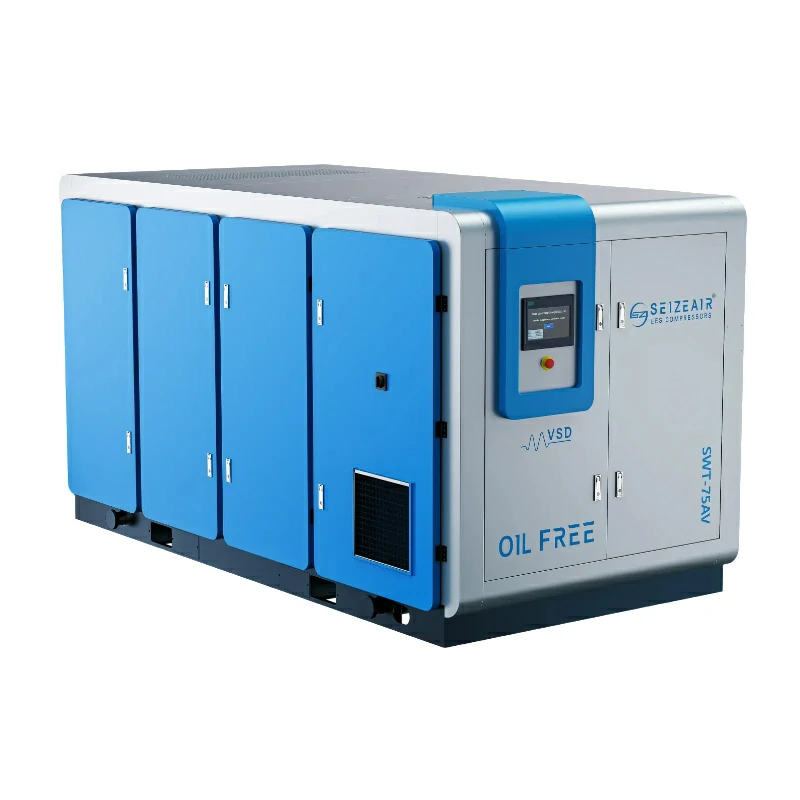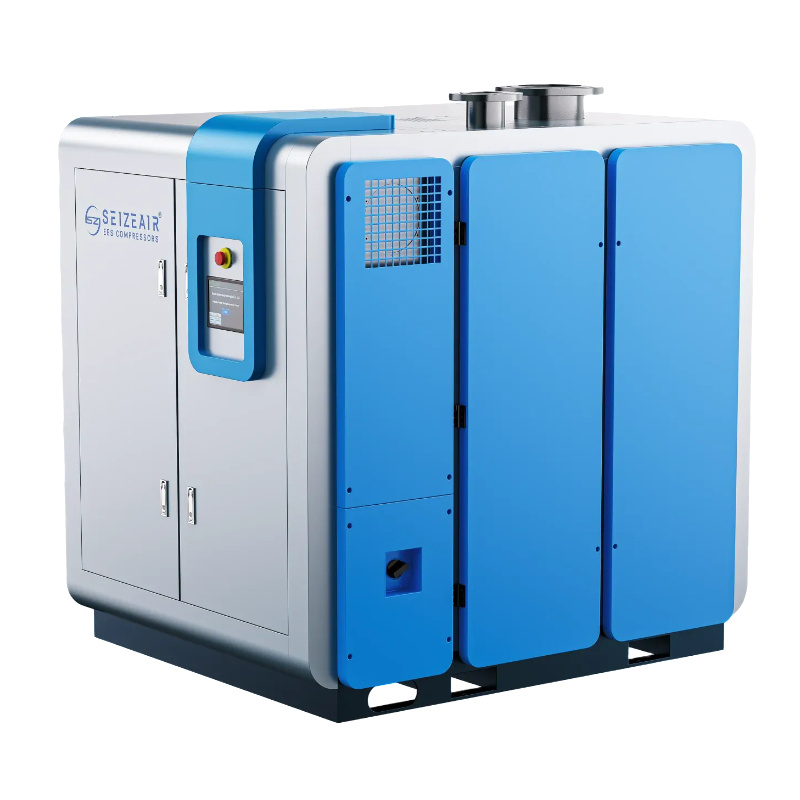


PTC ASIA air compressor buyers planning a trip to Shanghai in early November have one stand worth putting on the schedule: SEIZE AIR will exhibit at booth N4 · D3 during PTC ASIA 2026 / ComVac ASIA 2026, from 3 to 6 November 2026 at 2345 Longyang Road, Pudong New Area, Shanghai, China. Six machine lines have been announced for the stand, covering centrifugal, oil-injected screw, dry oil-free screw, magnetic-levitation and containerized station designs. This guide sets out the confirmed event details, explains what each exhibit represents, and gives plant engineers, maintenance teams and purchasing staff a practical way to turn a short booth conversation into a comparable technical enquiry. Model designations below reproduce the company’s announced list; model-specific ratings should be confirmed against the nameplate and the current catalogue at the stand.
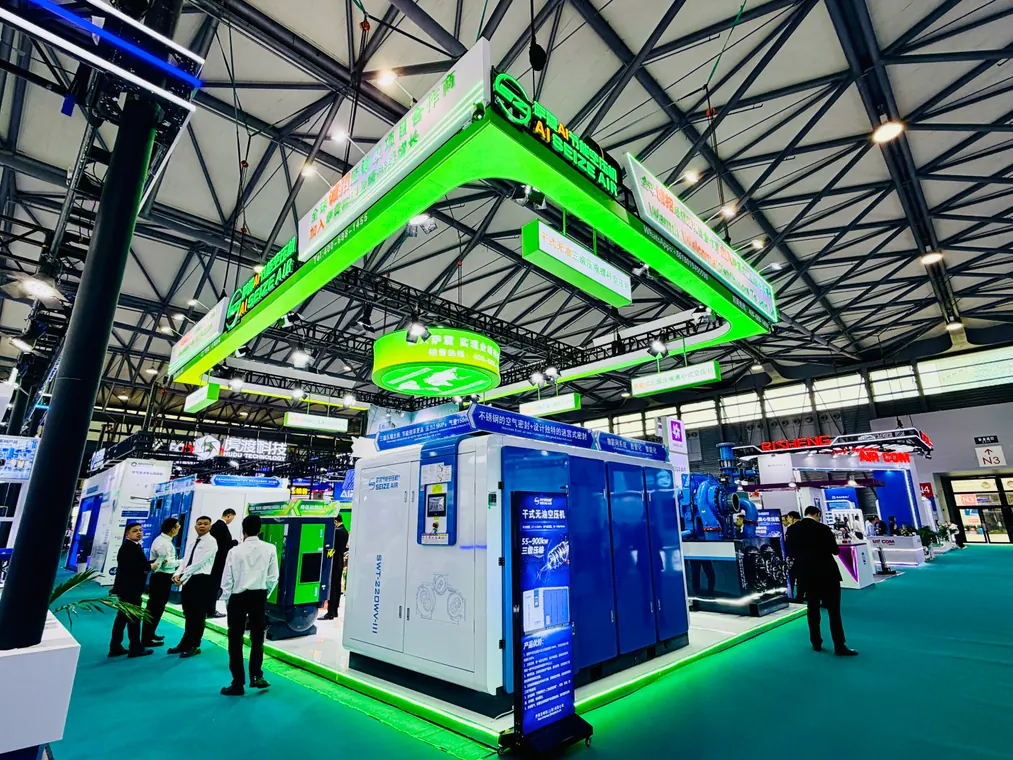
PTC ASIA air compressor visitors: the event at a glance
Two co-located exhibitions, one supply chain
PTC ASIA and ComVac ASIA run side by side at the same Shanghai venue, and that pairing matters to anyone specifying compressed air. PTC ASIA covers power transmission and fluid power, while ComVac ASIA focuses on compressed air and vacuum technology. A visitor can therefore review the drive, treatment and distribution equipment that surrounds a compressor in the same walk. Treat the two names as one trip with two halls rather than two separate events. That framing helps a buying team split responsibilities: one person looks at generation equipment, another at drives, dryers and controls.
For an air compressor buyer, the practical value of a co-located show is context. A compressor is never an isolated purchase. Its performance depends on inlet conditions, the treatment train, the distribution network and the demand pattern of the plant. Seeing those elements in one place makes it easier to ask suppliers how a proposed machine behaves inside a real system. It also exposes gaps in an enquiry early, before a quotation is issued on assumptions that nobody has checked. Use the visit to build a system view, not simply a shortlist of machines.
Confirmed dates, address and booth location
The details below are the organiser and exhibitor facts for this edition. Keep them in the shared trip note so that everyone in the delegation arrives at the same place. Booth codes at a large exhibition are easy to misread, and Hall N4 is a specific building rather than a general area. Confirm the hall number again at the entrance on the day, because organisers occasionally adjust hall assignments between the printed guide and the final floor plan.
| Item | Confirmed detail |
|---|---|
| Exhibition | PTC ASIA 2026 / ComVac ASIA 2026 |
| Dates | 3–6 November 2026 |
| Address | 2345 Longyang Road, Pudong New Area, Shanghai, China |
| SEIZE AIR booth | N4 · D3 |
| Announced exhibit lines | Six machine lines, from centrifugal compressors to a containerized air compressor station |
Arrive with the booth code written down, not just saved in a phone photo. Exhibition halls are large, signage competes with hundreds of other stands, and mobile reception indoors can be unreliable. A printed floor plan with N4 · D3 circled saves time at the entrance. If the delegation splits up, agree a fixed meeting point and a time window before entering the hall. These small logistics decisions protect the technical part of the visit from being squeezed out by wandering.
Why a compressor buyer should attend in person
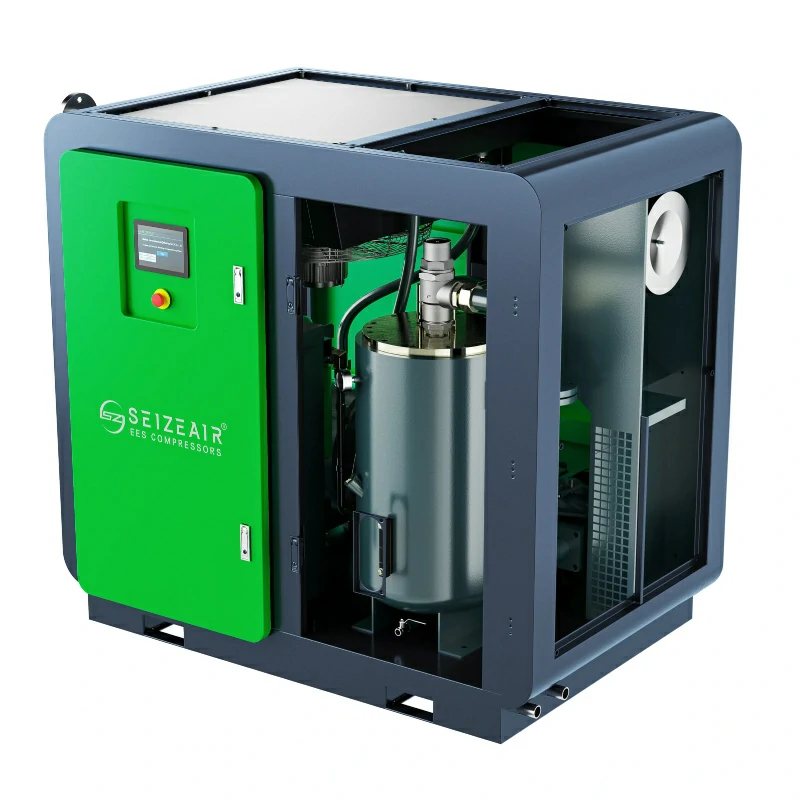
Catalogues describe a product at defined reference conditions; a stand lets you inspect how it is built. Cabinet layout, access panels, filter placement, controller screens and pipe connections are visible in a way that a datasheet cannot show. Maintenance staff in particular can judge whether routine service items are reachable without dismantling half the enclosure. That judgement is difficult to make remotely and expensive to discover after installation.
The second reason is the engineering conversation. A trade show puts application engineers, product managers and service specialists in the same place for a few days. Bringing a real demand profile and a set of written questions turns that access into something useful. Ask how a machine is rated, what the rating assumes, and which documents support it. Request the evidence rather than a headline figure. The rest of this guide is organised around exactly those questions, with a worksheet near the end for recording the answers.
Six PTC ASIA air compressor exhibit lines on the SEIZE AIR stand
The announced list contains six entries. Several are specific model designations, while one describes a complete station rather than a single machine. Read the list as a map of technology families: high-flow centrifugal compression, two-stage and permanent-magnet oil-injected screw machines, sixth-generation oil-free and magnetic-levitation platforms, and an integrated containerized station. Each family answers a different plant question. The sections below explain that question without attaching unverified numbers to any individual unit.
SC1000-180-8: the centrifugal end of the range
The SC1000-180-8 heads the announced list and sits with the company’s centrifugal equipment. Gear-driven centrifugal machines are usually selected where a plant needs a large, steady volume of air at a fixed pressure band, and where the cost of a single high-capacity unit compares well with several smaller packages. They are a different architectural choice from screw compressors, not simply a larger version of them.Anyone comparing the two should ask about turndown, inlet guide vanes or variable-speed control, and the behaviour of the machine when demand falls below its design point.
SEIZE AIR publishes a gear centrifugal air compressor range that documents the family’s operating envelope, including pressure, capacity and power bands across the series, together with the API 672 and AGMA Q4 references used for rotating equipment. Those figures describe the series, not this specific exhibited unit. At the stand, ask for the model-specific curve set and the reference conditions behind it. A performance curve is far more useful than a single capacity number, because it shows how the machine responds across its operating range.
HVC-132A-II/8.5 and ZVC-37A-II-FT/8.5: oil-injected screw machines
Two further designations, HVC-132A-II/8.5 and ZVC-37A-II-FT/8.5, represent the oil-injected screw side of the stand. The suffixes follow the company’s own model-coding convention; visitors should confirm what each element denotes on the nameplate and in the current catalogue rather than inferring it. What matters at the enquiry stage is the underlying architecture: single-stage or two-stage compression, fixed-speed or variable-speed drive, and the pressure class the machine is built for.
Two-stage compression is worth understanding before discussing either unit. By splitting the pressure rise across two compression stages with inter-stage cooling, a two-stage design can reduce the work needed for a given delivery condition compared with a single stage. SEIZE AIR documents its two-stage oil-injected screw compressor family separately, which is a useful reference for framing questions about stage arrangement, intercooling and the conditions under which the design is advantageous. Ask the booth team which of the two exhibited models uses that arrangement and what the stated comparison basis is.
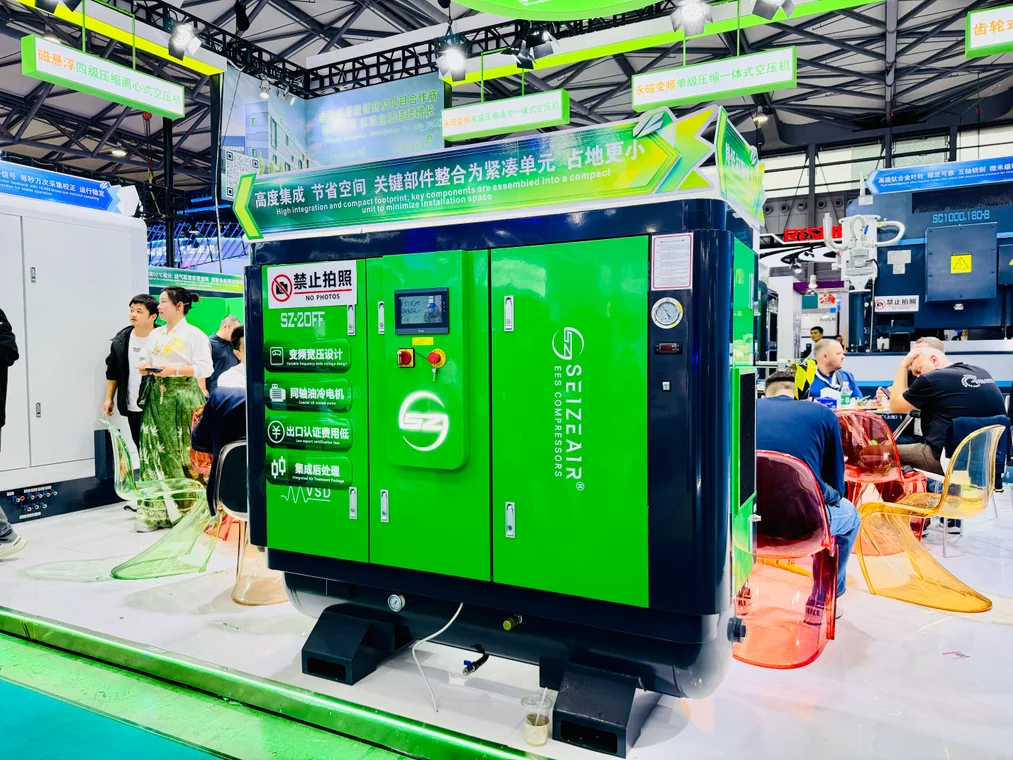
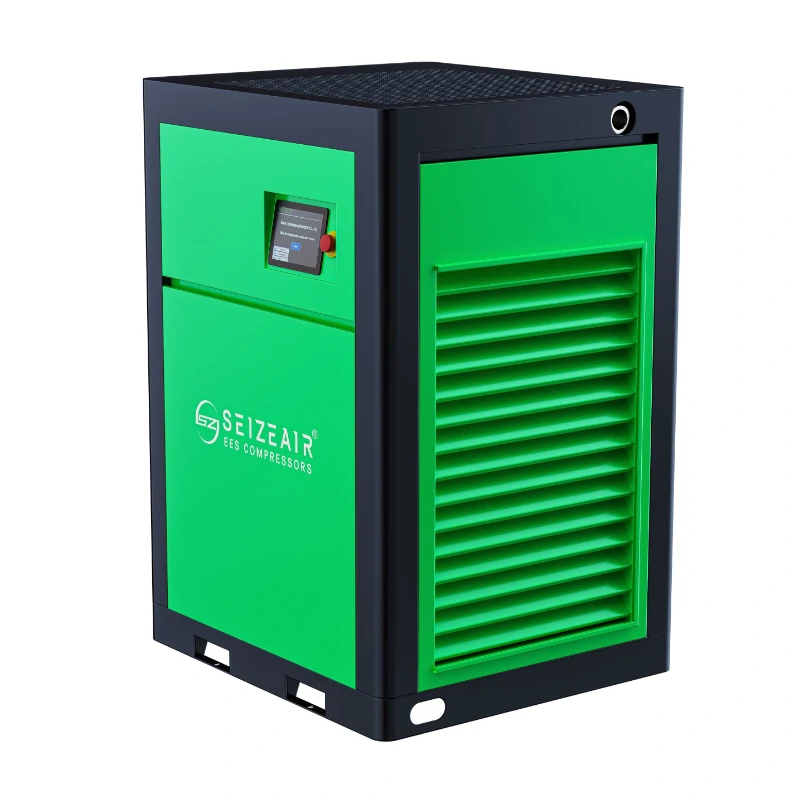
Cabinet photographs from an exhibition floor illustrate construction, not performance. A green enclosure with a control screen tells you where the operator interface sits and how the doors open; it says nothing about capacity or specific power. Keep that distinction in mind when comparing stands. Ask to see the nameplate, the controller menu and the maintenance access points, then record what you observe in your own words. Photographs are helpful as a memory aid, while ratings belong in the written documentation you take away.
GE535 with CH-315/8.0/60(HC): sixth-generation and magnetic-levitation centrifugal
The third entry pairs the GE535, described by the company as a sixth-generation product, with the CH-315/8.0/60(HC), described as the centrifugal model. This is the most technically distinct part of the stand, because magnetic levitation changes the mechanical design of a high-speed rotating machine. Rather than oil-lubricated rolling bearings, an active magnetic bearing system supports the rotor in a controlled electromagnetic field. The company’s magnetic levitation centrifugal air compressor materials describe that platform, and a separate magnetic levitation centrifugal energy-saving blower range covers lower-pressure duties.
The word “sixth-generation” is the company’s product-line label, not a performance claim to be converted into a percentage. Ask what changed between generations in terms of the rotor, the bearing control, the cooling arrangement and the controller. Request the current revision of the technical catalogue and its version date. Generational labels are useful shorthand for a sales conversation, but procurement decisions need the underlying specification and the documents that support it.
SWT-220WV/8: sixth-generation dry oil-free screw
The SWT-220WV/8 is the second model described as sixth-generation and represents the dry oil-free screw family. In a dry oil-free machine, the compression chamber contains no oil, so the air path relies on precisely timed rotors, coatings and sealing rather than oil injection for lubrication and cooling. That architecture is chosen when the process cannot tolerate oil carry-over, and it comes with its own maintenance and temperature considerations. SEIZE AIR documents the dry oil-free screw air compressor family with its series pressure and power bands, staging options and the ISO 1217 Annex C reference used for rating.
Series figures are a starting point, not a substitute for the exhibited unit’s nameplate. Ask which staging configuration the SWT-220WV/8 uses, what inlet conditions its rating assumes, and which air-quality standard applies to the delivered air. Also ask about the cooling medium and the ambient temperature range, since those affect where the machine can be installed. A buyer who leaves with the revision date of the catalogue and the model-specific datasheet has something a quotation review can actually use.
Containerized Air Compressor Station Model
The sixth announced entry is a station rather than a standalone compressor. A containerized air compressor station integrates the compressor, air treatment, receiver, ventilation, electrical distribution and controls inside a transportable enclosure. Its main promise is that the whole station is assembled and tested before it leaves the factory, so site work is reduced to positioning, power and air connections. That is a different procurement object from a machine delivered on a pallet, and it should be evaluated as a system.
SEIZE AIR maintains a dedicated containerized air compressor station product page covering this category. At the stand, ask what is included inside the enclosure, what is excluded, and which items are factory-tested before dispatch. Clarify the boundary between skid-mounted, containerized and trailer-mounted solutions, because the three are often confused in enquiries. Also confirm the site interfaces: power supply, cooling, drainage, air outlet and any foundation requirements. Those details determine whether the station concept fits the plot you have in mind.
Centrifugal and magnetic-levitation technology explained
How a centrifugal machine differs from a screw compressor
A screw compressor traps air between meshing rotors and reduces its volume; a centrifugal machine accelerates air with a high-speed impeller and converts velocity into pressure in a diffuser. The distinction matters for how each behaves when demand changes. Screw packages generally tolerate a wide operating band with variable-speed control. Centrifugal machines are usually optimised around a design point and need careful attention to turndown and surge protection. Neither is universally better. The right choice follows the shape of the plant’s demand profile.
At the stand, ask to see the machine’s operating envelope rather than a single rated point. Request the curve that relates delivered flow to discharge pressure, and ask how the control system behaves near the low-flow limit. For a plant with a steady base load and a smaller variable component, a centrifugal base-load machine paired with a smaller trim compressor can be a sensible arrangement. For a highly intermittent demand, the conversation shifts. Bring your own hourly or shift-level demand pattern so the discussion starts from your plant, not from a generic example.
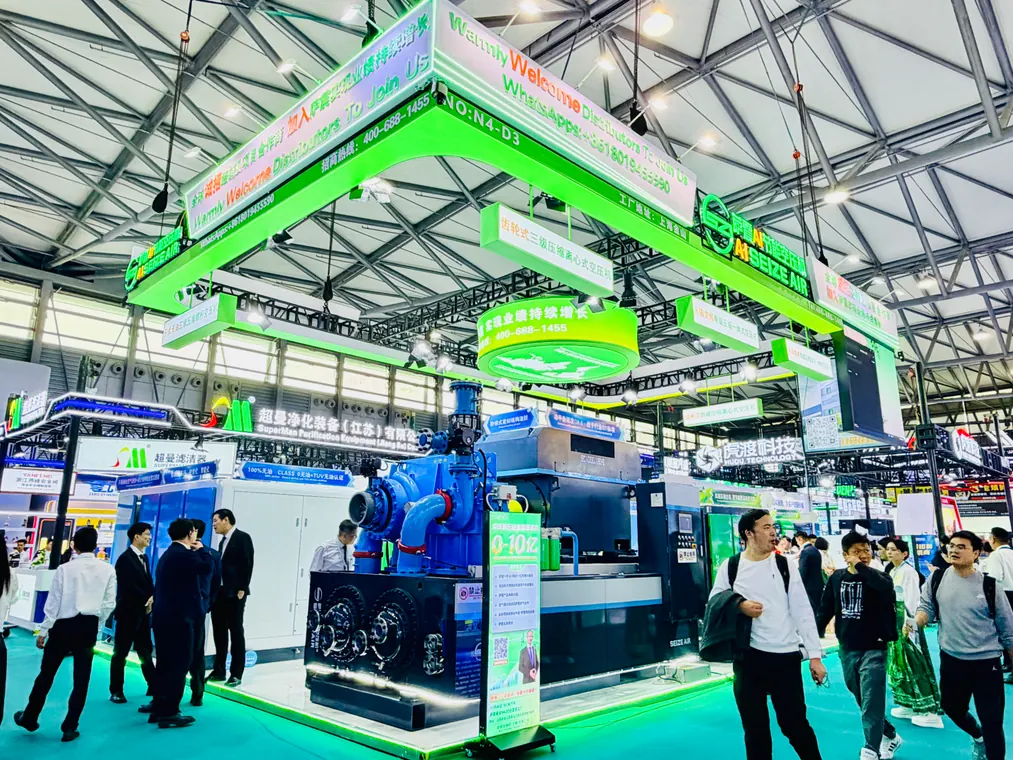
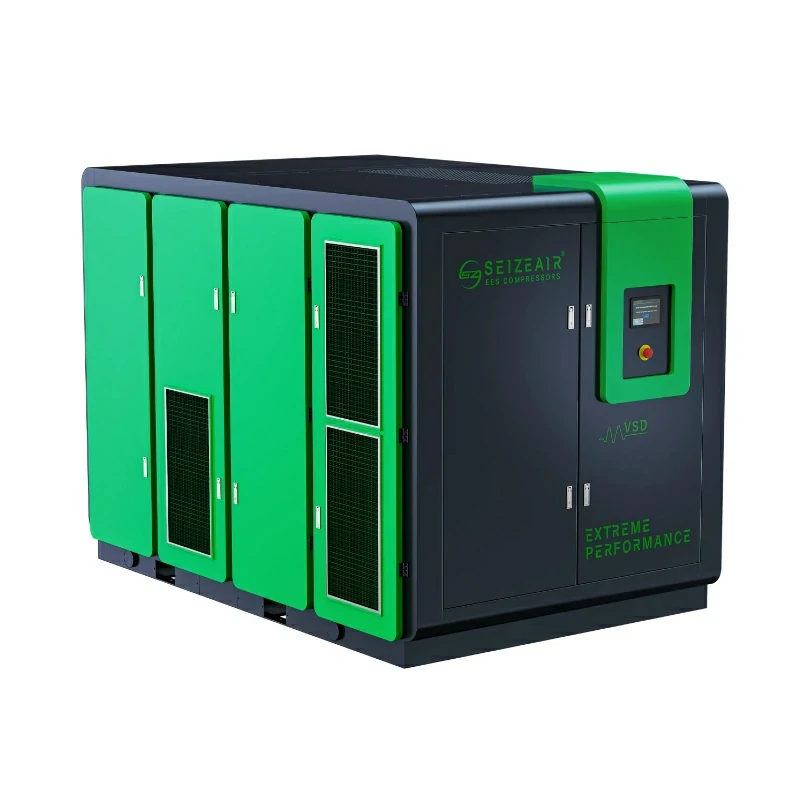
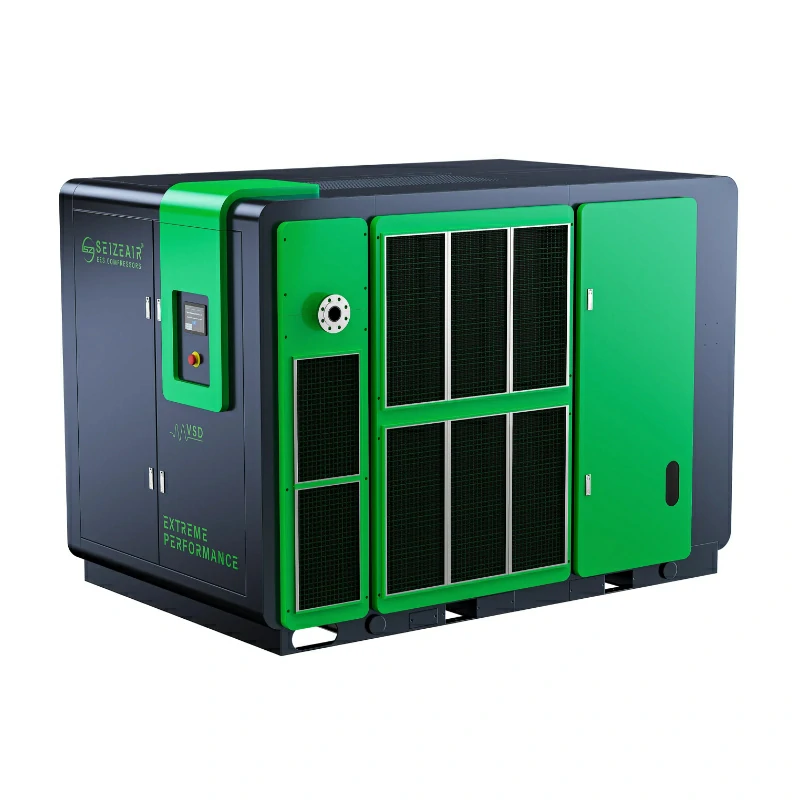
Large assembled machines are the main reason to see this equipment in person. The photograph above shows how a full assembly occupies floor space, where the cooling and drive sections sit, and how much clearance is needed around it for service. Those observations feed directly into a layout drawing. Note the lifting points, the access doors and the direction of the air outlet. Then ask the booth team for the installation drawing with dimensions and the recommended maintenance clearances. A machine that performs well but cannot be serviced in the allotted room is a poor specification.
What magnetic levitation bearings change
SEIZE AIR’s magnetic levitation blower catalogue (Version 2025-10) describes an active magnetic bearing arrangement with five degrees of freedom, two radial bearings and one axial bearing, and position sampling at roughly ten thousand times per second. It also describes an IP67 rating, a twenty-year design life for the bearing system, protection bearings intended to withstand a defined number of rotor drops, and a power-loss mode in which the machine generates electricity while the rotor coasts down. Those are catalogue statements about the platform, and visitors should ask which of them apply to the exhibited CH unit.
Other documented platform details include a three-stage inlet filtration system, two-stage compression with intercooling and aftercooling, a three-dimensional backward-curved impeller machined in one piece from aviation aluminium, a 115 percent overspeed test, and a built-in low-pressure water cooler with a moisture separation filter. Ask how each of these relates to the machine actually on the stand. The useful outcome is a written list of which platform features are present on which model, with the catalogue revision noted. That list is what a maintenance planner needs when estimating spare parts and service skills.
Keep blower and compressor pressure bands separate
One distinction is easy to blur during a busy stand conversation. The magnetic levitation blower family documented by SEIZE AIR covers a low-pressure band of roughly 0.3 to 1.2 bar with power from 22 to 400 kW, and its capacity tables are given at pressure steps between 30 and 120 kPa at 1 atm and 20 °C. The gear-driven centrifugal compressor family covers a much higher band, from 1.5 to 16 barG, with capacities of 40 to 380 m³/min and power from 100 to 2200 kW across the SC450 to SC2200 series. These are different machines for different duties.
Do not apply a blower capacity table to a compressor enquiry, or the reverse. When a figure is quoted, write down the reference conditions next to it: inlet pressure, inlet temperature, coolant conditions and whether the value is gauge or absolute. The Compressed Air and Gas Institute publishes guidance on how compressed air performance data should be stated and compared, which is a useful neutral reference when reviewing a supplier’s numbers. Ask the booth team to state their units and reference conditions explicitly for every figure they give you.
Oil-free air and what Class 0 certification actually covers
Class 0 is a measured air-quality class, not a marketing term
ISO 8573-1 defines purity classes for particles, water and oil in compressed air. Class 0 does not mean literally zero contamination; it means a class that is more stringent than Class 1 and is specified and tested by agreement between the parties, using the measurement parts of the standard. SEIZE AIR’s dry oil-free screw certification, reviewed against the certificate original, cites ISO 8573-1:2010, ISO 8573-2:2018 and ISO 8573-5:2001, and carries the certificate number 08823P10001 with a stated validity to 4 January 2028.
That certificate lists the covered models, from SWT-37W through SWT-355W and SWT-37A through SWT-250A. Coverage is model-specific, so a buyer should not assume it extends to larger units such as the SWT450W. Ask to see the certificate original at the stand, check the model list against the machine you are considering, and note the current validity date. A separate certificate, number GC24009009000223, covers the water-lubricated oil-free family with the same stated validity date. For background reading before the show, the comparison of water-lubricated and dry Class 0 compressors is a useful starting point.
Dry screw and water-lubricated designs are different answers
Both designs remove oil from the compression chamber, but they do it differently. A dry screw machine uses synchronised rotors with no liquid injection and relies on coatings, clearances and staging to manage temperature. A water-lubricated machine injects water into the compression chamber, which acts as sealant, coolant and lubricant. Each approach has different implications for air treatment downstream, for water quality and consumption, and for the maintenance routine. Neither is automatically superior across all applications.
SEIZE AIR documents a water-lubricated oil-free screw compressor family alongside the dry screw range. At the stand, ask which air-quality class each design is certified to, what downstream drying is required, and what happens to the delivered dew point in each case. For food, pharmaceutical, electronics and medical applications, the point-of-use air-quality specification should lead the discussion. Bring that specification as a written requirement rather than describing the application in general terms. A supplier can then confirm whether a given machine and treatment train meets it.
Documentation worth requesting at the booth
A short list of documents turns a friendly conversation into a reviewable record. Ask for the model-specific datasheet with its revision date, the performance test basis, the air-quality certificate original with its scope and validity, the applicable CE or EAC documentation, and the quality-system certificates covering the manufacturing site. SEIZE AIR’s published certification matrix includes ISO 9001, ISO 14001 and ISO 45001, TÜV oil-free, CE for the SV and S series, CE EMC/MD and EAC. Certificate validity should always be checked against the current original, because renewal dates change.
Also request the SGS test report reference if a performance claim is being made. The company’s published record cites report SHES250300470951 for the SVC-75A-II, SV-75A-II and SZ-100TPM models, measured to ISO 1217:2009. Note the models that report covers and ask whether comparable evidence exists for the unit you are considering. A report for one model does not establish the performance of a whole series. Record document numbers and dates in your worksheet so that the quotation review can refer back to the same evidence.
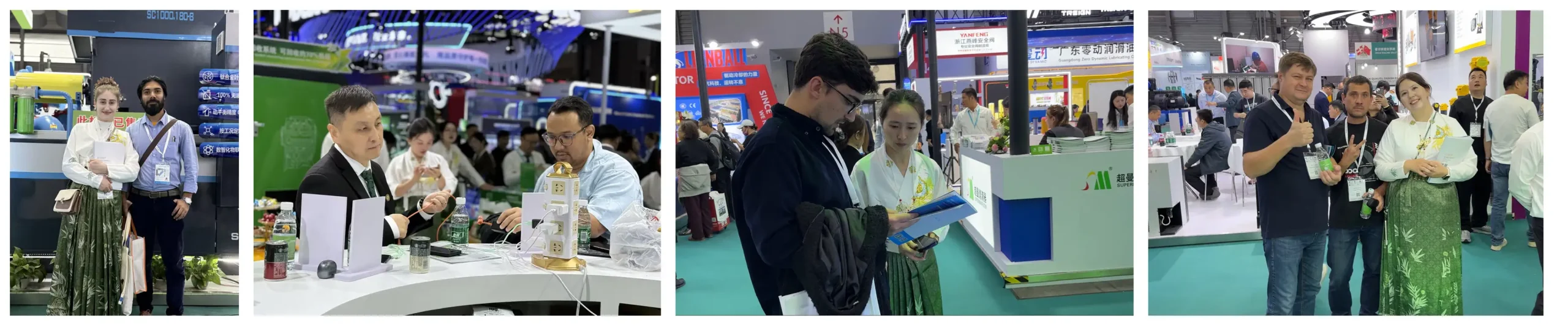
Booth conversations are where documentation requests are best made. The people who can answer a detailed certification question are usually present at a major exhibition, and a written request made in person is harder to lose than one sent afterwards. Take a note of who you spoke to and which documents they promised to send. Then follow up within a few days with the exact list. A short, specific follow-up message referencing the stand conversation usually produces a faster and more complete response than a general enquiry
Containerized and integrated air stations
What a containerized station includes
A containerized station is best understood as a factory-built compressed air room. Inside the enclosure you would normally expect the compressor package, a receiver, drying and filtration equipment, a condensate drain, ventilation and cooling, an electrical distribution panel, and a control system that supervises the whole assembly. The enclosure itself provides weather protection and a defined footprint. Some stations are built for outdoor placement at remote sites; others serve as a rapidly deployable replacement while a permanent compressor house is refurbished.
Ask the booth team to walk you through the exact scope of the exhibited station, item by item. Confirm which components are inside the enclosure and which remain site-supplied. Clarify the design ambient conditions, the ventilation arrangement and the noise treatment. Then ask how the station is transported, lifted and positioned, and what the site has to provide before commissioning. Scope is the most common source of dispute in station projects, so get it in writing. A clear battery-limits list protects both the buyer and the supplier.
Skid, container and trailer are three different things
These terms are often used interchangeably in enquiries, which leads to mismatched quotations. A skid-mounted unit is a compressor and associated equipment fixed to a common base frame, usually intended for installation inside an existing building. A containerized station is a complete, enclosed, weather-protected room that can be placed outdoors. A trailer-mounted unit is a mobile package on a chassis, designed to be towed between sites. Each has different foundations, permissions, transport and commissioning requirements.
Decide which of the three you actually need before asking for a price. A remote mining or construction site with no available building points towards a containerized or trailer solution; an existing plant with a compressor house and spare floor space points towards a skid or a conventional package. Describe the site, not just the machine, when you brief the supplier. That single clarification removes a large amount of ambiguity from the first quotation and makes subsequent comparisons meaningful.
Factory-tested integration and site hook-up
The principal argument for a pre-assembled station is that the interfaces between components are resolved before delivery. Piping, wiring, control logic and ventilation are designed as one system, and the assembly can be function-tested at the factory. On site, the remaining work is typically positioning, connecting power, connecting the air outlet and completing commissioning checks. That reduces the amount of field integration work and shortens the period during which different trades need access to the same area.
Ask what the factory test actually covers and what records are supplied with it. A functional test of controls and alarms is different from a full performance test of the compressor. Request the test protocol, the acceptance criteria and the commissioning checklist. Also confirm who is responsible for the final performance verification at site and under what conditions it will be measured. These questions are straightforward to answer at a stand, and the answers belong in the contract scope rather than in an email thread after delivery.
Smart monitoring and remote supervision
SEIZE AIR’s magnetic levitation platform documentation describes an intelligent station concept using Modbus together with 4G, Wi-Fi, Ethernet and LoRa connectivity, supporting continuous monitoring, fault alarms, historical data and remote start-stop. Stations of this kind are attractive where a site is unattended or where a central team supervises several compressor rooms. Connectivity alone is not the benefit; the benefit is a defined alarm and response workflow with someone accountable for acting on the data.
At the stand, ask which of those functions are included as standard, which are optional, and what data the system actually records. Clarify where the data is stored, who can access it, and what happens if the network connection drops. Ask about the alarm list and the escalation path. Then request the interface specification in writing so that your own control or energy-management team can assess compatibility. A monitoring package that cannot hand its data to your existing systems adds cost without adding much operational value.
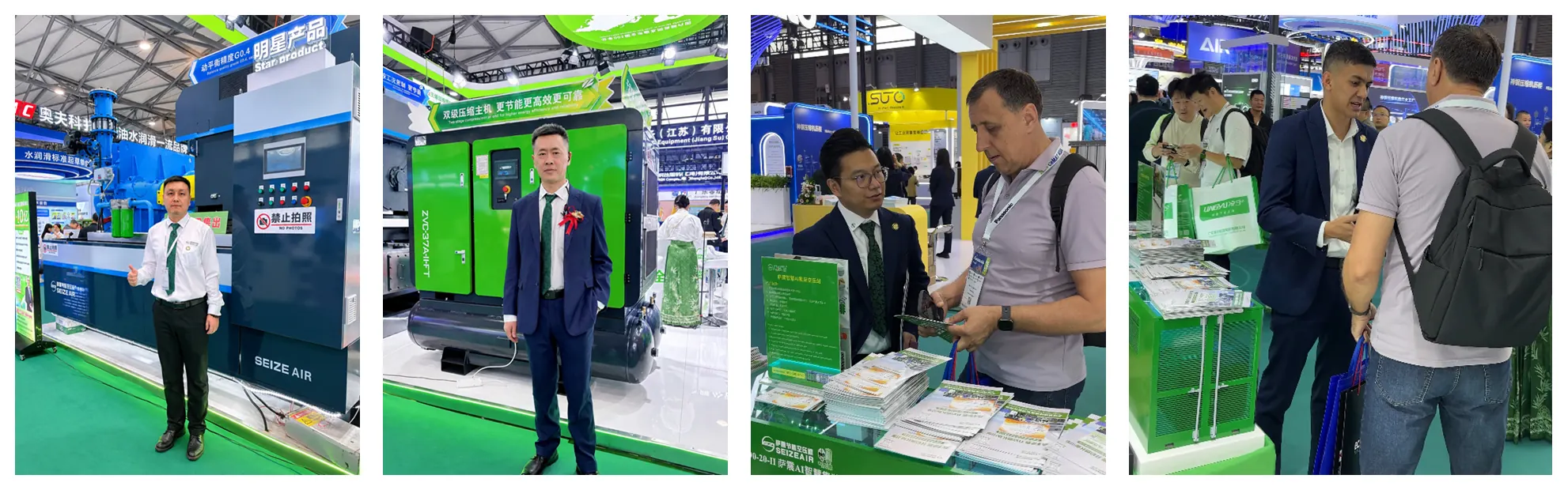
Printed literature is still one of the most useful things to carry away from an exhibition. Ask for the current catalogue revision rather than a general brochure, and check the version date on the cover or the imprint page. Write the date on your worksheet. Product documentation changes as models are revised, and a quotation review that mixes an old catalogue with a new datasheet can produce an inconsistent specification. If a document is only available digitally, request the download link before leaving the stand.
How to evaluate a PTC ASIA air compressor exhibit
Bring a demand profile, not just a model number
The most valuable item in your bag is a description of what the plant actually needs. Prepare the required pressure at the point of use, the flow profile across a typical shift, the maximum simultaneous demand, the air-quality class required by the process, and the installed treatment and distribution equipment. Note the ambient temperature range, altitude and any constraints on space, noise or power supply. If flow has never been measured, say so plainly. A supplier can then recommend an assessment instead of sizing a machine from an uncertain assumption.
Describe operating conditions separately from future plans. Current measured demand and an approved expansion belong in different columns of the brief. Estimate and measured values should never be mixed in one figure. Also note how many hours the plant runs and whether demand is steady, staged or intermittent. These inputs determine whether a fixed-speed machine, a variable-speed package, a multi-machine sequencing arrangement or a base-load plus trim configuration makes sense. Without them, a stand conversation can only produce a generic recommendation.
Ask about test conditions and reference standards
Every capacity or power figure carries assumptions. Ask for the inlet pressure and temperature, the coolant conditions, the reference standard used, and whether the number is a catalogue nominal value or a measured test result. ISO 1217:2009 and its Annex C are the common references for accepting compressor performance, and SEIZE AIR’s oil-free screw materials cite Annex C with an inlet of 1 bar at 20 °C. When a figure is quoted without its conditions, write down the missing condition as an open question rather than the figure as a fact.
Also ask whether the rated value refers to free air delivery at the package outlet or to a measurement taken somewhere else in the system. Treatment equipment, filters and dryers all introduce losses between generation and use. A plant that needs a defined condition at a machine inlet should specify where that condition applies. That single clarification prevents the common situation in which a compressor meets its datasheet while the process still complains about insufficient pressure.
Compare package input power, not nameplate motor power
Motor nameplate power, package input power and measured energy use answer different questions. The nameplate describes a component; package input power includes the drive, cooling fans and controls; measured energy use reflects how the installed system behaves over a production cycle. Mixing them in a comparison produces false conclusions about efficiency. Ask for the specific power figure, meaning input power per unit of delivered flow, together with the reference conditions under which it was determined.
Electricity tariffs also vary by region, time of day and contract structure. Rather than accept a savings percentage quoted at a stand, ask for the comparison method: which two machines, at which operating points, over which demand profile, and at whose measured conditions. The U.S. Energy Information Administration electricity data illustrates how widely prices and supply conditions differ, which is why a local energy calculation should use your own tariff and your own measured operating record. A credible supplier will explain the method rather than promise a fixed percentage.
Keep treatment, distribution and standby in the same enquiry
A compressor is one element in a supply system. Dryers, filters, receivers, drains, isolation valves, main pipes and branch connections all influence the condition delivered to the process and the energy the system consumes. When requesting a quotation, include the treatment requirement and the point at which it must be met. Ask how the proposed arrangement behaves when a filter loads, a dryer cycles, or several intermittent users start at the same time.
Standby philosophy belongs in the same conversation. Ask which units are expected to be running during normal production, how a standby unit starts, and what happens during maintenance isolation. A plant that cannot tolerate an interruption needs a different arrangement from one that can schedule a stop. Record these answers as part of the equipment scope. A quotation that covers only the compressor leaves the most important system questions unanswered, and those questions tend to reappear as costly change orders during commissioning.
- Required pressure at the point of use and the source of that requirement.
- Measured flow profile, with measured and estimated values kept separate.
- Air-quality class and the standard that defines it.
- Inlet conditions: ambient temperature range, altitude and coolant availability.
- Installed treatment, receivers and distribution arrangement.
- Standby, sequencing and maintenance isolation requirements.
- Space, access, noise and power-supply constraints at the installation point.
- Reference standard and revision date for every quoted performance figure.
From a booth conversation to a comparable quotation
Capture the answers before leaving the stand
Exhibition days are crowded and detail fades quickly. Use a worksheet with one row per question and fill it in while you are still at the stand. Record the model designation, the document revision, the person you spoke to, and any document promised afterwards. Note explicitly which claims were supported by a document and which were verbal descriptions. A short, structured record is far more useful than a stack of brochures and a few photographs when the enquiry is reviewed a week later.
| Record field | What to capture | Why it matters |
|---|---|---|
| Model and revision | Full designation plus catalogue version date | Prevents mixing old and new specifications |
| Rating basis | Reference standard, inlet conditions, units | Makes performance figures comparable |
| Air quality | Class, certificate number, scope and validity | Confirms the process requirement is met |
| Scope | Included and excluded items, site interfaces | Defines the quotation boundary |
| Evidence | Datasheet, test report, certificate originals | Supports the later review |
| Contact | Name and role of the person who answered | Gives the follow-up a clear owner |
Compare quotations on one operating basis
When quotations arrive, normalise them before comparing prices. Put each proposal onto the same delivery condition, the same demand profile and the same treatment scope. Separate the compressor package from the treatment equipment, installation, commissioning and optional monitoring. Keep motor nameplate power, package input power and predicted energy use in distinct columns. Require any claimed operating improvement to state its conditions and its comparison basis rather than a headline percentage.
The industrial compressor supplier evaluation guide offers one structure for that review. Use it to organise questions about documentation, service capability, spare-parts identification and the clarity of the proposed scope. A lower purchase price is not automatically the best correction if it leaves the air-quality requirement unmet or the maintenance access unresolved. Rank proposals against the requirements you recorded at the stand, not against each other in isolation.
Validate the result under production conditions
Acceptance should repeat the operating event that started the project. Define the measurement locations, the production state and the acceptance criteria before equipment is installed. Include the point-of-use air quality and the behaviour of the system during simultaneous demand. Record the settings, the component list and the accepted readings as a baseline. That baseline becomes the reference for later expansion, for troubleshooting and for any future performance discussion.
Keep the process owner involved in acceptance. A maintenance team may record a satisfactory station reading while an operator still sees a failed cycle. Connecting the measurements to the production outcome is what makes the check meaningful. If energy performance is part of the project, use measured package or station data on a clearly described production basis rather than converting a catalogue figure into a savings claim. This discipline starts with the questions asked at the exhibition stand and ends with a documented, repeatable result.
A practical visitor checklist for the Shanghai exhibition
Before you travel
Book the visit around a defined purpose. Write down the three questions the trip must answer and share them with everyone attending. Prepare the demand profile, the air-quality specification and a one-page drawing of the existing supply path. Check the dates, the address and the booth code against the organiser’s final guide. If you need a focused discussion with an application engineer, ask about an appointment in advance. Finally, decide who will record the answers and who will own the follow-up.
At the stand
Start with the system question, then move to the machine. Ask which of the six announced lines best matches your duty and why. Inspect access panels, filter positions, the controller and the pipe connections in person. Request the current datasheet and certificate originals, and note their revision dates. Take photographs only where permitted; some exhibits carry a no-photography label, so ask first. Fill in the worksheet before moving to the next stand, while the details are still fresh.
After the exhibition
Send a short follow-up that lists the exact documents requested and the model designations discussed. Attach your demand profile so that the supplier can respond with a defined scope. File the brochures, datasheets and worksheet together, with the version dates visible. Then compare any resulting quotation against the requirements you captured, not against memory. A disciplined follow-up is what converts a busy exhibition day into a specification the plant can actually use.
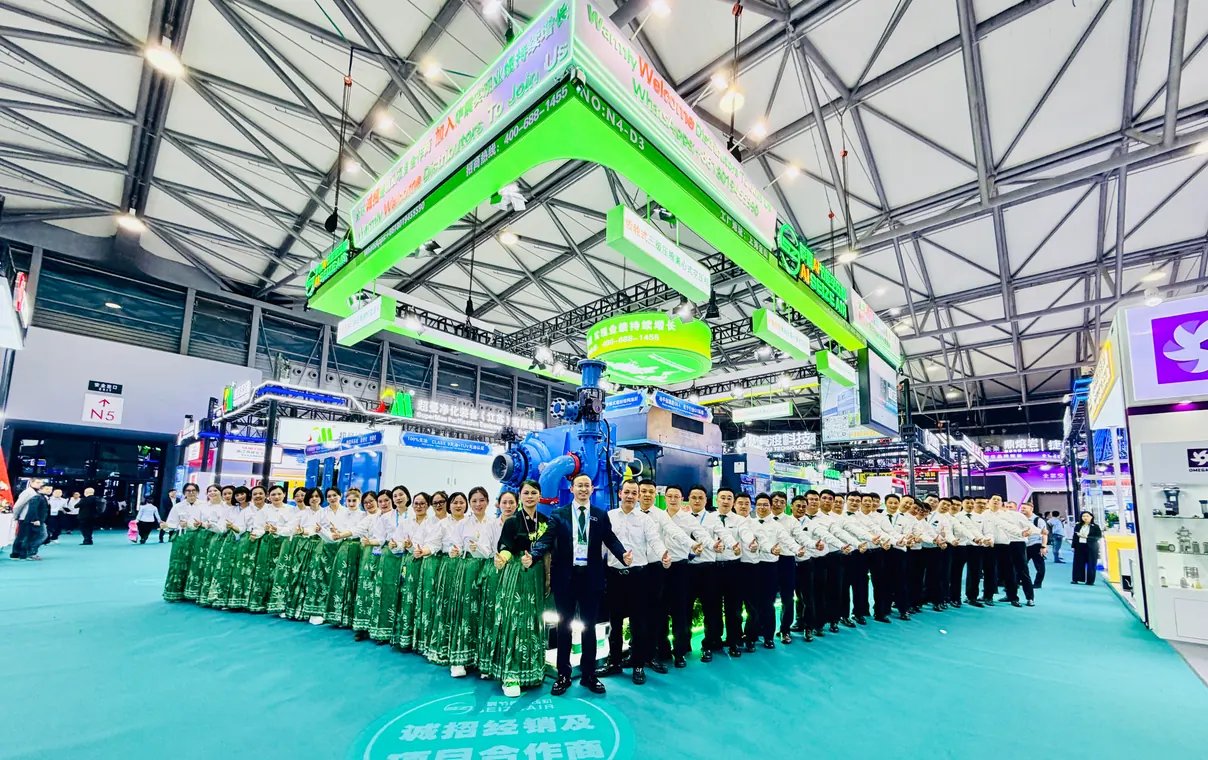
A large stand usually means a large team behind it, and that is worth using. Sales staff can explain commercial scope, application engineers can work through a duty profile, and service specialists can answer maintenance questions. Ask which of them is available during your visit and direct each question to the right person. A group photograph is a reminder that the conversation involves people who will still be reachable after the exhibition closes, which is when the real specification work begins.
Frequently asked questions about SEIZE AIR at PTC ASIA and ComVac ASIA
When and where is the exhibition held?
PTC ASIA 2026 / ComVac ASIA 2026 takes place from 3 to 6 November 2026 at 2345 Longyang Road, Pudong New Area, Shanghai, China. Check the organiser’s final visitor information for opening hours and hall access before travelling, since daily schedules can differ on the first and last show days.
Which booth is SEIZE AIR in?
SEIZE AIR is at booth N4 · D3. The N4 part identifies the hall; the D3 part identifies the position within it. Write the full code in your trip note and confirm it at the hall entrance on the day.
Which machines will be on display?
The announced list contains six entries: SC1000-180-8; HVC-132A-II/8.5; the sixth-generation GE535 together with the centrifugal CH-315/8.0/60(HC); the sixth-generation SWT-220WV/8; ZVC-37A-II-FT/8.5; and a Containerized Air Compressor Station Model. Treat these as designations from the exhibitor’s list and confirm their specifications at the stand.
Can I get model-specific technical data at the booth?
Ask for the current datasheet, the performance test basis and the catalogue revision date for each model you are considering. Series-level figures describe a family, not necessarily the exhibited unit. Request the nameplate data and the conditions behind any quoted rating before including a number in an enquiry.
Are the oil-free machines certified?
SEIZE AIR publishes Class 0 certification for its dry oil-free screw family under certificate 08823P10001, with a stated validity to 4 January 2028 and a defined list of covered models, and for its water-lubricated family under certificate GC24009009000223. Ask to see the certificate originals and check the current validity and model scope against the machine you are evaluating.
Should I prepare anything for a technical discussion?
Yes. Bring the required pressure, the flow profile, the air-quality class, the installed treatment and distribution arrangement, and the site constraints. If demand has not been measured, say so. A supplier can then recommend an assessment rather than propose a size based on an unconfirmed assumption.
How do I continue the conversation after the show?
Send a short follow-up listing the models discussed and the documents requested, then attach your demand profile. You can also contact SEIZE AIR to arrange a booth appointment or a model-specific enquiry before the exhibition. A written scope agreed early makes the later quotation review much faster.
Plan your PTC ASIA air compressor visit around real requirements
A trade show rewards preparation. SEIZE AIR brings six distinct machine lines to booth N4 · D3, from high-flow centrifugal and magnetic-levitation equipment through oil-injected and dry oil-free screw compressors to a complete containerized station. Each answers a different plant question, and the questions are more useful than the display. Arrive with a measured demand profile, an air-quality specification and a short list of documents to request. Leave with a worksheet that records what was confirmed, what was promised and what still needs verification.
That approach keeps the PTC ASIA air compressor conversation grounded in evidence rather than headline figures. Whether the outcome is a single machine, a multi-unit station or simply a better understanding of your own system, the value of the visit is a defined specification that a supplier can quote against and a plant can verify in production. Confirm the dates, note the booth code, and use the few days in Shanghai to turn a display into a decision.