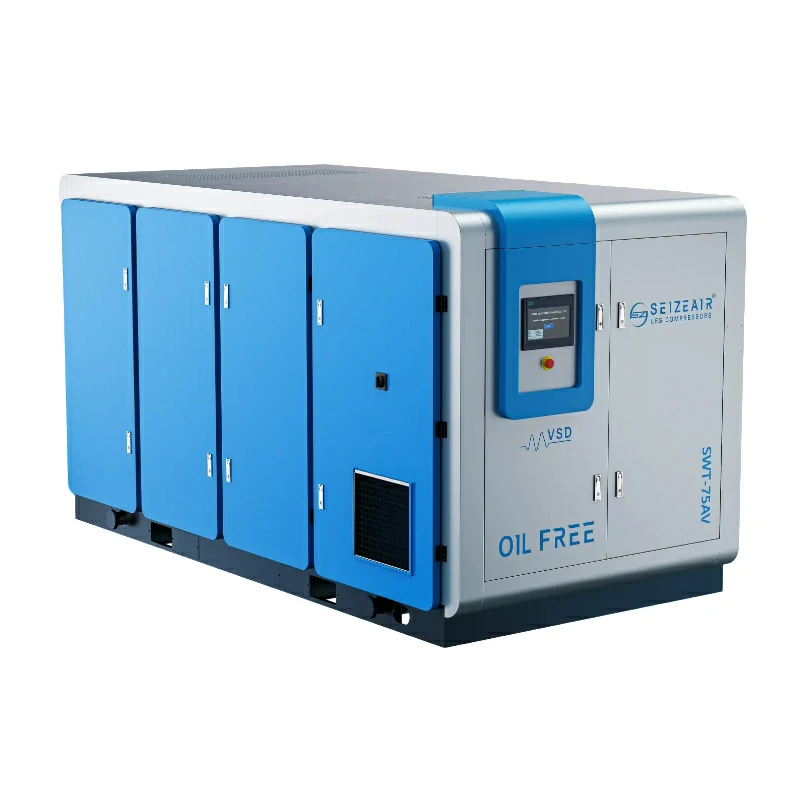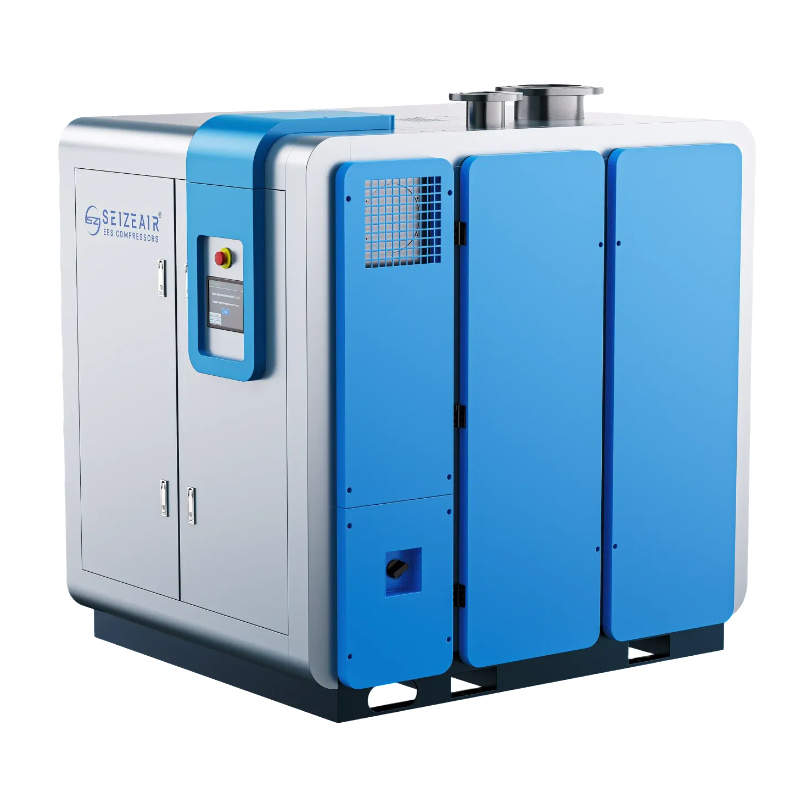


When setting up a professional workshop, expanding an industrial facility, or upgrading your plant’s manufacturing line, choosing the right power configuration for your air system is a critical decision. The debate between a single phase vs 3 phase air compressor isn’t just about the machine itself—it’s about matching your facility’s electrical infrastructure with your actual production demand.
Choosing incorrectly can lead to expensive electrical retrofits, motor burnout, or an underpowered system that constantly halts your production line. In this comprehensive guide, we will break down the engineering differences, power dynamics, and practical applications of both systems to help you make an informed investment.
Understanding the Basics: What is Phase in Electricity?
Before diving into compressor configurations, we need to understand the electrical current that powers them. “Phase” refers to how alternating current (AC) electrical load is distributed.
What is a Single-Phase Power Supply?
Single-phase power is the standard electrical hookup found in almost all residential homes and light commercial spaces. It uses two wires: one active (phase) wire and one neutral wire. The voltage typically alternates at 230V (or 110V depending on your region).
The power delivery in a single-phase system peaks and drops in a single wave. For small machinery, this is perfectly fine. However, for heavy-duty industrial motors, this single wave means the delivery of power isn’t continuous, making it harder to start and run massive loads efficiently.
What is a 3-Phase Power Supply?
Three-phase power is the backbone of modern industrial manufacturing. It uses three active wires (and often a neutral), with each alternating current signal offset by 120 degrees.
This creates a continuous, overlapping wave of power that never drops to zero. An industrial 3 phase air compressor benefits from this steady stream, allowing the motor to start easily, run cooler, and deliver significantly higher shaft horsepower without drawing massive, unstable currents from the local grid.
Single Phase vs 3 Phase Air Compressor: Key Structural Differences
To get a clear picture of how these two configurations stack up against each other, let’s look at their core technical and operational differences.
| Feature | Single-Phase Air Compressor | 3-Phase Air Compressor |
| Common Voltages | 110V, 220V, 230V | 380V, 400V, 460V, 480V |
| Horsepower Range | Usually up to 5 HP (rarely up to 7.5 HP) | 5 HP up to 500+ HP |
| Power Efficiency | Lower (higher current required per HP) | High (lower current, balanced load) |
| Duty Cycle | Intermittent (often 50% – 60% for pistons) | Continuous (100% for rotary screws) |
| Lifespan | Moderate (motors run hotter) | Exceptionally Long (industrial grade) |
| Primary Environment | Home garages, workshops, small auto shops | Manufacturing plants, heavy industry, mining |
Is a 3 Phase Air Compressor Better Than a Single Phase One?
For commercial and industrial applications, a 3 phase air compressor is universally considered superior to a single-phase machine. The advantages come down to pure physics and motor efficiency.
Advantages of 3-Phase Systems
- Superior Energy Efficiency: From an engineering standpoint, a 3-phase motor delivers more power per amp than a single-phase motor. Because the load is split across three phases, the physical size of the conductors and components inside the motor can be smaller, reducing copper losses and heat generation.
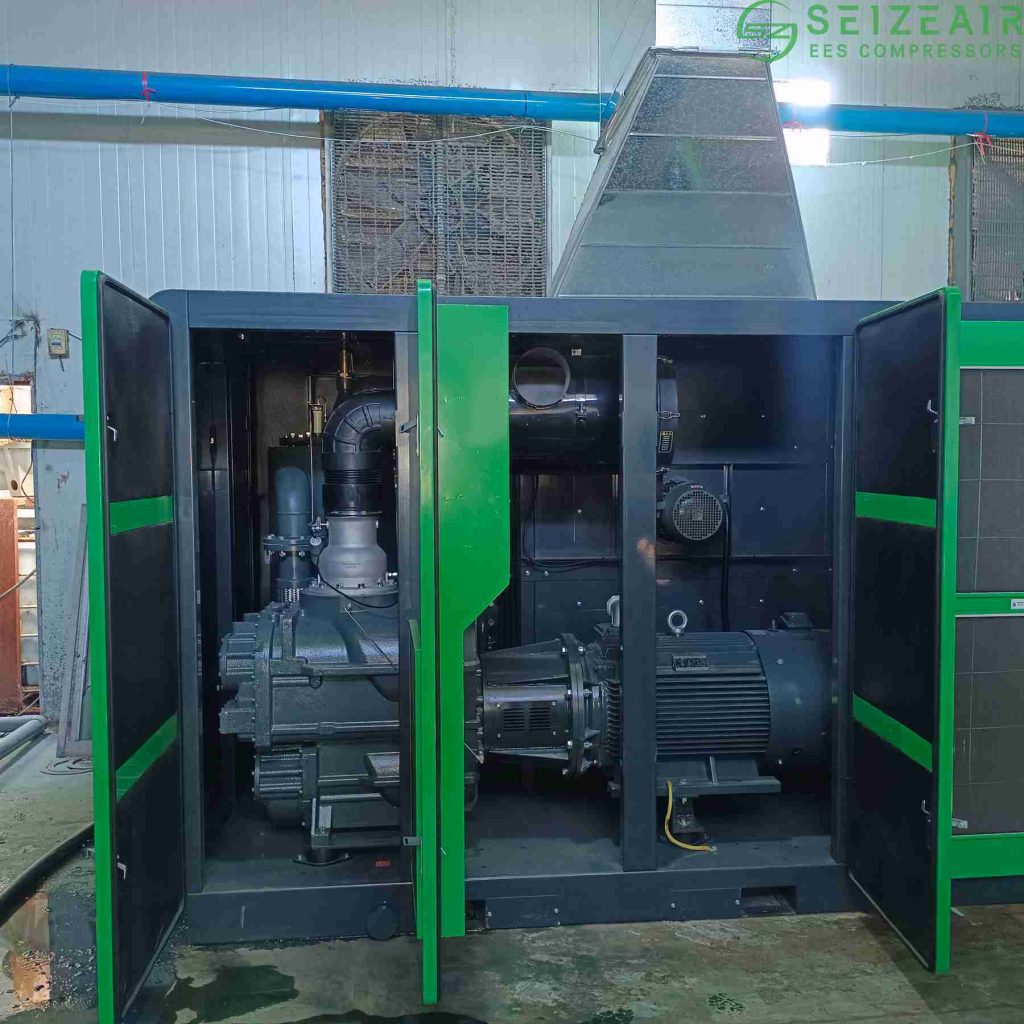
- Continuous Duty Cycles: Most 3-phase units are paired with rotary screw air ends. These machines are engineered to run 24/7. Unlike reciprocating piston compressors that need time to cool down, a 3-phase rotary screw compressor thrives under continuous operation.
- Reduced Maintenance and Longevity: Without the need for starting capacitors or centrifugal switches—common failure points in single-phase motors—3-phase motors are mechanically simpler and last significantly longer under harsh industrial conditions.
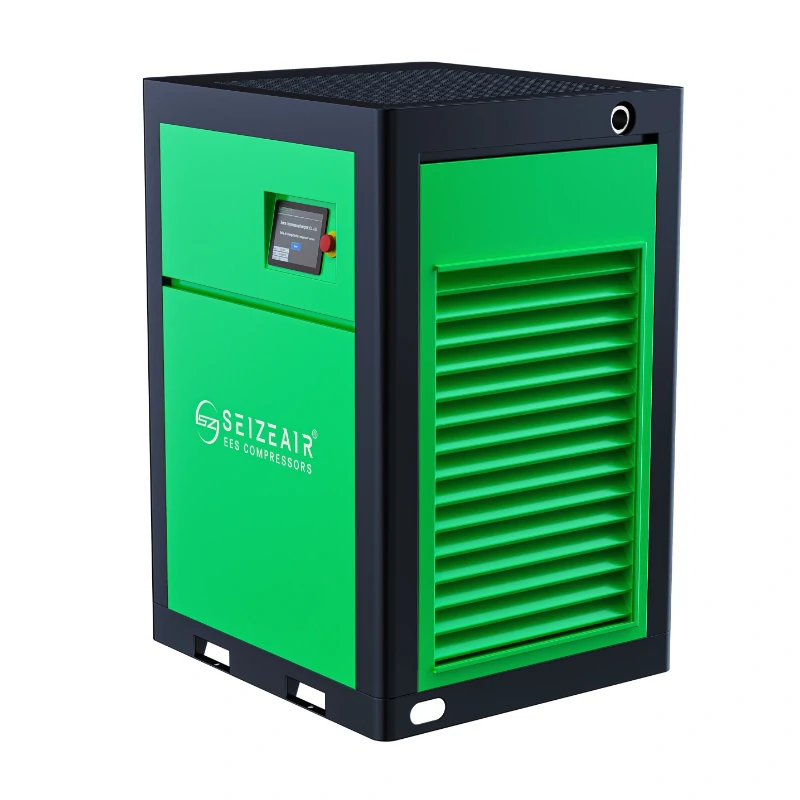
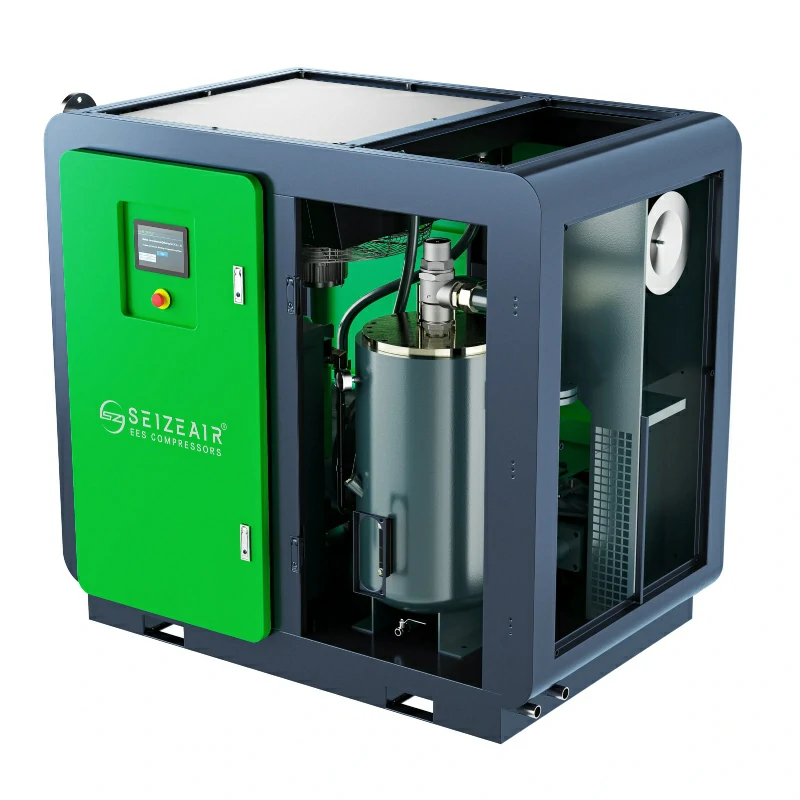
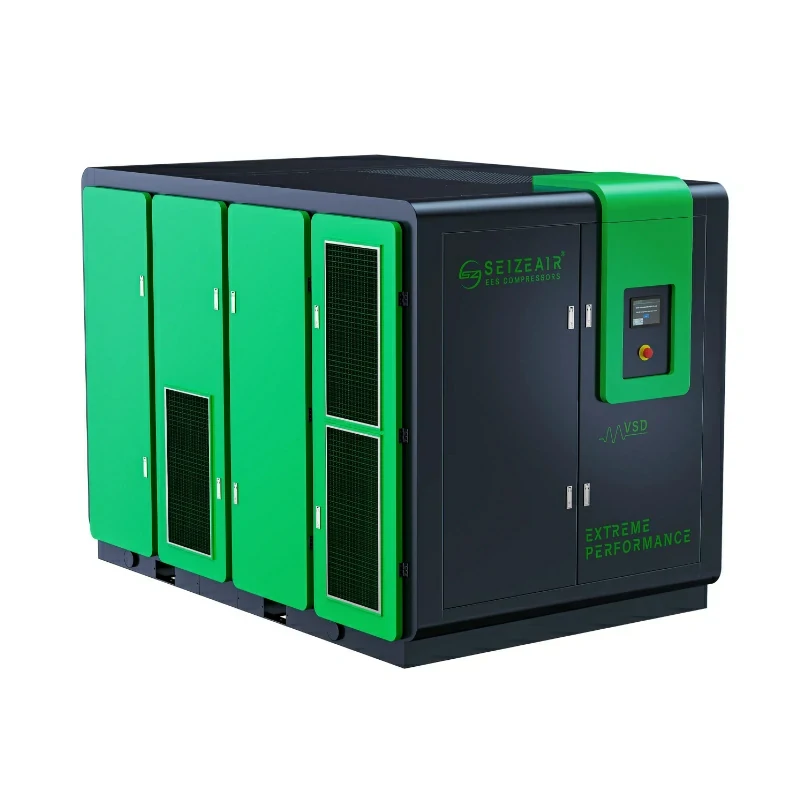
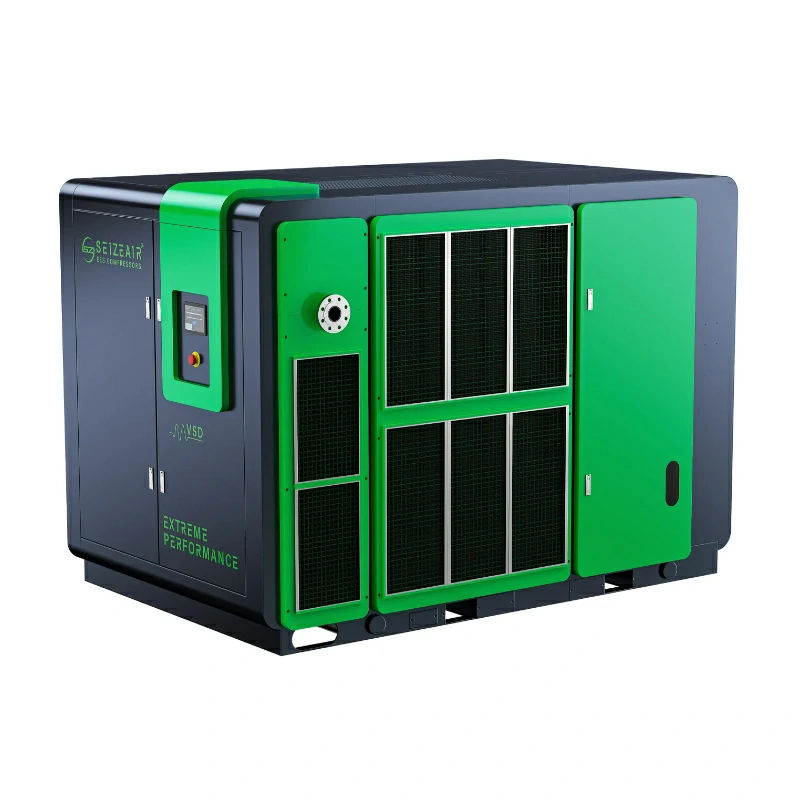
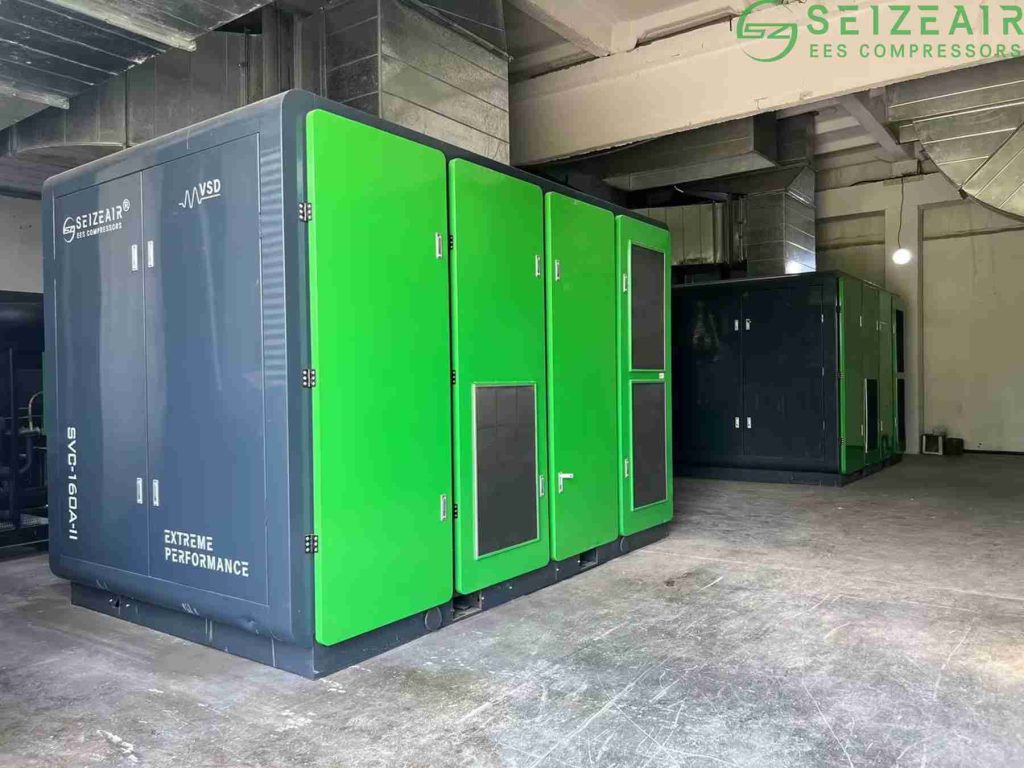
For factories focusing on green production and looking to slash monthly energy expenses, specialized manufacturers like Seize Air design premium permanent magnet variable speed drive (VSD) 3-phase compressors that optimize this electrical efficiency even further, matching motor speed precisely to your real-time air consumption.
What are the Main Disadvantages of a 3-Phase Air Compressor?
While the operational benefits are clear, a 3 phase air compressor does come with specific challenges that might make it impractical for certain users.
High Infrastructure and Hookup Costs
The primary barrier to entry is the electrical grid access. If your facility does not already have a 3-phase power drop from the utility company, bringing it into the building can cost thousands of dollars. It requires specialized industrial transformers, specific conduits, and heavy-duty three-pole breakers.
Complete Lack of Portability
These machines are designed to be permanent fixtures. Due to the requirement for fixed, high-voltage industrial wiring, you cannot easily move a 3-phase compressor from one job site to another. They are built for stationary factory installations.
How to Choose a 3 Phase Air Compressor for Industrial Use?
When your production demand forces you to scale up, you cannot simply buy the largest machine on the shelf. You must calculate your true air demand and matching infrastructure capacity.
Step 1: Calculate Total CFM and PSI Demand
Look at the data plates on all pneumatic machinery that will run simultaneously in your factory. Add their required Cubic Feet per Minute (CFM) ratings together. Always add a 30% safety margin to account for future machinery additions and natural system pressure drops.
Step 2: Verify Your Specific Plant Voltage
Not all 3-phase power is the same. You must match your machine precisely to your facility’s supply. For instance, you will need to specify whether you require a 460 volt 3 phase air compressor or a 230v 3 phase air compressor depending on your local industrial grid configuration. Running a motor on the wrong voltage will destroy the windings instantly.
Step 3: Select the Pump Type (Screw vs. Piston)
If your operations run continuously for hours at a time, skip the piston models entirely. A 3 phase rotary screw air compressor is designed to run at 100% duty cycle, ensuring your line never drops pressure mid-shift.
What is the Power Consumption of a 3-Phase Air Compressor?
Understanding the electrical draw of your machine is vital for sizing your breakers and calculating your monthly operational costs.
The Mathematical Reality of Industrial Power
In electrical terms, power (Watts) is calculated as:
Watts = Volts x Amps x Power Factor x Square Root of 3 (for 3-phase)
Because 3-phase power utilizes that extra multiplier (the square root of 3, which is roughly 1.732), it can deliver much higher horsepower output without scaling up the amperage to dangerous, unmanageable levels.
| Compressor Horsepower (HP) | Standard Voltage (V) | Estimated Full Load Amps (A) per Phase | Recommended Breaker Size (A) |
| 7.5 HP | 230V | ~22A | 30A |
| 10 HP | 460V | ~14A | 20A |
| 20 HP | 460V | ~27A | 40A |
| 50 HP | 460V | ~65A | 100A |
For instance, a 10 HP motor running on a single-phase 230V line would draw roughly 40 to 50 Amps under full load, requiring massive, expensive wiring. Conversely, a 10 HP 460 volt 3 phase air compressor draws only about 14 Amps per phase. This keeps your electrical panels cool and lowers your infrastructure wiring costs significantly.
Can You Run a 3-Phase Air Compressor on Single Phase Power?
This is one of the most common dilemmas faced by small machine shops expanding into industrial-grade equipment. The short answer is: yes, but not directly.
Warning: You cannot simply wire a 3-phase motor into a standard single-phase residential electrical panel. Doing so will cause the motor to single-phase, overheat, and burn out within seconds.
To bridge this gap safely, you have three technical options:
- Variable Frequency Drives (VFD): A VFD can take single-phase incoming power, convert it to DC, and then invert it into a synthetic 3-phase output. When choosing a 3 phase air compressor with VFD, ensure the drive is properly sized, as you often have to derate the drive by 50% to handle the high incoming single-phase amperage.
- Rotary Phase Converters: This external machine uses a single-phase source to spin a 3-phase idler motor, creating a true third electrical line to power your compressor.
- Static Phase Converters: These only help start the motor using capacitors but drop the third phase once running, reducing the compressor’s total horsepower output by roughly one-third. This is not recommended for heavy-duty applications.
How to Wire a 3 Phase Air Compressor Safely?
Due to the dangerous voltages involved in industrial power supplies, wiring should always be finalized by a licensed industrial electrician. However, understanding the core steps ensures your installation goes smoothly.
1. Install a Dedicated Three-Pole Breaker
Your compressor must have its own isolated circuit. A three-pole breaker ensures that if a fault occurs on any single phase, all three lines are tripped instantly, protecting the motor from single-phasing.
2. Verify Motor Rotation Direction
This is the most critical step for a 3 phase rotary screw air compressor. If you phase the motor backward (which happens if any two of the three live wires are reversed), the air end will spin backward. While a piston pump might survive this briefly, a rotary screw pump running backward even for a few seconds can be completely destroyed due to an immediate lack of internal oil pressure. Always bump the starter momentarily to check the rotation arrow on the flywheel or coupling before letting the machine run.
Finding the Perfect Compressed Air Solution For Your Business
Choosing between single phase and 3 phase air compressors boils down to your current power limits and your long-term growth plans. If you operate a small garage or light-duty workshop, single-phase keeps your setup simple and affordable. However, if you are managing a growing manufacturing plant, automated machine shop, or industrial facility where downtime directly equates to lost revenue, investing in a heavy-duty 3 phase air compressor is the only logical choice to ensure operational efficiency.
If you are ready to scale your production with reliable, energy-saving equipment, the industrial engineering team at Seize Air is ready to assist you. Contact us today with your specific CFM and plant voltage requirements, and we will help you select or customize the perfect high-efficiency compressed air system optimized precisely for your facility’s electrical framework.