

When a project demands a reliable 185 cfm air compressor, selecting the right power source isn’t just a matter of preference—it’s a critical operational decision. The 185 CFM (Cubic Feet per Minute) capacity is the absolute sweet spot for mid-sized industrial applications, standard construction sites, and pneumatic tool operations. However, the debate between a diesel vs electric configuration involves balancing initial capital expenditure, long-term fuel or energy costs, site accessibility, and environmental regulations.
What Does a 185 CFM Air Compressor Actually Run on a Job Site?
Before diving into the mechanical differences, it is essential to understand the capacity we are dealing with. A standard 185 cfm air compressor rating means the machine delivers 185 cubic feet of compressed air per minute, typically regulated at a standard working pressure of 100 to 125 PSI (Pounds per Square Inch).
This specific volume is highly sought after because it perfectly aligns with the air consumption requirements of heavy-duty pneumatic equipment.
- Jackhammers and Breakers: Easily runs two 90-lb paving breakers simultaneously without dropping system pressure.
- Sandblasting: Supports mid-sized abrasive blasting nozzles (such as a No. 4 or No. 5 nozzle) for continuous surface preparation.
- Pneumatic Drills & Rock Drills: Ideal for quarrying, utility line installations, and standard anchor drilling.
- Drywall Texture Sprayers & Spray Painting: Provides consistent, oil-free air volume for industrial-grade protective coatings.
Is a Towable 185 CFM Utility Air Compressor Right for Outdoor Construction?
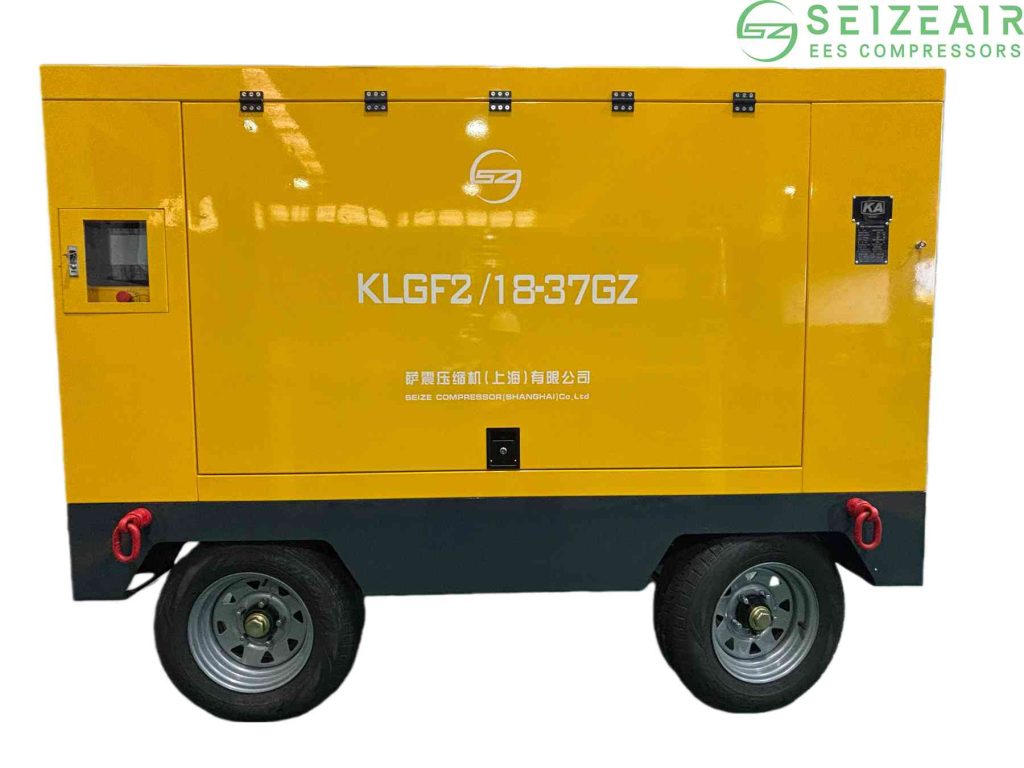
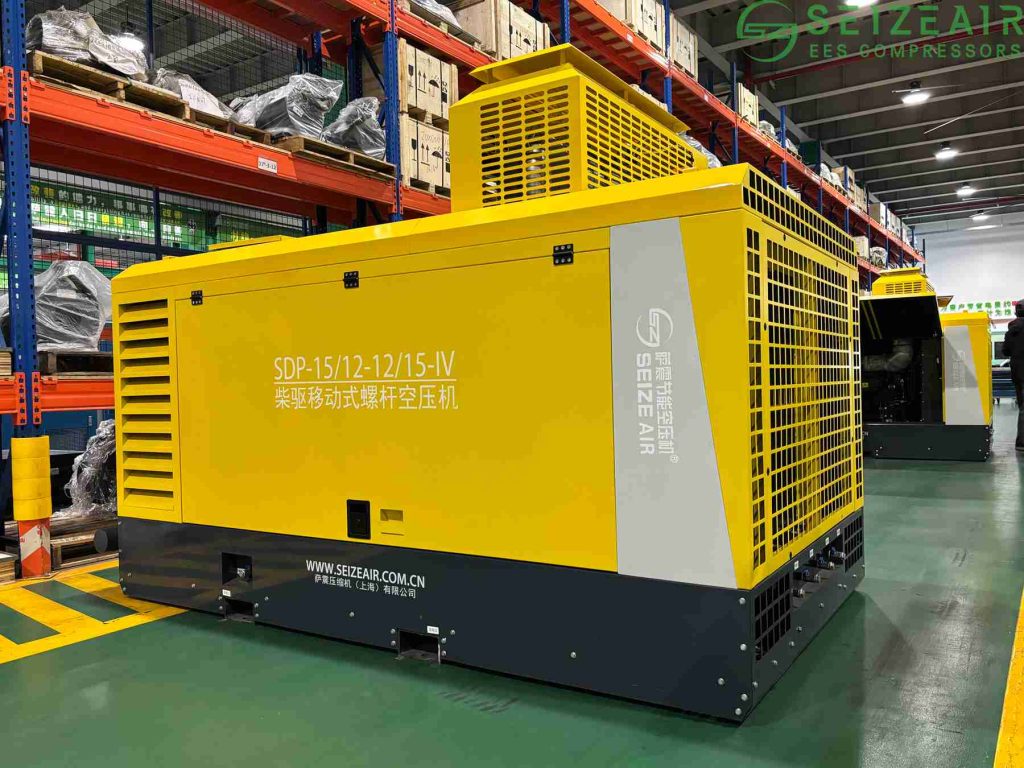
Portable diesel air compressors are the historical backbone of civil engineering, road construction, and remote infrastructure projects. A towable 185 cfm utility air compressor couples a heavy-duty rotary screw air end with an internal combustion diesel engine, all mounted on a heavy-duty towing chassis or a compact oilfield skid.
Key Advantages of Diesel-Powered Units
- True Mobility and Independence: The defining benefit of a mobile diesel unit is its ability to operate anywhere. It requires zero electrical infrastructure, making it indispensable for greenfield construction sites, highway maintenance, and remote pipelines.
- Rugged Weatherproofing: Engineered for harsh outdoor environments, these machines feature heavy-gauge steel or composite canopies that withstand rain, blowing sand, and extreme temperature fluctuations.
- Immediate Deployment: There is no need to wait for local utility hookups, certified electricians, or permitting for electrical panel upgrades. You simply tow it to the site, check the fluids, and start working.
What is the 185 CFM Diesel Air Compressor Fuel Consumption Per Hour?
While highly versatile, diesel units come with significant operational overhead that fleet managers must calculate. The 185 cfm diesel air compressor fuel consumption per hour typically ranges between 2.5 to 3.5 gallons per hour under full 100% load conditions. At idle or partial load, this may drop to 1.2 to 1.8 gallons per hour.
In volatile energy markets, daily fueling costs can quickly eat into project profit margins. Furthermore, modern diesel engines must comply with strict Tier 4 Final or Stage V emissions standards. This means complex Exhaust Gas Recirculation (EGR), Diesel Particulate Filters (DPF), and Selective Catalytic Reduction (SCR) systems. These components add to the initial purchase price and require ongoing maintenance, such as Diesel Exhaust Fluid (DEF) replenishment and regular DPF regeneration cycles.
What Size Electric Motor for a 185 CFM Air Compressor Is Required?
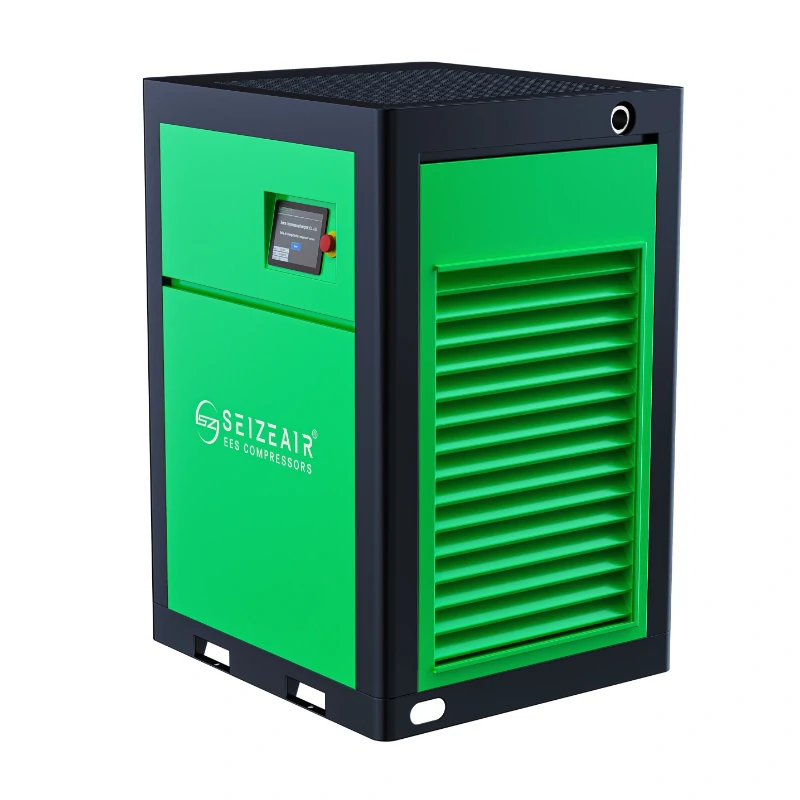
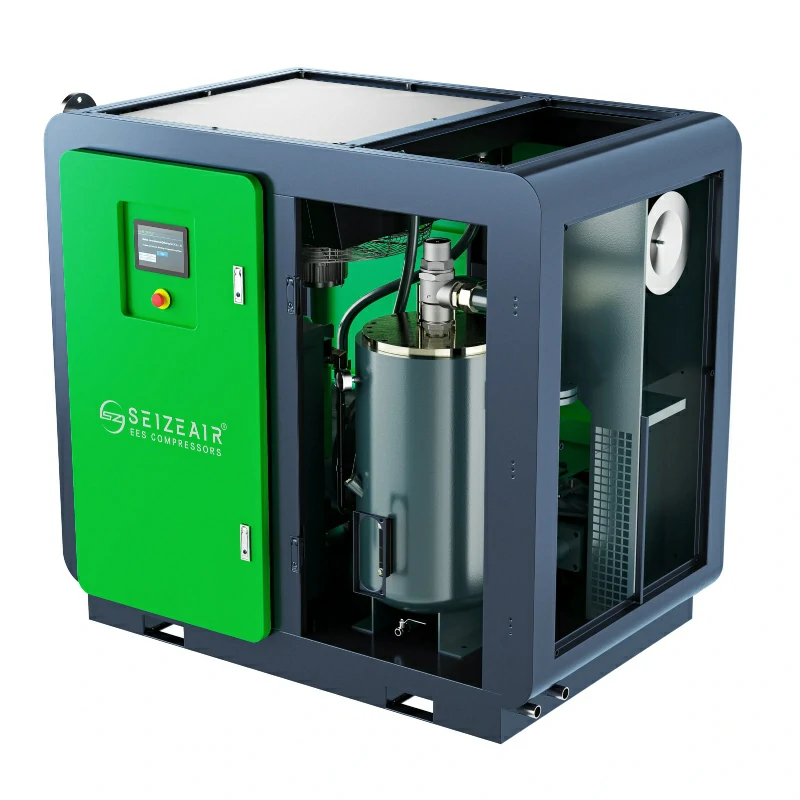
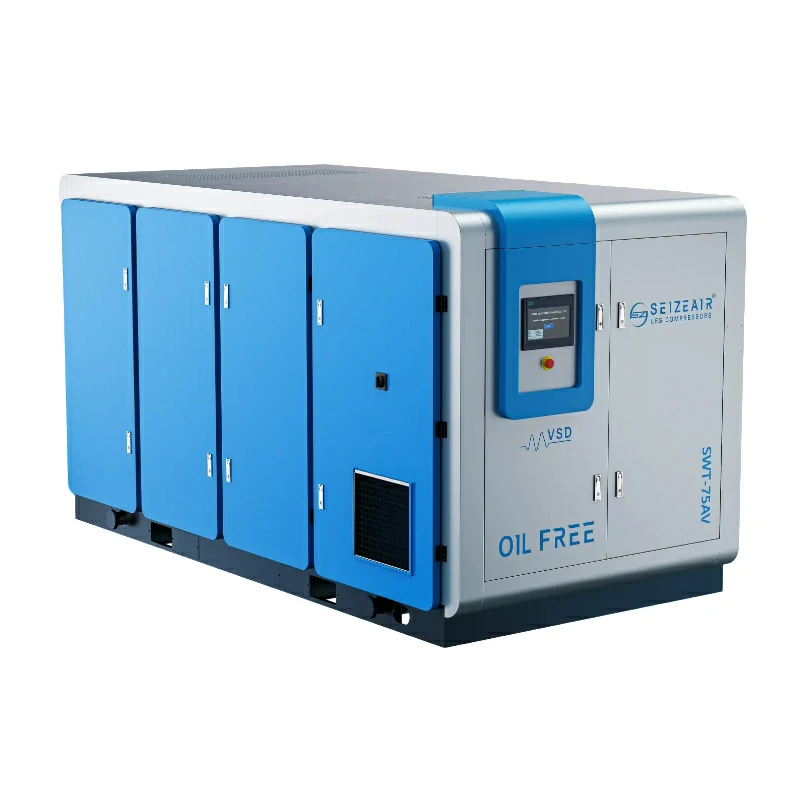
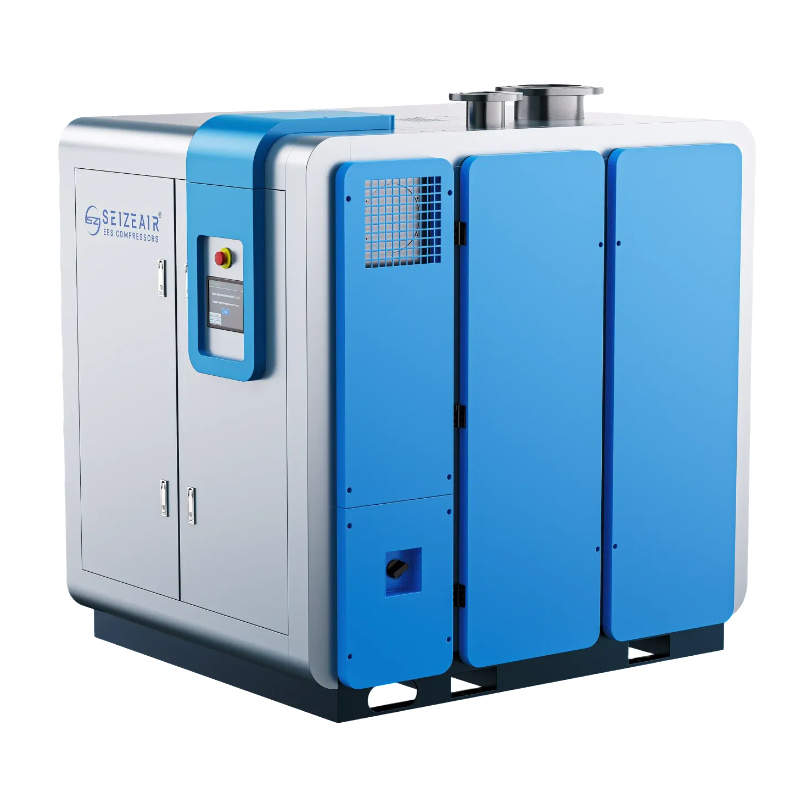
Electric 185 CFM air compressors replace the internal combustion engine with a high-efficiency electric motor—often an induction motor or an advanced permanent magnet variable speed drive (PM VSD).
If you are wondering what size electric motor for 185 cfm air compressor systems is standard, the answer is typically a 40 HP to 50 HP (horsepower) industrial motor, depending on the targeted maximum operating pressure (100 to 150 PSI).
Why Industrial Facilities are Shifting to Electric Drives
- Massive Reductions in Operational Costs (OPEX): Electric motors are inherently more energy-efficient than diesel engines. When comparing equivalent run times, electricity costs are consistently lower than diesel fuel expenses per cubic foot of air generated.
- Zero Emissions and Low Noise: Electric units emit no exhaust gases, allowing them to operate safely indoors, in poorly ventilated tunnels, or in urban areas with strict noise and pollution ordinances.
- Longer Equipment Lifespan: A well-maintained industrial electric motor can run for decades, often outlasting a diesel engine by two to three times the total operating hours.
What Are the Portable 185 CFM Air Compressor Electrical Requirements?
If you plan to use an electric model as a semi-portable or stationary unit, you must verify your facility’s infrastructure. The portable 185 cfm air compressor electrical requirements are substantial. These units cannot run on standard residential or light commercial single-phase power.
They strictly require a 3-phase electrical supply, usually configured to one of the following industrial voltages:
- 230 Volts / 3-Phase / 60 Hz
- 460 Volts / 3-Phase / 60 Hz (Most common in North American plants)
- 380-415 Volts / 3-Phase / 50 Hz (Standard across Europe and Asia)
If the job site lacks this infrastructure, pulling lines or dropping a temporary transformer can be prohibitively expensive. This is why top-tier manufacturers like Seize Air design their industrial electric units with flexible voltage options and optimized control cabinets to minimize installation friction during factory upgrades.
Diesel vs. Electric 185 CFM Air Compressor: Technical Head-to-Head
To give you a clear, bird’s-eye view of how these two configurations stack up in real-world scenarios, let’s look at the key technical metrics side-by-side.
| Feature / Metric | Diesel 185 CFM Configuration | Electric 185 CFM Configuration |
| Primary Mobility | Extremely high (Hitch-and-go trailer) | Limited (Stationary or heavy skid-mount) |
| Power Source | Ultra-low sulfur diesel fuel (+ DEF) | 3-Phase industrial electrical grid |
| Average Lifespan | 10,000 – 15,000 engine hours | 20,000 – 40,000 motor hours |
| Indoor Operation | Strictly prohibited (Carbon monoxide risk) | Perfectly safe (Zero emissions) |
| Noise Level | Moderate to High (72 – 76 dBA at 7 meters) | Low to Ultra-Low (62 – 68 dBA) |
| Energy Efficiency | Variable based on mechanical engine wear | High (Up to 96% with PM VSD motors) |
| Long-Term OPEX | High (Subject to fuel prices & engine wear) | Low (Highly stable energy costs) |
How Do You Calculate the Total Cost of Ownership (TCO) for a 185 CFM Unit?
Choosing the right compressor requires calculating the Total Cost of Ownership (TCO) rather than just looking at the price tag on the showroom floor. Let’s look at a practical, simplified formula to evaluate energy costs over a standard work year (2,000 operating hours) for both types of setups.
Diesel Fuel Cost Calculation:
If a diesel unit burns 3 gallons per hour at full load, and diesel averages $4.00 per gallon:
- 2,000 hours * 3 gal/hr = 6,000 gallons of fuel
- 6,000 gallons * $4.00/gal = $24,000 per year in fuel
Electric Energy Cost Calculation:
For a typical 45 HP electric motor running at 92% efficiency with an electricity rate of $0.12 per kWh:
- 45 HP * 0.746 = 33.57 kW demand
- (33.57 kW * 2,000 hours * $0.12) / 0.92 = $8,757 per year in power
By switching to a high-efficiency electric model, an industrial workshop can save over $15,000 annually per machine in energy costs alone. When you factor in the reduced maintenance schedule, the financial argument for electric power in stationary environments becomes undeniable.
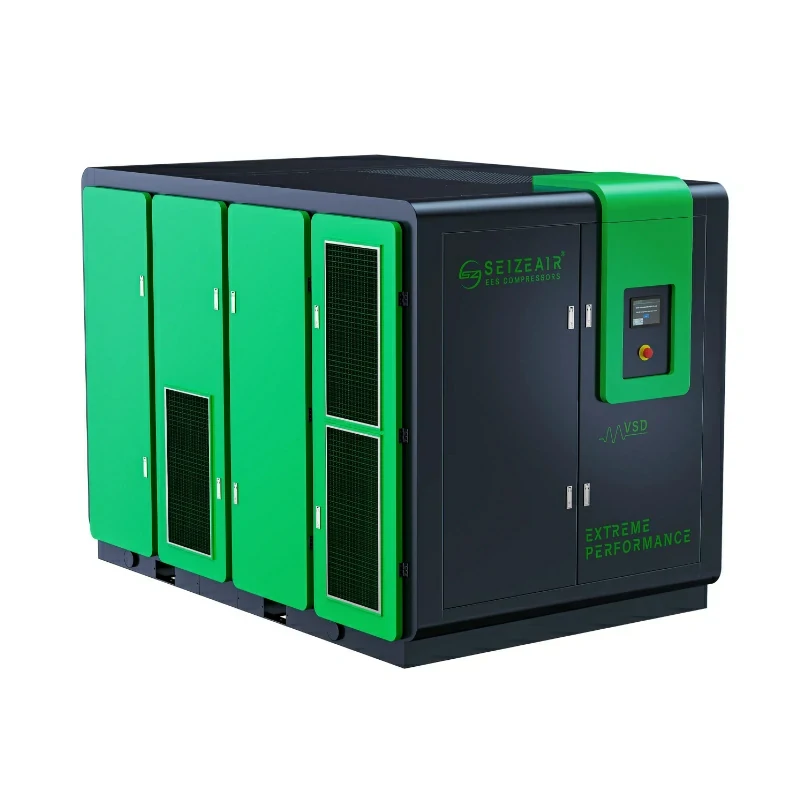
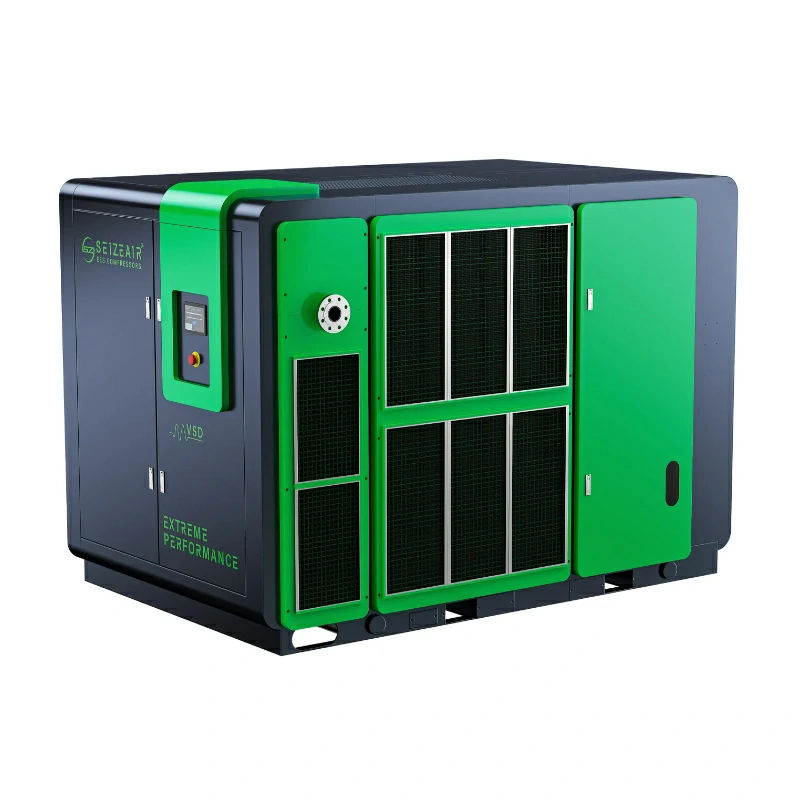
Furthermore, implementing an electric compressor featuring a Permanent Magnet Variable Speed Drive (PM VSD)—a specialized design pioneered for extreme efficiency by companies like Seize Air—allows the motor to automatically adjust its RPM to match your exact, real-time air demand, slashing that utility bill by up to an additional 35% to 50%.
What is Included in a 185 CFM Rotary Screw Air Compressor Maintenance Checklist?
Maintenance downtime directly impacts your bottom line. The power source you choose completely dictates your service intervals. Review the core components below to see what your team can realistically manage.
The Standard 185 CFM Rotary Screw Air Compressor Maintenance Checklist
| Service Interval | Diesel-Engine Specific Tasks | Electric-Motor Specific Tasks |
| Daily / Every 10 Hours | Check engine oil, coolant levels, fuel water separator, and DEF fluid. | Check compressor oil sight glass, drain condensate separator. |
| Every 250 Hours | Change engine oil and filter, replace fuel filters, clean engine air intake. | Inspect air filter element, check belt tension (if applicable). |
| Every 500 – 1,000 Hours | Replace DPF filters, inspect belts, service engine cooling system. | Blow out cabinet dust, check electrical terminal connections. |
| Every 2,000 – 4,000 Hours | Complete engine overhaul assessment, check injection nozzles. | Change compressor lubricant, replace oil separator element. |
An electric motor has only one moving part (the rotor). There are no spark plugs, fuel injectors, radiators, oil filters, or complex emissions systems to service on the drive side. This reduces scheduled downtime by up to 70% compared to a diesel engine. Modern designs, such as the premium industrial packages engineered by Seize Air, fit seamlessly into existing factory layouts while optimizing service access points so that when maintenance is required, it takes minutes, not hours.
Summary Procurement Checklist for Fleet Managers
To streamline your final procurement process, review this quick decision checklist before finalizing your purchase order or rental agreement:
- Go with a Diesel Unit If: The machine will be moved to different public job sites weekly; the primary working environment is outdoors with zero access to power; or immediate, hitch-and-go mobility is your primary logistical bottleneck.
- Go with an Electric Unit If: The compressor will remain in a fixed indoor or semi-sheltered plant environment; your facility has stable, established 3-phase power infrastructure; or lower long-term operating costs and minimal maintenance are top priorities.
Finding the Perfect Compressed Air Solution
Making the right choice between a diesel and an electric 185 cfm air compressor requires balancing the demands of your current project with your long-term financial goals. Whether you need the rugged mobility of a mobile unit or the cost-cutting efficiency of an advanced permanent magnet electric system, selecting precision-engineered equipment ensures your operations keep running smoothly.
At Seize Air, we specialize in providing world-class, energy-efficient air compressor systems tailored to modern industrial needs. Our team of engineering experts is ready to analyze your specific operational parameters, air demand profiles, and infrastructure capabilities to help you secure the ideal unit.
Contact our technical support and sales team today to request a comprehensive quote, discuss technical equipment specifications, or receive a customized energy-saving analysis for your facility. Let’s optimize your compressed air system together.