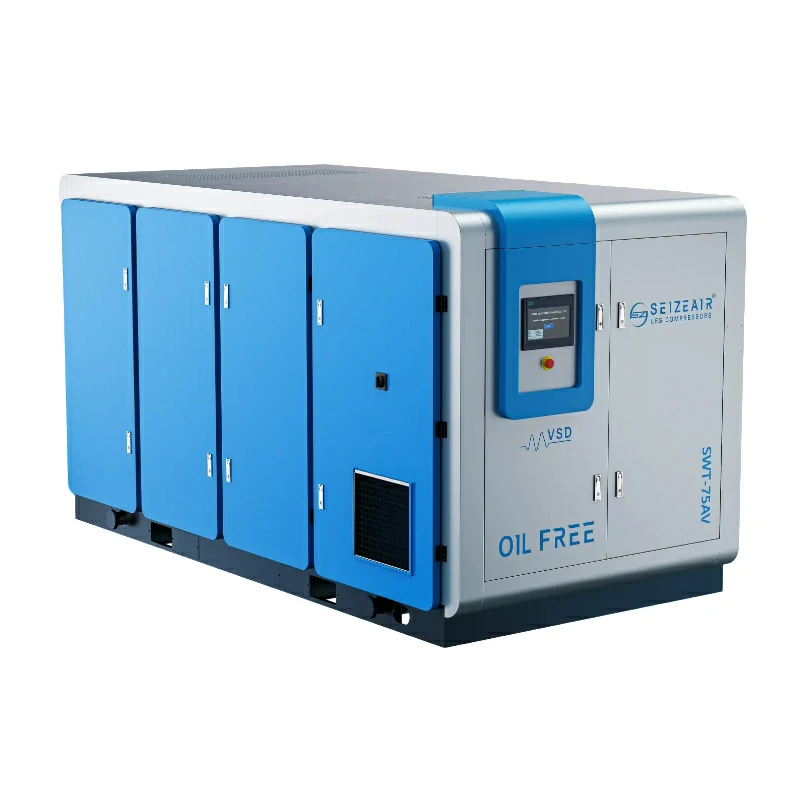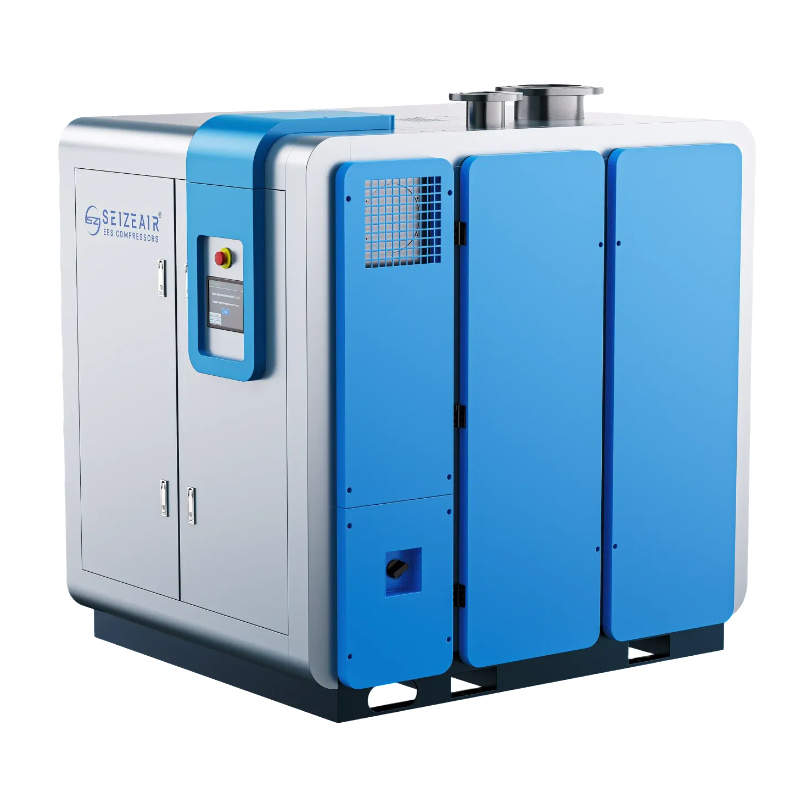


A single phase air compressor runs on the same 120 V or 240 V power found in homes and small shops, while a three phase air compressor needs the industrial three-wire supply common in factories. That difference in power supply changes everything from motor torque and start-up behavior to efficiency, purchase price, and long-term running cost.
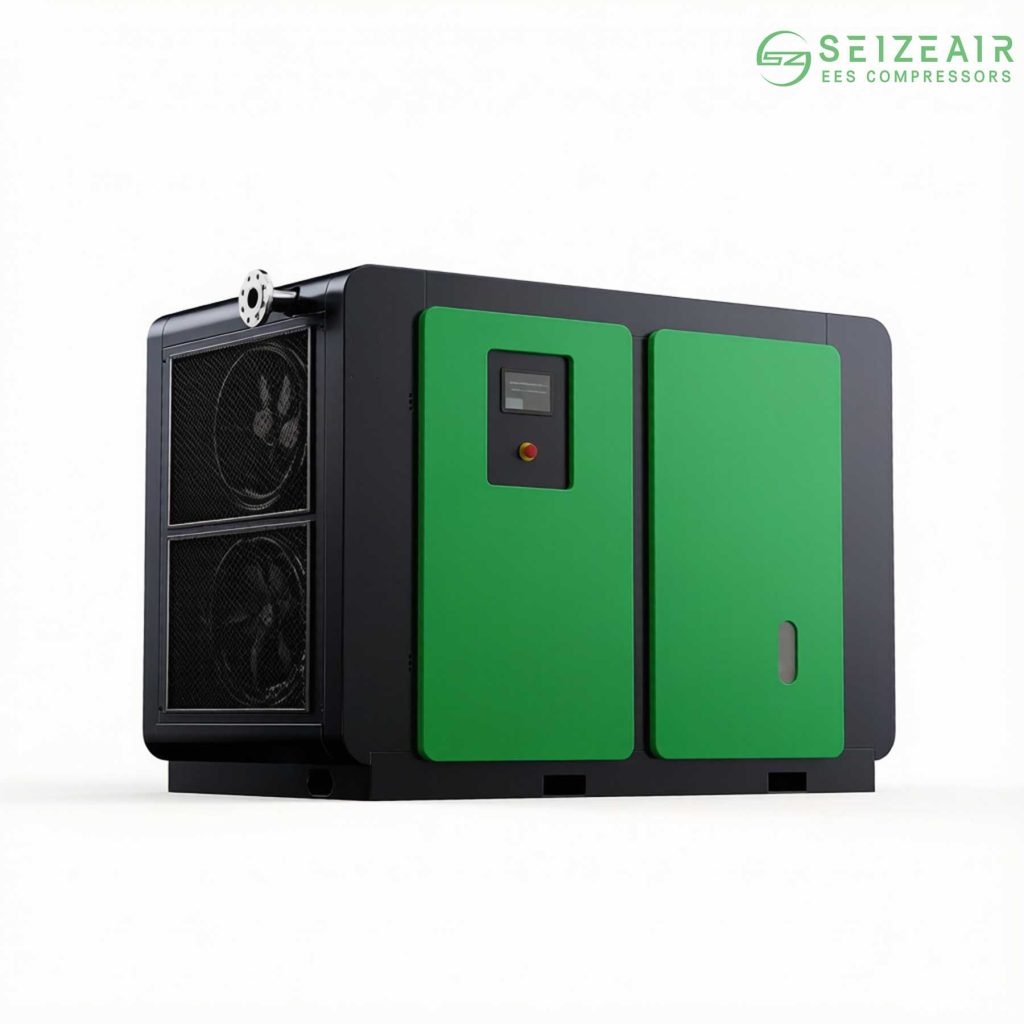
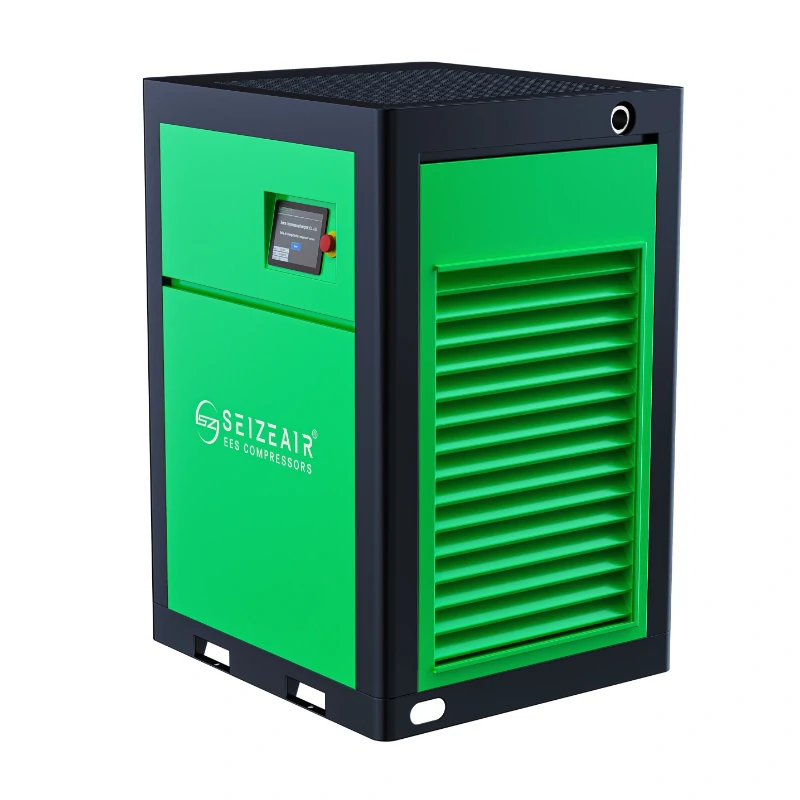
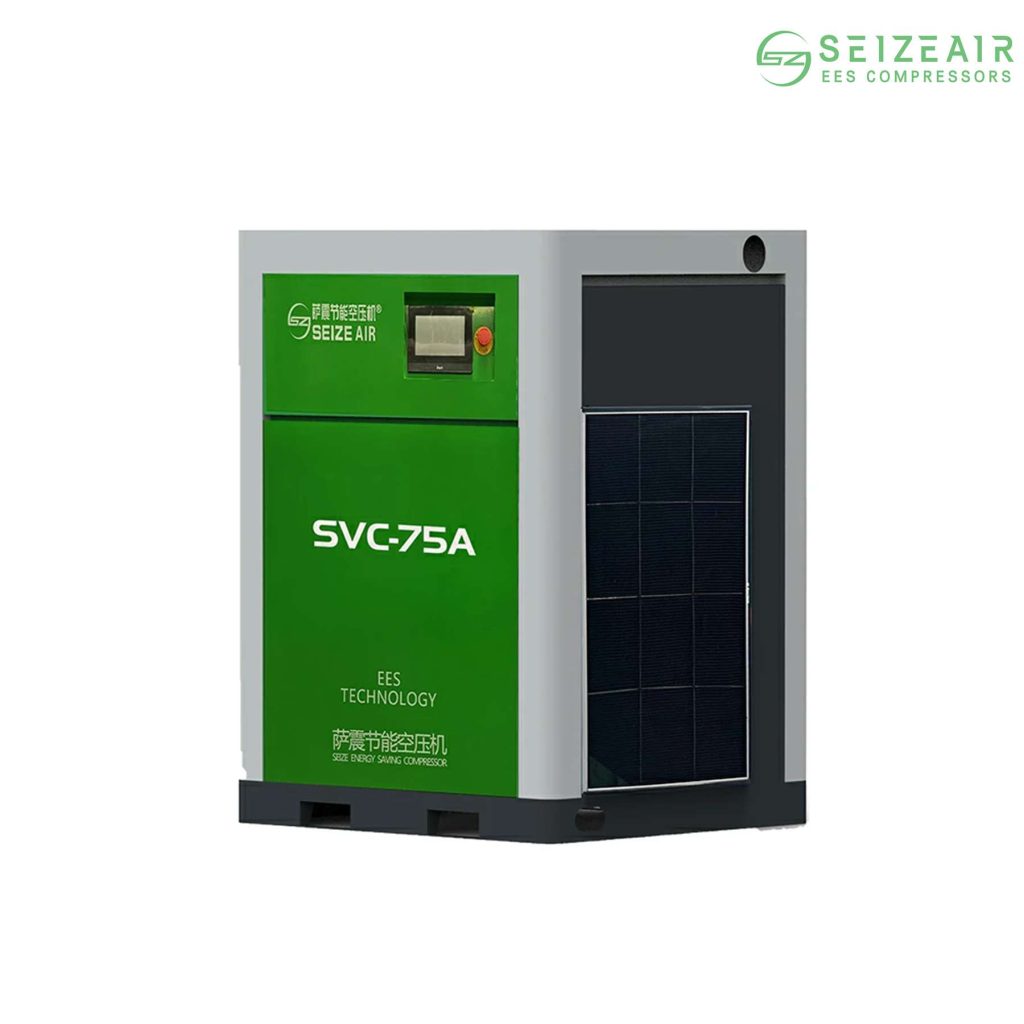
Single phase air compressor product view
What Is a Single Phase Air Compressor?
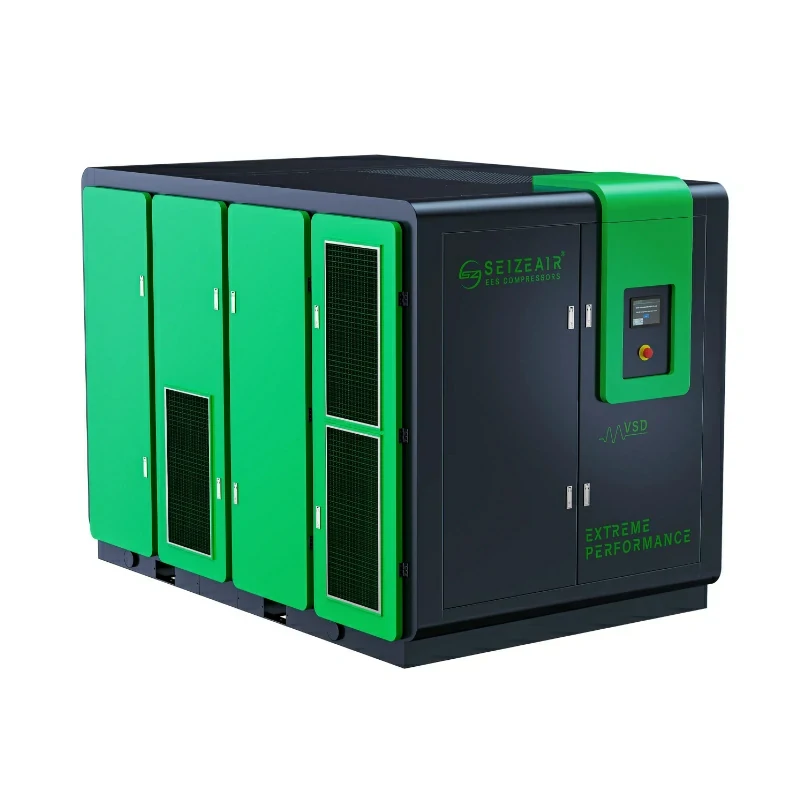
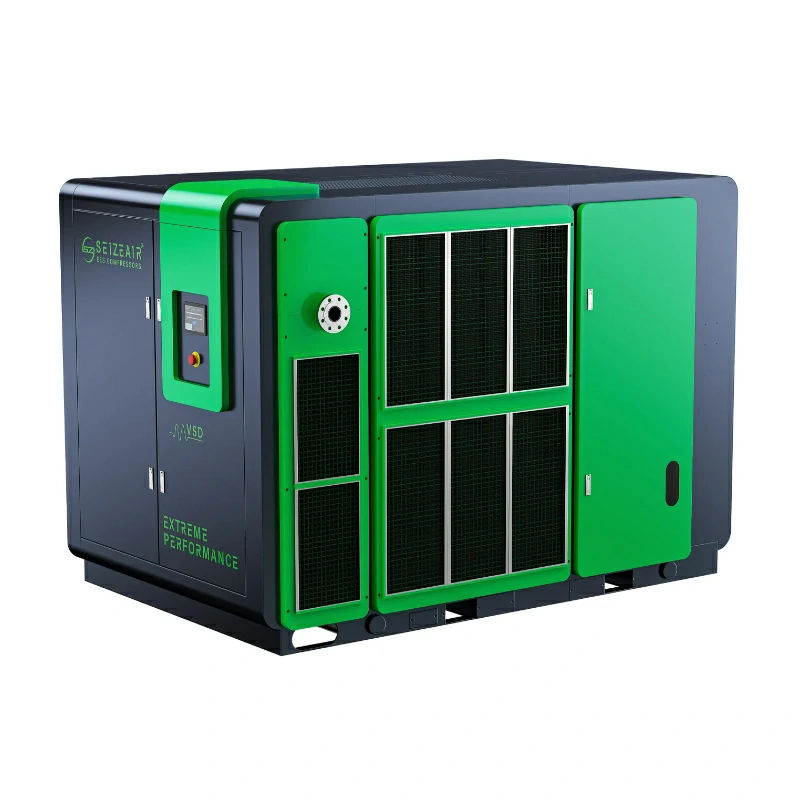
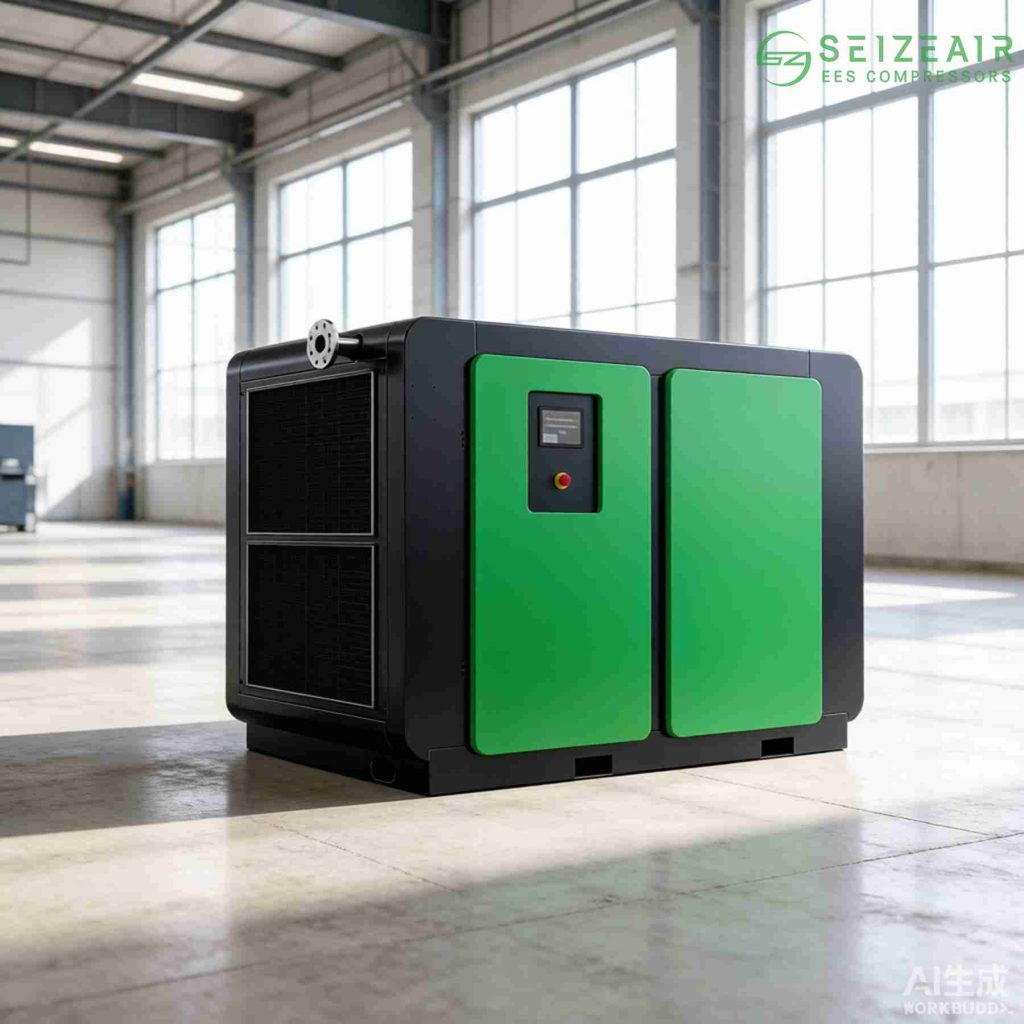
Three phase air compressor in an industrial factory
A single phase air compressor uses a single alternating current waveform. In North America this is typically 120 V or 240 V between one hot conductor and neutral. In Europe and many Asian countries it is 220 V to 240 V. The power reaches a peak twice per cycle and falls to zero in between, which means the motor torque pulses.
Because of this pulsing torque, single phase motors need a starting winding or a capacitor to create the rotating magnetic field that gets the rotor moving. Once the motor is close to running speed, a centrifugal switch disconnects the start winding and the motor continues on its main winding. Small rotary screw air compressors sometimes use single phase permanent-split-capacitor motors, while piston compressors up to about 5 HP frequently use capacitor-start-induction-run motors.
Single phase compressors dominate the portable, home garage, and light commercial markets. They plug into standard wall outlets or simple 240 V receptacles, so installation is straightforward and does not require a utility upgrade.
What Is a Three Phase Air Compressor?
A three phase air compressor uses three separate AC waveforms, each offset by 120 degrees. At any instant one of the phases is near peak, so the combined power delivery is smooth and continuous. The motor produces constant torque from start-up to full speed, and it can generate more torque per amp than a single phase motor of the same frame size.
Three phase compressors are the default in manufacturing plants, machine shops, and any facility that already has three phase service. They range from small 3 HP workshop units up to several hundred horsepower in large industrial systems. If you are looking at an industrial screw compressor for continuous production, it is almost always three phase.
The power supply uses three hot conductors and no neutral. Common industrial voltages include 208 V, 230 V, 460 V, and 575 V depending on the region and utility transformer configuration.
Single Phase vs Three Phase Air Compressor: Key Differences
| Feature | Single Phase Air Compressor | Three Phase Air Compressor |
| Power supply | 120 V / 240 V (residential) | 208 V / 230 V / 460 V (industrial) |
| Number of live conductors | 1 hot + neutral + ground | 3 hots + ground (no neutral needed) |
| Torque delivery | Pulsing, needs start winding | Constant from start to full speed |
| Starting current | High inrush, often 5x to 7x FLA | Lower inrush with soft start or VFD |
| Motor efficiency | 65% to 75% common | 85% to 95% common |
| Power factor | Lower, may need correction caps | Higher, easier to correct |
| Typical size range | Up to about 5 HP to 7.5 HP | 3 HP to several hundred HP |
| Common locations | Home garages, small shops, mobile service | Factories, plants, heavy workshops |
| Initial cost | Lower | Higher |
| Installation | Simple plug or 240 V outlet | Requires three phase panel and wiring |
| Maintenance | More motor wear from start cycles | Longer motor life under continuous duty |
This table explains why the two types serve different markets. A single phase unit is convenient and cheap to install. A three phase unit is more efficient and lasts longer when it runs all day.
How Single Phase and Three Phase Power Actually Work
In a single phase circuit, voltage rises and falls in a sine wave. The equation for instantaneous voltage is:
V(t) = Vm * sin(2 * pi * f * t)
where Vm is the peak voltage and f is the frequency, 50 Hz or 60 Hz. Because power is proportional to voltage squared, the torque in a single phase motor drops to zero twice per cycle. The motor keeps spinning because of inertia, but the torque ripple creates vibration, noise, and extra heat.
In a three phase circuit, the three voltages are:
Va(t) = Vm * sin(2 * pi * f * t)
Vb(t) = Vm * sin(2 * pi * f * t – 2*pi/3)
Vc(t) = Vm * sin(2 * pi * f * t – 4*pi/3)
The sum of the three phase powers is constant. This constant power produces constant torque, which is why three phase motors run smoother, cooler, and quieter.
Which One Is More Efficient?
For the same horsepower, a three phase motor is usually more efficient than a single phase motor. The difference comes from several factors.
Three phase motors do not need a separate start winding or capacitor. The copper in the motor is used entirely for running, not for starting. There is also less current flowing through each winding for the same output power, so resistive losses are lower. A typical 5 HP three phase motor might have a full-load efficiency of 90%, while a comparable single phase motor might be 72%.
The efficiency gap widens at partial load. Single phase motors often lose efficiency quickly when they run below half load. Three phase motors, especially permanent magnet or variable speed designs, maintain better efficiency across a wider load range.
However, the total cost picture depends on more than motor efficiency. If a shop already has single phase power and only needs a compressor for a few hours a week, the lower installation cost of a single phase unit can outweigh the efficiency advantage of three phase.
Can a Single Phase Compressor Match Three Phase Performance?
Up to about 5 HP, a single phase compressor can do many of the same jobs as a smaller three phase unit. It can run air tools, inflate tires, power paint booths, and feed small pneumatic machinery. The limitation is not just horsepower; it is also duty cycle and starting frequency.
Single phase motors generate more heat during start-up. If the compressor cycles on and off rapidly, the motor can overheat. Most single phase compressors are rated for 50% to 75% duty cycle. Three phase compressors, especially oil-injected screw air compressors, are designed for continuous duty and can run 24 hours a day.
A single phase screw air compressor is a real option for light commercial users who want rotary screw reliability without three phase power. These units are usually limited to 3 HP to 7.5 HP and are built with belt drives or direct drives that reduce start-up strain.
How Much Power Does a Single Phase Air Compressor Need?
The electrical draw of a single phase compressor depends on horsepower, voltage, motor efficiency, and power factor. A useful approximation is:
I = (HP * 746) / (V * eta * PF)
where I is current in amps, HP is horsepower, 746 is watts per horsepower, V is voltage, eta is efficiency, and PF is power factor.
For example, a 5 HP single phase compressor running on 240 V with 75% efficiency and 0.85 power factor would draw approximately:
I = (5 * 746) / (240 * 0.75 * 0.85) = 24.4 A
A 5 HP three phase compressor at 230 V with 90% efficiency and 0.88 power factor would draw approximately:
I = (5 * 746) / (sqrt(3) * 230 * 0.90 * 0.88) = 11.8 A per phase
The three phase unit draws less current per conductor, generates less heat, and can use smaller wiring relative to the power delivered.
Air Compressor Voltage Requirements by Size
| Motor size | Typical single phase voltage | Typical three phase voltage | Common application |
| 0.5 HP to 2 HP | 120 V or 240 V | 208 V | Home garage, hobby shop |
| 3 HP to 5 HP | 240 V | 208 V / 230 V | Small auto shop, contractor |
| 5 HP to 10 HP | 240 V (limited) | 230 V / 460 V | Machine shop, light manufacturing |
| 10 HP to 50 HP | Rare | 460 V | Manufacturing, assembly |
| 50 HP and up | Not available | 460 V / 575 V | Heavy industry, plants |
This table is a good starting point for matching a compressor to your electrical service. If you only have 120 V outlets, your practical limit is about 1.5 HP to 2 HP. If you have a 240 V single phase panel, you can move up to about 5 HP before three phase becomes the better choice.
Is a Three Phase Air Compressor Worth It for a Home Garage?
Usually not, unless the garage already has three phase service or you plan to add it for other machinery. Running a new three phase line to a residential building can cost thousands of dollars and may not even be offered by the local utility.
For most home garages, a 120 V or 240 V single phase air compressor is the practical choice. A 2 HP to 3 HP single phase unit delivers enough air for impact wrenches, nail guns, tire inflating, and light painting. If you need more air than that, a larger tank or a higher-flow single phase compressor is usually cheaper than installing three phase power.
The exception is a serious home machinist or fabricator who already runs a three phase lathe, mill, or welding equipment. In that case, adding a three phase compressor makes sense because the electrical infrastructure is already paid for.
Can I Run a Three Phase Compressor on Single Phase?
Yes, but usually with compromises. There are three common methods:
1. Variable frequency drive (VFD). A single phase input VFD can output three phase power to the motor. This is the most practical electronic solution and gives you speed control as a bonus. You must size the VFD about 50% larger than the motor nameplate current because the VFD input diodes carry more load on single phase.
2. Rotary phase converter. A rotary converter uses a three phase motor running on single phase to generate the missing legs. It works well but adds cost, noise, and maintenance.
3. Static phase converter. A static converter creates a third phase briefly to start the motor, then the motor runs on single phase with reduced power output. This is the cheapest option but you typically only get about two-thirds of the motor’s rated horsepower.
Each method has trade-offs. A VFD is clean and efficient but costs more. A rotary converter is robust but mechanical. A static converter is cheap but reduces performance. In most cases, if you only have single phase power, buying a compressor designed for single phase is simpler and more reliable.
Single Phase Air Compressor 240V Wiring Basics
A 240 V single phase compressor in North America uses two hot conductors and a ground. There is no neutral. The circuit must be protected by a double-pole breaker sized to the motor’s full load amps, and the breaker must be a motor-rated type that can handle the start-up inrush.
The wiring path is straightforward:
Panel breaker -> disconnect switch -> motor starter or pressure switch -> compressor motor
The pressure switch turns the motor on when tank pressure drops to the cut-in setting and off at the cut-out setting. Many pressure switches have a built-in unloader valve that releases head pressure before restart, which makes start-up easier on the motor.
Wire size depends on current and run length. For a 5 HP 240 V compressor drawing about 25 A, 10 AWG copper wire is common for runs up to about 50 feet. Longer runs require larger wire to limit voltage drop. Voltage drop wastes power and reduces starting torque, so it is worth sizing the circuit correctly.
Convert 3 Phase Air Compressor to Single Phase: Is It Practical?
Swapping a three phase motor for a single phase motor is technically possible on smaller compressors, but it is rarely worth the effort. The single phase motor must fit the same frame, shaft diameter, and mounting pattern. You also need a new pressure switch, starter, and possibly wiring. By the time you buy the parts and pay for labor, you may be close to the price of a used single phase compressor.
If the compressor pump is in excellent condition and the motor is the only obstacle, a VFD running on single phase input can keep the original three phase motor. This is often the best retrofit path. Just remember to derate the VFD and to check that the motor insulation can handle the voltage spikes some older VFDs produce.
Single Phase Screw Air Compressor vs Industrial Three Phase Units
A single phase screw air compressor is built for users who want rotary screw benefits without industrial power. These units are quiet, run cooler than piston compressors, and are designed for longer duty cycles. They are common in auto body shops, small CNC shops, and mobile service trucks.
Industrial three phase screw compressors cover the full range from 5 HP to 500 HP and beyond. They use permanent magnet variable frequency screw compressor technology to match motor speed to air demand, which saves large amounts of energy when demand varies. They also offer better heat recovery, more precise pressure control, and longer service intervals.
| Feature | Single Phase Screw Compressor | Three Phase Industrial Screw Compressor |
| Typical power | 3 HP to 7.5 HP | 5 HP to 500+ HP |
| Power supply | 240 V single phase | 230 V / 460 V three phase |
| Noise level | Low to moderate | Low, often with enclosure |
| Duty cycle | Moderate | Continuous |
| Best for | Small shop, mobile service | Factory, production line |
| Energy control | Load/unload or simple VFD | Advanced VSD, heat recovery |
| Initial cost | Moderate | Higher |
When to Choose a Single Phase Air Compressor
Choose a single phase air compressor when:
– Your building only has single phase power.
– You need less than about 5 HP of continuous air.
– The compressor will run intermittently, not 24/7.
– Budget and simple installation matter more than peak efficiency.
– You need portability for job sites or mobile service.
– You are a home user, hobbyist, or light commercial operator.
Single phase compressors are also easier to resell on the used market because more buyers can power them. For a one-man shop or a small contractor fleet, that flexibility has real value.
When to Choose a Three Phase Air Compressor
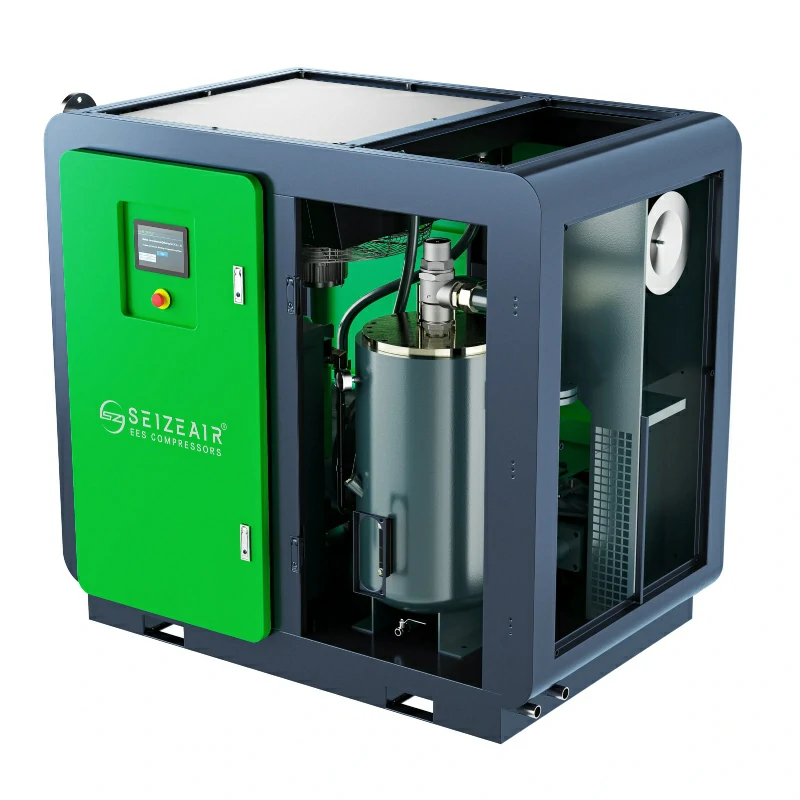
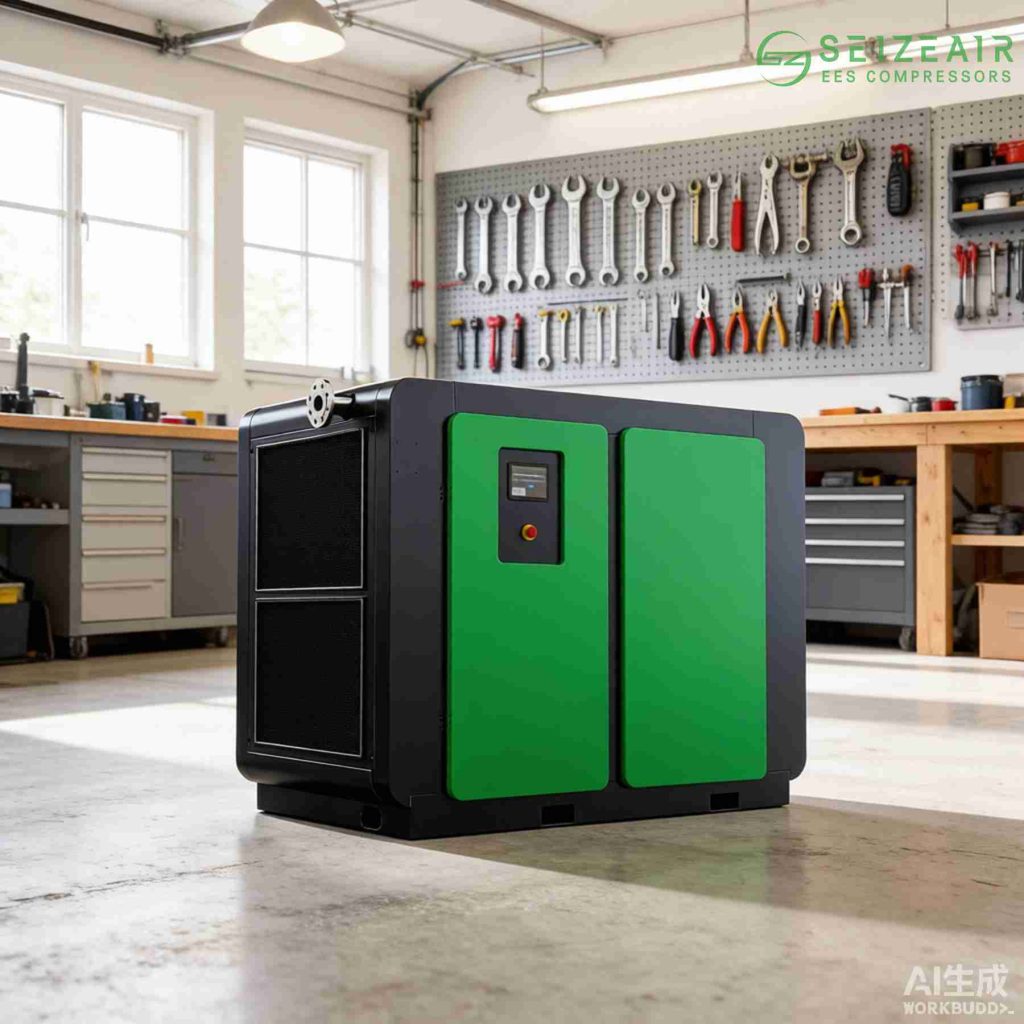
Single phase air compressor in a home garage
Choose a three phase air compressor when:
– Your facility already has three phase service.
– You need 5 HP or more of continuous compressed air.
– The compressor will run long hours every day.
– Energy efficiency and motor longevity are priorities.
– You plan to add variable speed control or heat recovery.
– You are running a production line, factory, or large workshop.
Three phase power also opens the door to larger two-stage screw compressor systems, oil-free screw air compressors for food and pharma, and VSD screw compressor energy savings that are hard to achieve on single phase.
Do Single Phase Compressors Use More Electricity?
For the same mechanical output, a single phase compressor usually uses more electricity than a three phase compressor. The reason is motor efficiency. Single phase motors typically run at 65% to 75% efficiency, while three phase motors run at 85% to 95%.
The difference is small at low horsepower and intermittent use. A 2 HP single phase compressor that runs two hours a week might only waste a few dollars a year compared with a three phase unit. But a 5 HP compressor that runs two shifts a day can waste hundreds of dollars per year.
The key is duty cycle. The more hours the compressor runs, the more important efficiency becomes. If the machine is on a lot, three phase pays back. If it only runs occasionally, single phase is fine.
Why Do Three Phase Motors Last Longer?
Three phase motors last longer for three reasons. First, constant torque means less vibration. Less vibration means less stress on bearings, windings, and couplings. Second, lower current per winding means less heat. Heat is the main enemy of motor insulation. Third, there is no start switch or capacitor to fail.
Single phase motors start with a burst of current and a mechanical switch. That switch can fail after thousands of cycles. Capacitors also degrade over time. Three phase motors avoid both of these wear items.
That does not mean single phase motors are unreliable. A well-built single phase motor can last ten to fifteen years with proper care. But under heavy continuous duty, three phase is the clear winner.
Can a 5 HP Air Compressor Run on Single Phase?
Yes, but it is near the practical limit. A 5 HP single phase compressor needs a 240 V circuit and a breaker that can handle the start-up surge. Many residential panels can support it, but the wiring must be sized correctly. A 5 HP compressor is common in small auto shops and serious home garages.
Above 5 HP, three phase becomes much more practical. You can find single phase motors up to 7.5 HP or even 10 HP, but they are expensive, draw very high current, and often require special capacitors or starting circuits. The cost and complexity usually push buyers toward three phase.
Cost Comparison: Upfront and Over Time
| Cost item | Single phase compressor | Three phase compressor |
| Purchase price | Lower | Higher |
| Electrical installation | Minimal, standard outlet | Requires three phase service |
| Utility demand charges | Lower | May trigger demand metering |
| Energy cost per HP-hour | Higher | Lower |
| Motor replacement cost | Lower | Higher |
| Maintenance frequency | More frequent starts wear parts | Longer intervals |
| Typical payback | Immediate | Months to years if adding power |
The break-even point depends on local electricity rates and operating hours. If a three phase unit saves $0.50 per hour in electricity and runs 2,000 hours per year, that is $1,000 per year. If the added installation cost is $3,000, payback is three years. After that, the three phase unit saves money every year.
Common Mistakes When Choosing Between Single and Three Phase
One common mistake is buying a three phase compressor because it is “better” without checking whether three phase power is available. The compressor then sits unused while the owner quotes an electrical upgrade that costs more than the machine.
Another mistake is undersizing the electrical circuit for a single phase compressor. A 5 HP motor on a 20 A breaker will trip during start-up. The breaker and wire must be sized for the motor nameplate current and starting inrush, not just the running load.
A third mistake is assuming a static phase converter will deliver full motor power. It will not. If you need the full rated output, use a rotary converter or a properly sized VFD, or buy a compressor that matches your supply.
Finally, some buyers ignore duty cycle. A single phase compressor can deliver the same peak CFM as a three phase unit, but if it cannot cool down between cycles, the motor will fail prematurely. Always check the duty cycle rating and compare it to your actual run time.
Another frequent error is ignoring noise. A loud compressor in a small shop becomes a real problem. If noise matters, look at a low-noise air compressor or a unit with a full sound enclosure.
Safety and Code Considerations
Both single phase and three phase compressors must be installed according to local electrical codes. In the United States this means the National Electrical Code (NEC), which requires disconnecting means within sight of the motor, properly sized conductors, and motor overload protection.
Three phase compressors also need correct phase rotation. If the phases are connected in the wrong order, the motor will run backward. On a screw compressor this can cause immediate damage because the rotors are designed to turn in one direction only. Always verify rotation before running the compressor under load.
Grounding is essential for both types. A compressor frame must be bonded to the equipment grounding conductor. This protects users if a winding shorts to the frame.
Matching Compressor Type to Your Application
| Application | Recommended type | Why |
| Home garage, auto DIY | Single phase 120 V / 240 V | Simple power, low cost |
| Small auto body shop | Single phase 240 V, up to 5 HP | Enough air for painting and tools |
| Mobile service truck | Single phase or engine driven | No external power needed |
| Small CNC shop | Single phase or three phase 230 V | Depends on shop service |
| Machine shop | Three phase 230 V / 460 V | Continuous duty, multiple tools |
| Food packaging | Three phase, possibly oil-free | Clean air, reliable supply |
| Manufacturing plant | Three phase 460 V | Efficiency, scale, VSD options |
| Mining or construction | Three phase or diesel mobile | High volume, harsh environment |
Maintenance Differences
Single phase motors have start switches and capacitors that wear out. The centrifugal switch can stick, and capacitors can lose capacitance over time. These parts are inexpensive but they add to the maintenance list.
Three phase motors are simpler internally. They have no start switch and usually no capacitor. The main maintenance items are bearings, windings, and cooling. Because they run cooler and smoother, bearings last longer.
For both types, regular air compressor maintenance includes oil changes, filter replacements, belt tension checks, cooler cleaning, and condensate draining. A neglected compressor of either type will cost more to run and fail sooner.
Does Power Factor Matter?
Power factor is the ratio of real power doing work to the apparent power flowing in the wires. Single phase motors often have a power factor around 0.75 to 0.85. Three phase motors typically run at 0.85 to 0.95.
A lower power factor means more current is needed to deliver the same real power. That extra current causes larger voltage drops and can increase utility charges in commercial settings. Industrial users sometimes install power factor correction capacitors to bring the power factor closer to unity.
For a small shop, power factor is usually not worth worrying about. For a factory with many motors, it can affect the monthly electric bill.
Energy Use in Real Numbers
Suppose a 5 HP compressor runs 2,000 hours per year. A single phase unit with 72% efficiency and 0.85 power factor draws about 25 A at 240 V. The input power is:
P_in = V * I * PF = 240 * 25 * 0.85 = 5,100 W = 5.1 kW
Annual energy = 5.1 kW * 2,000 h = 10,200 kWh
At $0.12 per kWh, that is $1,224 per year.
A three phase unit with 90% efficiency and 0.88 power factor draws about 11.8 A per phase at 230 V. The input power is:
P_in = sqrt(3) * V * I * PF = 1.732 * 230 * 11.8 * 0.88 = 4,140 W = 4.14 kW
Annual energy = 4.14 kW * 2,000 h = 8,280 kWh
At $0.12 per kWh, that is $994 per year.
The three phase unit saves about $230 per year in this example. Over ten years the savings exceed $2,000, which can cover much of the installation cost in a facility that already has three phase power.
Should You Upgrade from Single Phase to Three Phase?
If your shop is growing and you are adding three phase machines anyway, a three phase compressor is a natural choice. You spread the electrical upgrade cost across several machines, and the compressor benefits from lower running costs.
If you only need the compressor and nothing else is three phase, the upgrade is harder to justify. A high-quality single phase compressor, a larger receiver tank, or a screw air compressor sizing guide review may solve the problem at lower cost.
Some utilities offer incentives for upgrading to more efficient three phase equipment. It is worth asking your utility representative about commercial and industrial rebates before making a decision.
Three Phase Air Compressor Advantages in Summary
The main advantages of a three phase air compressor are:
– Higher motor efficiency, usually 85% to 95%.
– Constant torque and smoother operation.
– Lower current per conductor for the same horsepower.
– Longer motor and bearing life.
– Better compatibility with variable speed drives.
– Easier heat recovery and system integration.
– Available in much larger sizes for industrial use.
These advantages matter most when the compressor runs many hours per year. For light or occasional use, the lower cost and simpler installation of single phase often wins.
What About 220V Single Phase Air Compressors?
In many countries outside North America, 220 V to 240 V single phase is the standard household voltage. A 220 V single phase air compressor can therefore deliver more power on a standard outlet than a 120 V North American unit. In Europe, a 2.2 kW single phase compressor is common and useful for small workshops.
The same rules apply: single phase torque pulses, needs a capacitor or start winding, and is limited to roughly 3 kW to 5 kW for common designs. Above that, three phase becomes the practical choice.
Buying Checklist
Before you buy, answer these questions:
1. What voltage and phase are available at the installation site?
2. What is the maximum horsepower the electrical service can support?
3. How many hours per day will the compressor run?
4. What peak CFM and pressure does the application need?
5. Is the load steady or does it vary throughout the day?
6. Is noise a concern in the workspace?
7. Do you need oil-free air for food, medical, or electronics?
8. Is there room for a larger receiver tank to reduce cycling?
9. Will future equipment need three phase power?
10. What is the total installed cost, including wiring and permits?
Use the answers to narrow the choice. A small shop with 240 V single phase and intermittent use should look at single phase piston or small screw units. A plant with three phase service and continuous demand should look at industrial three phase screw compressors.
If your application needs higher pressure, a high pressure air compressor is usually a three phase machine because single phase motors struggle to deliver high torque at the speeds needed for high pressure stages.
How Seize Air Fits Into the Decision
Seize Air builds a wide range of industrial air compressor solutions, from small single phase units suitable for workshops up to large three phase systems for manufacturing. If you are unsure whether your application needs single phase or three phase power, the Seize Air team can review your voltage, duty cycle, and air demand before you commit.
Final Thoughts
The choice between a single phase air compressor and a three phase air compressor comes down to power availability, duty cycle, and total cost. Single phase wins on convenience and low upfront cost. Three phase wins on efficiency, smooth running, and long-term durability. Match the machine to your supply and your workload, and you will get reliable compressed air without paying for capacity you cannot use.
If you need help choosing the right voltage, sizing the motor, or planning the electrical installation, contact us and we will guide you to a compressor that fits your power supply and your budget.