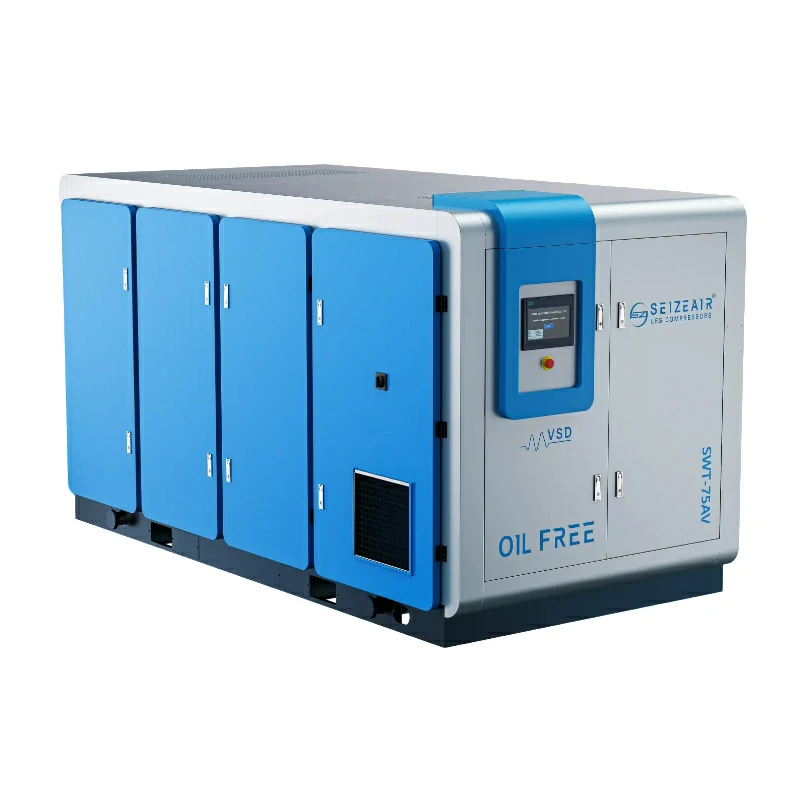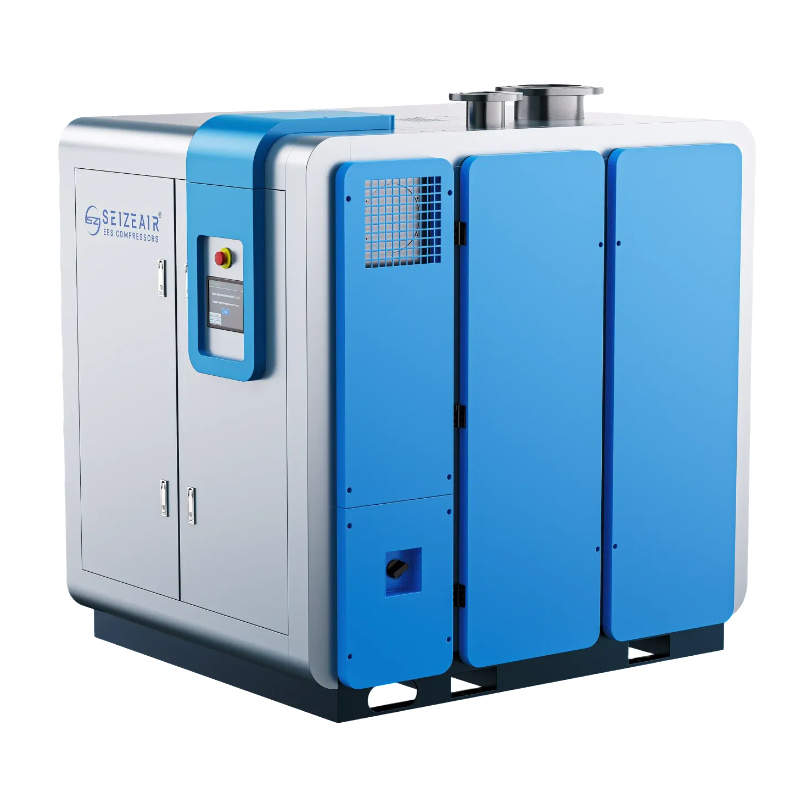


A frequency conversion air compressor lowers your energy bills by spinning the motor up and down to match real air demand, instead of running flat-out and burning electricity every time consumption dips. Because a variable speed (VFD) unit only pulls the power the job actually needs, most shops cut compressed-air energy cost by 20% to 50% in the first year, and the savings keep stacking up for the life of the machine.
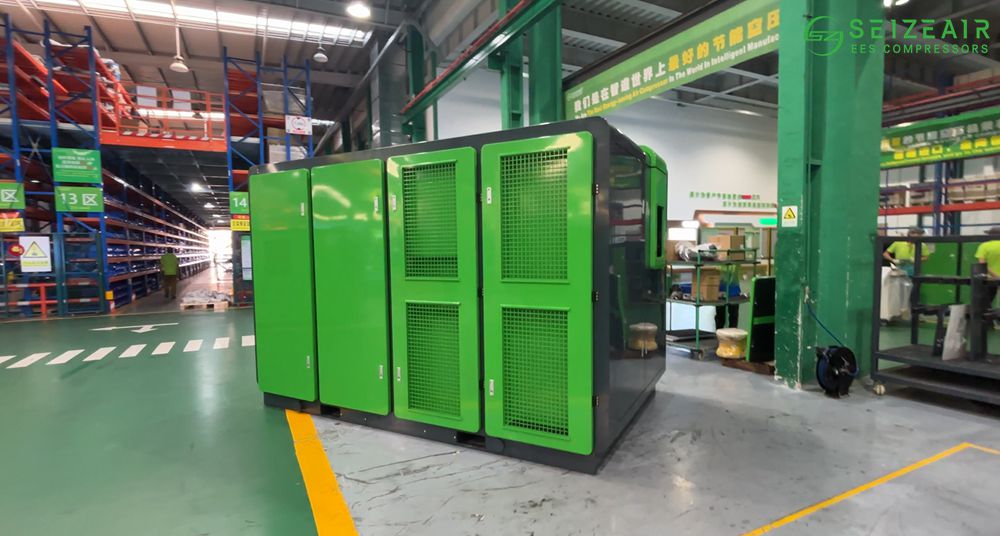
What Is a Frequency Conversion Air Compressor, Exactly?
Strip away the marketing and a frequency conversion air compressor is just a regular compressed-air machine with one smart extra: a variable frequency drive sitting between the supply and the motor. That drive changes the frequency of the electricity feeding the motor, which changes the motor’s speed. Faster motor equals more air. Slower motor equals less air. Simple as that.
A conventional fixed-speed unit only knows two states — full blast or off. When your tools ask for less air than the compressor makes, the machine has to dump the surplus by blowing it off or idling, and both waste power. A frequency conversion screw air compressor never does that. It eases off the throttle.
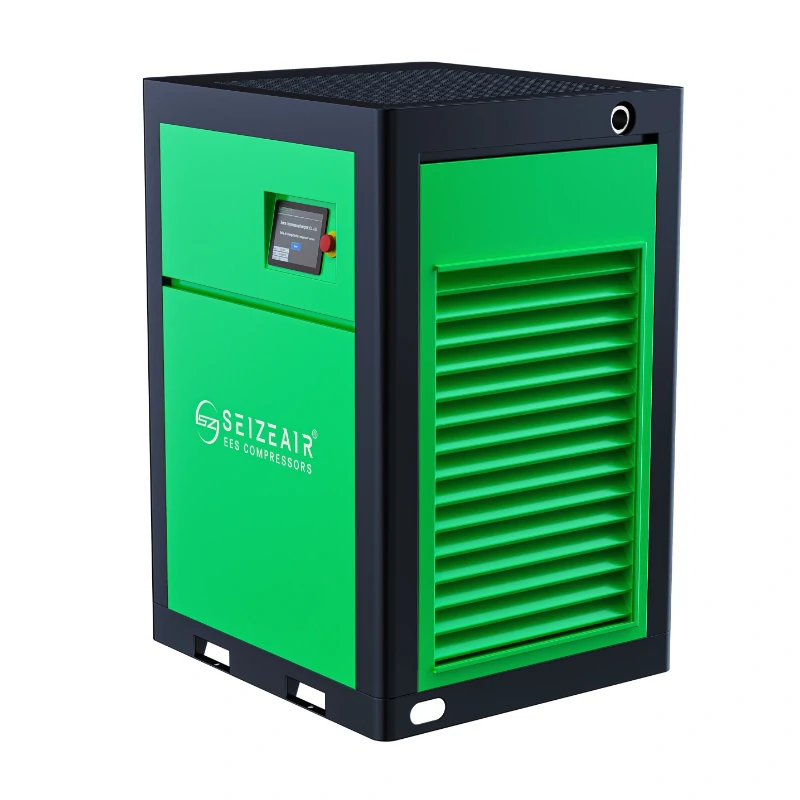
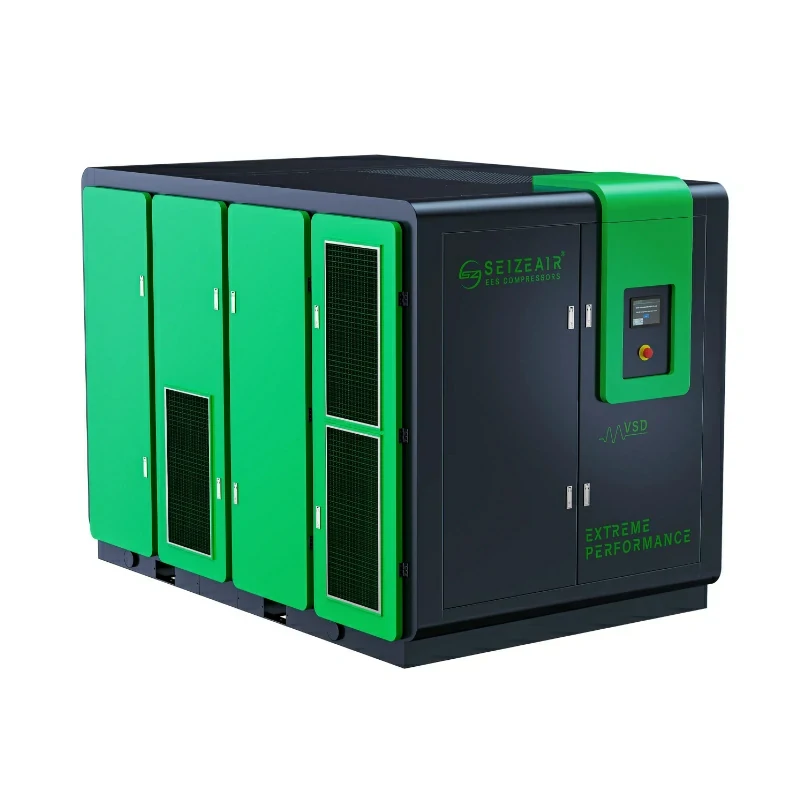
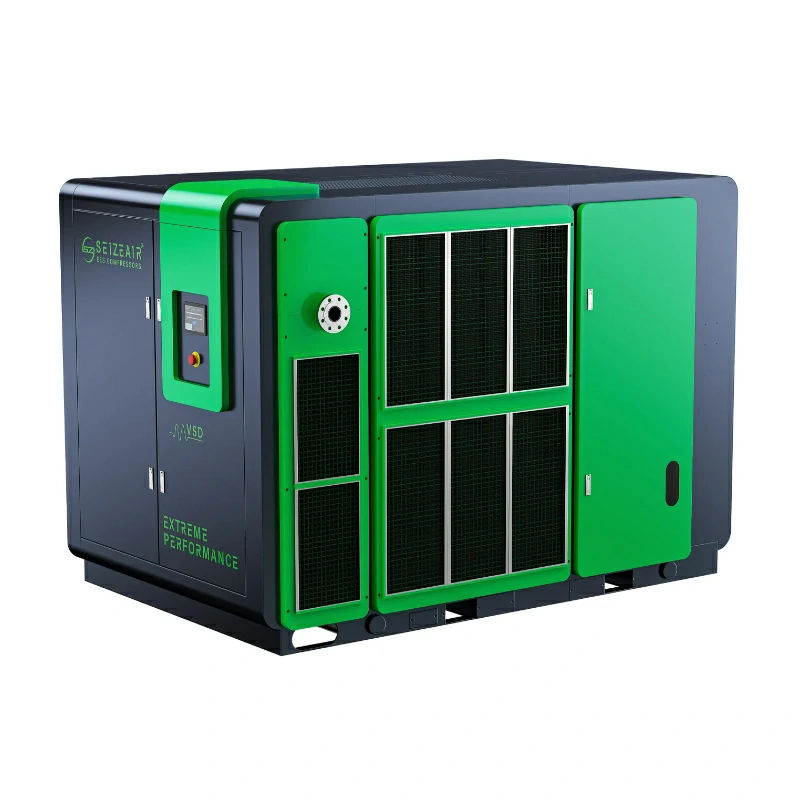
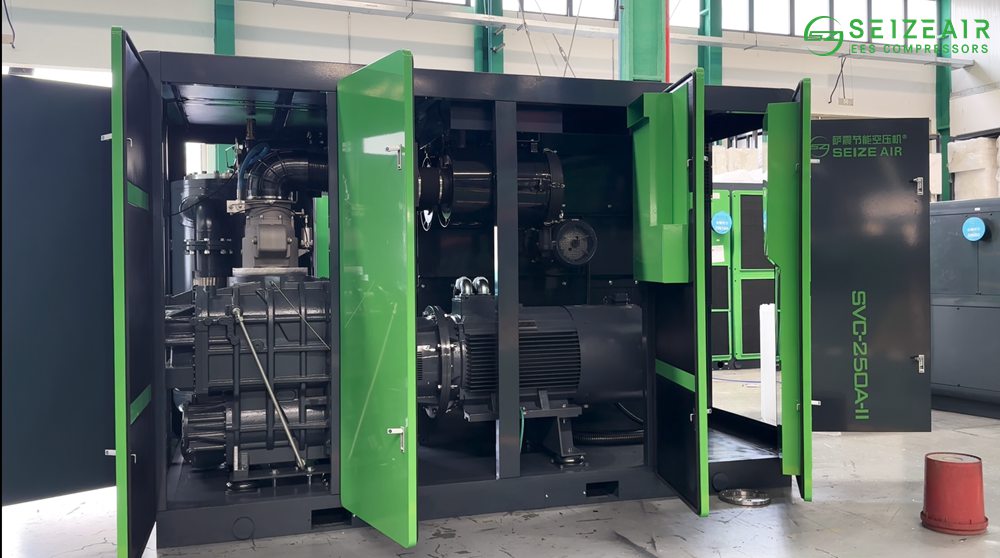
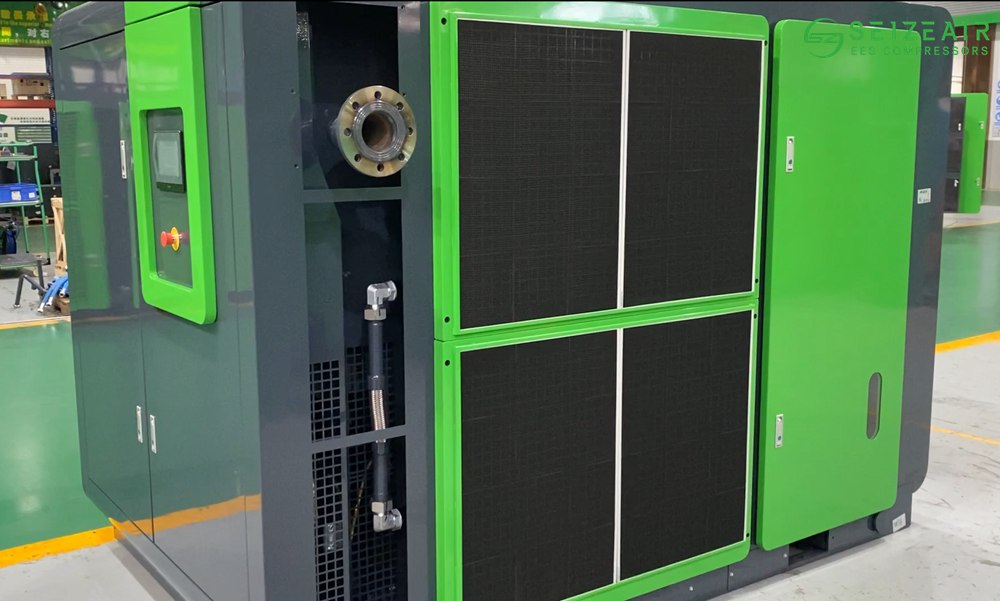
This is why you’ll hear the same idea called different names: inverter compressor, VFD compressor, variable speed drive (VSD) compressor. They point at the same core trick. Specialist builders such as Seize Air now ship permanent-magnet versions of these machines as standard catalog items, which tells you how mainstream the technology has become.
How Does a Frequency Conversion Air Compressor Work?
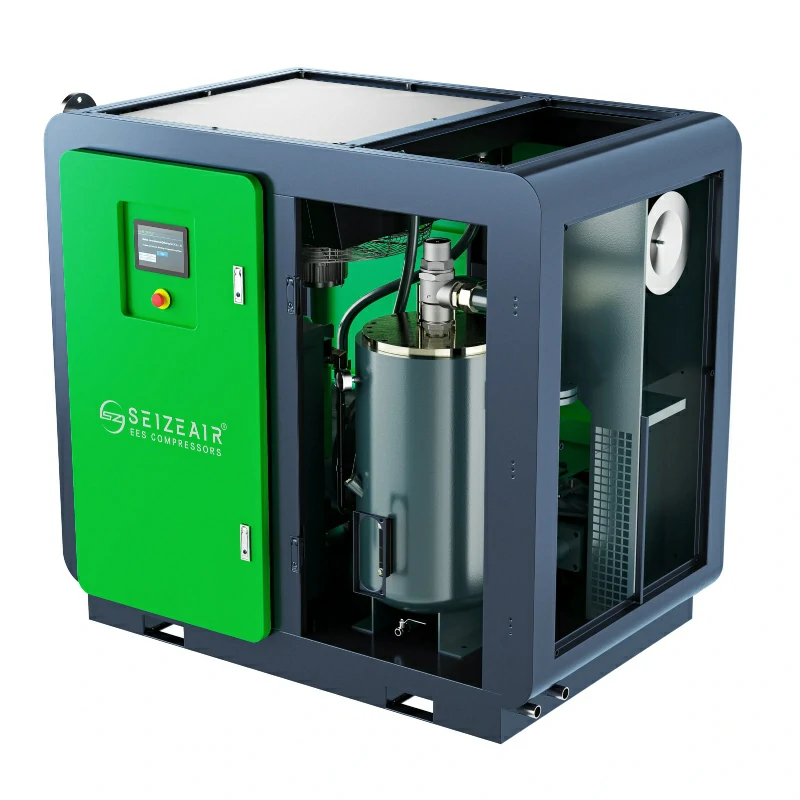
Here’s the chain inside the cabinet. Mains power comes in as fixed-frequency AC. A rectifier flips it to DC and smooths it on a bus. An inverter (built from IGBT switches) chops that DC back into AC — but at whatever frequency the controller wants. The motor sees that frequency and turns at the matching rpm. The controller watches line pressure with a sensor and nudges the frequency up or down a few times per second to hold the setpoint.
Fixed-speed machines ride a wide pressure band because they can only bang between loaded and unloaded. A VSD rides a tight one:
FIXED SPEED (star-delta)
 line pressure (bar)
 7.0 |====\          /====\          /====
     |    \        /      \        /
 5.5 |     \______/        \______/
     +----+----+----+----+----+----+----> time
     big sawtooth = wasted energy in every dip

VSD (frequency conversion)
 7.1 |----------------------------------------
 6.9 |----------------------------------------
     +----+----+----+----+----+----+----+----> time
     flat line = motor only works as hard as needed
Hold pressure steady and you also stop the air-driven tools from surging, which quietly saves a little more on top.
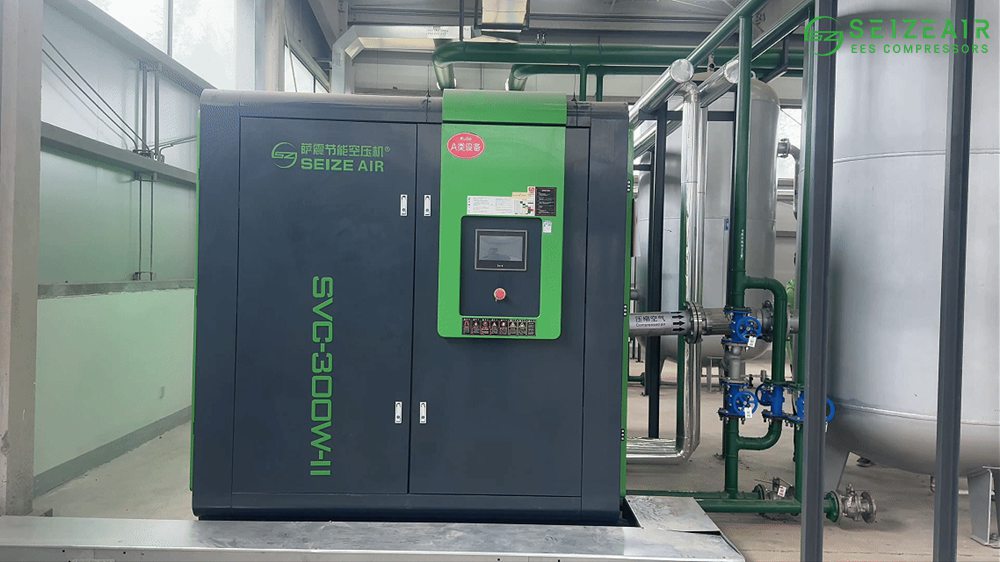
Why Compressed Air Eats So Much of Your Power Bill
Before we talk savings, it helps to grasp the problem. For most plants, the compressor is a silent giant on the utility bill. Buy the machine, and the purchase price is maybe 10% to 15% of what you’ll spend on it over ten years. The electricity is the other 70% to 90%.
Air is expensive to make. Roughly one kilowatt-hour of electricity yields about seven to eight cubic metres of free air at best, and real-world systems lose a chunk of that to heat and leaks. So every wasted kilowatt-hour at the compressor shows up directly on the bill.
You can frame the running cost with plain arithmetic, no fancy tools needed:
Annual energy cost = motor rated kW x running hours per year x electricity price per kWh
Example: a 55 kW unit running 6,000 hours a year at $0.12 per kWh costs about $39,600 a year in electricity. Shave 35% off that with variable speed and you’re looking at roughly $13,800 back in your pocket annually. That single line of math is why plants bother with frequency conversion at all.
The Real Trick
A fixed-speed compressor is sized for your peak need, but peak need rarely lasts all day. Most shops sit at 50% to 70% of maximum demand for the bulk of a shift. That’s where the physics bites.
Centrifugal and screw machines obey the affinity laws: flow scales with speed, pressure scales with speed squared, and power scales with speed cubed. In plain form:
P2 / P1 is about (N2 / N1) to the power of 3
So if you run the motor at 80% speed, you don’t use 80% of the power — you use roughly 51%. Drop to 60% speed and you’re near 22% of full-load power. The savings aren’t linear; they accelerate as the motor slows. A variable speed drive air compressor lives in exactly that sweet zone during part-load hours.
| Load level | Fixed-speed kWh/h | VSD kWh/h | Saving |
|---|---|---|---|
| 100% | 55 | 52 | ~5% |
| 75% | 55 (unloaded cycling) | 38 | ~31% |
| 50% | 55 | 24 | ~56% |
| 25% | 55 | 13 | ~76% |
Numbers above are illustrative, but they track what shops actually measure once a VSD replaces a bang-bang unit.
How Much Energy Can You Actually Save?
There’s no single number, because it rides on your load profile. Plants with steady, near-constant demand save less — sometimes 10% to 15%. Plants with spiky, stop-start demand save the most, often 35% to 50%. The reason is obvious from the table above: the more time you spend below full load, the more a VSD helps.
A few real-world patterns show up again and again:
| Typical use | Average load | Annual energy saving |
|---|---|---|
| General metal workshop | 60% | 30–40% |
| Laser cutting cell | 50% | 35–45% |
| Food & beverage line | 70% | 22–30% |
| Auto body / spray booth | 55% | 30–42% |
| Textile mill | 65% | 25–35% |
If your demand swings through the day, a frequency conversion air compressor for laser cutting or any variable-speed unit in the same family will usually pay for the price gap fast.
Variable Speed vs Fixed Speed — A Straight Comparison
People ask this like it’s a tug-of-war, but it’s really about duty cycle. Here’s the honest side-by-side:
| Feature | Fixed-speed compressor | Variable speed (VFD) compressor |
|---|---|---|
| Motor control | On/off, star-delta | Continuous rpm control |
| Part-load efficiency | Poor | High |
| Pressure stability | ±1 bar swings | ±0.1 bar |
| Energy at low load | Wasted via unload | Scales down |
| Upfront cost | Lower | Higher |
| Best fit | Steady 100% load | Varying demand |
A fixed speed air compressor still wins when you run flat-out every hour of every shift and never dip. Most shops aren’t that shop.
To decide, work the payback:
Payback (years) = (VSD price minus fixed price) divided by annual electricity saving
If the gap is $8,000 and you save $13,800 a year, you’re whole in under eight months. After that, it’s pure upside.
Part-Load Efficiency and Why “Bigger Is Safer” Backfires
Old habit says size the compressor 30% oversize so you never run short. With a fixed-speed machine that’s a tax you pay forever — the oversized motor idles more, blows off more, and drinks more. With a VSD, oversizing hurts less because the motor just slows down, but you’ve still paid for iron you don’t use.
The cleaner move is to size for true average demand and let the drive cover the peaks. That keeps the unit in its efficient band instead of crawling along at 20% load where even a VSD loses some edge.
Permanent Magnet vs Standard VFD Motors
Not all variable-speed motors are equal. A standard VFD-fed induction motor is good. A permanent magnet frequency conversion air compressor swaps the induction rotor for a magnet rotor that hits IE4 or IE5 efficiency classes. At part load — which is where your compressor lives most of the day — the permanent-magnet design stays efficient instead of sagging. Expect another few points of saving on top of the VSD benefit.
For higher demand, a two stage frequency conversion air compressor splits compression across two rotors, which cools the air between stages and squeezes out more air per kilowatt. Pair two-stage with permanent magnet and variable speed and you’ve got about the most efficient screw package money buys.
Picking the Right Unit for Your Shop
Get the sizing wrong and no amount of clever drive saves you. Start with two numbers: your average cubic-metres-per-minute draw, and how much it swings through the day. If swing is wide, lean VSD. If it’s flat, a fixed-speed or a small VSD with a buffer tank both work.
Match the machine to the job. Laser cutting wants clean, dry, steady air, so a dedicated variable-speed unit with good drying pays off. Spray booths want steady pressure so the gun doesn’t spit. Small workshops on a budget do fine with a compact variable-speed screw rather than a giant fixed unit they’ll never load.
Don’t skip the supporting gear. A VSD exposes waste elsewhere — leaks and dirty filters now show up as higher motor speed and more cost, which is a gift if you act on it.
Where the Savings Disappear
Plenty of plants fit a shiny variable-speed compressor and then watch the bill barely move. The usual culprits:
- Leaks. A single 3 mm leak can bleed $1,000-plus a year. Fix the network first.
- Pressure set too high. Every extra bar costs roughly 7% more energy. Set it only as high as the worst tool needs.
- Wrong size. Too big and it lingers at low load; too small and it pins at 100%.
- Choked filters. A clogged intake or separator makes the motor work harder for the same air.
- No monitoring. If you can’t see specific power (kWh per m3), you can’t tell when it drifts.
Keep the Savings
A frequency conversion air compressor asks for the same care as any screw unit, just with a bit more attention to the electrical side. Change air and oil filters on schedule, keep the cooling path clear, and glance at the controller’s energy readout now and then. A compressed air leak detection sweep twice a year catches the silent money drains. If you want hard numbers before you buy, an air compressor energy audit will size the saving for your exact line.
Is a Frequency Conversion Air Compressor Worth the Money?
For most shops, yes — but the call depends on hours and load shape. Use this as a quick filter:
| Your situation | Recommendation |
|---|---|
| Run 8+ hours/day, demand varies | Frequency conversion — strong payback |
| Steady 100% load all shift | Fixed speed may be enough |
| Low hours (under 4h/day) | VSD still saves, longer payback |
| Frequent start/stop cycles | VSD cuts wear and surge |
If you land in the top row, the math almost always favours variable speed. The bigger your bill, the faster it pays.
Why Seize Air Builds These the Way We Do
Seize Air has spent years tuning variable-speed screw packages for real workshops rather than lab conditions — permanent-magnet rotors, tight pressure bands, and controllers that read your line instead of guessing. The point of all the engineering above is practical: lower the kWh per cubic metre, and the bill takes care of itself.
Ready to See Your Own Number?
If you want to know what a frequency conversion air compressor would actually save in your plant, talk to us. Tell us your running hours, your average air draw, and your electricity rate, and we’ll size the right unit and show the payback in black and white. Reach the Seize Air team through our contact page and we’ll get you a straight answer, not a brochure.