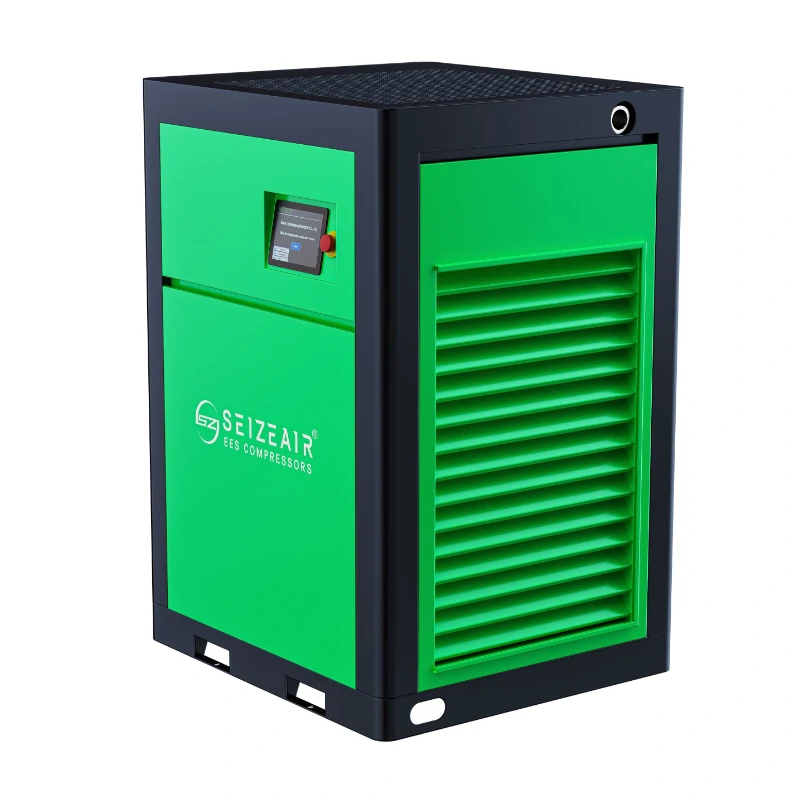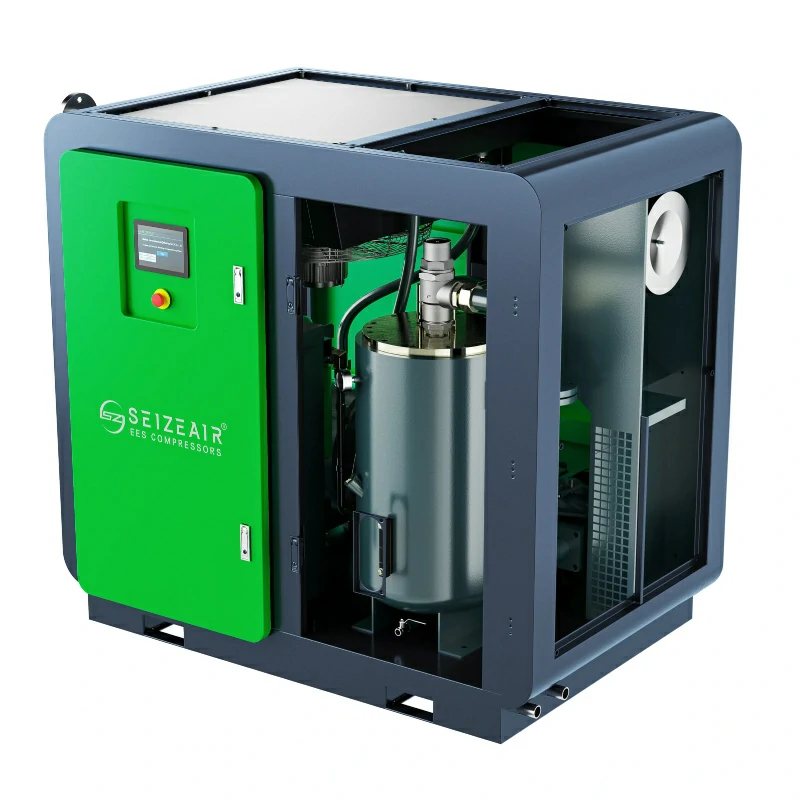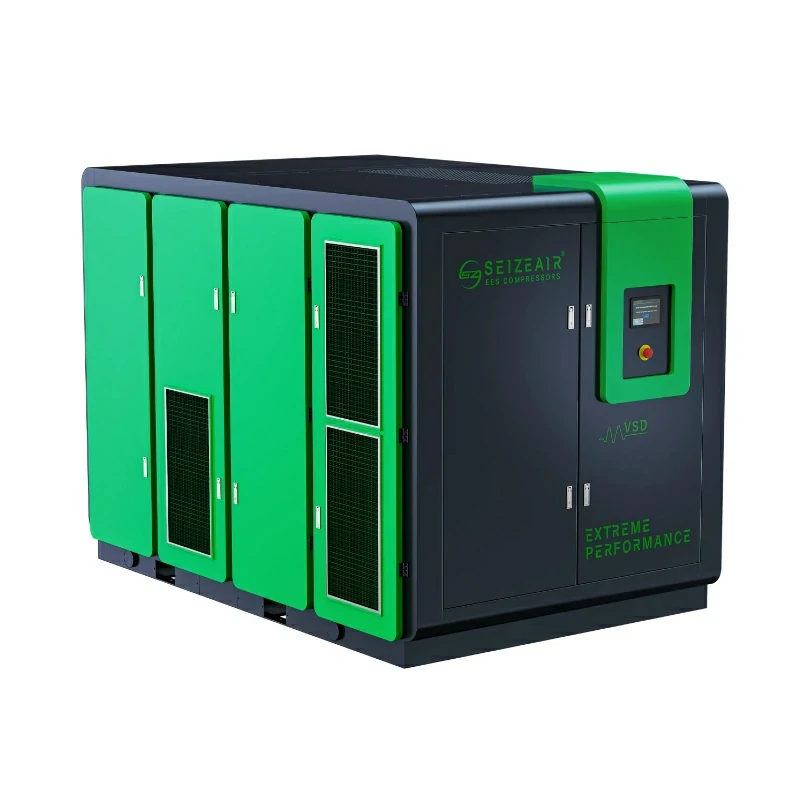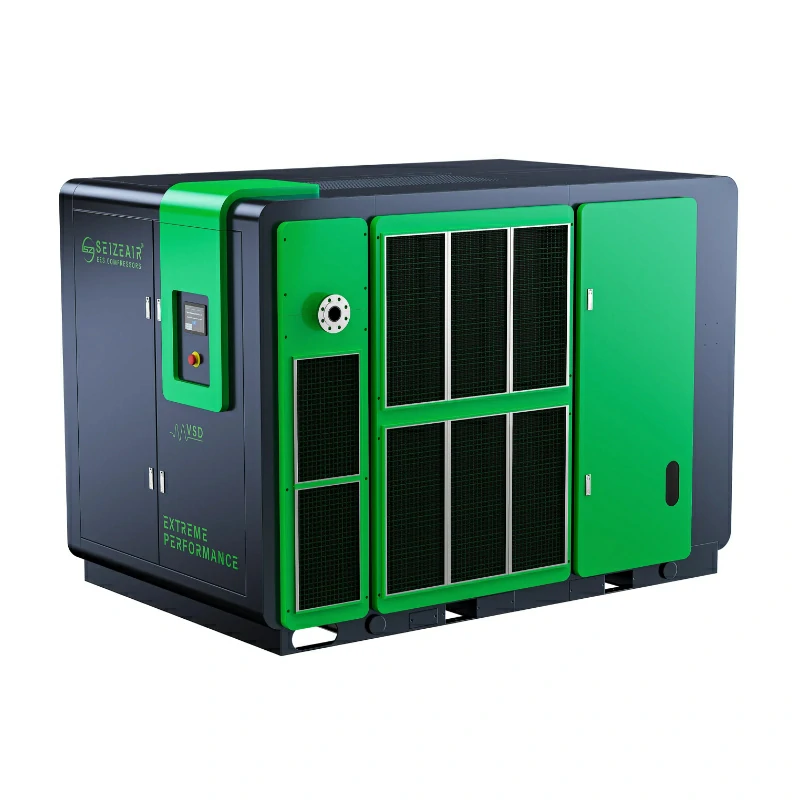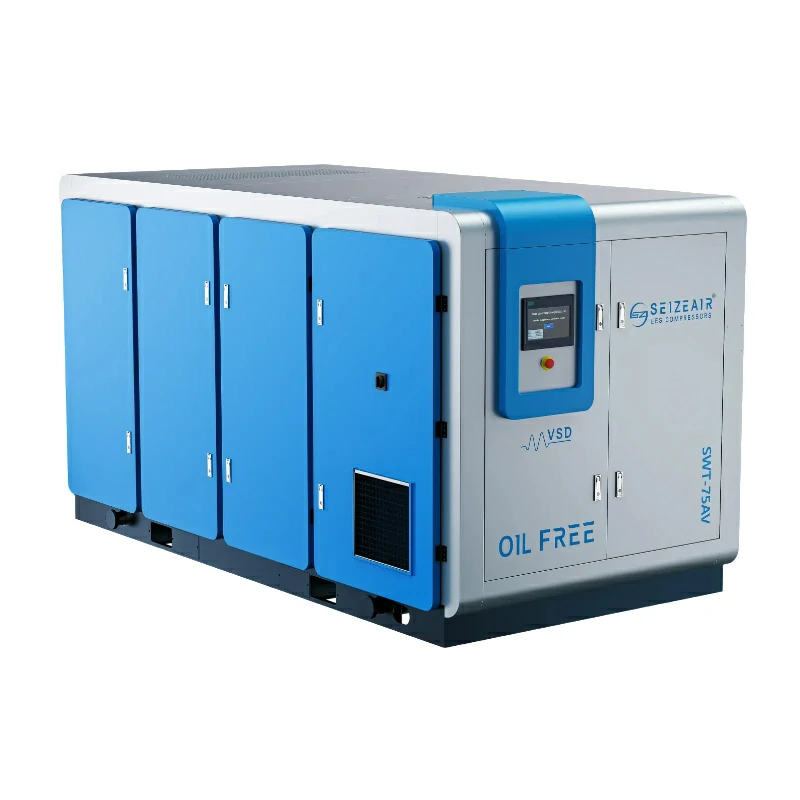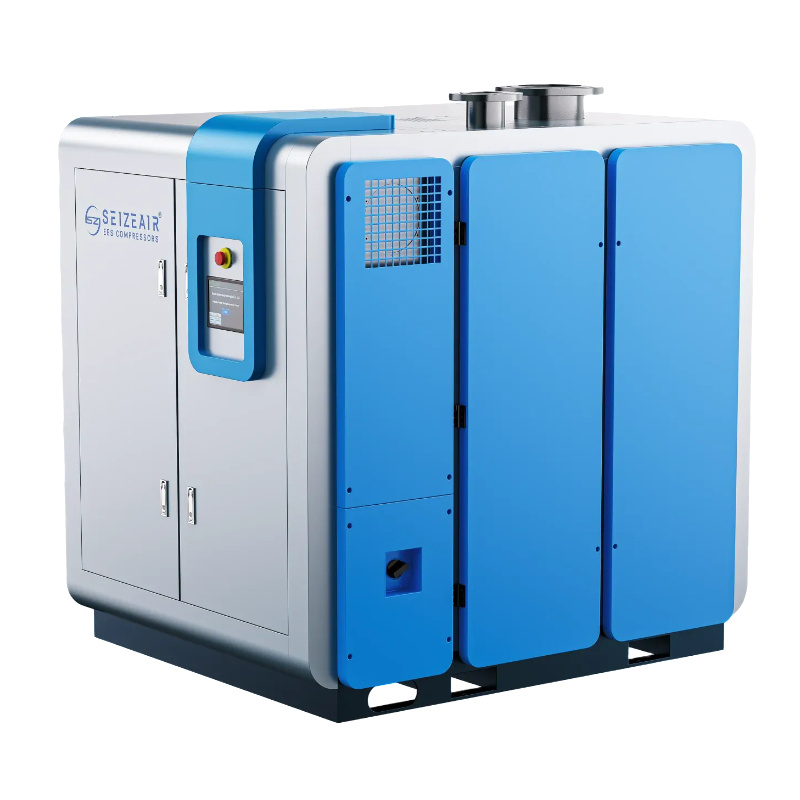


A skid mounted air compressor station puts the compressor, dryer, filters, receiver and controls on one steel base, so the whole air plant arrives assembled, tested and ready to connect to power and pipework. It is the difference between buying a machine and buying a working air supply. This guide explains what belongs on the skid, how to size each module, how a skid differs from a containerized or trailer-mounted unit, and what to check before you sign an order.
What Is a Skid Mounted Air Compressor Station?
A skid mounted air compressor station is a complete compressed air plant built on a single structural steel base, or skid. The compressor sits on that base with its after-treatment, storage and control gear already piped and wired together. You lift the skid, set it down, anchor it, bring in power and a discharge line, and the station runs.
The word station matters more than the word skid. A skid is only the frame. The product is a functional air system whose parts were selected to work together and tested as a set before dispatch. That is why a station is specified differently from a compressor: you are buying a pressure, a flow, a dew point and an air quality class at the outlet, not just a motor rating.
The Components Normally on the Base
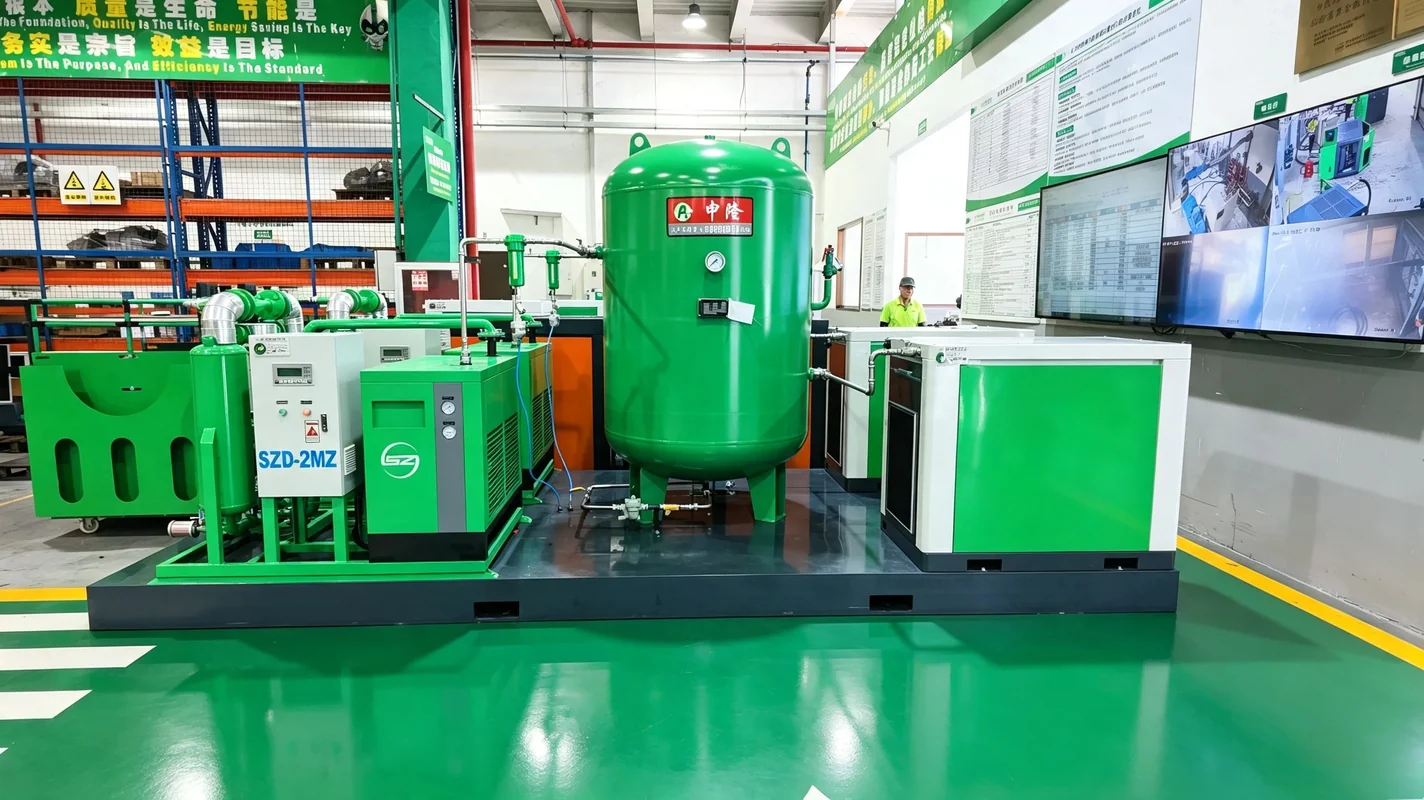
Most industrial skid stations carry the same core set. The compressor is the prime mover. After it come the moisture and dirt removal stages, then storage, then the control and monitoring layer. Mechanical details such as drains, isolation valves and a pressure gauge at the outlet are small but decide whether the station is serviceable in practice.
- Compressor with its own intake filter, oil or oil-free airend, motor and local controller.
- Aftercooler and dryer, either refrigerated or desiccant, sized to the station flow.
- Coalescing and particulate filters matched to the required air quality class.
- Receiver to buffer demand and let the compressor unload rather than short-cycle.
- Condensate drains, usually zero-loss electronic type, with a safe discharge route.
- Controls and instrumentation, including pressure sensing, fault logging and often remote access.
What Goes Into a Station: The Module List
Before comparing suppliers, write the module list down. A quotation that names only a compressor and a tank is not a station quotation. The table below is the minimum you should expect to see itemised, with the pressure, flow and dew point that each module has to meet. Fill the specification column with your own numbers rather than accepting a generic claim.
| Module | Job it does | What to specify |
|---|---|---|
| Compressor | Produces flow at pressure | FAD at your worst-case pressure, motor kW, fixed or variable speed |
| Aftercooler | Drops discharge temperature | Approach temperature and cooling medium |
| Dryer | Removes water vapour | Pressure dew point, type, rated flow at your inlet condition |
| Filters | Removes oil aerosol and particles | ISO 8573-1 class per stage, element micron rating |
| Receiver | Buffers demand, stabilises pressure | Volume, design pressure, orientation |
| Drains | Removes condensate | Zero-loss type, alarm output, discharge point |
| Controls | Runs and reports the station | Sequencing, fault log, remote protocol |
Two modules are often undersized even when the compressor is right. The dryer is rated at a reference inlet temperature and pressure, and its capacity falls when the inlet is hotter or the pressure lower. The receiver is sized for the demand swings the site actually has, not for a rule of thumb copied from another project.
Skid Mounted vs Containerized vs Trailer Mounted
Three formats dominate, and they solve different problems. The skid station is the open or semi-enclosed base unit described above, normally installed indoors or under a canopy. A containerized station puts the same equipment inside a steel container with doors, louvres and often its own lighting, so it can stand outdoors. A trailer-mounted unit adds running gear so the plant can be towed between sites.
Choose the skid when the station will live in a plant room or a covered area and you want the simplest, most accessible arrangement. Take the container when there is no building and the unit must survive weather, or when the site wants a plug-and-play package that can be relocated later. A trailer only makes sense when mobility is the real requirement, because the chassis and running gear add cost and reduce the space available for treatment equipment.
| Format | Best for | Enclosure | Mobility |
|---|---|---|---|
| Skid | Plant room or covered area, best access | Open or semi-enclosed | Lifted, not towed |
| Containerized | Outdoor siting, relocatable package | Weatherproof container | Lifted, not towed |
| Trailer | Sites that change location | Open or canopied | Towed on its own chassis |
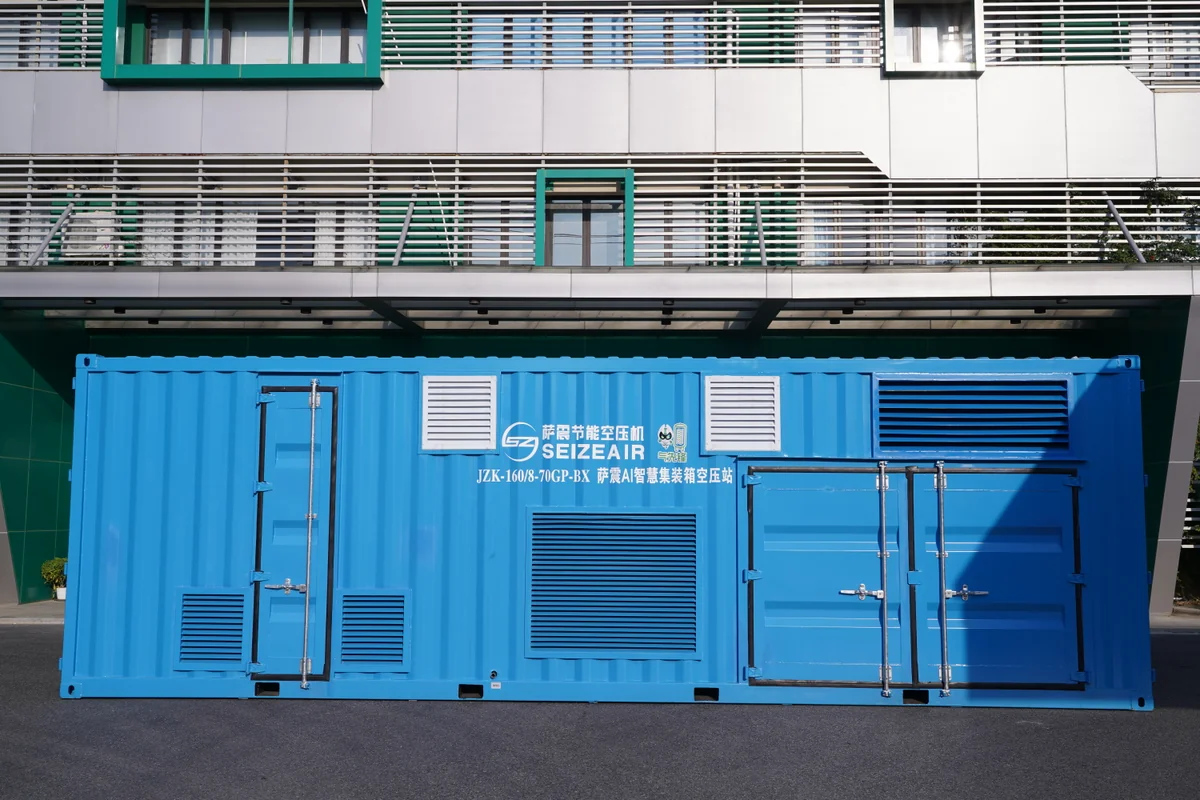
The engineering consequence is that a container is not simply a skid with a box around it. Ventilation has to be designed, because the compressor and dryer reject heat into a small volume. Plan access so a filter change does not require removing a machine. A container also changes the fire and electrical classification discussion, so specify the enclosure with the equipment, not afterwards. If outdoor siting is likely, compare the trade-offs in this guide to containerized air compressor stations, and if the unit must move, read skid mounted diesel versus trailer mounted units.
Skid Station vs a Traditional Compressor Room
A traditional compressor room is built on site: separate machines, site-run pipework, separate electrical work and a commissioning period during which the interfaces are discovered. A skid station moves that integration into a factory. The modules are assembled, leak-tested and run before shipment, and the site work shrinks to foundations, power, discharge connection and commissioning checks.
That shift has practical value beyond speed. Responsibility becomes clearer, because one supplier owns the whole air path rather than blaming the dryer vendor for a compressor problem. Spare parts and service intervals can be planned as one schedule. The trade-off is flexibility: a skid is harder to reconfigure than loose equipment, so the specification has to be right at the start. If you expect the demand to double within two years, design the base for the future station or plan a second skid rather than cramming everything onto one frame.
Sizing the Station: Flow, Pressure and Diversity
Sizing starts with a demand survey, not a catalogue. List every air consumer, its flow at its own working pressure, and its duty cycle. Add the leaks and the margin you are willing to carry. Then apply a diversity factor only where consumers genuinely do not run together. A station sized on the sum of every nameplate with no diversity runs lightly loaded and wastes energy; a station sized on optimistic diversity runs short at the morning start-up.
Pressure needs the same care. The compressor must produce the highest pressure any consumer needs at the point of use, plus the pressure lost in the dryer, filters and pipework. A station that produces 8 bar at the compressor outlet may deliver well under 7 bar at a distant tool once treatment and distribution losses are counted. Specify the station outlet pressure and the flow at that pressure, and make the supplier state both.
For small and medium stations, a variable-speed permanent-magnet screw is often the efficient core, because it matches output to a changing demand instead of loading and unloading a fixed-speed machine. Real examples from the current range show the scale: a 11 kW unit delivers about 0.72 to 1.79 m³/min at 7.5 bar, and a 15 kW unit about 1.03 to 2.58 m³/min at the same pressure. Compare the options in the permanent-magnet variable-frequency screw range, and for larger duties the two-stage screw compressor range.
Air Treatment: Dryer, Filters and Dew Point
The dryer decides the dew point; the filters decide the purity. A refrigerated dryer typically reaches a pressure dew point a few degrees above freezing and suits general industrial air. A desiccant dryer reaches a much lower dew point and is needed when pipework runs outdoors, when the air is used in a cold process, or when the product is sensitive to moisture. Do not accept a dew point figure without the inlet temperature and pressure at which it applies.
Filtration is usually a chain rather than a single element: a bulk separator, a coalescing filter, then a fine filter or carbon stage where oil-free air is required. Each stage adds pressure drop, and pressure drop is energy. Size the filters at the station flow so the elements do not have to be changed every few weeks, and fit differential pressure indicators so the change is based on data rather than a calendar. The ISO 8573-1 class you actually need should be written into the order, with the test method agreed. The Compressed Air and Gas Institute publishes reference material on testing and air quality at cagi.org.
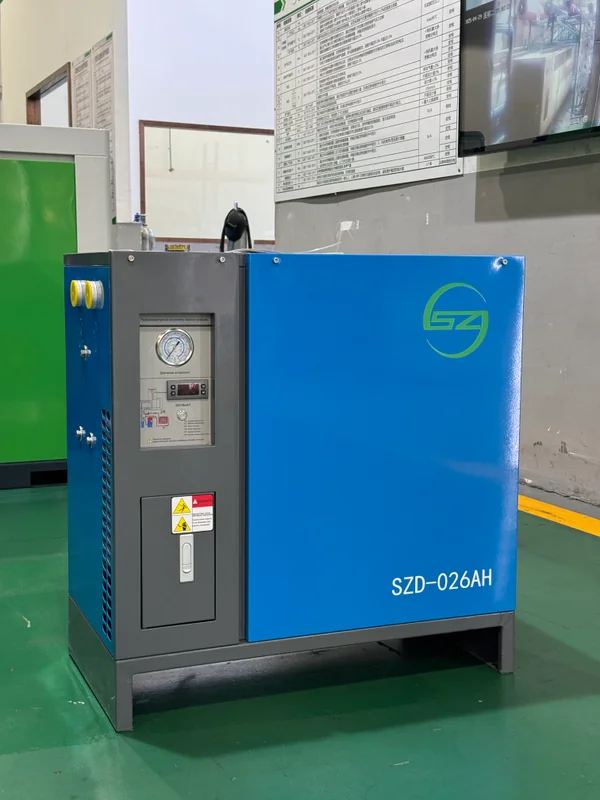
Where the air must be oil-free, the compressor itself has to be oil-free, because downstream filters cannot guarantee a class that the machine does not deliver. A dry oil-free screw is the usual choice for a station serving food, pharmaceutical or electronics duty; see the dry oil-free screw compressor range for the class and capacity options.
Receiver and Storage Sizing
Storage does three jobs: it absorbs demand peaks, it limits compressor cycling, and it gives the control system time to respond. The right volume depends on the compressor size, the size of the largest demand event and the acceptable pressure swing. A common shortcut is to size in proportion to flow, but a station feeding a large intermittent consumer needs more storage than the same flow spread evenly.
Put the receiver where it does the most good. For a variable-speed machine, storage downstream of the dryer and filters steadies the pressure seen by the plant. For a fixed-speed machine, storage close to the compressor lets it unload fully and run less often. Check the receiver’s design pressure and its drain arrangement against the rest of the station, and make sure the base frame is rated for a full receiver, because water and steel add up.
Power Supply, VSD and Electrical Integration
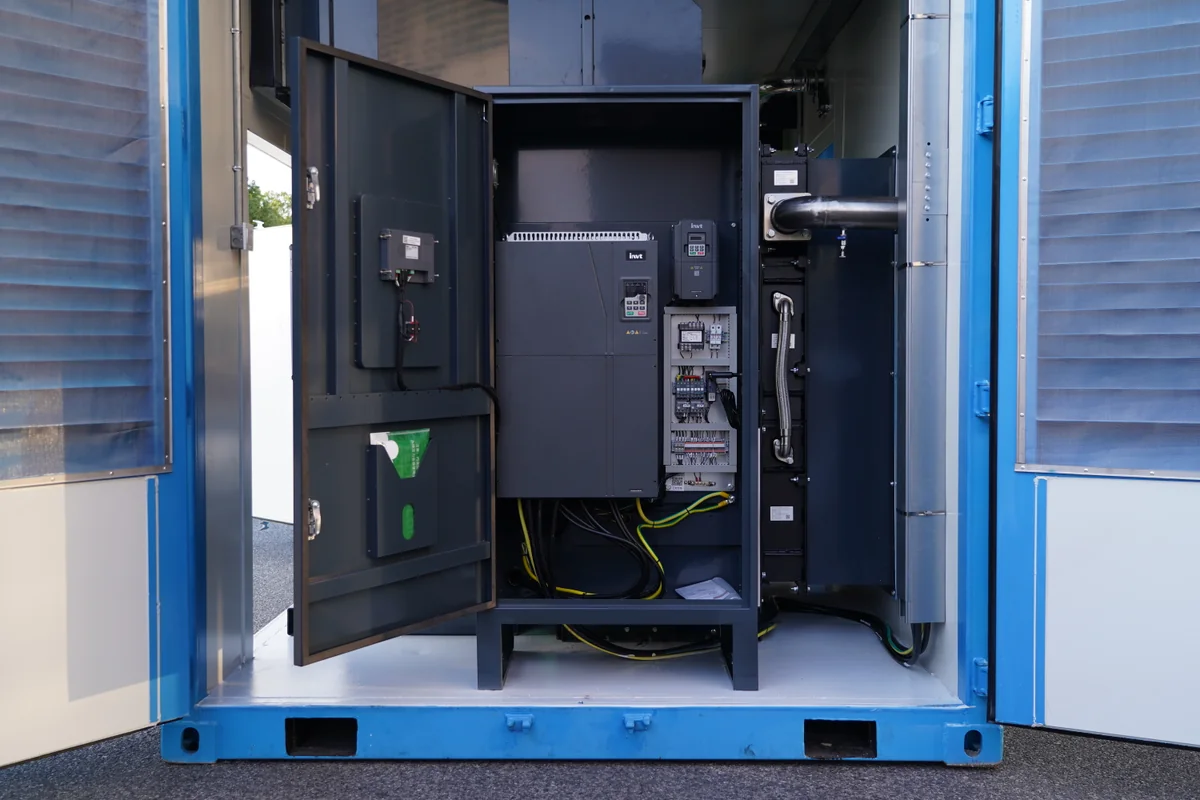
Electrical integration is where skid stations are most often under-specified. The skid needs a supply that matches the motor, the starting method and the site’s fault level. A variable-speed drive brings its own requirements: cable length limits, earthing, harmonic distortion and cooling. If the drive is mounted inside the enclosure, its heat load belongs in the ventilation calculation.
Decide early whether the station is fixed speed, variable speed or a mix, and whether the drive is on the skid or in a separate panel. A drive on the skid shortens cable runs and keeps responsibility with one supplier, but it puts heat and electronics in the same box as the compressor. A separate panel is easier to cool and service but adds site work. Whatever the choice, ask for the full load current, the recommended protection and the earthing arrangement in writing, and check them against the site supply before the skid is built.
Heat, Ventilation and Ambient Conditions
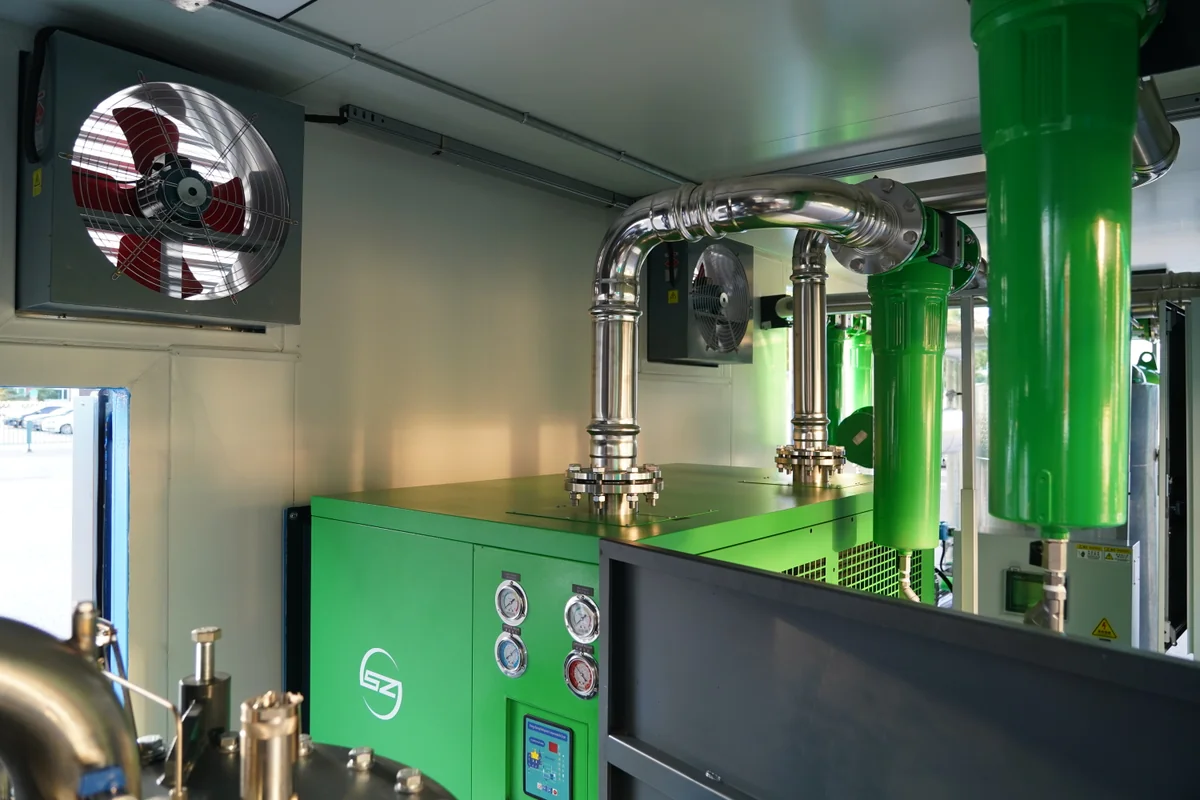
Almost all the electrical input ends up as heat in the room or enclosure. A skid station in a plant room needs enough air change to keep the intake temperature within the compressor’s rating, and enough directed airflow to stop hot air recirculating back into the intake. An enclosed container needs the same calculation in a much smaller volume, with louvres, fans and often a thermostatically controlled extract.
Ambient conditions also set the machine’s real capacity. Hot intake air reduces mass flow, and high altitude reduces it further. If the site is hot, dusty or coastal, say so at the specification stage, because the cooler, filters and paint system may all need to change. A station that is correct on paper at 20 °C can be overloaded at 45 °C, and the fix is much cheaper before the skid is built.
Noise and Where to Put the Station
Noise is a siting decision as much as a machine decision. The compressor, the dryer fan and the cooling fans all contribute, and hard reflective surfaces make it worse. Put the station where the sound has something to travel through, keep the intake and discharge away from work areas, and avoid corners that trap noise. If the station must sit near people, specify the sound pressure level at a stated distance and check it against the local limit.
Access matters as much as noise. Leave room to open panels, remove filter elements, slide out a dryer and lift the heaviest module. A station packed tight against a wall saves floor space and costs service time for its whole life. Mark the lifting points and keep them clear, because the skid will be lifted again for maintenance or relocation.
The Base Frame, Lifting and Anchoring
The base frame is the part nobody inspects and everybody relies on. It has to carry the dead weight of every module, the dynamic loads of the compressor, and the transport loads of the whole station. Check that the frame is designed for lifting at the marked points with the receiver full or empty as stated, and that the lifting points are rated and labelled. A frame that flexes in transit can misalign pipework before the station ever runs.
Anchoring is the other half. The skid should sit on a flat, level foundation that can take the load, with vibration isolation matched to the machine. Bolt it down at the designed points, not wherever the holes happen to line up, and leave the drain and cable routes clear before the concrete is poured. If the station may move later, design the foundation and the lifting plan for that from the start.
Piping, Drains and Condensate Management
Piping inside the station should be short, supported and accessible. Use isolation valves so a filter or dryer can be serviced without shutting the plant, and fit a bypass only where the process genuinely allows untreated air. Size the pipe for low pressure drop at peak flow, and slope the branches so condensate runs to a drain rather than sitting in a low point.
Condensate is the most neglected part of a station. Every dryer and filter separator produces water, and if the drains block or are piped to the wrong place, the water ends up in the air line or on the floor. Use zero-loss drains with an alarm contact, route the discharge to an oil-water separator where oil is present, and check the route is legal for the site. A drain that trips a bund alarm is a design fault, not an operator error.
Controls, Monitoring and Remote Access
A station controller should do more than start and stop. It should sequence multiple compressors if the station has them, log pressures and temperatures, record faults with a timestamp, and expose that data over a standard protocol. Remote access is now common and useful, but it should be a monitoring aid, not a replacement for local safety controls and a manual stop.
Ask what happens when the network fails. The station must keep running and keep protecting itself without a cloud connection. Then ask what data you will actually use, and make sure the sensors exist to produce it. A pressure sensor at the station outlet and a flow meter on the main line turn a vague energy discussion into a measured one. Sites that want a higher level of automation can compare the approach in this example of an AI smart containerized air station.
Transport and Site Logistics
A completed skid is a heavy, awkward load, and the transport plan belongs in the project schedule. Confirm the lifting weight, the centre of gravity, the lifting points and the transport dimensions before the skid is built. Check the route: gate widths, floor loadings, overhead obstructions and the crane or forklift available at the destination. A station that cannot reach its foundation is an expensive problem to discover on delivery day.
Protect the station in transit. Pipework, gauges and panels should be braced or removed, and the receiver should be shipped and handled as the supplier specifies. On arrival, inspect for damage before signing, and photograph anything that looks disturbed. The delivery document is much easier to enforce before the crane is released than after the station is on its base.
Installation and Commissioning Checklist
Commissioning is the point where a good station is proved and a weak one is exposed. Work through the list below with the supplier present, and record the readings rather than ticking boxes.
- Foundation level, anchor bolts torqued, vibration isolators fitted as designed.
- Power supply voltage, phase rotation and protection checked against the nameplate.
- Earthing and bonding complete, drive and motor cables within the allowed length.
- Ventilation running, intake and discharge temperatures measured under load.
- Pipework leak-tested, supports fitted, isolation valves operating.
- Drains tested, discharge route confirmed, alarms proved.
- Dew point and pressure measured at the station outlet at full flow.
- Controller settings, fault log and remote access verified; operator training completed.
Keep the commissioning record. It is the baseline for every later performance question, and it is the evidence you need if a warranty discussion starts.
Running Cost: How to Calculate It
Energy dominates the lifetime cost of a station, and it is calculable without guessing. Take the measured or specified package input power at your duty point, multiply by the annual running hours at that duty, and multiply by your electricity price. Do the same for the dryer and the fans, because they run whenever the station runs. Add maintenance, filter and dryer element replacement, and the cost of the pressure drop you designed in.
The point of the calculation is comparison, not precision. Two stations that meet the same duty can differ in input power and in turndown, and the difference compounds over years. Use your own tariff and your own hours; the US Energy Information Administration publishes average electricity prices at eia.gov/electricity if you need a reference point. For the levers that actually move the number, see how a VSD compressor reduces power consumption.
Maintenance Plan for a Station
Maintenance on a station is a schedule across modules, not a single service interval. Start with the compressor: its own oil, filter and separator routine, or its own inspection points if it is oil-free. The dryer has a condenser to keep clean and, for desiccant types, a desiccant charge with a finite life. Filter elements should be changed on differential pressure, and the drains have strainers and valves that fail quietly.
Build one table with every module, its interval and its spare part, and put it on the wall. Record running hours, outlet pressure, dew point and filter differential pressure at each service. Trends catch problems that a single reading misses: a slowly rising differential pressure means a filter is loading, and a slowly rising discharge temperature means a cooler or a ventilation path needs attention. Carry the critical spares, because a station stopped for a filter element is a plant stopped for a filter element.
Common Specification Mistakes
Most station problems are decided on the quotation, long before installation. The same mistakes appear repeatedly, and each one is avoidable with a line in the specification.
- Sizing the compressor on nameplate sums with no diversity, or with optimism instead of data.
- Quoting a dryer at a reference condition that the site will never see.
- Leaving the receiver out, or sizing it for a different demand pattern.
- Ignoring pressure drop across treatment, so the outlet pressure is short.
- Forgetting ventilation heat load, especially in a container.
- No lifting plan, no anchor detail and no access space for service.
- Specifying an air quality class with no test method or acceptance criterion.
When a Compact All-in-One Is Enough
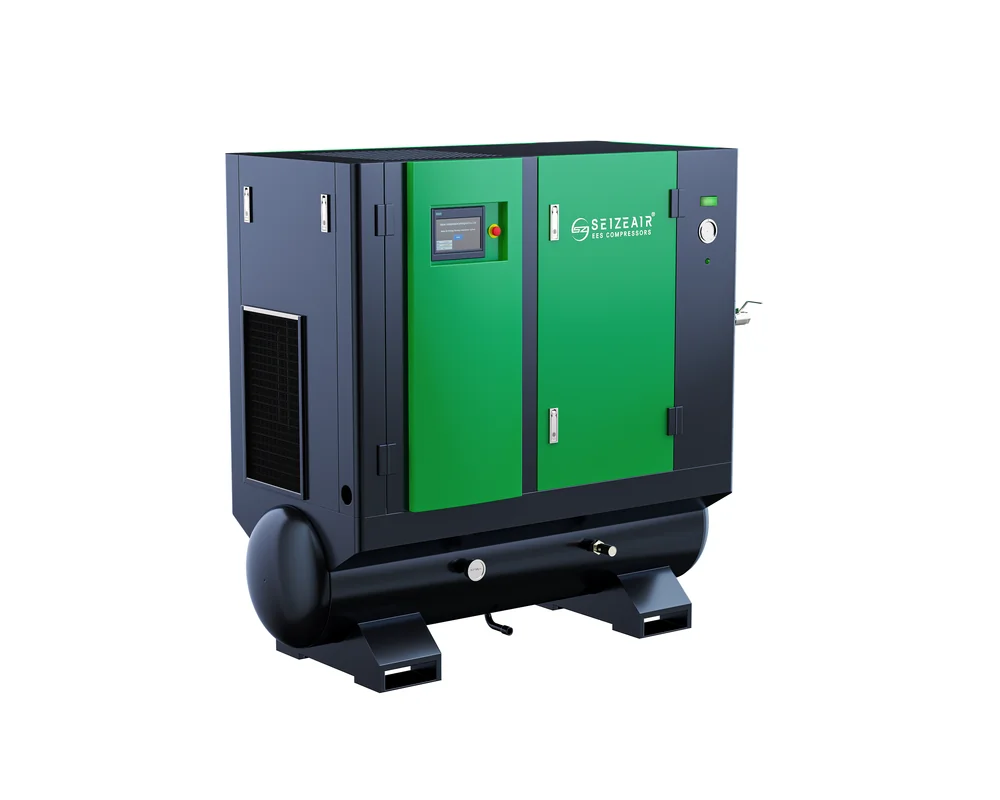
Not every site needs a full station. For a small workshop, a single all-in-one unit with an integrated receiver and dryer can cover the demand in one footprint, with less pipework and a simpler installation. The limit is scale and service access: an all-in-one is compact by design, so treatment capacity and storage are finite, and a larger site will outgrow it.
The decision rule is straightforward. If the demand is steady, modest and unlikely to grow, an all-in-one is efficient. If demand varies, if air quality is critical, or if the site will expand, a skid station with separately sized modules gives room to grow and easier service. Either way, specify the outlet pressure, flow, dew point and air quality class, because those four numbers define the product you are buying.
Applications: Where a Skid Station Fits
Skid stations suit projects where the air plant has to be defined, delivered and commissioned quickly, and where one supplier for the whole air path is an advantage. Typical cases include construction and infrastructure sites with a temporary or phased demand, mining and quarry operations, food and beverage plants that need a defined air quality class, and factories adding a line without building a new compressor room.
Larger industrial plants use skid stations as modules of a bigger system, with several skids sequenced together. The same logic applies at scale: define the duty, treat the air to the required class, store enough to stabilise pressure, and control the set as one plant. For the wider picture on plant-level air systems, see this guide to heavy-duty industrial air compressor plants, the comparison of large air compressors for industrial plants, and the full oil-injected screw compressor range.
What to Send in an RFQ
A clear enquiry gets a comparable quotation. Write the requirement as a duty, not a model number, and ask every supplier to answer the same points. The list below is enough to start a serious conversation.
- Required flow (FAD) and pressure at the station outlet, with the diversity basis.
- Required air quality class and pressure dew point, with the test method.
- Site conditions: ambient temperature range, altitude, humidity, indoor or outdoor.
- Power supply: voltage, frequency, phases, starting method, harmonic limits.
- Footprint and access constraints, lifting and transport limits.
- Control and monitoring requirements, including remote access and protocols.
- Noise limit at a stated distance, and any local regulatory requirement.
- Service expectations: response time, spare parts, commissioning support.
Frequently Asked Questions
What is the difference between a skid and a container station?
A skid is an open or semi-enclosed base frame, normally installed indoors or under cover. A container station places the same equipment inside a weatherproof steel enclosure so it can stand outdoors. The equipment can be identical; the enclosure, ventilation and access change.
Does a skid mounted air compressor station include a dryer?
It should, if it is sold as a station rather than a compressor on a frame. The dryer, filters and receiver are what make the unit a working air supply. Confirm each module is listed in the quotation, because some offers use the word station for a compressor and a tank only.
How much space does a station need?
Enough for the skid footprint plus service access on every side where a panel, filter or dryer has to be reached, plus the ventilation path. The access space is not optional; a station packed against a wall costs more in service time than it saves in floor area.
Can a skid station be installed outdoors?
Only if it is designed for it. An open skid needs a canopy or a weatherproof enclosure, and the electrical equipment needs the right ingress protection. If outdoor siting is planned, specify a containerized station instead of adding a cover later.
What maintenance does a station need?
A schedule across modules: compressor service per its own interval, dryer condenser cleaning and desiccant replacement where fitted, filter elements on differential pressure, and drain checks. Record outlet pressure, dew point and filter differential pressure at each service to catch trends.
How do I size the receiver?
Base it on the largest demand event, the acceptable pressure swing and the compressor’s response, not on a fixed multiple of flow. A station feeding a large intermittent consumer needs more storage than one serving an even load at the same average flow.
Is a variable-speed compressor worth it in a station?
Usually, when demand varies through the day. Variable speed matches output to demand and avoids load-unload cycling. If the load is steady and near full capacity, a fixed-speed machine can be the simpler choice. Size on the load profile, not on the technology label.
Can I add a second skid later?
Yes, and it is often the best way to grow. Design the foundation, the pipework headers and the control scheme for the future unit at the start, so the second skid connects without rebuilding the first. Plan the space before you need it.
Conclusion
A skid mounted air compressor station is a way to buy a result instead of a collection of parts. The result is a defined flow at a defined pressure, dried and filtered to a stated class, with storage and controls that make it stable. Get the duty, the treatment and the siting right, and the station becomes the quiet utility every plant wants. Get them wrong, and no amount of premium hardware will fix a dryer that is too small or a room that is too hot.
Start with the demand survey and the air quality target. Then size each module against both, write the numbers into the quotation, and insist on a commissioning record that proves them. That sequence is what separates a station that works from a frame with machines on it.