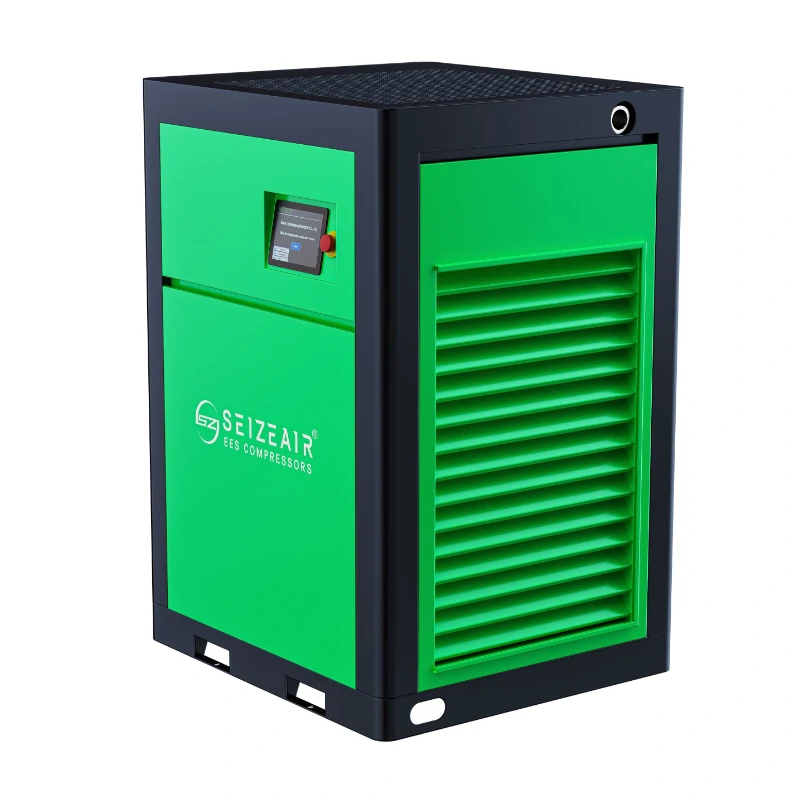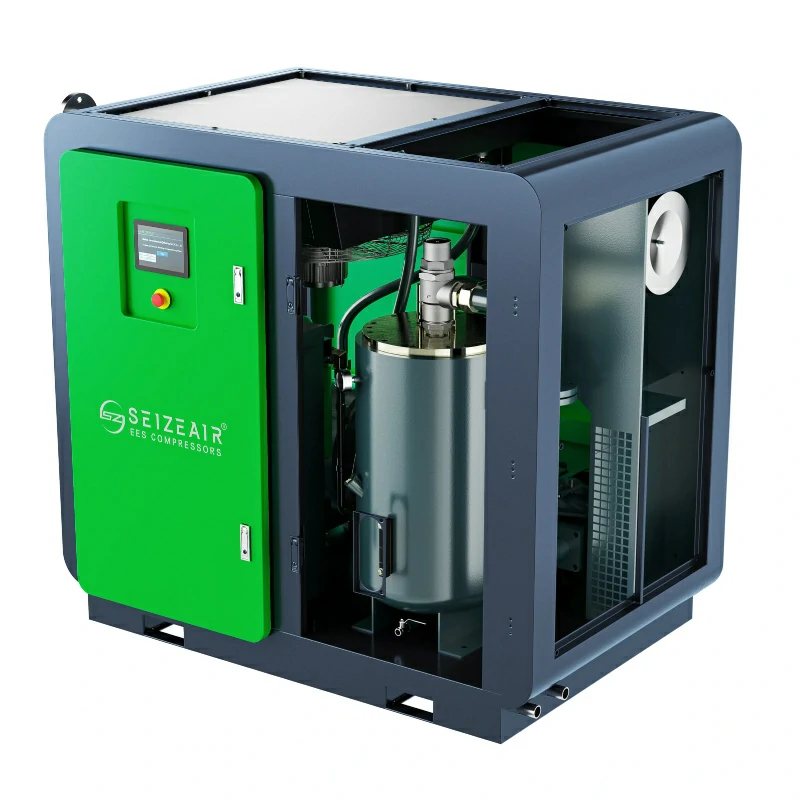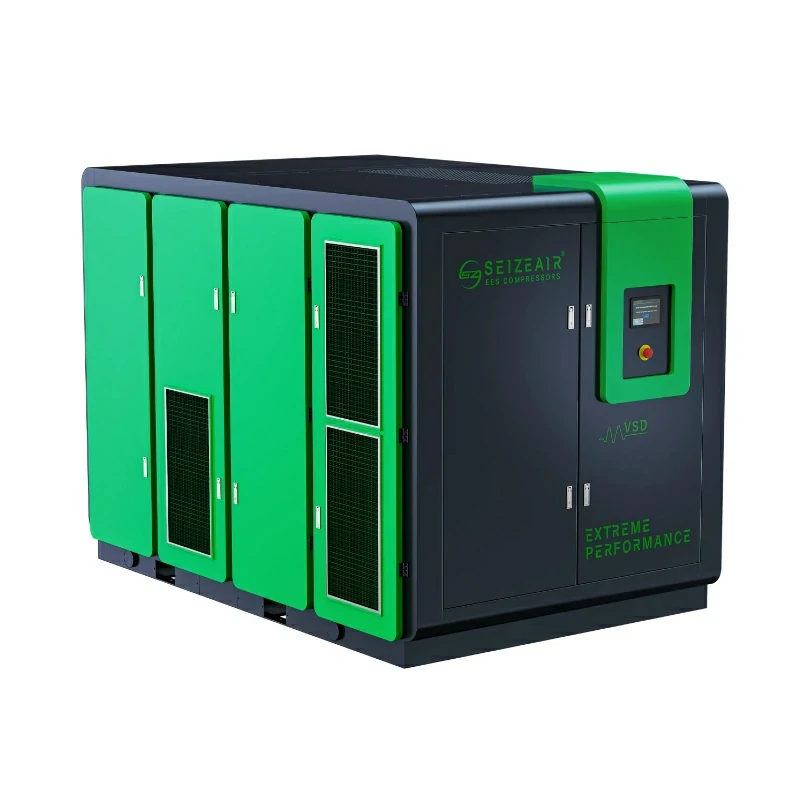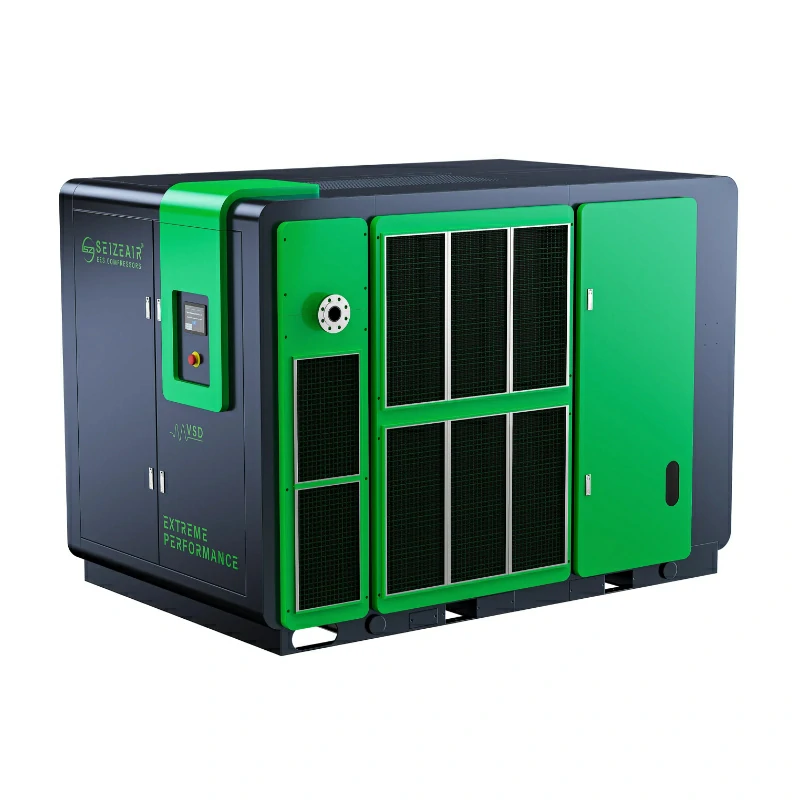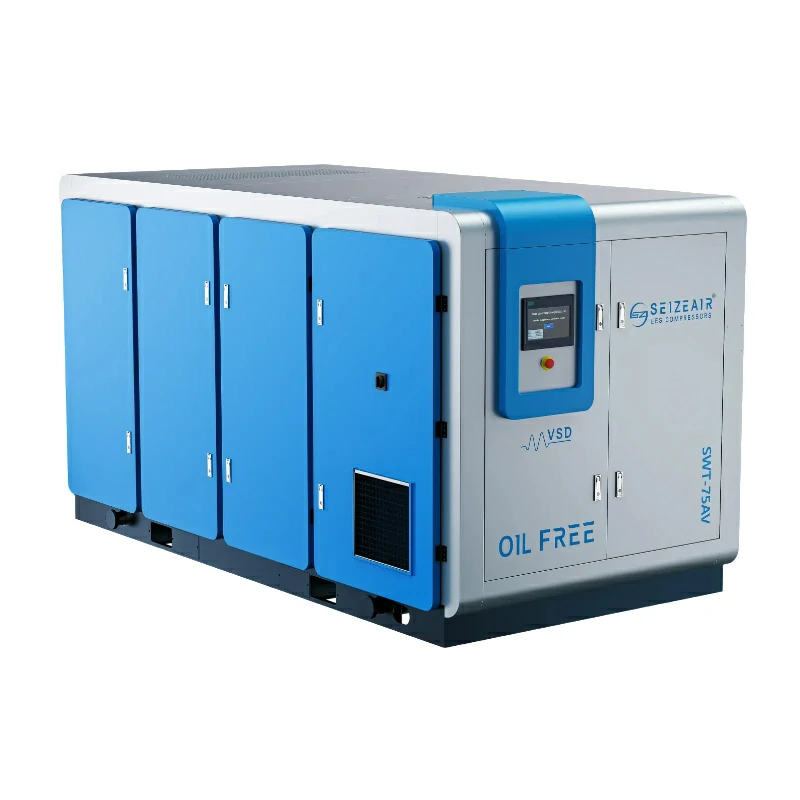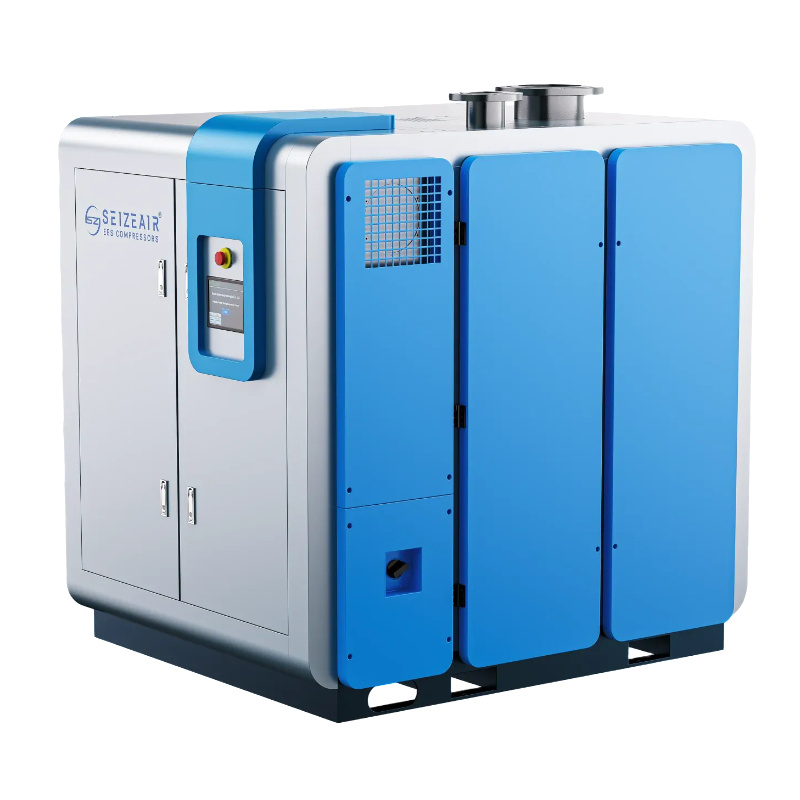


What is the best air dryer for air compressor systems has no single catalogue answer: the best dryer is the one that matches your pressure dew point target, your air quality requirement and your total cost of ownership. For most factories running oil-injected screw compressors on general plant air, a correctly sized refrigerated air dryer is the most economical choice. When the process demands very dry air — outdoor piping through winter, instrumentation, powder coating, food, pharmaceutical or electronics production — a desiccant (adsorption) dryer takes over, either alone or as a polishing stage behind a refrigerated unit. This guide explains how each dryer type works, where each one wins, how to size and install it correctly, and how to compare quotations so the best air dryer for air compressor duty in your plant is a decision you can defend with numbers.
What “Best” Means for a Compressed Air Dryer
Most buyers who search what is the best air dryer for air compressor equipment are hoping for a model name they can order today. In industrial compressed air, the honest answer depends on three numbers rather than one brand: the pressure dew point your process can tolerate, the air quality class you must prove — usually in ISO 8573-1 terms — and the cost of owning the dryer for five to ten years. A dryer that over-dries air nobody needs is as wrong as one that leaves water in the pipes, because every dew point level below what the process requires is paid for twice: once at purchase and again on every electricity bill.
A useful rule of thumb looks like this. If a pressure dew point between roughly +3 °C and +10 °C protects the process — general machining, assembly, actuated valves, packaging in a temperature-controlled building — a refrigerated air dryer wins on both purchase price and running cost. If the process needs air that stays dry even when the pipe temperature drops below freezing — instrument air, powder coating, laboratory supply, outdoor lines in winter — a desiccant (adsorption) dryer is the correct tool, delivering pressure dew points in the −20 °C to −70 °C range that refrigeration technology cannot reach. Membrane and deliquescent dryers serve smaller, more specialised niches, which we cover below.
If you want the full step-by-step framework first, our compressed air dryer selection guide walks through the calculation in detail. This article focuses on the decision itself: which dryer type is best, for which plant, and why.
Why Compressed Air Carries Water — and What It Costs You
Atmospheric air always contains water vapour, and compressing it concentrates the problem. A compressor that ingests several cubic metres of humid ambient air every minute squeezes that same moisture into a much smaller volume, so the air leaving the machine is effectively saturated. The aftercooler and the receiving tank remove part of the load as liquid condensate — which is why the tank drain discharges water every day — but whatever vapour survives travels into the distribution piping.
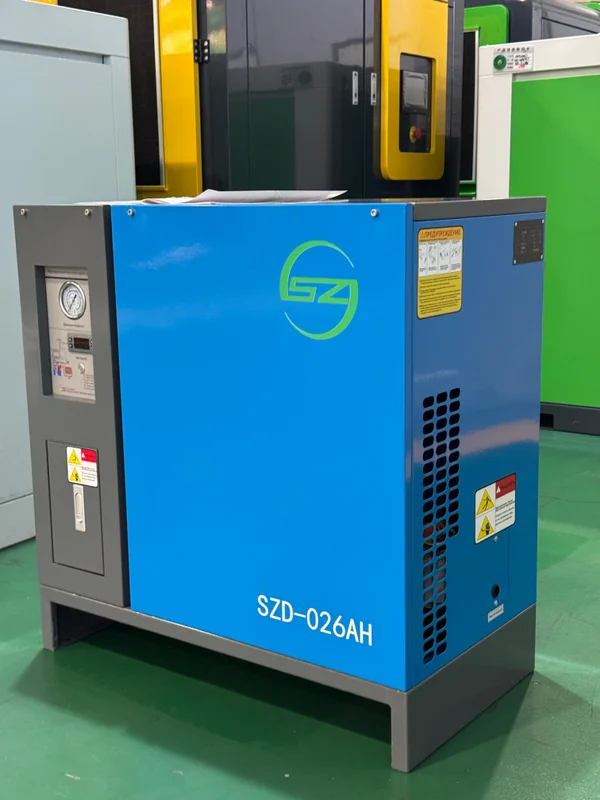
As the compressed air cools along the pipe run, that vapour condenses on the inner walls. The damage is familiar to every maintenance engineer: rust and scale that break loose and score valve seats, emulsified moisture that ruins paint finishes, sticking pneumatic actuators, washed-away lubrication in air tools, frozen lines on outdoor runs, and conditions that allow microbial growth in food and beverage plants. Add the cost of drying and re-drying upstream equipment, disposing of oily condensate, and unplanned stops caused by water hammer or ice, and moisture becomes one of the most expensive hidden utilities in the plant. Drying the air at the source, with a correctly selected air dryer for air compressor duty, is cheaper than repairing any of these failures.
Where you dry the air matters as much as whether you dry it. Central drying at the compressor room protects the whole network with one machine, while point-of-use drying can polish the air for a single sensitive process without over-drying the rest of the plant. Most factories combine both: a central air dryer for air compressor systems sized for the total flow, plus local treatment where a specific machine demands a deeper dew point than the header supplies.
The Three Main Types of Air Dryer for Air Compressor Systems
Industrial plants choose between three working principles: refrigeration, adsorption and membrane separation. Each reaches a different pressure dew point at a different cost, and each has a clearly defined territory where it is the best air dryer for air compressor installations of that kind.
Refrigerated Air Dryers
A refrigerated dryer passes the hot compressed air through a heat exchanger and chills it to a few degrees above freezing. Water vapour condenses into liquid, a separator removes it, and an automatic drain discharges the condensate. Before the air leaves the unit, a re-heater warms it back up so the pipes outside do not sweat. The result is a stable pressure dew point in the +3 °C to +10 °C window — dry enough to protect a normal indoor plant from corrosion and water carryover.
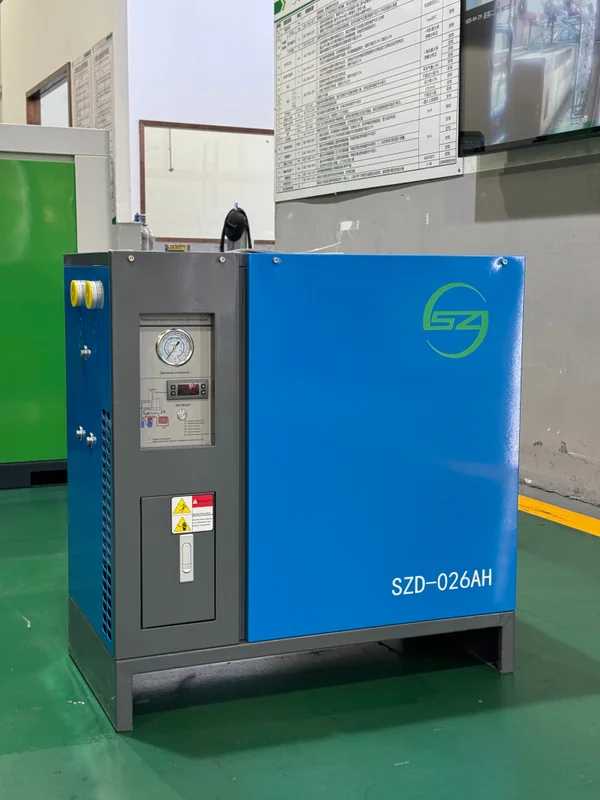
The refrigerated type earns its popularity honestly: it has the lowest purchase price and the lowest energy draw per unit of dried air, uses no purge air at all, and needs only routine drain and condenser checks in service. Its hard limit is physics — the exchanger cannot run below 0 °C without icing, so no refrigerated machine can deliver a sub-zero pressure dew point. Dew point also tends to drift upward at very low load or with a clogged condenser in a hot compressor room. Both air-cooled and water-cooled versions are available, and for plants that already have cooling water a water-cooled refrigerated air dryer moves the heat out of the compressor room instead of into it. For the majority of indoor, oil-injected installations, this is the best air dryer for air compressor service from a pure cost standpoint.
Air-Cooled or Water-Cooled Refrigerated Dryers?
Refrigerated dryers come in two heat-rejection flavours, and the choice affects the machine room, not just the dryer. Air-cooled units push the heat into the room with a fan; they install anywhere but demand ventilation and add to the room’s cooling load in summer. Water-cooled versions hand the heat to a cooling-water circuit, which keeps the compressor house cooler and usually holds a steadier dew point in hot climates — at the price of water treatment and a load on the cooling system. Plants with existing cooling water generally choose water-cooled above a certain size; smaller rooms without water infrastructure stay air-cooled. Match the decision to the machine room you actually have.
Desiccant (Adsorption) Air Dryers
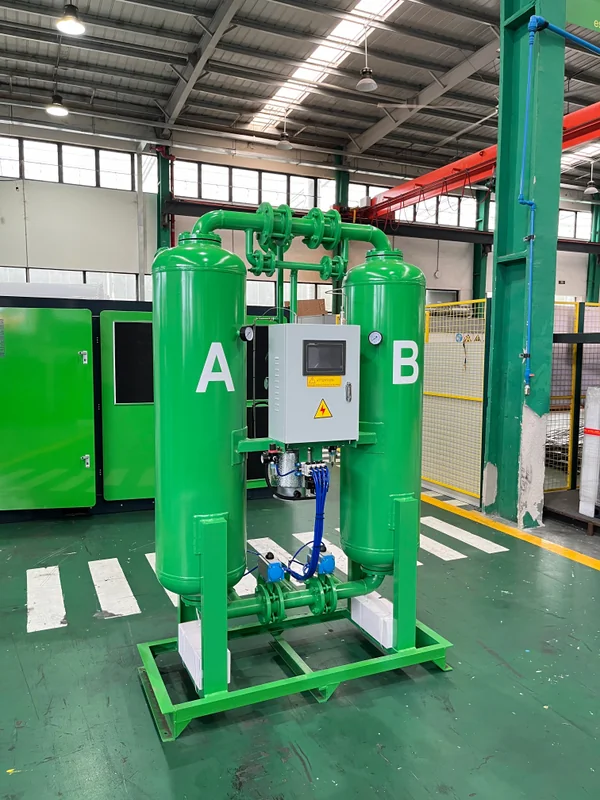
A desiccant dryer dries the air chemically rather than thermally. Two vessels filled with adsorbent — activated alumina, silica gel or molecular sieve — alternate roles: one tower adsorbs moisture from the process air while the other regenerates, then a controller switches them over every few minutes. Because the mechanism does not depend on keeping water liquid, the air can be dried far below 0 °C, reaching pressure dew points from −20 °C down to −70 °C.
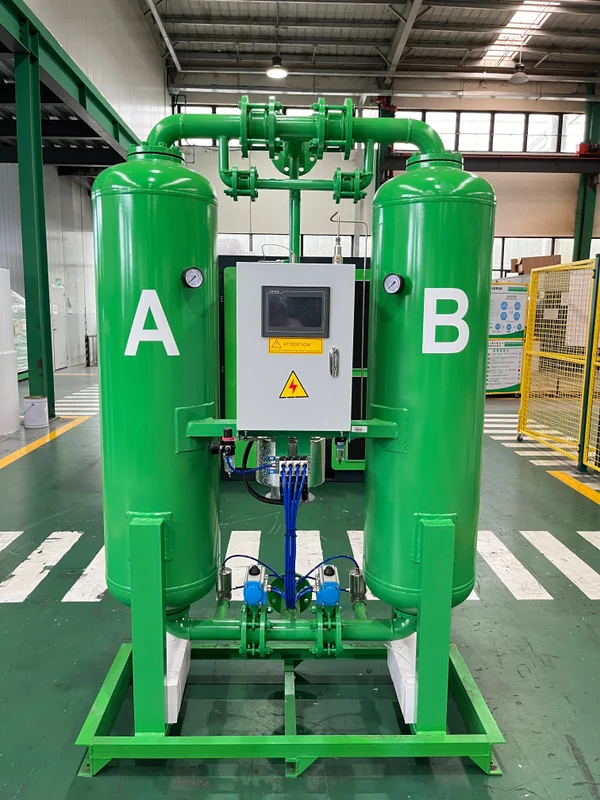
The variants differ mainly in how they pay for regeneration. Heatless designs purge a share of the dried compressed air through the off-line tower; they are simple and reliable but consume that purge continuously, which is why the manufacturer’s stated purge rate is such an important comparison figure. Heated and blower-purge machines add external heat — or an electric heater with its own blower — so that little or no compressed air is sacrificed, trading a higher electrical load for lower compressed-air consumption on larger flows. A heatless or low-heat adsorption dryer is the workhorse choice for mid-size plants, while a blower heat regeneration adsorption dryer becomes attractive on big flows where purge air would be expensive.
The trade-offs are real: higher purchase price, regeneration energy, and a bed that must be protected from oil aerosol and dust by pre-filtration. Desiccant is the best air dryer for air compressor systems only where the process genuinely needs the deep dew point — buying it for a workshop that would be happy at +5 °C simply burns money.
Membrane and Deliquescent Dryers — Niche but Useful
Membrane dryers dry air selectively: a bundle of hollow fibres lets water vapour permeate through the fibre walls while oxygen and nitrogen continue down the bore. There are no moving parts and no power draw, which makes them excellent for small point-of-use flows, laboratories and hazardous areas — but the permeation costs compressed air continuously, and dew points are moderate, so membranes rarely serve as a whole-plant solution. Deliquescent dryers dissolve chemical tablets into the moisture they collect; they suit mobile diesel compressors and rugged remote sites where simplicity matters more than a deep dew point, at the price of a consumable tablet supply. Both types earn their place on specific duties rather than as default plant equipment.
What Is the Best Air Dryer for Air Compressor Use? The Decision by Scenario
Putting the three technologies together gives a decision that most plants can apply directly:
- General manufacturing and assembly air, indoor plant: refrigerated dryer — lowest lifetime cost for a +3 °C to +10 °C dew point.
- Instrument air, powder and wet coating, cold outdoor piping, laboratories: desiccant dryer — the only way to hold a sub-zero pressure dew point.
- Large flows with deep dew point demand: refrigerated pre-dryer plus desiccant polisher — the refrigeration stage removes most of the moisture load so the desiccant bed and its purge stay small.
- Small point-of-use loads in one corner of the plant: membrane module sized for that line only.
- Remote or mobile diesel compressors: deliquescent dryer where simplicity outranks dew point.
The hybrid arrangement in the third bullet deserves emphasis, because it is the economically correct answer to what is the best air dryer for air compressor systems in many mid-size and large plants: refrigeration first for bulk moisture, adsorption second for the final dew point. The desiccant towers then handle a fraction of the water they would face alone, the purge air demand shrinks accordingly, and the total energy bill lands between the two technologies. For a side-by-side breakdown of the two main contenders, see our refrigerated vs desiccant air dryer comparison.
Pressure Dew Point
Every dryer quotation should state one governing figure: the pressure dew point, the temperature at which moisture would begin to condense inside your pipes at working pressure. Two dryers can both say “dry air” while differing by 70 degrees — and the cost difference is just as large. Pressure dew point is measured at line pressure; an atmospheric dew point quoted at 1 bar reads several degrees lower for the same air and flatters the dryer, so always compare figures at the same reference.
ISO 8573-1, the compressed air quality standard, grades moisture by pressure dew point: Class 1 corresponds to −70 °C, Class 2 to −40 °C, Class 3 to −20 °C, Class 4 to +3 °C, Class 5 to +7 °C and Class 6 to +10 °C. Refrigerated dryers normally serve Class 4 to Class 6 territory, while desiccant machines reach Class 1 to Class 3. The Compressed Air & Gas Institute publishes practical guidance on matching these classes to real processes, and it is the reference most specification writers use. Match the class to the process and buy exactly that: specifying Class 2 air for a tool circuit doubles the investment and the running cost for no benefit, while accepting Class 6 air on a coating line produces rejects instead.
Matching the Dryer Type to Your Application
The same dew point logic maps cleanly onto the applications we meet most often:
General Manufacturing, Assembly and Packaging
Indoor plants running tools, cylinders and packaging machines are the classic refrigerated-dryer territory. The air protects pipework and actuators, and the dryer pays for itself quickly in avoided corrosion and valve failures. Smaller workshops often get the best value from a combined machine — compressor, tank and dryer on one chassis — and our guide to choosing the best air compressor with dryer for a shop covers that buying decision in detail. Confirm the dryer is rated for the compressor’s free air delivery at your ambient temperature, not just at the catalogue’s reference conditions.
Paint Shops, Instrumentation and Laboratories
These users feel moisture immediately: fisheyes in a paint film, drifting readings from a pneumatic instrument, corrupted test results. A desiccant dryer — frequently as the second stage behind a refrigerated unit — holds the deep, stable dew point the process needs. For coating and instrument lines, stability matters as much as depth: a bed that regenerates reliably keeps the dew point flat over the shift, which is precisely what a refrigerated machine cannot guarantee on a cold winter morning when the plant air meets cold pipework.
Food, Pharmaceutical and Electronics Production
These sectors combine two requirements: very dry air and very clean air. Drying strategy and oil strategy must be decided together, because oil aerosol from a lubricated compressor destroys a desiccant bed and contaminates product-contact air. Many plants pair an oil-free compressor with a desiccant dryer to serve both requirements at once; if you are weighing that choice, our comparison of oil injected vs oil free compressor technology explains the trade-offs, and the guide to Class 0 air compressor types covers water-injected and dry oil-free designs. In electronics, the same dry-air logic protects moisture-sensitive components and processes during reflow and test operations.
Outdoor Pipelines, Mines and Cold Climates
Wherever pipes run outside or through unheated buildings, the design target is simple: the pressure dew point must sit below the lowest pipe temperature the air will ever meet, or the line will freeze from the inside. For most of these sites a desiccant dryer is the only safe answer; deliquescent dryers remain common on mobile diesel compressors for road works and mining, where their consumable tablets are easier to manage than a powered refrigeration circuit. Size the dryer for winter inlet conditions, not summer ones, or the first cold snap will find the weak point.
How to Size an Air Dryer for Air Compressor Flow
Sizing errors are the most common reason a “good” dryer disappoints in service. Work through the sequence in order:
- Take the compressor’s free air delivery (FAD) as the baseline flow the dryer must handle — not the motor rating.
- Apply the manufacturer’s correction factors for your actual inlet temperature, ambient temperature and working pressure; a dryer rated at 35 °C inlet may lose a significant share of its capacity on a hotter day.
- Add a modest margin for growth, then select the next size up if the corrected figure lands between two models.
- Check the pressure drop across the dryer and its filters at rated flow, and include it in the system calculation.
- Plan the condensate path: separator, zero-air-loss drain and a compliant disposal route for oily condensate.
Undersized dryers run hot, carry moisture downstream and dew-point drift becomes visible as water at the furthest drop points. Oversized refrigerated dryers waste energy cycling; oversized desiccant dryers waste purge air every switch cycle. Remember too that every component in the train adds resistance — the effect of filters, dryers and long piping on system pressure is quantified in our compressed air pressure drop troubleshooting guide, and every bar of artificial pressure loss costs real energy at the compressor.
Energy Consumption: Where Dryer Types Differ Most
Over a ten-year life, energy usually outweighs the purchase price of any dryer. Refrigerated dryers draw power for the refrigeration circuit; cycling machines modulate their compressor with load while non-cycling units run continuously, so match the control type to a plant with variable demand. Desiccant dryers spend energy in two currencies: electricity for heaters and blowers on heated designs, and purge air on heatless designs. Because purge air is compressed air you generated and then threw away, the stated purge rate at rated conditions is the single most valuable number on a heatless dryer datasheet — ask for it explicitly and compare it between quotations.
Electricity prices vary widely by country and season, so express dryer consumption in kilowatt-hours per year at your duty cycle and multiply by your own tariff; official statistics such as the electricity price data published by the U.S. EIA show how much tariffs differ between regions. Zero-air-loss condensate drains, dew-point-dependent switching on desiccant towers, and the hybrid refrigerated-plus-desiccant arrangement are the three upgrades that most reliably cut dryer energy bills in existing plants.
Installation Rules That Protect the Dryer and the Air Quality
Even the best air dryer for air compressor duty will underperform if it is piped badly. Four installation rules prevent most problems. First, place the dryer downstream of the receiving tank: the tank sheds a large share of the moisture as bulk condensate and buffers pulsations, so the dryer sees a cooler, steadier flow it was sized for. Second, install the right filtration in the right order — a coalescing pre-filter before a refrigerated dryer, and before a desiccant dryer a filter that removes oil aerosol rigorously, because oil films blind the adsorbent and shorten bed life dramatically. Third, put a dust filter after every desiccant dryer: adsorbent abrades, and the last thing a coating line needs is alumina dust in the air.
Fourth, give the machine room to breathe: refrigerated condensers need clean airflow, desiccant valves need clearance for service, and every dryer deserves a bypass so it can be maintained without stopping the plant. Drainage matters as much as piping — a failed float drain silently re-floods dried air, so specify zero-air-loss electronic drains and test them on the maintenance round. Plants that prefer a factory-integrated answer can consider an integrated air compressor with dryer and tank, where the matching, piping and wiring are completed before delivery instead of on site.
Common Mistakes That Turn a Good Dryer into a Bad Investment
Field service engineers keep meeting the same handful of failures, and nearly all of them are avoidable at specification stage:
- Choosing the dryer from the compressor’s motor rating instead of its free air delivery, so the machine is undersized from day one.
- Ignoring correction factors, then discovering in the first heatwave that the rated flow assumed a mild reference day.
- Installing a desiccant dryer without oil-removal pre-filtration and watching the adsorbent bed degrade early.
- Skipping the dust after-filter on a desiccant installation and sending adsorbent fines into a coating line.
- Relying on a manual or timed drain that passes condensate between cycles.
- Burying the dryer in a corner with no bypass and no service clearance, so every maintenance visit stops the plant.
Every item on this list costs more to fix after commissioning than to prevent on paper. Walk the proposed installation before the order is placed and again before acceptance, and tick the items off one by one — the exercise takes an hour and routinely saves a season of troubleshooting.
Maintenance and Lifetime Cost
Refrigerated dryers ask for little: clean the condenser, verify the drains, check refrigerant circuit indicators and log the pressure dew point. Desiccant dryers add the adsorbent itself to the maintenance plan — bed life depends heavily on oil carryover and pre-filter discipline, so follow the supplier’s stated change interval rather than waiting for dew point alarms. On both types, the drains are the most failure-prone component and the cheapest to keep healthy.
A realistic service rhythm keeps either technology healthy without much labour:
- Daily: glance at the dew point display and the drain discharge.
- Weekly: test the electronic drains manually and confirm the separators are letting go of condensate.
- Monthly: clean refrigerated condenser fins, or verify cooling-water flow and inlet temperature on water-cooled units.
- Annually: replace pre-filter and after-filter elements, inspect valves and controller settings, and record a full dew point check against the original guarantee.
When you total the cost of ownership, combine purchase price, energy at your tariff, purge-air losses converted through your compressor’s specific power, filter elements, adsorbent or refrigerant service, and the downtime risk of the failure modes above. A dryer that costs more but purges less often repays the difference within a few years on continuously running systems — which is why the cheapest quotation is rarely the best air dryer for air compressor plants that run two or three shifts.
Buying Checklist: Compare Quotations Like for Like
Before signing, make every supplier answer the same questions:
- What pressure dew point is guaranteed, and at which inlet temperature, ambient temperature and working pressure?
- Which ISO 8573-1 air quality class does the complete train — dryer plus recommended filters — achieve?
- What is the purge air consumption or electrical power draw at rated conditions?
- What is the pressure drop across dryer and filters at rated flow?
- Which drain type is fitted, and is it zero-air-loss?
- What are the desiccant change interval and the cost of a refill set?
- What warranty, local service coverage and spare-part availability back the machine?
Two quotations that answer these seven questions can be compared honestly; one that avoids them cannot. Insist on the numbers in writing, then price the deltas over your expected operating hours rather than over the invoice alone.
How to Read a Dryer Datasheet Before You Buy
A dryer datasheet hides its most important numbers in the small print, so read it in a fixed order. Start with the rated flow and the reference conditions behind it — inlet temperature, ambient temperature and working pressure — because every capacity figure is only true at those conditions. Next find the guaranteed pressure dew point and confirm it is quoted at line pressure, not at atmospheric. Then read the energy lines: refrigeration power draw, purge air share, or blower and heater load, whichever applies to the technology. Finish with the pressure drop at rated flow, the drain type, and the noise level if the machine shares a room with people.
If any of these lines is missing, ask for it in writing before comparing prices. A quotation that cannot state its reference conditions cannot be compared, and a dew point quoted without conditions is a marketing figure rather than a specification. Suppliers who answer precisely are also the ones most likely to support the machine properly after installation — the datasheet is a preview of the partnership, not just of the hardware.
Frequently Asked Questions
Does every compressor need an air dryer?
No. If the air only powers rough duties in a heated space — a blast of air for cleaning a bench, for example — aftercooling and tank drainage may be enough. The dryer becomes necessary as soon as moisture starts to damage something you care about: tools, instruments, product quality or pipework. That judgement is exactly what the ISO 8573-1 class selection in this article is for.
Can I use a desiccant dryer without a refrigerated dryer?
Yes, and for many mid-size plants it works well. The trade-off is that the desiccant bed then carries the entire moisture load, so the towers, the purge or heater energy, and the refill cost all grow. Adding a refrigerated pre-dryer usually shrinks the desiccant stage enough to pay for itself on larger flows.
What happens if the dryer is undersized?
An undersized dryer runs beyond its corrected capacity, the dew point drifts upward, and moisture appears at the end of the line first — typically as water at the drop farthest from the compressor room on hot or humid days. Chronic overload also shortens desiccant life and stresses the refrigeration circuit, so treat repeat dew point alarms as a sizing problem, not a fault to be reset.
How long does desiccant last before it must be replaced?
It depends chiefly on oil carryover, pre-filter condition and switching cycles, so there is no universal number. Follow the supplier’s stated change interval, keep the pre-filter elements fresh, and watch the dew point trend — a creeping dew point at constant load is the classic early sign of an ageing bed.
Does an air dryer remove oil from the compressed air?
Essentially no. Dryers remove moisture; oil removal is the job of coalescing filters and, where needed, activated-carbon stages. Desiccant beds suffer from oil rather than cleaning it, which is why the pre-filter is mandatory. Plan oil and moisture treatment as two separate, specified stages.
What dew point do I need for outdoor lines in winter?
Set the pressure dew point below the lowest temperature the pipe will reach, with a safety margin. In climates with sub-zero winters that normally means a desiccant dryer; a refrigerated unit’s +3 °C to +10 °C dew point will condense and freeze inside any pipe that gets colder than the dryer’s outlet air.
Conclusion
Ask what is the best air dryer for air compressor systems and the disciplined answer has three steps. Define the pressure dew point and air quality class the process genuinely needs; pick the technology that reaches that class at the lowest lifetime cost — refrigerated for normal indoor plant air, desiccant for sub-zero dew points, hybrid for large deep-dew-point flows; then size and install it so the rated performance survives contact with your real ambient conditions. Buyers who follow that sequence rarely regret the purchase, because the specification, not the sales brochure, drove the decision.
SEIZE AIR manufactures oil-injected and oil-free screw compressors together with the matching after-treatment — refrigerated and adsorption dryers, filtration and integrated stations — so the compressor, the dryer and the air quality guarantee come from one responsible party. If you share your compressor model, flow, ambient conditions and target air quality, our engineers will recommend the dryer configuration that fits the duty, and quote it with the checklist above already answered.