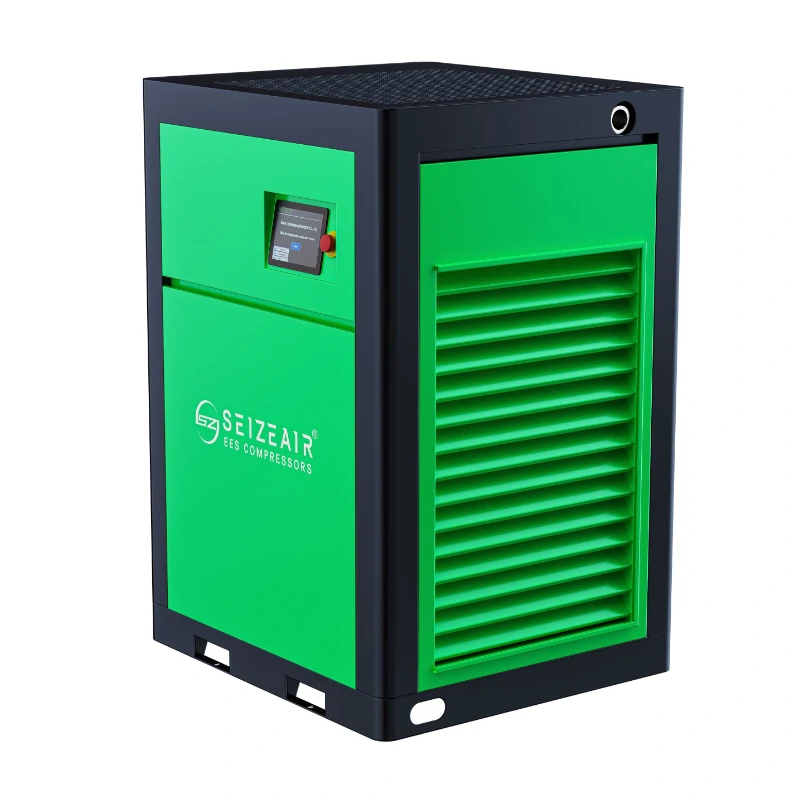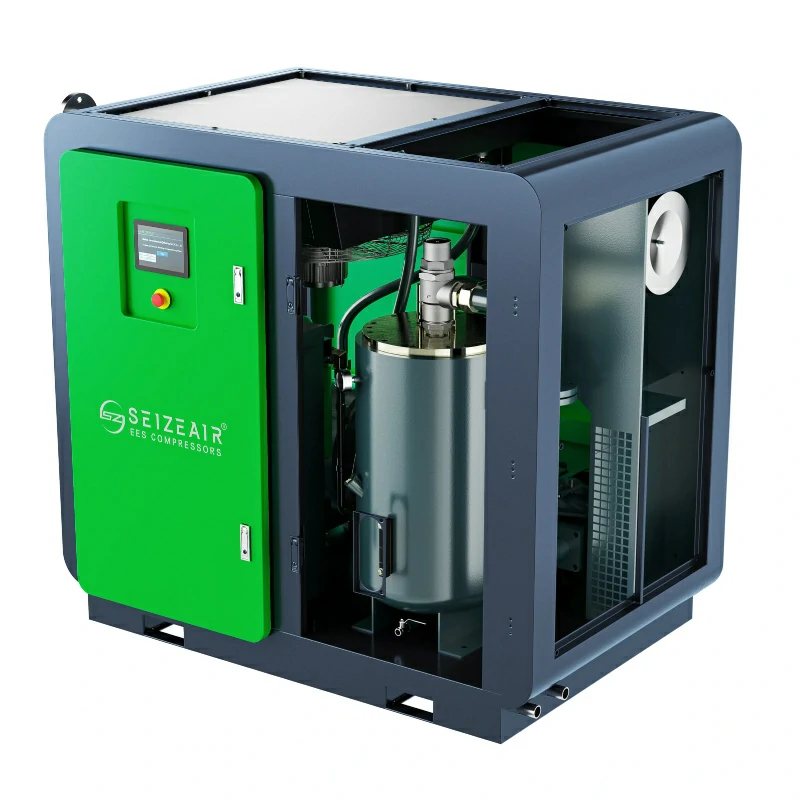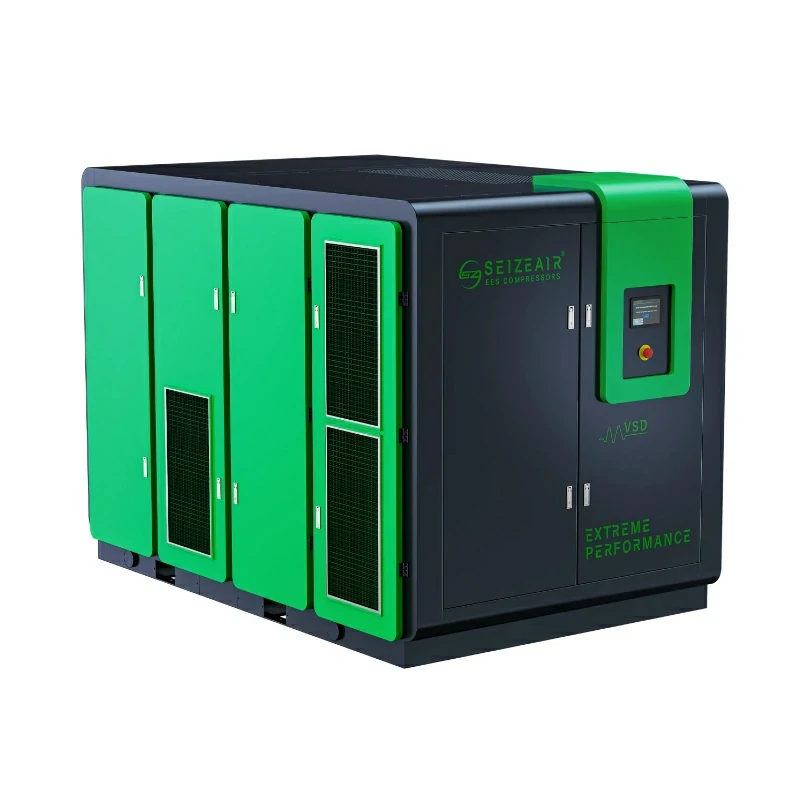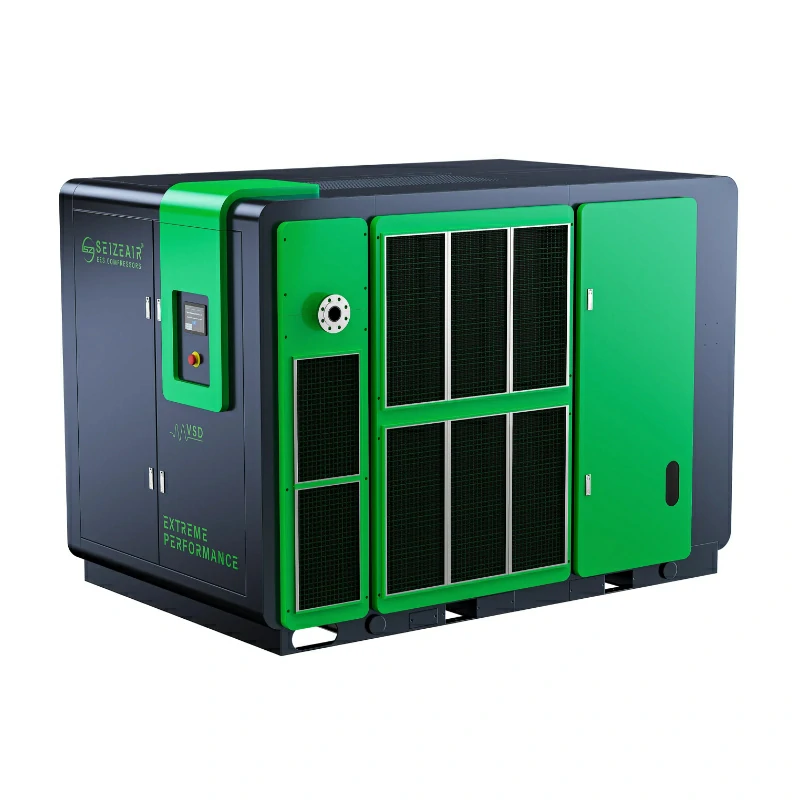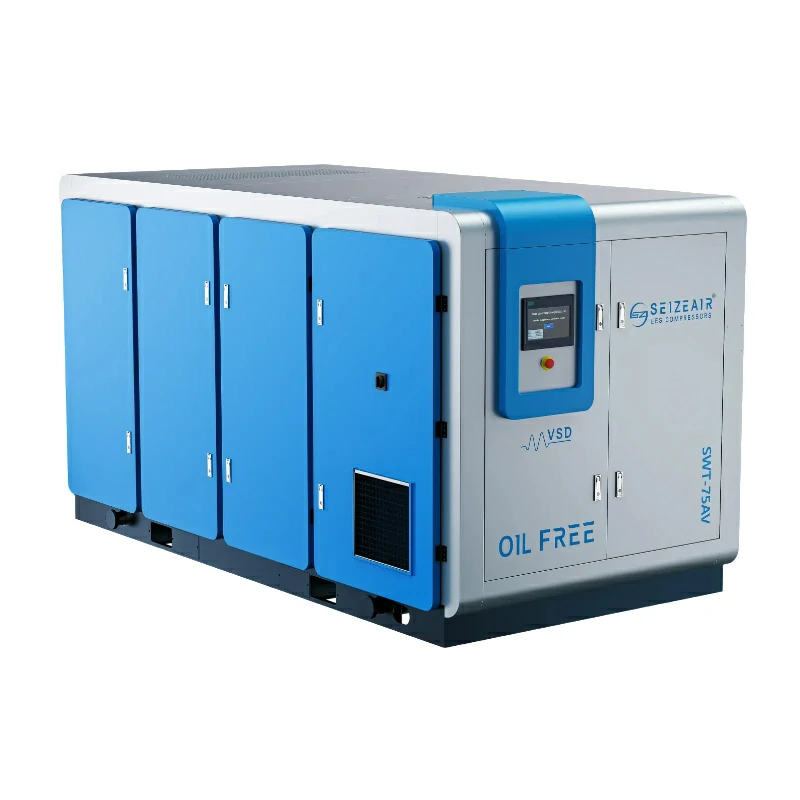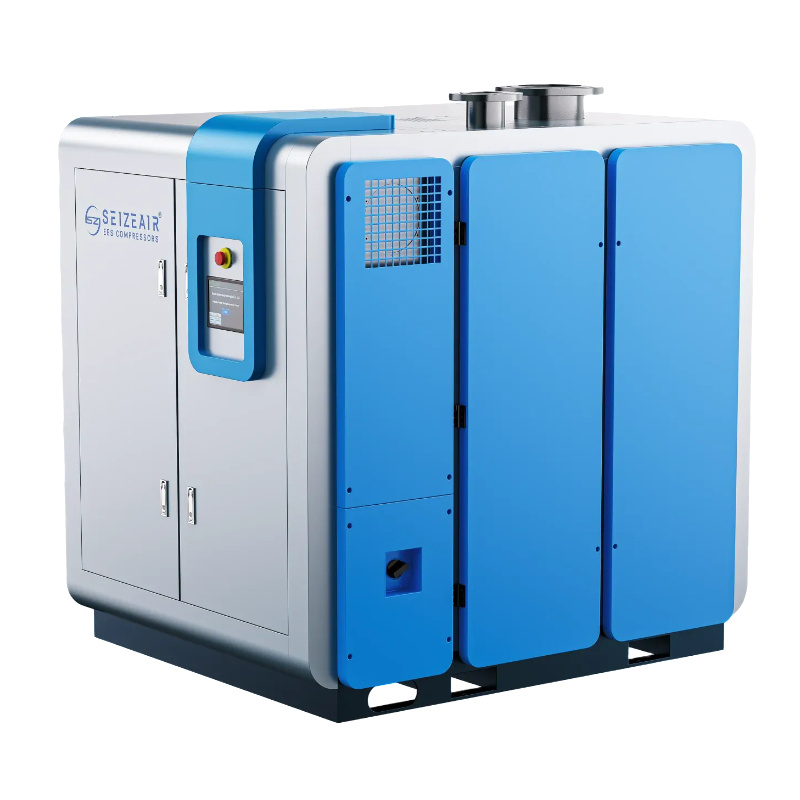


A VSD air compressor is an industrial compressed-air machine whose main motor is controlled by a variable speed drive (VSD), so the motor speed follows the actual air demand instead of running constantly at one fixed speed. By adjusting how fast the motor turns, the compressor produces only the volume of compressed air the plant is using at that moment, which avoids the repeated loaded and unloaded cycling that wastes energy on a fixed-speed unit. This guide explains what the technology is, how it works, how it compares with fixed-speed machines, where it pays off, and how to select, install, monitor and maintain one with confidence.
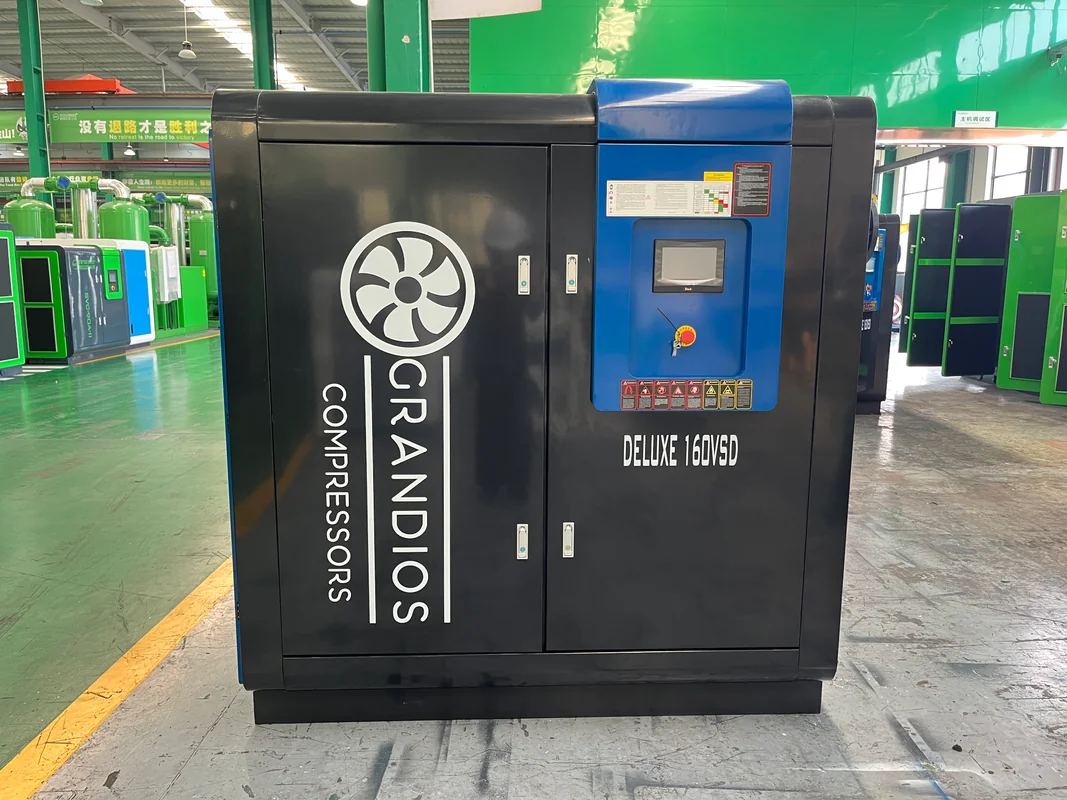
What Does “VSD” Mean on an Air Compressor?
The letters VSD stand for variable speed drive. In compressor literature you will also see the same idea called a VFD (variable frequency drive) or an ASD (adjustable speed drive). All three terms describe the same component: a power-electronics cabinet that takes the incoming plant supply and converts it into a motor feed whose frequency and voltage can be varied continuously. Because an AC induction or permanent-magnet motor turns at a speed set by the supply frequency, changing that frequency changes the motor speed, and changing the motor speed changes how much air the compressor’s airend delivers.
On a fixed-speed compressor the motor is either fully on or fully off, and output is throttled by mechanical valves. On a VSD air compressor the motor itself slows down when demand falls and speeds up when demand rises, so the machine tracks the load. That single change—controlling speed instead of blocking flow—is what delivers the efficiency and control advantages covered later in this article. The drive does not alter the physics of compression; it simply lets the whole package breathe with the factory rather than fighting it, and it does so while protecting the motor from the shock of a hard start.
How a VSD Air Compressor Works
A VSD unit is not a different kind of compression stage; it is a conventional rotary screw (or occasionally centrifugal) airend paired with an intelligent drive system. Three subsystems do the work, and they must be designed together rather than bolted on after the fact. The drive, the motor and the airend are matched as one system so that efficiency, cooling and protection all hold across the entire speed range, not only at the nameplate point.
The Variable Speed Drive (Inverter)
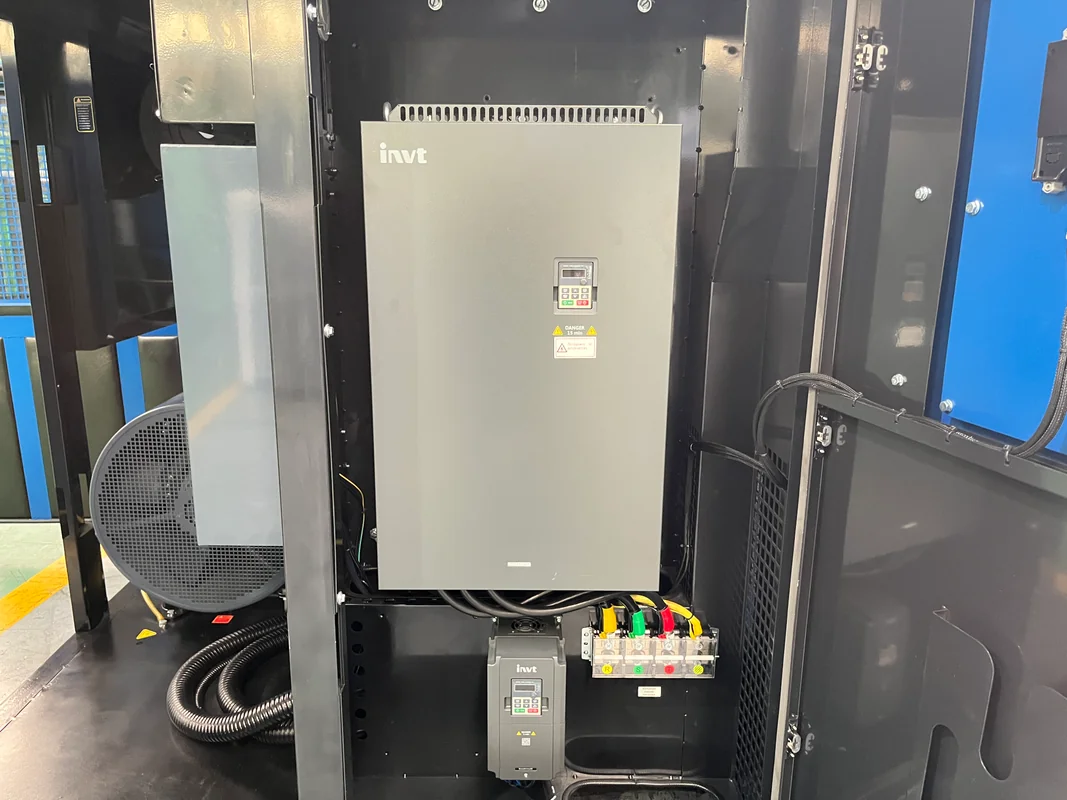
The drive sits between the plant power and the motor. It first rectifies the incoming AC to DC on a smoothed bus, then uses insulated-gate transistors to synthesize a new AC output whose frequency and voltage are controlled. This pulse-width-modulated output lets the controller set motor speed precisely. Raising the output frequency spins the motor faster; lowering it slows the motor down. Modern industrial drives also provide controlled acceleration, regenerative braking on deceleration, and protective functions such as over-current, over-temperature and phase-failure shutdown, all coordinated with the compressor controller. The drive’s cooling and filtering are part of the package design, not an afterthought.
The Pressure Feedback Loop
A pressure transducer measures the system pressure at or near the compressor outlet and sends that signal to the controller. The controller compares the measured pressure with the setpoint and adjusts the drive. If pressure is drifting below the target, it raises motor speed; if pressure is rising above target, it slows the motor. Because the loop runs continuously, the compressor holds the network near a narrow pressure band instead of swinging between a load threshold and an unload threshold. Good placement of the transducer and a sensible deadband are what keep the response stable rather than hunting, and they also prevent the machine from needless small corrections.
The Airend and Motor
The airend is the compression element. In the rotary screw design used across most industrial VSD packages, two meshing rotors trap air and squeeze it to the required pressure. When the drive slows the motor, the rotors turn more slowly and the airend ingests less air per minute, so delivered flow drops in step with demand. Permanent-magnet motor designs common on current VSD packages keep efficiency high across the speed range, which is why many buyers compare a permanent-magnet VSD screw compressor when specifying new plant. The motor and airend are selected so neither overheats at the low end of the range.
VSD vs Fixed-Speed Air Compressor: What Changes?
The simplest way to see the difference is to watch what the machine does when the factory is using less air than the compressor can make. A fixed-speed machine modulates output with inlet valves and either blows off or runs unloaded, while its motor keeps spinning and still draws significant power. A VSD machine simply slows the motor, so the power drawn falls with the speed reduction at part load. The table below summarises the practical differences that affect running cost and plant control, and it frames the rest of the discussion.
| Aspect | Fixed-speed (load/unload) | VSD (speed-regulated) |
|---|---|---|
| Motor state | On at full speed, or unloaded spinning | Speed varies with demand |
| Surplus air | Dumped or held in unload | Not produced in the first place |
| System pressure | Swings across a band | Held in a narrow band |
| Start-up | Full-current across-the-line start | Soft, ramped start |
| Best fit | Steady, near-constant demand | Variable or multi-shift demand |
Because a VSD avoids making surplus air, it removes the unload power that a fixed-speed unit keeps spending between demand peaks. The oil-injected versus oil-free comparison guide covers which compression type suits which process, and the VSD principle applies across both oil-injected and oil-free designs. The choice between the two is about air quality, not about whether to use a drive.
Why the Pressure Band Matters With VSD
A fixed-speed system must carry a wide pressure band so that the unload threshold sits safely above the load threshold; otherwise the machine would short-cycle. That wide band means the network often runs at the high end, and leak losses rise with pressure. A VSD holds a much tighter band, so you can set the target closer to the true minimum the process needs. Lower average pressure reduces leakage, eases wear on components, and gives downstream tools a steadier supply. The benefit is not only the energy saved at the compressor but also the energy saved across every fitting and tool that no longer operates against needless pressure, which is why pressure strategy belongs in the same conversation as the drive.
Variable Speed vs Variable Displacement
Buyers sometimes confuse a VSD with a variable-displacement airend. A variable-displacement design changes how much air each rotor revolution traps, while keeping the motor at a fixed speed; a VSD changes the motor speed itself. Both reduce part-load output, but they do it by different means and suit different systems. A VSD generally gives the smoothest pressure control and the best part-load efficiency on widely varying loads, whereas variable displacement can be a simpler retrofit on some fixed-speed frames. Knowing which you are being offered prevents comparing unlike things, and it should be stated plainly in any specification rather than hidden behind a generic “energy-saving” label.
The practical difference shows up in the control feel. A VSD slows the whole machine, so motor current, airflow and heat all fall together as demand drops, which is why the part-load efficiency holds. A variable-displacement unit keeps the motor spinning at full speed and simply turns down what each revolution pumps, so the motor still spends close to full-speed power even when the delivered air is low. For sites with deep, frequent swings the VSD is usually the stronger choice; for sites with a mostly steady load and only occasional trimming, variable displacement can be enough. Matching the method to the load shape is the point, not chasing a label.
Key Benefits of a VSD Air Compressor
The advantages are strongest wherever air demand rises and falls through the day, and they compound when several of them apply at once. The sections below separate the effects so you can judge which ones matter for your site, rather than accepting a single headline saving that may not match your duty.
Energy Savings at Part Load
Compressed-air systems are rarely loaded at 100 percent all shift. Packaging lines pause, CNC machines change tools, and assembly stations idle between cycles. During those dips a fixed-speed unit keeps drawing unload power, while a VSD unit reduces motor speed and input power. The exact saving depends on the demand profile, the pressure band and the specific machine, so any quotation should be based on measured plant data rather than a fixed percentage. For background on measuring demand, the screw compressor sizing guide explains how to build a realistic load profile from production records.
Tighter System Pressure
Because the drive reacts to pressure feedback in real time, the network stays close to the setpoint. A tighter band means downstream tools and instruments receive steadier pressure, which improves product consistency and can let you set the target a little lower than a fixed-speed system would need. Lower average pressure also reduces leakage loss, since leak flow scales with pressure. The result is a calmer, more predictable air system rather than one that lurches between extremes, and that predictability is itself a production advantage in sensitive processes.
Soft Start and Motor Protection
Across-the-line starts pull a large inrush current that stresses switches, contactors and the supply. A VSD ramps the motor smoothly from zero to running speed, reducing mechanical shock and electrical disturbance. This is valuable where the supply is weak or where several large motors share a transformer, and it also reduces the thermal and mechanical stress that shortens component life on hard-starting machines. In practice, soft start often improves the reliability of the whole electrical neighbourhood, not just the compressor.
Less Heat and Wear
Running slower during low demand means less mechanical work, lower winding temperature and reduced valve and seal cycling. Fewer loading cycles also mean the inlet valve and minimum-pressure valve operate less aggressively, which supports longer service intervals when paired with a disciplined maintenance program. The drive’s own cooling and filtering needs are modest but should not be ignored during layout, because a hot drive cabinet ages faster than a cool one.
Where a VSD Compressor Delivers the Most Value
VSD control pays back fastest in plants with variable demand: food and beverage lines with cleaning and filling cycles, automotive and metalworking cells with intermittent tool use, textile and plastics processes with batch rhythms, and workshops where several independent machines share one network. Typical examples also include blow-moulding lines, laser cutting with intermittent cutting duty, and wastewater treatment with strong day-and-night demand swings, where the load can fall to a fraction of the peak for hours at a time. Any site where the compressor unloads for long stretches each day is a candidate. In contrast, a plant that runs one constant load for long uninterrupted shifts may see little benefit and could be served by a simpler fixed-speed or dual-control machine. The payback follows the shape of the load curve, not the name on the enclosure, so a short logging exercise usually answers the question.
When a Fixed-Speed or Dual-Control Unit May Be Enough
Not every application needs a VSD. If the demand is flat and near the machine’s full capacity for the whole shift, a well-matched fixed-speed unit is simpler and often cheaper to buy. Dual-control (load/unload with a timed stop/start) can cover mild variability. The right choice follows from the measured profile, not from a general preference; oversizing a VSD to cover a peak that rarely occurs wastes both capital and part-load efficiency. The oil-injected screw compressor range includes both fixed and variable-speed options so the specification can match the duty rather than forcing one technology onto every job.
Motor Efficiency Classes and the VSD Advantage
Compressor motors are rated by international efficiency classes, from IE1 up to IE5 for the most efficient permanent-magnet designs. A VSD lets a permanent-magnet IE5-class motor hold high efficiency across a wide speed range, something a fixed-speed IE3 motor cannot do when the load drops. The combination matters because most running hours occur below full load, not at it. Specifying the motor class together with the drive, rather than separately, is how you capture the efficiency the headline number promises, and it should appear explicitly in the quotation so the claim can be verified.
When you read a quotation, look for the motor’s IE class and ask how it was measured—at the nameplate point or across the speed range you will actually run. A drive that is efficient but bolted to a standard IE3 motor leaves part-load savings on the table, while an IE5 motor on a poorly tuned drive may never reach its potential. The honest comparison is system efficiency at your load profile, not a single class letter. Request the part-load curve, and treat any efficiency claim that cannot be shown as a curve with suspicion rather than as a saving you can bank.
How To Size and Select a VSD Air Compressor
Selection should start from data, not a catalogue number. Build a realistic load profile first, then size the machine to the average and peak with sensible trim. Use this checklist before requesting a quotation, and keep the answers in the project file so the supplier can respond to your real duty.
- Record actual flow at the points of use over a full representative week, including night and weekend patterns.
- Identify the true required pressure at the farthest tool, not the compressor discharge.
- List air-quality requirements (oil content, dew point, particulate) for each process.
- Decide whether a single VSD, a VSD plus a trim fixed-speed, or multiple staged machines best matches the profile.
- Confirm electrical supply, cooling method and available footprint with the SEIZE AIR application team before finalising.
For higher-pressure or two-stage duty, review the two-stage oil-injected compressor options, and for the newest variable-frequency packages see the permanent-magnet variable-frequency Z-series. Choosing a reliable supplier matters as much as the hardware; the supplier selection guide lists the questions to ask before signing.
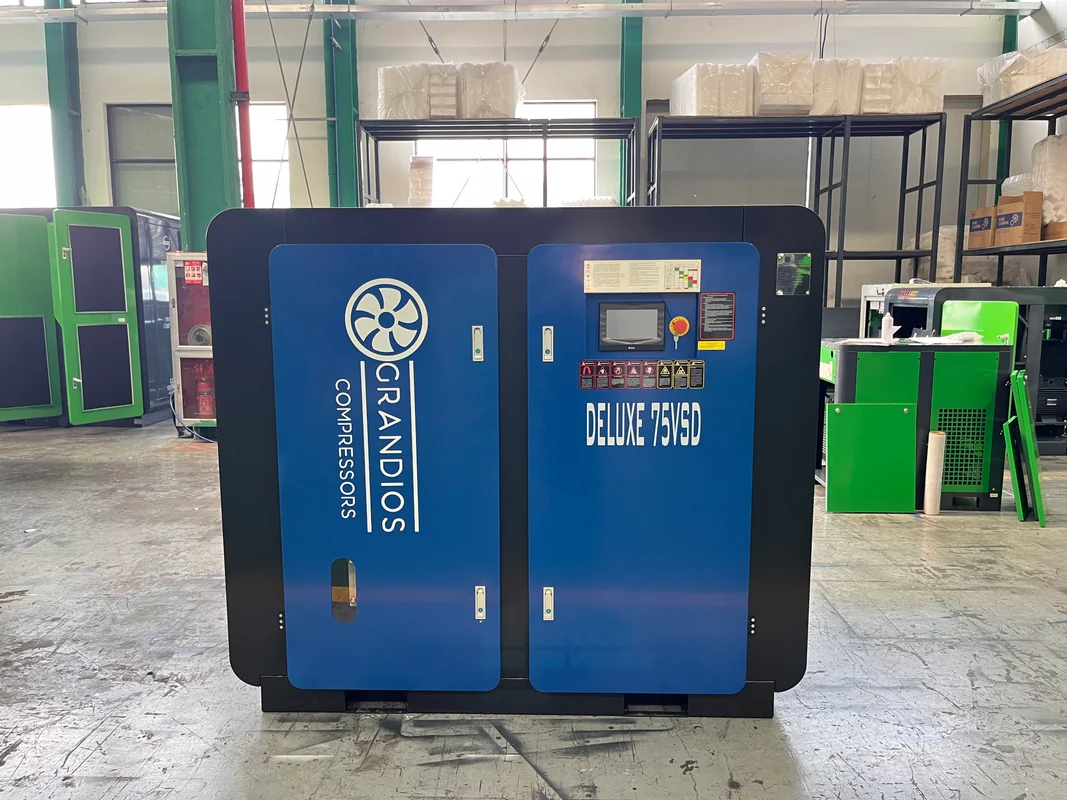
The Components Inside a VSD Package
Understanding the main building blocks helps during specification, installation and service, and it also makes fault-finding far easier later.
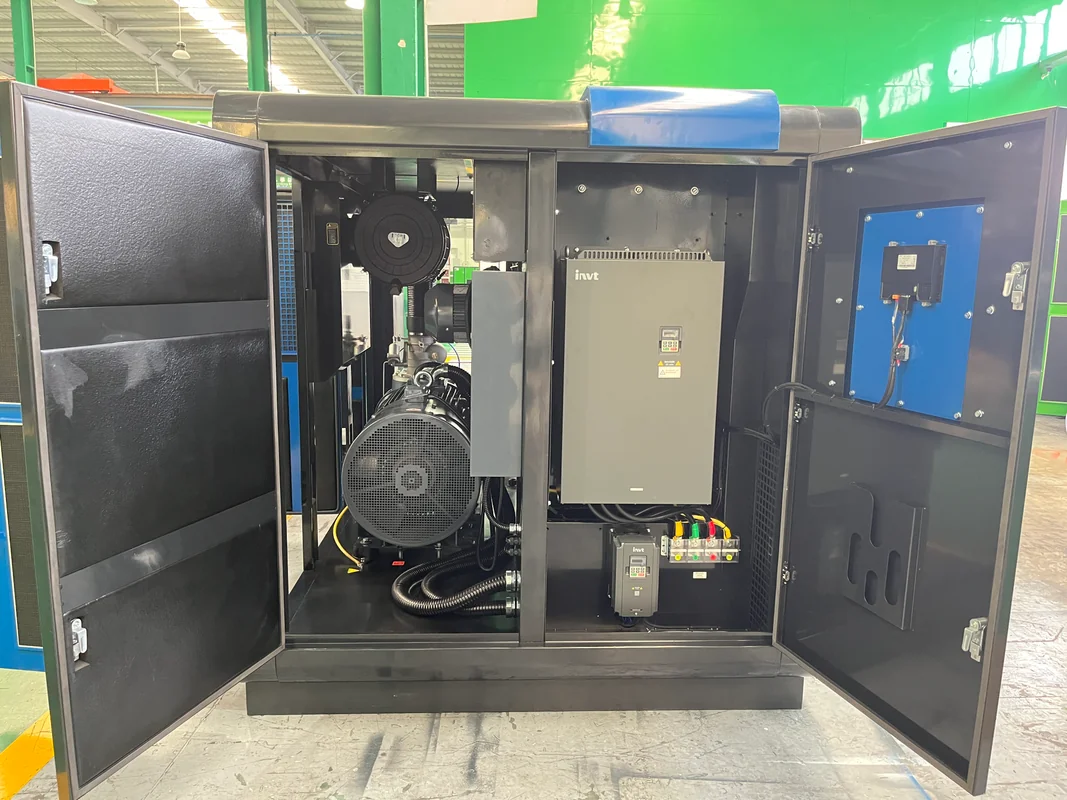
Inverter Cabinet
The drive enclosure contains the rectifier, DC bus, inverter bridge and cooling fans, plus the control board. It must be sized for the motor current, protected from dust and heat, and ventilated according to the manufacturer’s instruction. In humid or dusty sites, air filtering and cabinet cooling deserve special attention. The cabinet is the part most sensitive to environment, so its location should be chosen as carefully as the airend’s, and it should never be boxed in against a hot wall.
Motor
VSD-rated motors are built to handle the harmonic heating and insulation stress of variable-frequency supply. Permanent-magnet designs improve part-load efficiency. The motor nameplate defines the rated voltage, frequency, current and protection class that the drive and supply must match. Using a drive-rated motor protects warranty and avoids the overheating that standard motors can suffer on a variable-frequency supply, which is a common and expensive mistake on retrofits.
Controller
The controller runs the pressure loop, sequences multiple compressors if present, logs alarms and often provides remote monitoring. Good controllers expose trend data so you can verify the savings case after commissioning. They also coordinate safety functions and can hand control to a plant energy-management system when one is present, which turns the compressor from a standalone machine into a managed utility.
Airend
The airend is the heart of the machine. Its rotor profile, bearing system and sealing determine specific power and service life. In an oil-injected screw unit, the injected oil cools, seals and lubricates the rotors; the oil-injected versus oil-free article explains when each is appropriate. Proper airend care is what preserves efficiency over the machine’s life, and it is where most of the running cost actually lives.
Commissioning and First Start-Up
A VSD package should be commissioned as a system, not switched on and left. Verify the supply voltage and phase balance, confirm the drive parameters match the motor nameplate, set the pressure setpoint to the agreed target, and check the transducer reading against a calibrated gauge. Run the machine across its speed range and watch for abnormal vibration, temperature or alarm behaviour. Record the baseline readings; they are the reference for every future maintenance decision and for proving the savings case. Good commissioning is the difference between a specification on paper and a machine that actually delivers it in the plant.
Monitoring, Telemetry and Remote Management
Most modern VSD controllers log pressure, temperature, motor current, running hours and fault history, and many expose this through a network connection. Trend data lets you see part-load behaviour, confirm the pressure band, and catch a drifting setpoint or a fouling filter before it becomes a breakdown. For sites with several compressors, central sequencing can balance run hours and trim with the VSD for the best overall efficiency. Treat monitoring as part of the investment, because the saving you cannot see is the saving you cannot prove or protect.
Troubleshooting Common VSD Faults
When a VSD package misbehaves, separate electrical from pneumatic causes. Drive faults such as over-current, over-temperature or earth faults usually point to the cabinet, the motor or the supply; pressure or flow complaints usually point to valves, filters, leaks or the airend. Start from the controller’s logged alarms rather than guessing, keep the drive cabinet clean and cool, and confirm the supply quality before blaming the machine. A structured maintenance schedule plus the logged history resolves most issues quickly and prevents repeat failures.
Total Cost of Ownership and Payback
The purchase price is a small part of a compressor’s lifetime cost; energy usually dominates. A VSD can lower that energy line where the load varies, but the payback must be calculated against your own profile and electricity cost, not a generic figure. Build the case from measured flow and pressure, estimate the unload power a fixed-speed unit would spend, and compare it with the part-load performance of the VSD option. Factor in the slightly higher capital cost of the drive, the extra cooling and filtering, and the maintenance of both mechanical and electrical sides. A disciplined maintenance schedule protects the saving after commissioning and keeps the machine inside its warranty conditions.
Common Misconceptions About VSD Compressors
Several myths cause poor decisions. First, a VSD is not automatically the cheapest option; on flat loads it can cost more for no return. Second, a VSD does not remove the need for good air treatment—dryers, filters and receivers still matter, and the tighter pressure band actually makes their sizing more predictable. Third, “variable speed” refers to the motor, not to variable discharge pressure; pressure is still set by the controller and the process. Fourth, a VSD cannot fix an undersized or leaking distribution system; it only avoids making surplus air the fixed-speed way. Treat it as a control strategy, not a cure-all, and specify it on evidence.
Maintenance Considerations for VSD Units
VSD packages need the same core care as any rotary screw compressor—oil, separators, filters, belts or couplings, coolant and condensate management—plus a little extra attention to the electrical side. Keep the drive cabinet clean and within its temperature rating, verify cooling fans, inspect terminations periodically, and follow the manufacturer’s interval for the airend. Because a VSD runs at many speeds, listen for vibration or bearing noise across the range, not only at full speed. A structured maintenance schedule keeps both efficiency and warranty conditions intact, and it makes the logged baseline data meaningful over time.
Frequently Asked Questions
Is a VSD the same as a VFD?
Yes for practical purposes. VSD (variable speed drive) and VFD (variable frequency drive) describe the same motor-control technology; some regions and standards prefer one term over the other, but both refer to the inverter that varies motor speed to match air demand.
Will a VSD reduce my electricity bill?
It can, when demand varies. Savings come from avoiding unload power and from holding a tighter pressure band, but the amount depends on your real profile. Measure demand first, then evaluate the payback rather than assuming a fixed figure, because the shape of the load curve decides the result.
Can I add a VSD to an existing fixed-speed compressor?
Sometimes, by retrofitting a drive to a VSD-rated motor, but it is rarely as effective or reliable as a factory-integrated package because cooling, control and protection are designed as a system. A purpose-built VSD unit is usually the safer route and the easier one to warranty.
Do VSD compressors need special installation?
They need the usual clean, ventilated, frost-free space plus attention to the drive’s cooling and to supply quality. Confirm voltage, cooling method and footprint with the supplier during specification, and keep the drive cabinet away from heat and dust.
What size VSD do I actually need?
Size from the measured average and peak flow, not from a nameplate guess. A VSD sized to the average with sensible trim covers variability better than an oversized unit that never leaves the inefficient bottom of its range, and it pays back faster.
Are VSD compressors louder or quieter?
At full speed they are comparable to fixed-speed units of the same size. At part load the slower motor and fan often make them quieter than a fixed-speed machine that is constantly at full speed or repeatedly loading and unloading.
One Large VSD or Several Staged Machines?
A common specification question is whether to install a single large VSD or several smaller machines that stage on and off. A single VSD covers a wide range smoothly but leaves the plant exposed if it trips, and it may spend part of its life at very low speed where efficiency is poorer. Multiple machines, one of them a VSD trim unit, give redundancy and let each run near its best point. The right answer depends on peak demand, the cost of downtime, and how the load curve is shaped. Build the comparison from the same logged profile used for sizing, and let the redundancy requirement weigh as heavily as the energy number, because a stopped compressor saves nothing when the whole line is down with it.
VSD for Oil-Free and Specialty Applications
The VSD principle is not limited to oil-injected screw machines. Oil-free screw, water-lubricated and centrifugal compressors also use variable-speed control where the duty varies, and the same pressure-loop logic applies. In food, pharmaceutical and electronics plants where air purity is regulated, the drive must be paired with the correct oil-free airend and treatment train; the drive changes the speed, not the air quality. The oil-injected versus oil-free guide helps match the compression type to the process, and the VSD is then selected on top of that decision. For these sites the tighter pressure band of a VSD also protects sensitive downstream instruments from pressure excursions that could disturb a batch or a measurement.
Conclusion
A VSD air compressor controls motor speed with a variable speed drive so compressed-air output tracks real demand, cutting unload losses and holding system pressure in a narrow band. It is the right choice for plants with variable or multi-shift demand and the wrong choice for flat, constant loads. Size it from measured data, match the compression type to your air-quality needs, and maintain both the mechanical and electrical sides. Explore the permanent-magnet variable-frequency range or talk to the SEIZE AIR team to build a specification for your site. For independent background on working with compressed air, the Compressed Air and Gas Institute guidance is a useful reference.