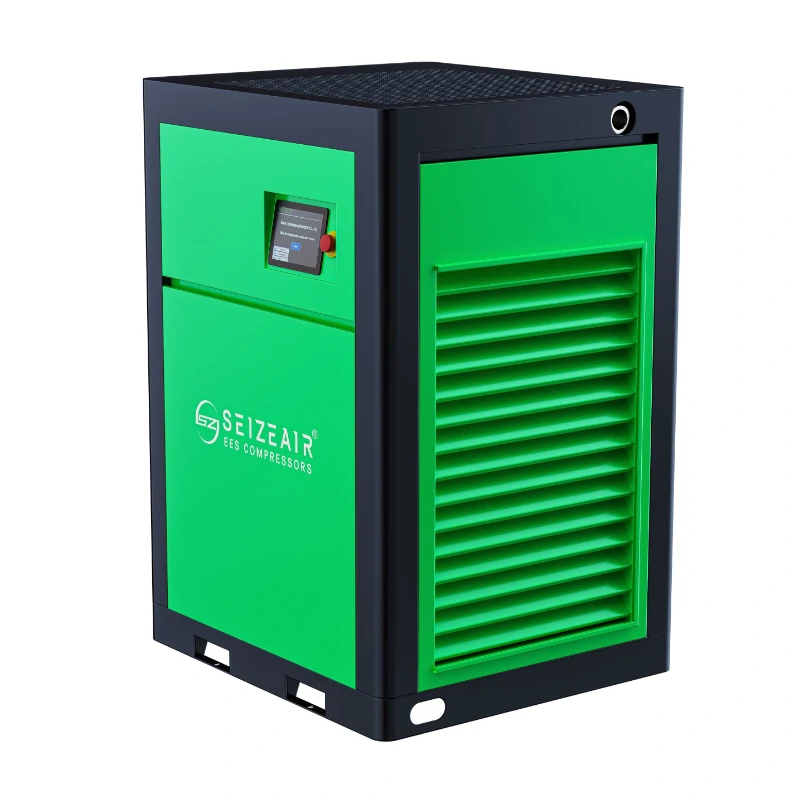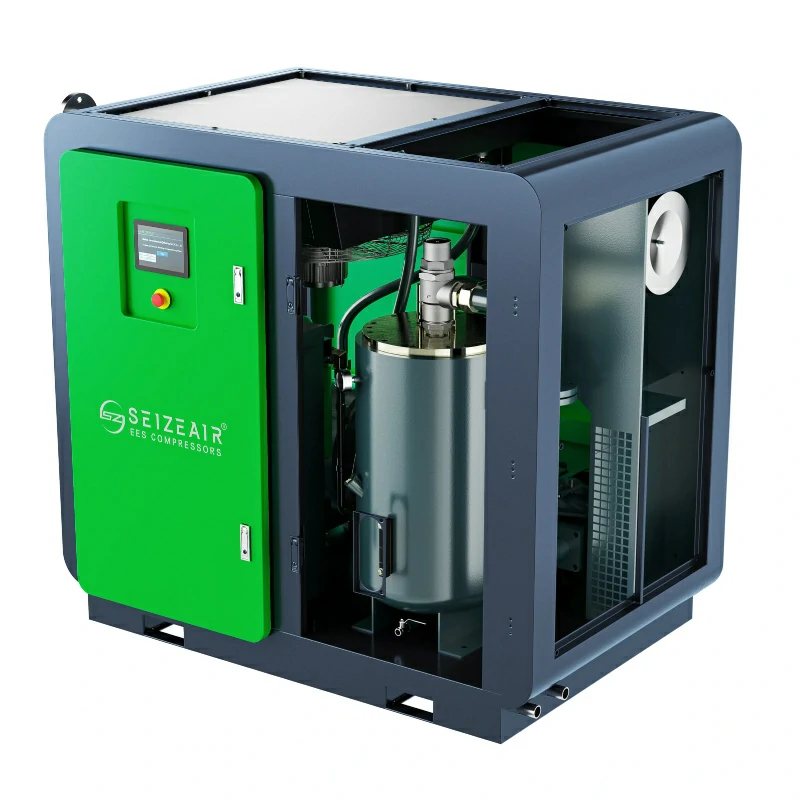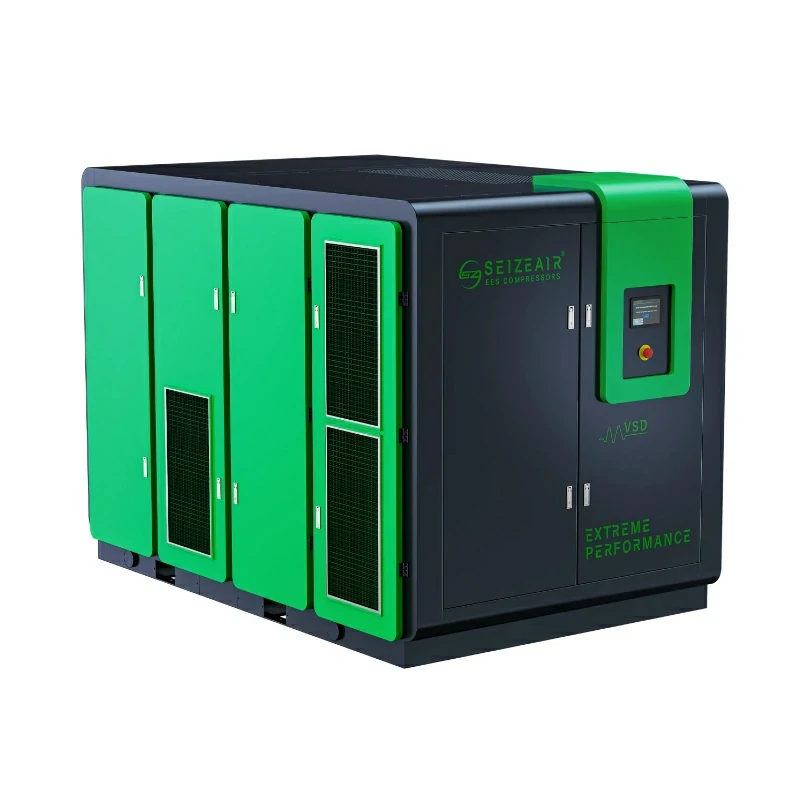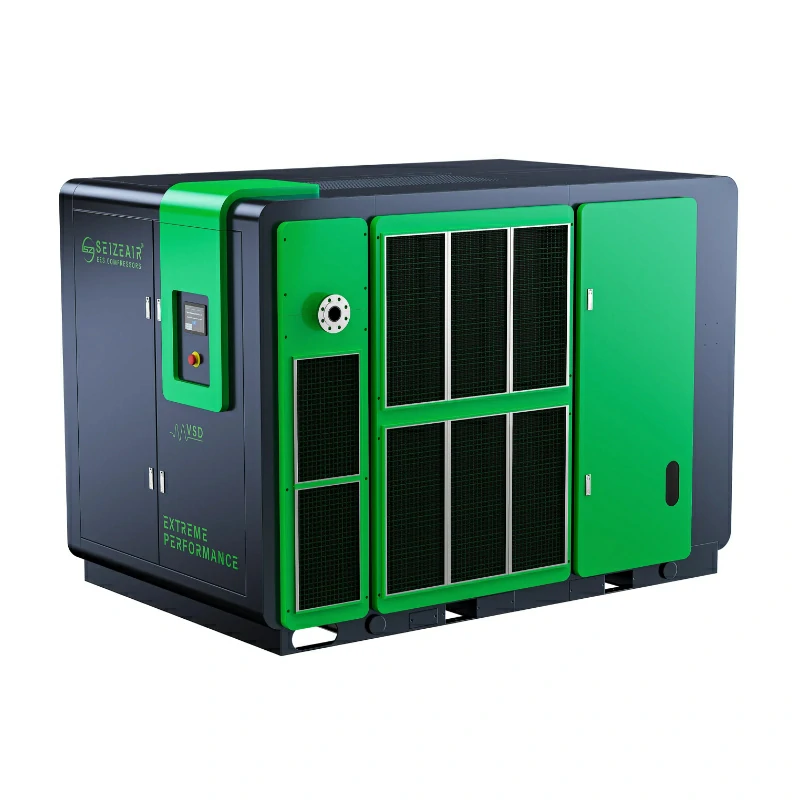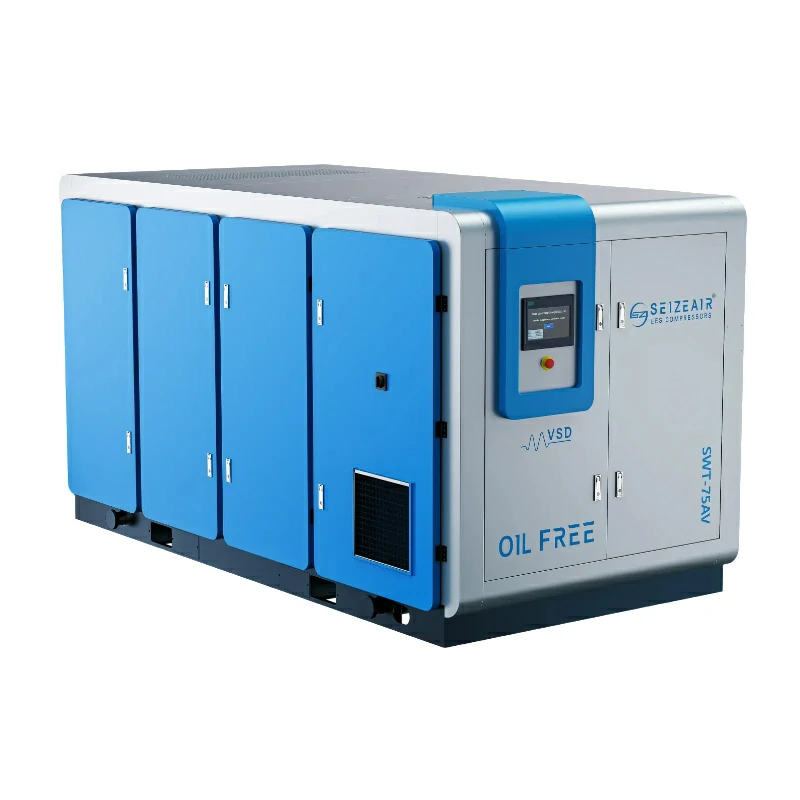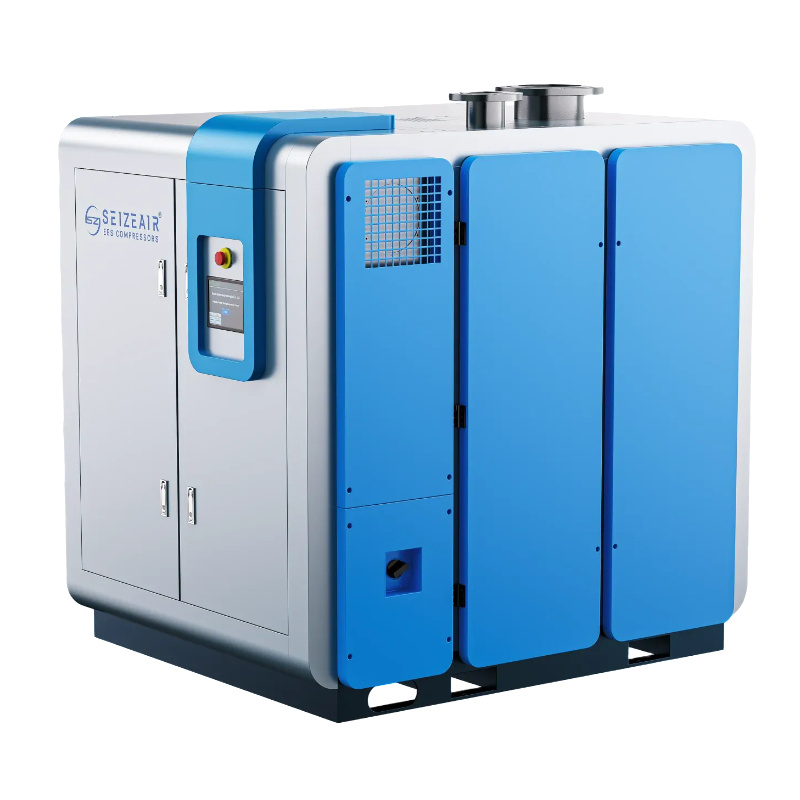


What is the best psi for an air compressor? The best pressure is the lowest pressure that keeps every machine in your plant working at its specified inlet condition, plus a controlled margin for the losses that occur between the compressor and the point of use. Pneumatic tool manufacturers commonly rate their equipment around 90 psi at the inlet, while industrial packages are offered in classes such as 100, 125 and 150 psi. This guide explains how those numbers relate, where pressure is lost in a real system, and how to choose a rating that matches your demand instead of paying for pressure you never use.
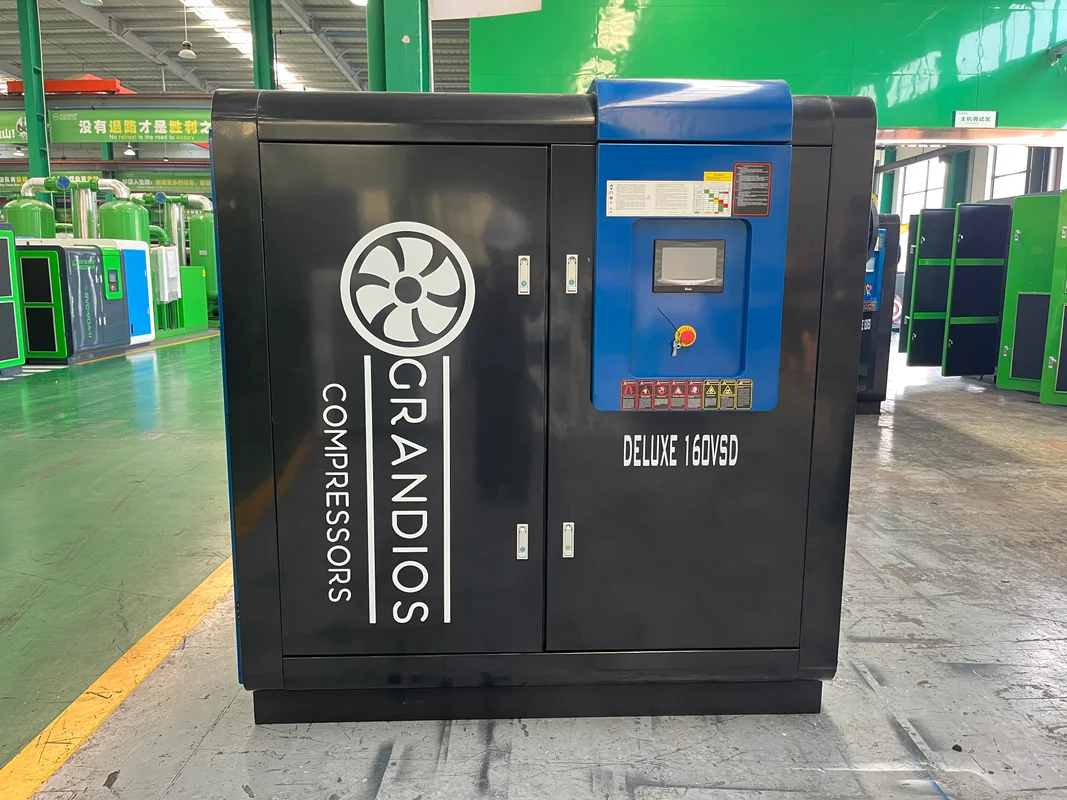
What Is the Best PSI for an Air Compressor?
The short answer
The best psi for your air compressor is not the highest number on the nameplate. It is the result of a short calculation: take the highest inlet pressure required by any connected machine, add the pressure losses measured between the compressor and that machine, and add a small operating margin so the control system can regulate instead of sitting at its limit. A compressor rated well above that result costs more to buy and more to run every hour it operates.
Two numbers therefore matter, and they are often confused. The first is the pressure your equipment needs at the point of use. The second is the pressure the compressor must produce so that this requirement survives the trip through dryers, filters, piping and hoses. Buying the right rating means solving both at once. The screw compressor sizing guide on our blog walks through the companion question of air delivery, and this article concentrates on the pressure side of the same decision.
Why the highest rating is not the best rating
Displacement compressors produce a fixed volume of air per revolution and let the system pressure settle wherever demand and control allow. When you raise the set point, every cubic metre of air must be squeezed harder, the motor works harder, and leakage through the same fittings grows as well. A plant that runs its whole network at 125 psi to serve a handful of tools rated at 90 psi pays that extra energy on every unit of compressed air, all year, for no production benefit.
Higher settings also shorten the usable pressure window. Filters hold more air before blowing down, receivers store less useful air between a given band, and unregulated users consume more. None of these effects shows up on the quotation, which is why the pressure conversation belongs at the beginning of a project rather than after the equipment has been selected.
PSI, Bar and kPa: Reading Pressure Ratings Correctly
Industrial compressors are specified in psi in North America and in bar or MPa across much of Asia and Europe, so a buyer comparing quotations will meet all three units. They are fixed definitions, and converting between them is a matter of arithmetic, not judgement. The table below collects the conversions that appear most often in compressor documentation.
| Conversion | Value | Where you will see it |
|---|---|---|
| 1 bar | 14.5 psi | European catalogue working pressures |
| 1 MPa | 145 psi | Chinese and Japanese nameplates, such as 0.8 MPa |
| 1 psi | 0.0689 bar | Converting a tool rating to a catalogue figure |
| 1 psi | 6.895 kPa | Technical datasheets and instrumentation |
A second distinction matters when you compare numbers: gauge pressure and absolute pressure. A compressor nameplate almost always states gauge pressure, the reading above atmosphere, while some engineering calculations use absolute pressure, which includes the atmosphere itself. The difference of roughly 14.5 psi at sea level is significant when you convert between the two scales, so check which scale a document uses before copying a value from it.
How Air Compressor Pressure Ratings Actually Work
Every compressor carries at least two pressure figures that are easy to mix up. The rated working pressure describes the condition at which the manufacturer guarantees a stated air delivery. The maximum pressure, sometimes called the stop pressure, is the highest value the package can reach before its control shuts the machine down. A package rated 125 psi with a maximum of 145 psi will spend its life somewhere at or below the rated figure, and its delivered volume falls as the working point rises toward that maximum.
Flow ratings also depend on the reference conditions used to state them. Standardised rating codes such as ISO 1217 Annex C define the inlet conditions and tolerance behind a quoted capacity, which is why two catalogues with identical-looking flow figures can behave differently once installed. Our own catalogues rate capacity to ISO 1217 Annex C at a 1 bar, 20 °C inlet, and the same discipline should apply to any quotation you compare. When a supplier states a flow without stating the standard behind it, ask for the reference conditions before you put the figure into a comparison.
A concrete example shows how the figures line up in practice. One 75 kW oil-injected screw package from our range was tested by SGS under report SHES250300470951 against ISO 1217:2009, and the verified figures for that model are a delivery of 15.6 m³/min at a working pressure of 0.8 MPa with a specific power of 5.90 kW per m³/min. Converted, 0.8 MPa is about 116 psi, which places the machine in the standard industrial pressure class that most plant air systems use. The test report gives the buyer three verified numbers instead of three marketing claims, and that is exactly the standard of evidence to request from any supplier.
Match PSI to the Equipment You Actually Run
Start from the demand side
The most reliable way to answer the question in this article is to start from the demand side rather than the supply side. List every connected machine, take its required inlet pressure from the nameplate or instruction manual, and note where that requirement applies: at a regulator outlet, at the machine connection, or inside a particular pneumatic circuit. The highest genuine requirement, not the largest motor, sets the pressure target for the network.
Collect the requirement in writing from the equipment supplier when the nameplate is silent. A machine that “usually works” at 90 psi may be living with slow cycle times that nobody has attributed to the air supply, and the datasheet value is the figure the manufacturer designed the machine around. Guessing this number undermines every later step, so it is worth a phone call to get it right.
Think in pressure classes, not single values
It helps to think in pressure classes rather than in individual values. Compressed air applications cluster into three broad bands, and the equipment families that serve them are built differently. The ranges below describe the classes our own product families are built for, with catalogue figures behind each one.
| Pressure class | Typical range | Typical applications | Machine families built for it |
|---|---|---|---|
| Low-pressure blower duty | 0.3 to 2.0 bar, about 4 to 29 psi | Aeration, pneumatic conveying, blow-off and sparging | Magnetic levitation blowers at 0.3 to 1.2 bar and oil-free screw blowers at 0.4 to 2.0 bar |
| Standard industrial plant air | 7 to 10.5 bar, about 100 to 152 psi | Hand tools, cylinders, packaging, general manufacturing | Oil-injected screw packages rated 0.8 MPa in test, and dry oil-free screw packages rated 4.5 to 10.5 bar |
| Higher-pressure process air | Up to 16 barG, about 232 psi, in a single centrifugal package | Process air, instrument air, testing and specialised production | Gear centrifugal compressors spanning 1.5 to 16 barG |
The boundary between blower duty and compressor duty deserves a note, because it is a common source of over-specification. Moving material through a conveying line or aerating a tank does not become easier when you supply it at 100 psi through a pressure regulator; it becomes wasteful. Machines designed for the lower band deliver far more air per kilowatt at those pressures than a plant-air compressor throttled down to serve them. If your demand sits mostly in the lowest band, the low pressure air compressor applications in pneumatic conveying guide explains how the two classes divide the work in real installations.
Pressure Drop: Why the Compressor Must Sit Above the Tool Rating
Where the losses accumulate
Between the compressor outlet and the tool inlet, air passes through an aftercooler or dryer, one or more filters, a length of distribution piping, and finally hoses, couplings and point-of-use treatment. Each element takes a share of pressure while air flows through it. This loss is called pressure drop, and it is zero only when no air moves. A system that measures 125 psi at the compressor on a Sunday will show less at the machine connection on a working Tuesday.
The supply path below shows where the losses accumulate. Each drop is the difference between the pressure immediately upstream and downstream of that element while the system delivers air, and their sum is what the compressor set point must cover.
Compressor set point (a rating class, for example 125 psi)
   |   pressure drop across the dryer          = dP1
   |   pressure drop across the filter line    = dP2
   |   pressure drop across distribution pipe  = dP3
   |   pressure drop across hoses and FRL sets = dP4
   v
Point-of-use pressure = set point - (dP1 + dP2 + dP3 + dP4)
What unmeasured losses cost you
Three practical consequences follow. First, the set point must be chosen against measured losses, not assumed ones; a plant that has never measured the drop across its treatment train has no way to know what its compressor is actually delivering to the machines. Second, treatment elements should be selected for their duty, because a correctly sized dryer and filter line costs far less to operate than a restrictive one that forces the whole plant to run at a higher set point. Third, a rising set point over the months is a symptom, usually of a loaded filter element or a restriction, and it should trigger a measurement rather than another turn of the pressure knob.
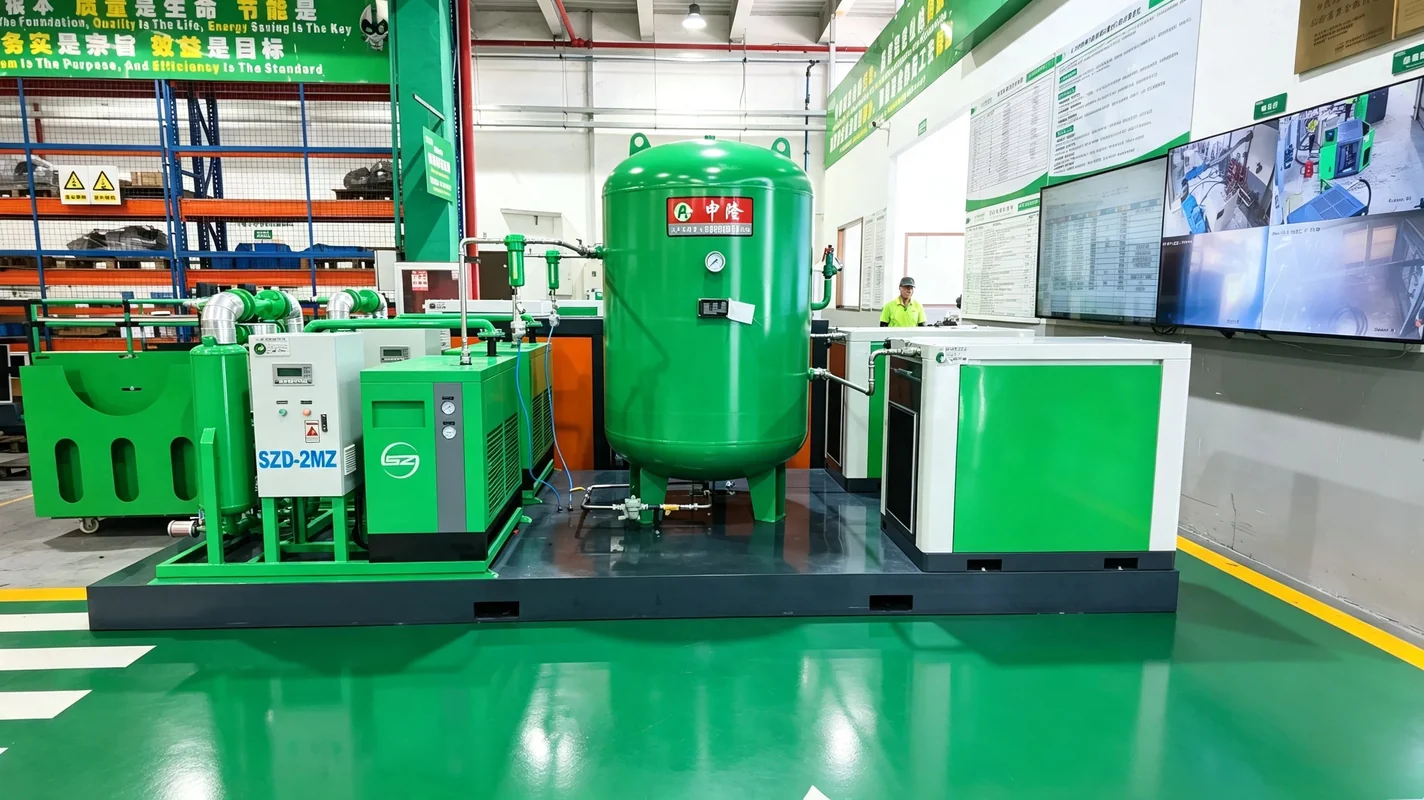
Storage interacts with pressure as well. A receiver does not create pressure; it buffers demand so the compressor control can breathe between load cycles. The useful air stored between two pressure values depends on the width of that band, which is one more reason why an unnecessarily high set point, or an unnecessarily wide control band, does not automatically improve supply. When the whole station is packaged on one base, as in a containerised supply, these components arrive already matched; our containerized air compressor station page shows that arrangement in a form that ships complete and tested.
The Compressed Air and Gas Institute, the main industry body for compressed air equipment, publishes guidance on selecting and maintaining treatment components and distribution systems for the pressure the process requires. Their material is a sensible cross-check before you accept any proposal that changes the set point instead of the restriction.
Why the Lowest Pressure That Works Is the Best Pressure
The energy penalty is continuous
Energy consumption rises continuously as discharge pressure rises. The compressor motor must compress each volume of air further, which takes more work, and the effect applies to every running hour of the machine’s life. There is no threshold at which the penalty begins and no discount for running slightly high; the curve simply climbs. Over a multi-year service life, the electricity cost of a plant-air compressor dwarfs its purchase price, so a set point held a few psi above what the process needs is a quiet, permanent cost.
Running high also affects the machine itself. Components see higher loads, seals and hoses work against greater stress, and leaks grow because the same openings now lose air at a higher pressure. None of this is dramatic on any single day, which is exactly why it survives in plants that measure production output carefully but rarely measure the air system.
Holding the target with variable-speed control
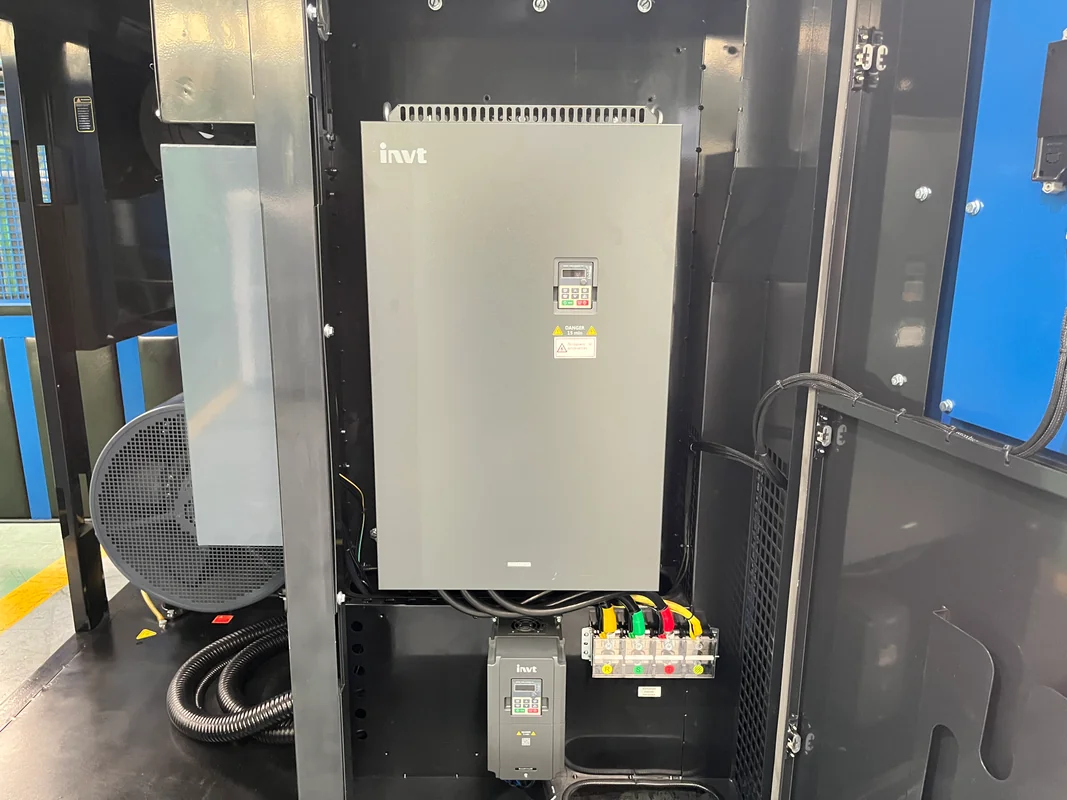
Variable-speed control changes how a plant holds its pressure. A variable-speed package regulates output by changing motor speed, holding the network close to a single target across a changing demand profile, while a fixed-speed machine cycles between two values. The energy benefit of that arrangement is real but it depends on the demand pattern and the selected operating range, which is why our oil-injected permanent magnet compressor range pairs the variable-speed drive with a permanent magnet motor across the standard plant-air pressure classes. The control target should still be the lowest pressure the process accepts; the drive simply makes that target easier to hold.
A useful habit for any plant is to lower the set point gradually while monitoring the most demanding machine, and to stop at the first sign of trouble rather than after it. Record the value where production still runs normally, keep a margin above it for filter loading between services, and write that figure into the maintenance standard. The best psi for your air compressor is then a documented number with a reason behind it, not a setting inherited from whoever commissioned the equipment years ago.
When You Genuinely Need Higher PSI
Two-stage compression for demanding plant air
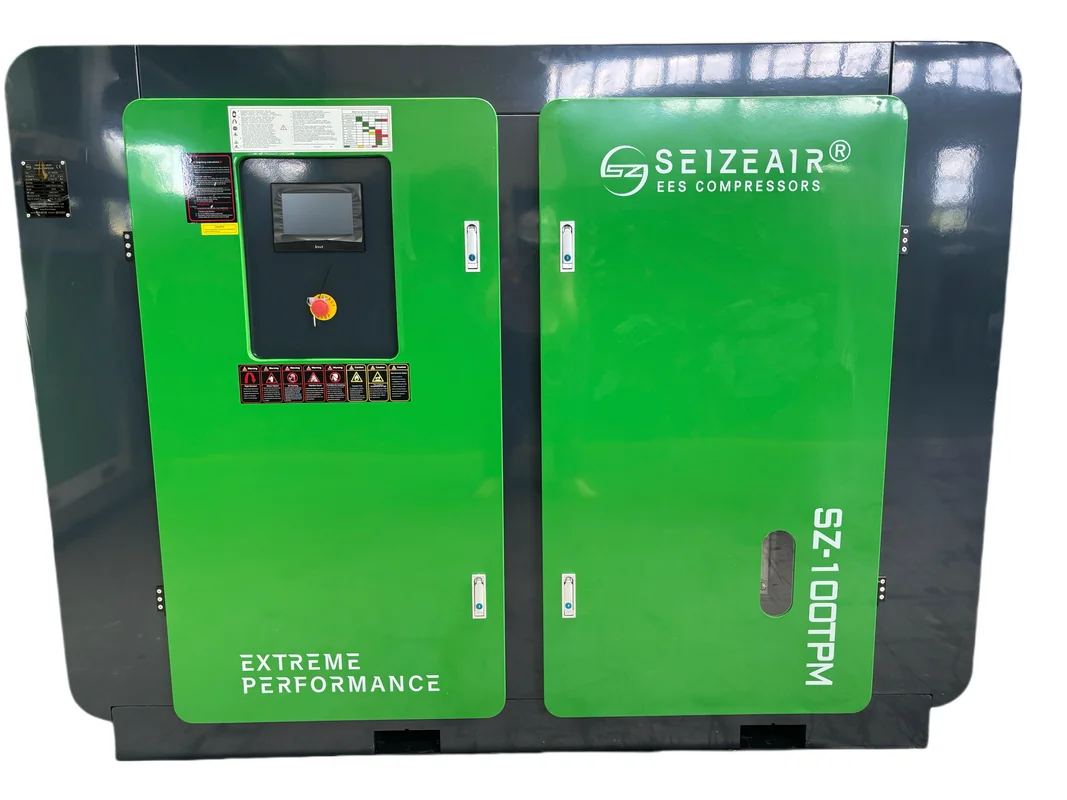
Some demands legitimately require more than ordinary plant air. Where the required pressure approaches the upper end of the standard class, two-stage compression becomes attractive: the air is compressed in two steps with cooling between them, which reduces the work of compression and limits the discharge temperature. The arrangement is standard in our two-stage permanent magnet range, and the two-stage oil-injected screw compressor page shows packages built for that duty within the standard industrial class.
Specialty high-pressure applications
Above the standard class, the equipment conversation changes. Applications in the several-hundred-psi region, such as certain testing, process and specialised production duties, call for packages designed for those pressures, and the oil versus oil-free decision becomes part of the same choice. Our 400 PSI air compressor comparison covers that region in detail, and the guide on what size high pressure air compressor industrial use requires explains how to size such a package without guessing. Treat both as the next step only after the demand has been measured; a high-pressure package specified against an assumed number is one of the most expensive mistakes in compressed air purchasing.
What PSI Do Different Compressor Types Deliver?
The blower band: large volumes at low pressure
Machine architecture and pressure class go together, and knowing the classes helps you read a product range quickly. Blower-type machines occupy the lowest band, delivering large air volumes at fractions of a bar gauge. A magnetic levitation centrifugal blower covers 0.3 to 1.2 bar in our range, and the oil-free screw blower line extends that band to 2.0 bar. Machines built for this duty move far more air per kilowatt at low pressure than any plant-air compressor throttled down to match, which is why aeration and conveying lines deserve their own dedicated supply rather than a tap off the main header.
The plant-air band and the territory above it
Single-stage oil-injected and oil-free screw packages cover the standard plant-air band, with oil-injected packages tested at 0.8 MPa in the SGS report cited earlier and dry oil-free screw machines spanning 4.5 to 10.5 bar. Two-stage screw machines strengthen the upper part of that band where duty cycles are heavy or pressures sit near the top of the class. For very large volumes at process pressures between the blower band and the plant-air band, centrifugal technology fills the middle ground with oil-free delivery by design. The gear centrifugal air compressor range serves exactly that space, from 1.5 barG up to 16 barG in a single package, which is why large textile, chemical and food plants often mix classes in one station instead of forcing every user onto one pressure.
Oil-free air: the purity class rides along
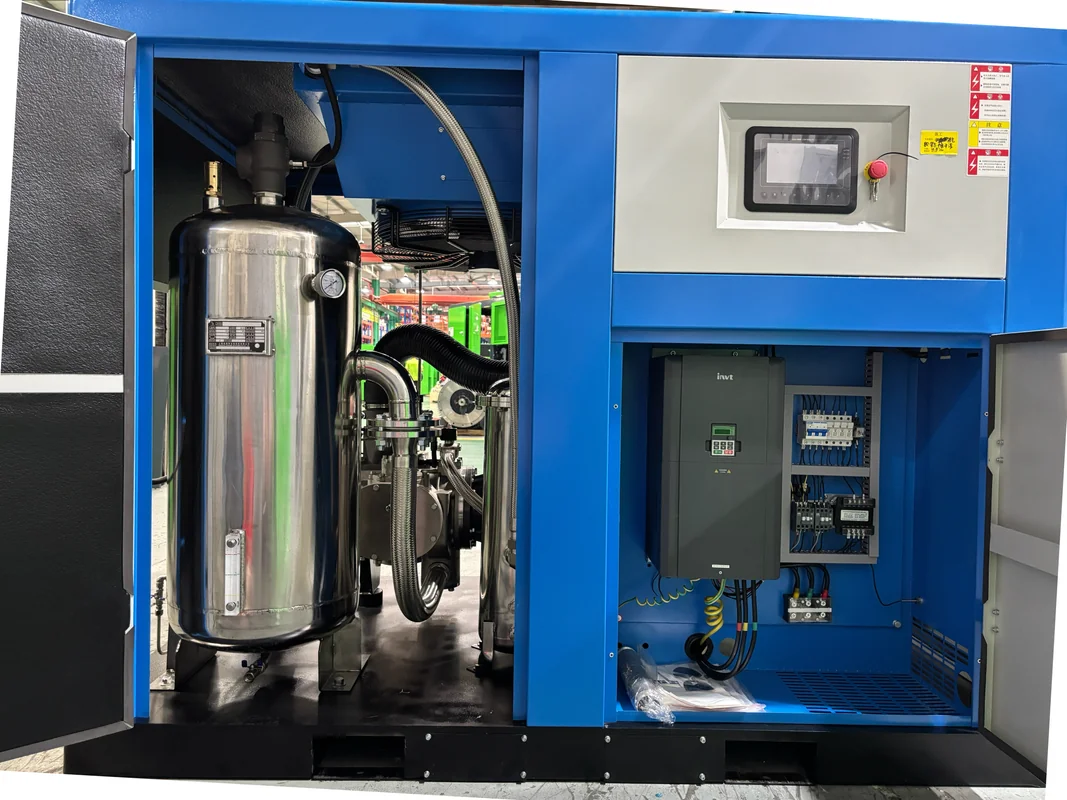
Oil-free machines follow the same pressure logic with one addition: the purity class. Food, medical and electronics applications need oil-free air at their required pressure, and the machine class must satisfy both requirements at once. A water-lubricated design, for example, uses water instead of oil to lubricate, seal and cool the compression element, which removes compressor oil from the air path entirely; the water-lubricated oil-free screw compressor page describes the principle. The pressure the process needs and the cleanliness it needs are separate questions, and a quotation should answer both in writing.
Choosing the class first, then the purity requirement, then the control arrangement, keeps the selection coherent. A buyer who starts from a pressure figure alone tends to compare machines that were never built for the same duty, and the cheapest quotation in that comparison is rarely the one that fits.
A Step-by-Step Method to Choose Your PSI
The method below turns the reasoning in this article into an ordered procedure you can complete in an afternoon for most plants. It deliberately spends most of its effort on measurement rather than on catalogue comparison, because the catalogue can only be read correctly once the demand is known.
- Inventory every connected machine and record its required inlet pressure from the nameplate or manual, together with the point where that requirement applies.
- Identify the governing machine: the one with the highest genuine requirement, not the one with the loudest complaint.
- Measure the pressure drop across each stage of the supply path, the dryer, the filters, the distribution piping and the point-of-use connection, while the plant is producing normally.
- Add the measured losses to the governing requirement to obtain the required set point, then add a modest margin for filter loading between services.
- Check the storage and control arrangement so the compressor can regulate around that value instead of cycling against its limits.
- Verify the result in production: confirm the governing machine receives its required inlet condition during the worst simultaneous demand, not only at idle.
- Document the accepted set point, the measurement date and the reasoning, so the next engineer inherits a decision rather than a mystery.
Two cautions keep the method honest. Do not accept a requirement from memory; instructions are revised and equipment is replaced, and the figure on an old drawing may no longer describe anything on the floor. And do not let one unusual demand set the whole plant’s pressure if it can be served more economically at its own point of use by a small local booster or by reassignment to a lower-pressure header; serving one outlier at 150 psi is different from running an entire network there.
Common PSI Mistakes to Avoid
Buying pressure you will never use
The most common mistake is selecting the next class up “to be safe”. A package rated well above the measured requirement costs more upfront, and it invites the plant to run at the higher set point indefinitely. Safety margin belongs in the calculation as a small, justified allowance, not as a whole pressure class purchased on instinct.
Compensating for restrictions with set point
When a machine reports low pressure, the tempting fix is to raise the compressor setting. That works until the compressor reaches its maximum, and meanwhile every other user pays for the pressure they do not need. The restriction, whether a loaded filter, a small-bore hose or a partly closed valve, should be found and corrected; then the set point can return to its proper value.
Confusing pressure with flow
PSI and CFM answer different questions, and neither can substitute for the other. Pressure describes the condition at a point; flow describes how much air is delivered over time. A system can hold excellent pressure while idle and still starve a machine that starts drawing large volumes, because the supply path or the generation capacity cannot sustain the flow. Diagnose the two separately before changing anything, and size the machine for flow while setting the pressure for the equipment that needs it.
Forgetting that ratings assume reference conditions
Flow and pressure figures assume the inlet conditions stated in the rating standard. Altitude, ambient temperature and inlet restrictions all move the installed performance away from the catalogue line. A package selected exactly at its rated limit in a cool coastal plant may have no reserve once installed at altitude in a hot workshop. State the site conditions in the enquiry so the supplier confirms the figures for your installation rather than for their test room.
Frequently Asked Questions about Air Compressor PSI
Is a 175 PSI compressor better than a 125 PSI one?
Better only for equipment that needs the higher pressure. For the same air delivery, a higher-rated package in the same technology generally costs more and, if run at the higher set point, consumes more energy per unit of air. A 175 psi class machine is the right purchase when the demand genuinely sits in that band; otherwise it is a cost with no return.
What PSI should I set my compressor to?
Set it to the measured requirement of the most demanding connected machine, plus the measured losses between the compressor and that machine, plus a small margin for filter loading. The figure usually lands just above the tool requirement rather than at the package maximum. Measure, adjust, then record the accepted value in the maintenance standard.
Can I run a 90 PSI tool from a higher-rated compressor?
Yes, provided the supply to that tool is regulated down to its rated inlet pressure. The risk runs the other way: a higher-rated compressor cannot be safely run from a lower-rated tool’s supply, and connecting a tool directly to an unregulated high-pressure line can damage it. Regulate at the point of use and verify the pressure there, not at the compressor.
Does higher PSI mean more air?
No. Pressure and delivery are separate specifications. A displacement compressor actually delivers slightly less air as the working pressure rises, because the same volume is compressed harder and internal losses grow. If your machines are starving, the answer is usually more delivery at the required pressure, not more pressure.
What PSI is a standard industrial air compressor?
Packages built for general plant air are commonly rated around 7 to 10.5 bar, which is roughly 100 to 152 psi, and many plant systems operate with the compressor set a little above 100 psi at the station outlet. Treat those as orientation values and let the measured demand decide; the classes are described in the table above together with the machine families built for them.
Why does my pressure fall when several machines start together?
A simultaneous start is a demand event, and the pressure dip shows whether the supply path can pass the combined flow at the required condition. Check whether the dip appears everywhere or only downstream of a shared restriction, whether the compressor control responds in time, and whether storage could buffer the event. The diagnosis may point to a restriction, a control adjustment or a capacity review, in that order of cost.
What is the difference between PSI and PSIG?
PSI is the general unit for pounds per square inch, while PSIG refers specifically to gauge pressure, the reading above local atmospheric pressure. Compressor nameplates and tool ratings are almost always gauge values, so the two terms usually describe the same thing in practice. The distinction becomes important in engineering calculations that use absolute pressure, which adds atmospheric pressure to the gauge reading, so confirm which scale a document uses before converting.
How much pressure drop is acceptable in a compressed air system?
The acceptance criterion is the process requirement: every machine must receive its specified inlet pressure under real production conditions. Rather than asking how much loss is tolerable in general, measure the drop across each stage of your own supply path and treat each figure as a budget that the next maintenance service has to restore. A loss that grows between services points to a loaded filter or a developing restriction, and the measurement record turns that from a mystery into a scheduled correction.
Questions to Put to Your Supplier
The pressure conversation with a supplier goes better when it starts from shared facts. Bring the demand inventory, the measured losses and the site conditions, and ask for answers that connect the proposed machine to those numbers. The questions below separate a serious proposal from a catalogue photocopy.
- At which working pressure is the quoted delivery guaranteed, and under which rating standard and reference conditions?
- How does the delivered volume change as the working point rises toward the package maximum?
- Which pressure losses did you assume for the dryer, the filters and the distribution system, and how should the set point be chosen from them?
- Which pressure class does the proposed machine belong to, and why does our demand profile fit it?
- What control arrangement will hold the target pressure across our shift pattern, and what happens when the lightest and heaviest shifts exchange?
- Which figures in the proposal are verified by test, and can the test report be supplied with its scope and conditions?
A supplier who answers these questions in writing has already done most of the engineering. A supplier who answers them with a larger motor has done something else.
Turn the Right PSI into a Stable Supply
The best psi for an air compressor is a decision, not a specification you copy from a neighbour. It comes from the highest genuine point-of-use requirement, the measured losses along the supply path, and a justified margin, held by controls that keep the system near that value instead of above it. Every psi of set point above that figure is paid for in every kilowatt-hour the compressor consumes, for the life of the plant.
If you would like the calculation checked against real equipment, contact SEIZE AIR with your tool list, demand profile and measured losses, and our engineers will confirm the pressure class and the package that fits it. Include the site conditions, the altitude and the air quality requirement, so the proposal answers the complete duty in one document.