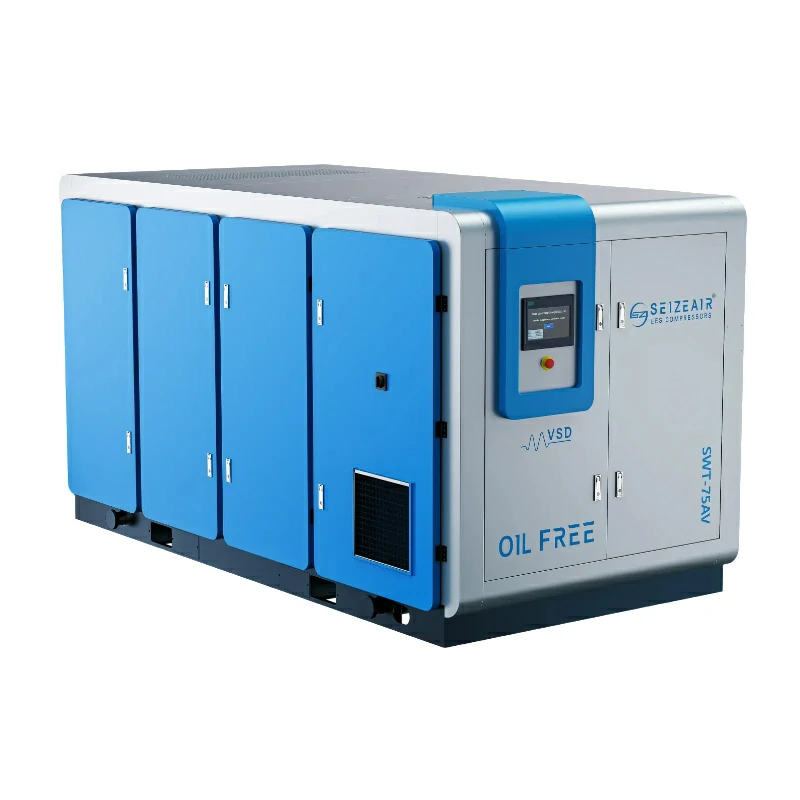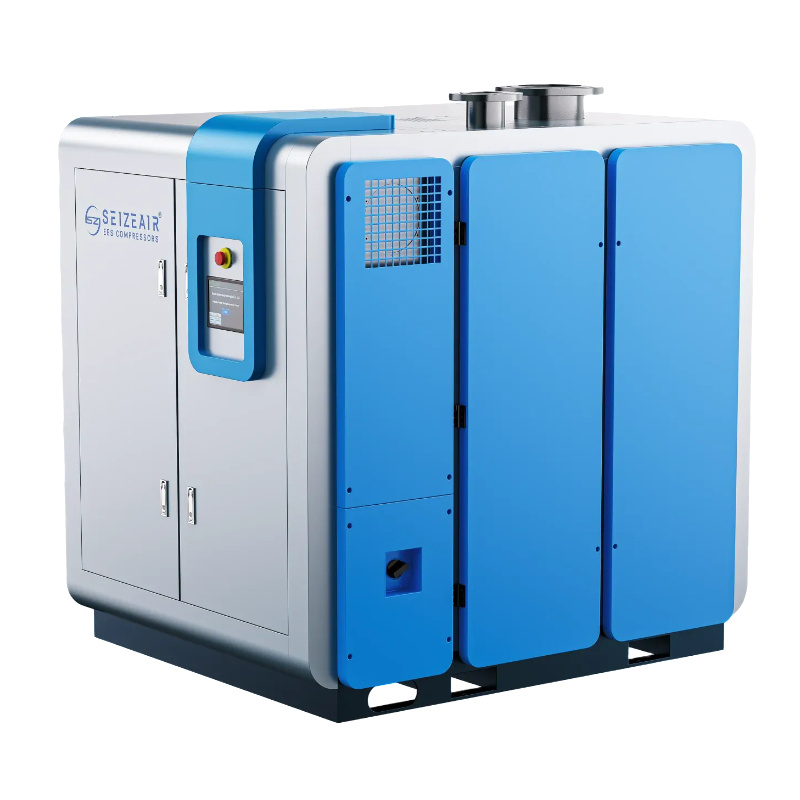


Air receiver tank selection starts with a clear picture of your demand profile, not with a catalogue. This guide explains what a receiver does, how to size it from real consumption data, where it belongs in the treatment train, and how to install and maintain it so it protects your compressor for years. Whether you are stabilizing a small workshop system or buffering a plant-wide network, the same engineering principles apply.
What Is an Air Receiver Tank and What Does It Actually Do?
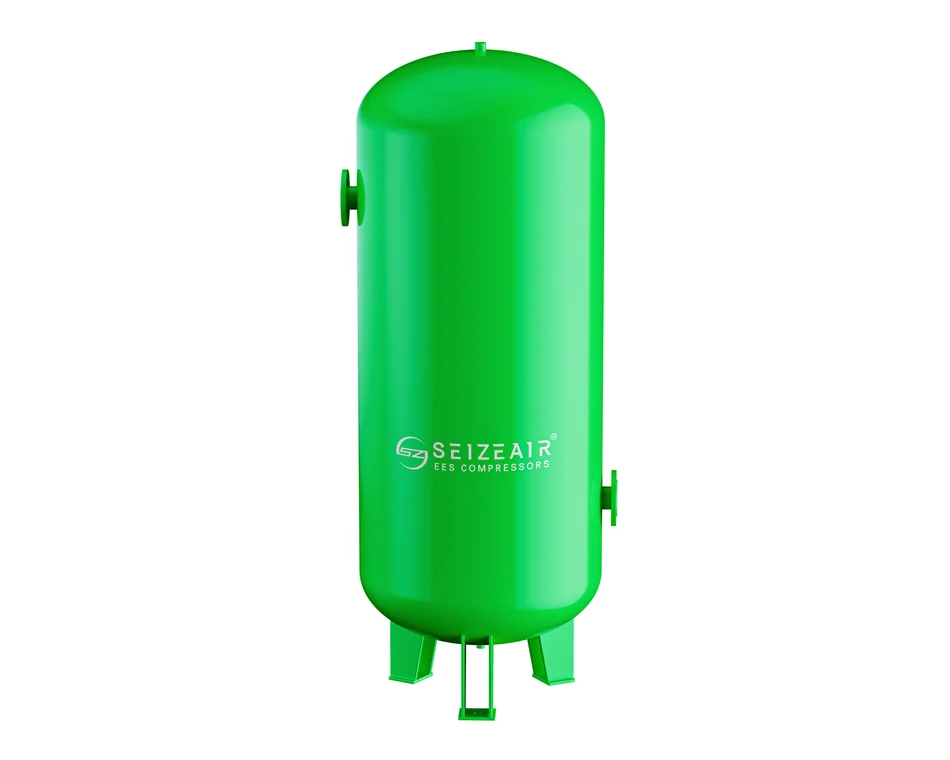
An air receiver tank is a pressure vessel installed in a compressed air system to store a volume of compressed air. It looks simple — a sealed steel cylinder with a few ports — but it performs several distinct jobs at once. Understanding those jobs is the key to specifying the right size, because a tank chosen for one function is often wrong for another.
Think of it as a buffer between a supply that cannot change instantly and a demand that changes constantly. A compressor does not respond to a sudden surge in air use within a fraction of a second. The receiver supplies that short burst from stored air, giving the control system time to react. Without it, pressure at the point of use sags every time a valve opens, and the compressor cycles on and off more often than it should.
The four core functions
- Storage and peak shaving. The tank holds a reserve of compressed air that covers short periods when demand exceeds what the compressor can deliver at that moment.
- Pressure stabilization. It damps the pulsations produced by the compressor and smooths pressure swings across the network, so downstream equipment sees a steadier supply.
- Moisture separation. As compressed air cools inside the vessel, water vapor condenses. The receiver gives droplets time to fall out, and a drain removes them before they reach the dryer and piping.
- Reduced cycling. By widening the band between load and unload (or start and stop), the tank makes the compressor run in longer, more efficient cycles.
These functions are why a receiver is considered a standard part of almost every industrial compressed air system design, not an optional accessory. The vessel does not create energy; it stores it at a useful moment and releases it when needed.
Why Your System Needs an Air Receiver Tank
It is tempting to treat the receiver as a simple container, but its effect shows up in energy bills, product quality, and equipment life. The benefits below are the reasons engineers keep specifying tanks even when a compressor might appear to handle the load on paper.
Handling intermittent peak demand
Most plants do not use air at a constant rate. A filling station, a packaging line, or a bank of solenoid valves can draw a large volume in a second or two. If the compressor had to supply that surge alone, it would need to be sized for the peak rather than the average — an expensive overinvestment that then runs inefficiently most of the time. The receiver covers the spike, allowing the compressor to be sized closer to the average flow. This is the same principle behind sizing an industrial air compressor from demand rather than from a single peak reading.
Cutting load/unload and start/stop cycles
Every start-up draws a high inrush current and adds wear. A fixed-speed compressor that short-cycles can start dozens of times per hour, which overheats the motor and contacts. A properly sized receiver stretches the time between starts. For a variable-speed machine, the tank reduces how aggressively the drive must chase rapid pressure changes, which improves stability and protects the drive. The relationship between storage, cycling, and frequency conversion energy savings is therefore direct: more useful buffer means smoother, more efficient operation.
Protecting downstream equipment
Pressure pulsations and carried-over water damage valves, cylinders, sensors, and air motors. A receiver acts as a settling chamber where the air slows down. That lower velocity lets entrained droplets and some particulate drop out before the air enters the distribution system. The cleaner, steadier supply extends the service intervals of pneumatic tools and instrumentation and reduces the load on filters and dryers.
Providing a short emergency reserve
If a compressor trips or power flickers, a charged receiver can maintain pressure long enough for a controlled shutdown or a safe transfer to a backup machine. This reserve is not a substitute for a generator or a redundant compressor, but it buys valuable seconds and prevents a sudden loss of air to critical processes.
Types of Air Receiver Tanks
Receivers are categorized by orientation, by where they sit in the treatment train, and by the code they are built to. Each choice affects footprint, drainage, and performance. Knowing the differences prevents the common mistake of buying a vessel that fits the space but not the job.
Vertical vs horizontal receivers
A vertical tank occupies a small floor area and uses gravity effectively: condensate collects at the bottom, away from the outlet near the top. This makes the vertical design the default choice where floor space is limited and headroom is available — most plant rooms and workshops. A horizontal tank offers a lower overall height and a larger volume in a single unit, which suits installations with low ceilings or those that need the vessel to sit beneath a platform. Horizontal receivers need a slight slope toward the drain to remove water completely.
Wet receivers vs dry (after) receivers
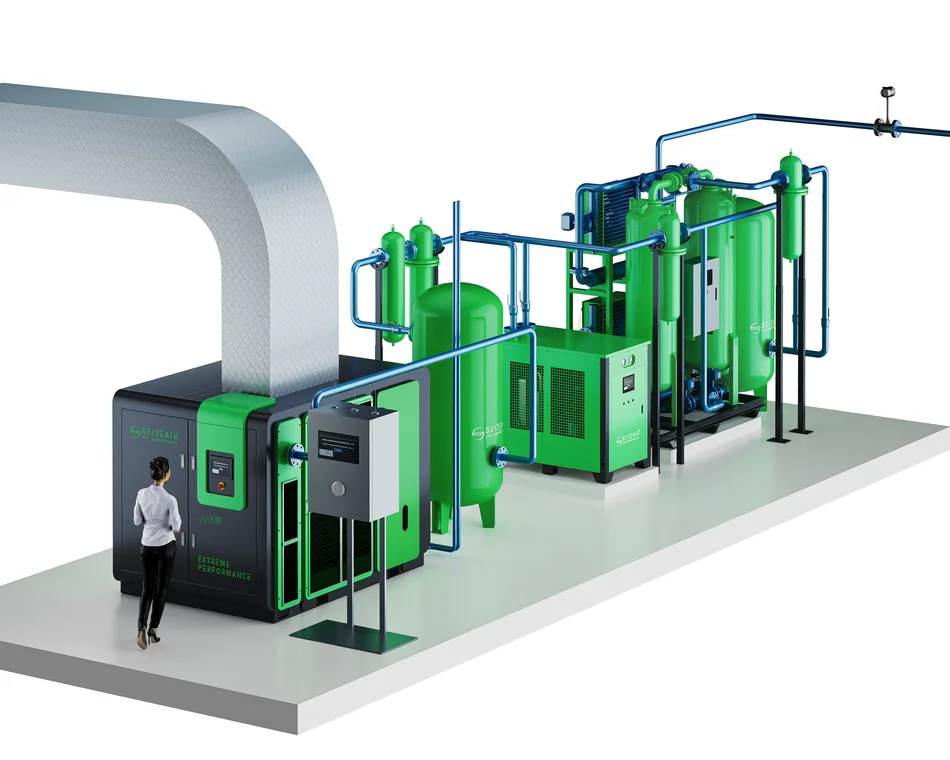
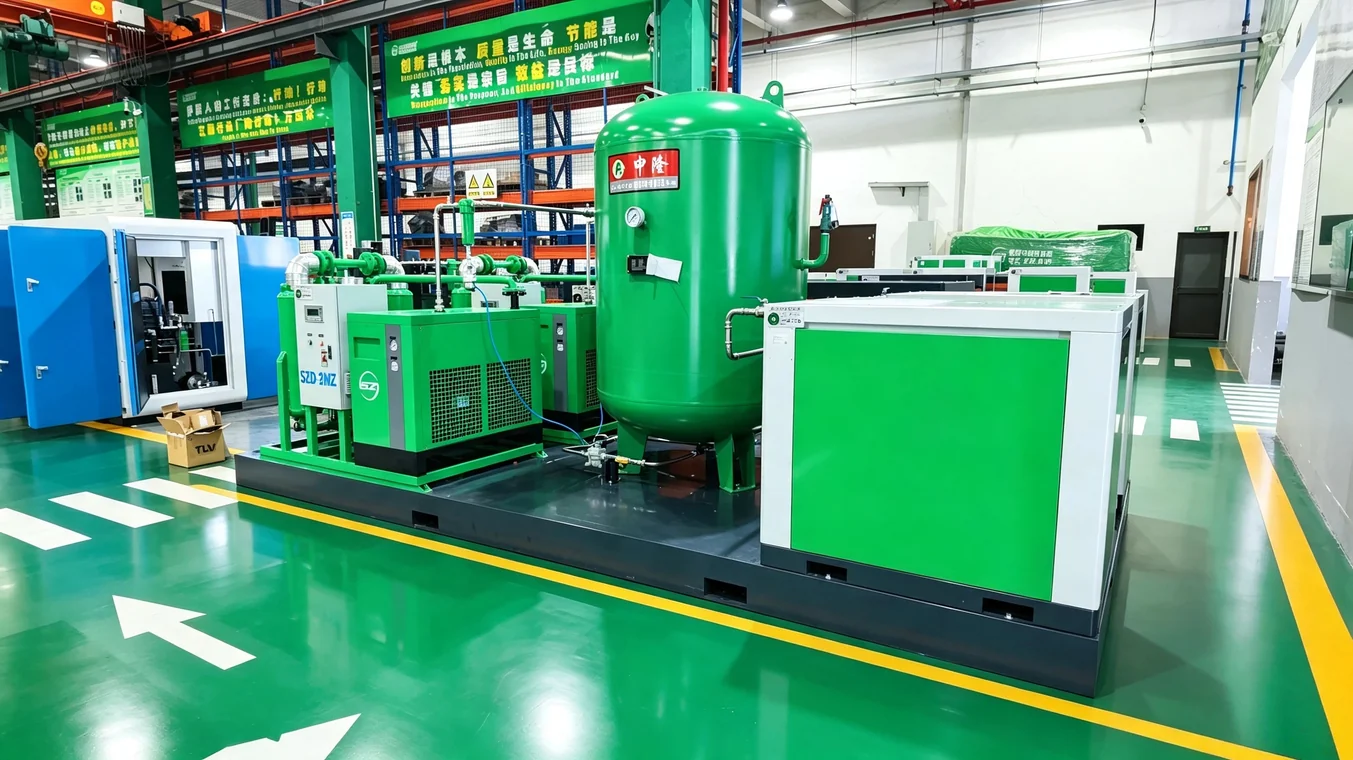
A wet receiver sits after the compressor and before the dryer. It receives hot, moisture-laden air, cools it, and drops out a large share of the water before the air reaches the dryer — reducing the dryer’s load. A dry receiver, also called an after-receiver or storage tank, is installed after the dryer and filters. It stores air that is already clean and dry, which is useful when demand peaks are large and you do not want moist air sitting in a big downstream vessel. Some systems use both: a wet receiver for separation and a smaller dry receiver for peak buffering. Your choice of refrigerated air dryer or desiccant unit influences which arrangement makes sense.
Certified vs non-certified vessels
Where a vessel is installed indoors or in a regulated site, a code-certified receiver — built and stamped to a recognized pressure-vessel standard — is often mandatory and is always the safer choice. It comes with documented design pressure, test records, and a relief device sized for the vessel. Non-certified or shop-built tanks may be acceptable for small, low-pressure applications in some regions, but the inspection and insurance requirements vary widely. Always confirm the local code before purchase, and never modify a receiver by welding on new ports without recertification.
How to Size an Air Receiver Tank
Sizing is where most mistakes happen. A tank that is too small does nothing; one that is too large wastes money and floor space. The correct method starts with measured demand, applies a defined allowable pressure band, and produces a volume. The formula below is the standard engineering approach for buffering a demand surge on a fixed-pressure system.
The storage sizing formula
For a system where the compressor runs at a set pressure and the receiver must cover a short peak, the required volume is calculated from the air deficit, the allowed pressure drop, and the time the buffer must last. Use absolute pressures in the calculation:
V = (Q x Pa x t) / (P1 - P2)
  V  = receiver volume, in m3 (or litres after x 1000)
  Q  = air demand exceeding compressor output, in m3/min (free air)
  Pa = absolute atmospheric pressure, about 1.0 bar(a)
  t  = time the buffer must cover the peak, in minutes
  P1 = maximum allowable system pressure, in bar(a)
  P2 = minimum acceptable system pressure, in bar(a)
  (P1 - P2) = the permitted pressure band across the receiver
Worked as a method: measure the peak flow with a data logger, subtract what the compressor can supply during that interval, and use that difference as Q. Decide how deep a pressure dip your process can tolerate — this is P2 — and how long the surge lasts, which is t. The result is a volume you can round up to the next available tank size. Note that this formula addresses peak buffering; piston-compressor pulsation damping and wet-receiver separation use different rules and are usually handled by the manufacturer.
Rule-of-thumb starting points
When measured data is not yet available, installers often use rough ratios as a first estimate — for example, a few litres of receiver volume per litre per minute of compressor output, or a target number of seconds of storage. These rules vary widely with application and should never be treated as a final specification. Use them only to choose a trial size, then confirm with logged pressure and flow data after commissioning.
Worksheet: fill in your own numbers
Because every plant is different, the most reliable approach is to fill in a worksheet with your own measured values rather than copy a published example. The table below lists the inputs you need; none are assumed here.
| Input | How to obtain it | Your value |
|---|---|---|
| Peak demand Q (m3/min free air) | Log flow at the main header during the worst surge | ______ |
| Compressor output during surge | From the machine data at your operating pressure | ______ |
| Allowable pressure band (bar) | Agreed with the process owner | ______ |
| Peak duration t (min) | Read from the same logged event | ______ |
| Calculated volume V (m3) | Apply the formula above | ______ |
Where to Install an Air Receiver Tank
Location determines how well the tank performs its separation and buffering roles. The ideal spot is close to the compressor but isolated from its vibration and heat, in a cool and well-ventilated area where the drain can be serviced without dismantling anything. Specific guidance for the surrounding plant room is covered in a compressed air maintenance plan, but the receiver has a few requirements of its own.
Foundation and clearance
A vertical receiver must stand perfectly level on a solid foundation sized for the tank’s empty weight, its water fill, and any seismic or wind loads required locally. Anchor it according to the manufacturer’s drawing. Leave clear space around the vessel for inspection of the shell, the gauge, the relief valve, and the drain. Do not box it into a corner where condensate lines cannot be routed with a continuous fall to a drain point.
Piping arrangement
Connect the compressor discharge to the receiver inlet, and take the outlet from a point above the inlet so that any pooled water stays at the bottom. Fit a drip leg with an automatic drain at the lowest point of the tank and at low points in the distribution main. A looped main around the plant balances pressure and reduces sag at distant take-offs. Avoid dead-end branches where condensate can collect. Where air is consumed in bursts, placing a small receiver near the point of use can be more effective than enlarging the central one, because it supplies the surge without pushing a pressure wave through a long pipe.
Safety devices and fittings
Every receiver needs a pressure relief valve set at or below the vessel’s maximum allowable working pressure, a readable pressure gauge, and a drain. A relief valve must never be isolated by a valve that can be locked closed. Many installations add a pressure switch that stops the compressor if pressure climbs beyond the normal control band — a second layer of protection, not a replacement for the relief device. Inspect and test these items on the schedule required by your jurisdiction and insurer.
Air Receiver Tanks and Air Quality
The receiver is part of the treatment train, not a substitute for it. Understanding what it can and cannot remove will keep your dryer selection honest and your air quality predictable.
What a receiver removes — and what it does not
A wet receiver removes a portion of free water by cooling and settling. It does not dry the air to a pressure dew point, and it does not remove oil vapor or fine aerosols to a specified purity class. For that you need a dryer and appropriate filtration. Condensate drained from the receiver is a waste stream, not clean water; in most regions it must be treated before discharge. Industrial guidance on managing such streams is available from environmental regulators such as the U.S. Environmental Protection Agency, and local rules should always take precedence.
Coordinating tank, dryer and filters
A correctly placed wet receiver lightens the load on downstream equipment, which can allow a smaller dryer and longer filter life. Conversely, an oversized tank installed in the wrong position can hold a large volume of moist air that the dryer must then process during startup. Match the receiver volume to the dryer’s capacity and to the way the system is loaded. For plants with strict air-purity needs, a dry receiver after the final filter stores air that is already at the required quality, which is why it is common in food, pharmaceutical, and electronics applications.
Drain management
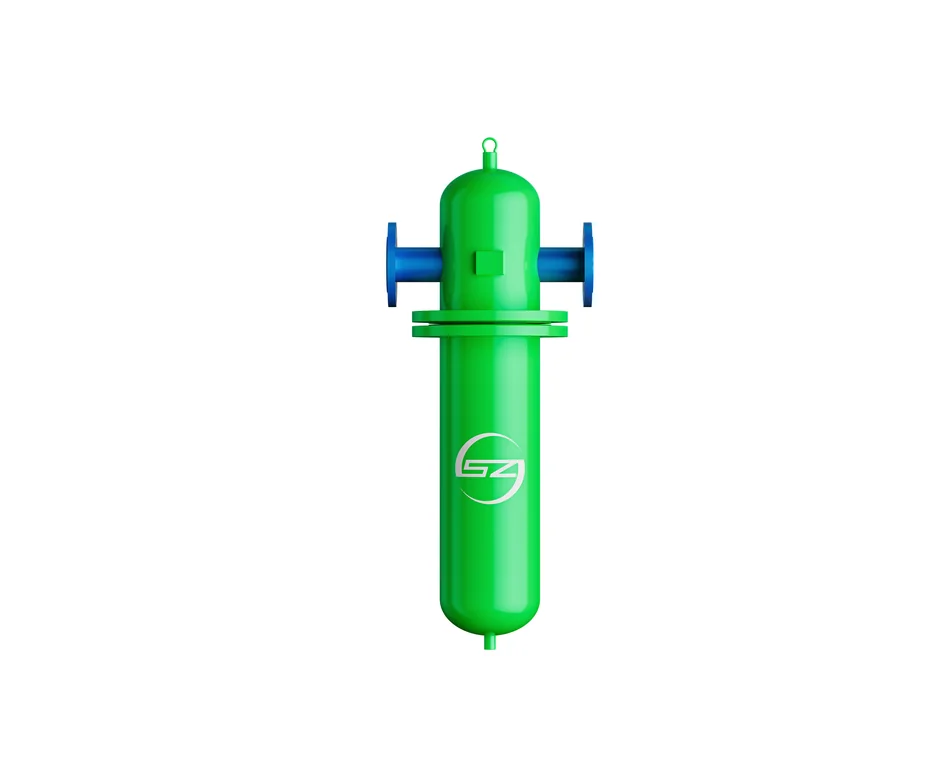
Automatic drains — float, electronic timed, or zero-loss — remove condensate without letting compressed air escape continuously. A failed drain is one of the most common causes of water carryover. Check the drain daily during commissioning, then set an interval based on what you find. In humid climates or during seasonal wet periods, the rate rises sharply. Route the discharge to an oil-water separator or approved treatment point; never allow it to run freely onto a floor or storm drain.
Maintenance and Inspection Checklist
A receiver is a passive vessel, so it is easy to neglect — until a drain fails or a relief valve seizes. A short, disciplined routine prevents most problems. The table below is a practical schedule; adapt the intervals to your operating hours, air quality, and local regulations.
| Frequency | Check | Action if abnormal |
|---|---|---|
| Daily | Drain operation and water volume; pressure gauge reading | Clear blockage; investigate sudden water increase |
| Weekly | Relief valve condition; unusual noise or vibration; fittings for leaks | Replace or service defective device; tighten fittings |
| Monthly | External shell corrosion; anchor bolts; drain line fall | Clean and repaint; correct slope |
| Annually | Internal inspection and relief valve test per code | Engage a qualified inspector; keep written records |
Never perform welding, drilling, or any modification on a pressurized or in-service vessel. Isolate, depressurize, and lock out the system before any invasive work, and return the vessel to service only after the required test and documentation. These habits align with the broader industrial air system practices that protect both people and equipment.
How a Receiver Affects Energy Efficiency
Storage is often discussed as a reliability feature, but it also influences energy use. By reducing short cycling, the receiver lowers the repeated start-up losses that dominate a poorly buffered fixed-speed machine. By smoothing pressure, it reduces the amount of time a variable-speed drive spends reacting to noise rather than serving real demand. A stable header also allows the whole system to operate at a lower average pressure, and every bar of unnecessary pressure costs energy across all compressed-air consumption.
The savings are not automatic, though. A leaking drain, a sticking intake valve, or an oversized tank that masks a leak can erase the benefit. Treat the receiver as one element in a system-wide efficiency program that includes leak detection, correct permanent magnet variable speed compressor control, and proper treatment sizing. Electricity cost is a real variable in any such analysis; public data such as the EIA electricity information can help you value the kilowatt-hours your plant actually consumes.
Common Air Receiver Tank Problems and Fixes
Water in the air lines
If condensate keeps reaching point of use, check the drain first, then the condition of the aftercooler and dryer, then whether the receiver is overloaded. A tank that is too small for the flow gives water no time to settle. Increasing storage or adding a separator ahead of the dryer often resolves it.
Pressure sag during demand peaks
A pressure dip that coincides with a machine starting points to insufficient buffer volume or a restriction between the receiver and the point of use. Log the event, check the pipe size and any throttled valves, then re-run the sizing formula with the measured deficit.
Rust, scale and internal corrosion
Persistent water at the bottom of the vessel attacks the shell from the inside. Keep the drain working, check the internal coating at inspection intervals, and consider a vessel with a protective lining if your air is consistently wet. External corrosion is usually a ventilation or spill issue.
Integrated Receivers and Skid-Mounted Packages
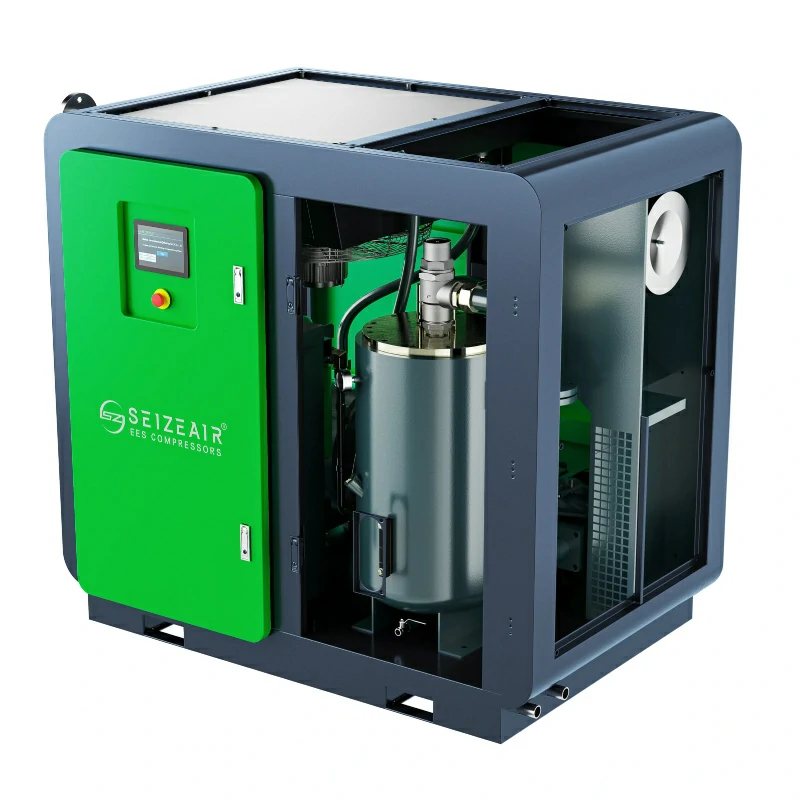
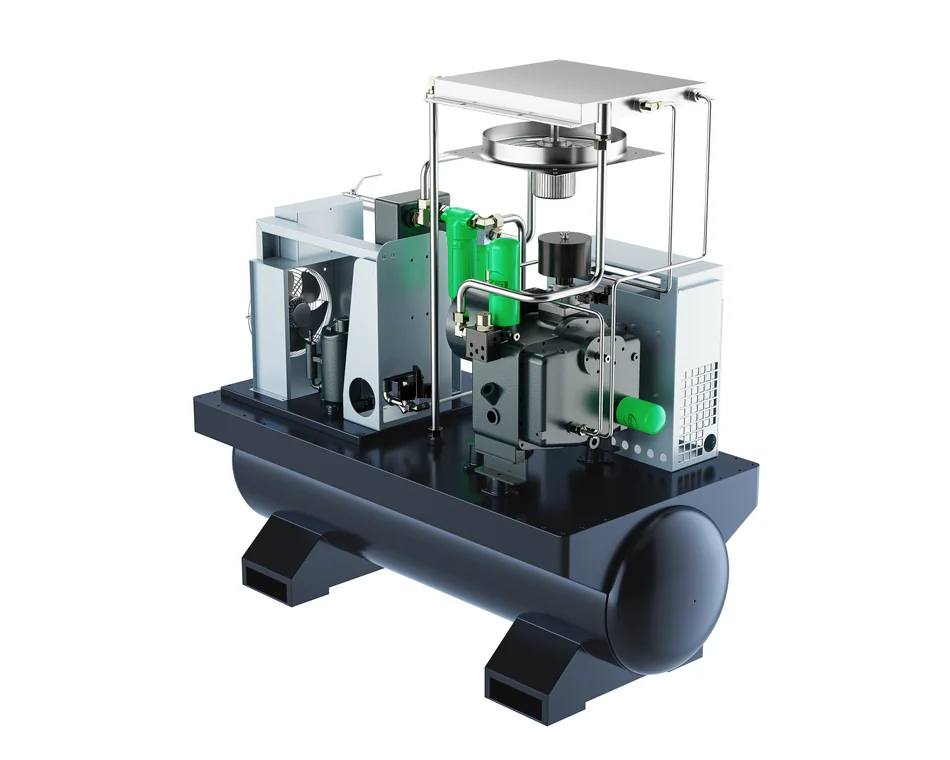
Not every receiver is a separate upright cylinder. Many modern packages integrate storage into the machine base. An all-in-one compressor with dryer and tank places the compressor, treatment, and a horizontal receiver on one frame. This reduces installation time and floor space, and it makes the whole package factory-tested before it reaches site. The trade-off is less flexibility: if one element needs replacement, the package may need more extensive work.
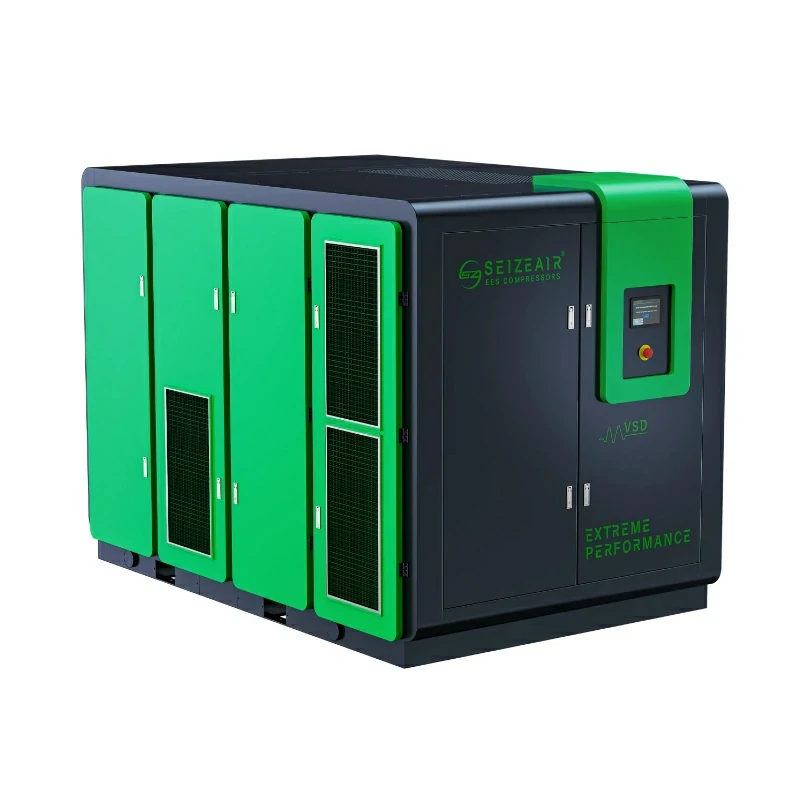
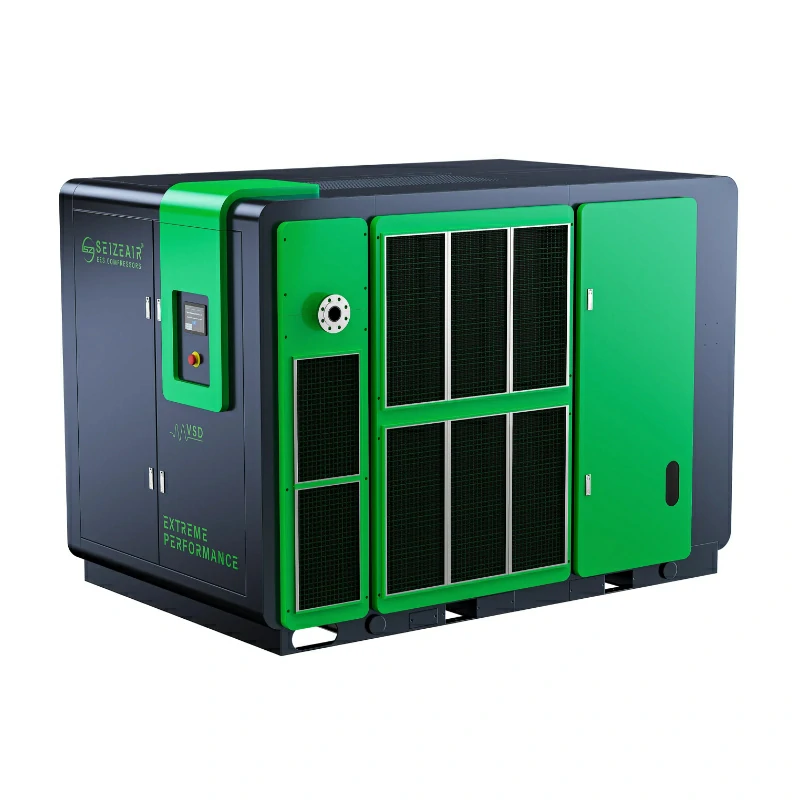
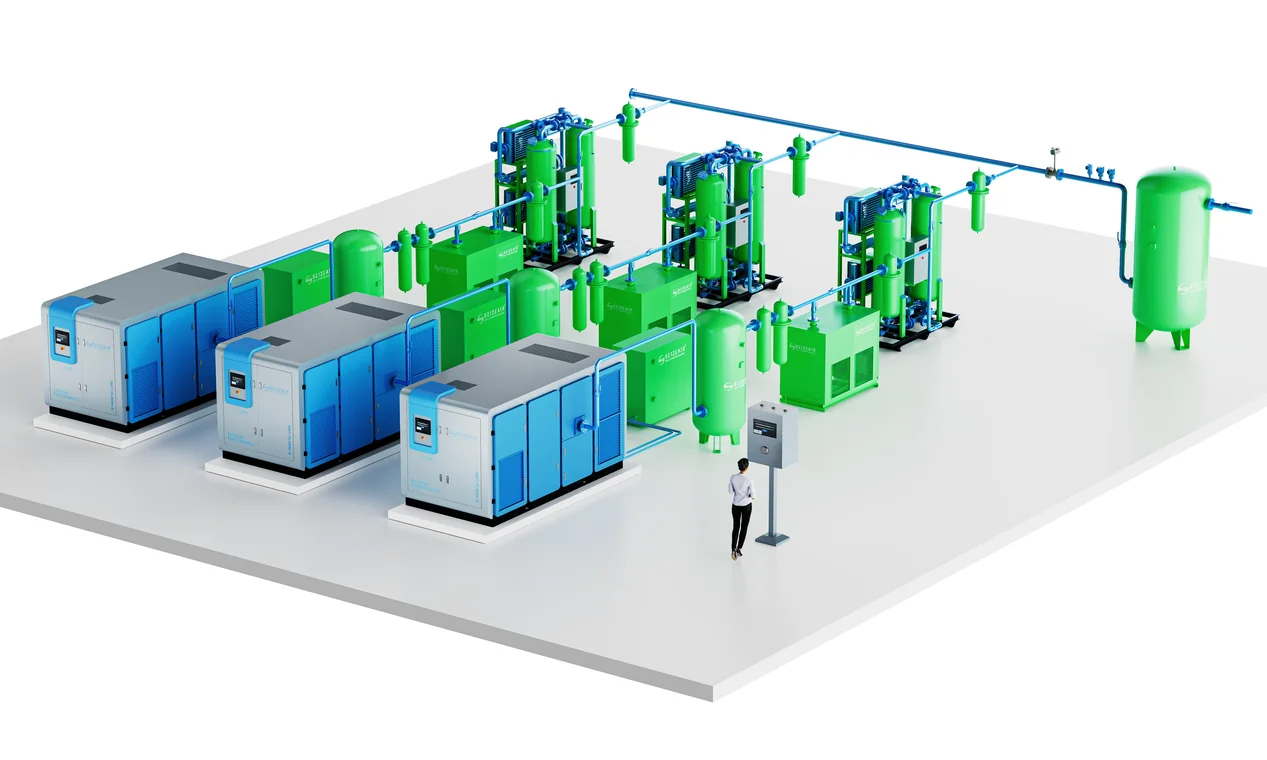
For larger or temporary installations, a skid or containerized station carries the compressor, dryer, and receivers on a shared base or inside an enclosure. This arrangement suits projects where the air plant must be commissioned quickly or relocated. In every case the same sizing logic applies — the receiver’s job does not change because it is mounted on a frame instead of a concrete pad.
Materials, Construction and Pressure Ratings
Not all receivers are built alike. The shell material, the way it is tested, and the fittings supplied with it determine whether the vessel is legal to install and safe to operate in your location. These are specification details worth reading carefully, because they are difficult and expensive to change after purchase.
Shell material and internal protection
Most industrial receivers are fabricated from carbon steel. In a dry-air application with a well-maintained drain, an uncoated or simply painted interior may be adequate. Where the air is wet or carries contaminants, a protective internal coating dramatically extends life by keeping condensate away from bare metal. Stainless steel vessels exist for corrosive environments and high-purity applications, but they cost considerably more. Ask what the interior finish is, how it is applied, and whether it is suitable for the air quality you need.
Design pressure, test pressure and relief sizing
The nameplate states the maximum allowable working pressure and the pressure at which the vessel was hydrostatically tested. The relief valve must be set at or below the working pressure and must have a capacity appropriate to the vessel and its supply. Do not assume the valve supplied with a package is correctly set for your system pressure — verify it during commissioning. The parameters to confirm are listed below as plain text, with no values assumed.
Receiver nameplate data to verify before installation:
  MAWP        = maximum allowable working pressure (bar / psi)
  Test press. = hydrostatic test pressure recorded on certificate
  Volume      = stated vessel volume (litres / m3)
  Relief set  = relief valve set pressure (must be <= MAWP)
  Relief cap. = certified discharge capacity of the relief device
  Code stamp  = applicable pressure vessel code / certifying body
  Serial no.  = traceable vessel serial number
Ports, manways and inspection access
Check that the nozzle size and connection type match your piping and that the inlet and outlet are positioned to encourage proper condensate separation. Larger vessels should include an inspection opening or manway so the interior can be examined. If the only access is through a small threaded port, a meaningful internal inspection may be impossible, which shortens the practical life of the asset. Confirm the drain connection size too, since an undersized drain is a frequent source of trouble.
Matching a Receiver to Your Application
The right configuration depends on how your plant uses air. A machine that runs eight hours a day with predictable demand has very different needs from a process that operates continuously with violent swings. Use the comparison below as a way to frame the conversation with your supplier, then validate it with your own logged data.
Workshops and light assembly
Small operations with intermittent tool use usually need modest storage close to the point of use. The goal is to prevent the compressor from starting for every short burst of demand and to keep pressure steady at the tool. A compact vertical receiver with an automatic drain, installed near the compressor, is normally sufficient. Oversizing here simply adds cost and a vessel that rarely does useful work.
Continuous process plants
Where production runs around the clock, reliability dominates. Plants often use multiple receivers, sometimes one wet vessel near the compressor for separation and one dry vessel near the process for buffering. Redundancy in the air plant is common, and the receiver allows a controlled changeover between compressors without a pressure disturbance. In these installations, inspection access and documented test records matter more than the lowest purchase price.
Food, pharmaceutical and electronics
Here the air itself is a process input, and purity requirements drive the design. A dry receiver placed after the final filtration stores air that already meets the required quality class, avoiding re-contamination. Internal surfaces must be clean and compatible with the purity standard, and drains must be managed hygienically. If your application falls into this category, specify the air quality class first and let it determine the receiver position, material, and finish.
| Application | Primary goal | Typical configuration |
|---|---|---|
| Workshop / light assembly | Reduce short cycling, steady tool pressure | Small vertical receiver near the compressor |
| Continuous process plant | Reliability, buffer for changeover | Wet receiver plus dry after-receiver, multiple units |
| High-purity production | Maintain air quality at point of use | Dry receiver after final filtration, protected internals |
| Seasonal or peak-heavy load | Cover short demand surges | Storage sized from logged peak data |
What to Check Before You Buy
Once you know the volume and configuration you need, a short purchase review keeps the project on track. The points below are practical and apply whether you are buying a single tank or specifying a complete air station.
- Documentation. Request the certificate, test records, nameplate data, and relief valve certification before ordering, not after delivery.
- Footprint and access. Confirm the tank fits the available space with enough clearance for inspection and drain service.
- Fittings included. Verify whether the price includes the relief valve, gauge, drains, and connection flanges, or whether they are extras.
- Interior finish. Match the coating or material to your air quality and humidity conditions.
- Supplier support. Ask who will commission the relief device and who supplies spare drain valves and service parts.
Frequently Asked Questions
Do I need an air receiver tank with a screw compressor?
Almost always. Oil-injected screw compressors produce a steady flow, but plant demand is rarely steady. The receiver covers the difference, reduces cycling, and separates water. Only very small, intermittently used units with built-in storage may not need a separate tank.
How big should my air receiver tank be?
Size it from measured peak demand, the allowable pressure band, and the duration of the surge using the formula above. Rules of thumb are only a starting point. If you cannot log data yet, choose a moderate size and verify after commissioning.
Should the receiver be before or after the dryer?
Both positions are valid and serve different goals. Before the dryer, it cools the air and removes water, reducing dryer load. After the dryer, it stores dry, clean air for large peaks. Plants with demanding air quality often use a receiver in each location.
How often should I drain an air receiver tank?
With an automatic drain, check operation daily at first and then set a routine based on observed water volume. In humid conditions or heavy use, drainage may be needed continuously. A failed drain is a leading cause of downstream water problems.
Can I install a larger receiver than recommended?
A larger tank is generally safe if it is correctly rated and the relief device and controls suit the system, but it adds cost, space, and startup wet-air volume. If your goal is lower pressure drop rather than more storage, check the distribution piping and filters before oversizing the vessel.
Getting the Specification Right
An air receiver tank is a small investment that protects a much larger one. Define the job — peak buffering, moisture separation, dry-air storage, or a combination — then size, position, and maintain it for that job. Use measured data wherever you can, insist on a certified vessel with a correctly set relief valve, and treat the drain as a maintenance priority. Do those things and the receiver will stabilize pressure, reduce compressor wear, and keep water out of your air lines for years.
If you want help translating a logged demand profile into a receiver specification, the engineering team at SEIZE AIR can review your pressure band and consumption data and suggest a configuration that fits your system. Contact the compressed air specialists to discuss your application.