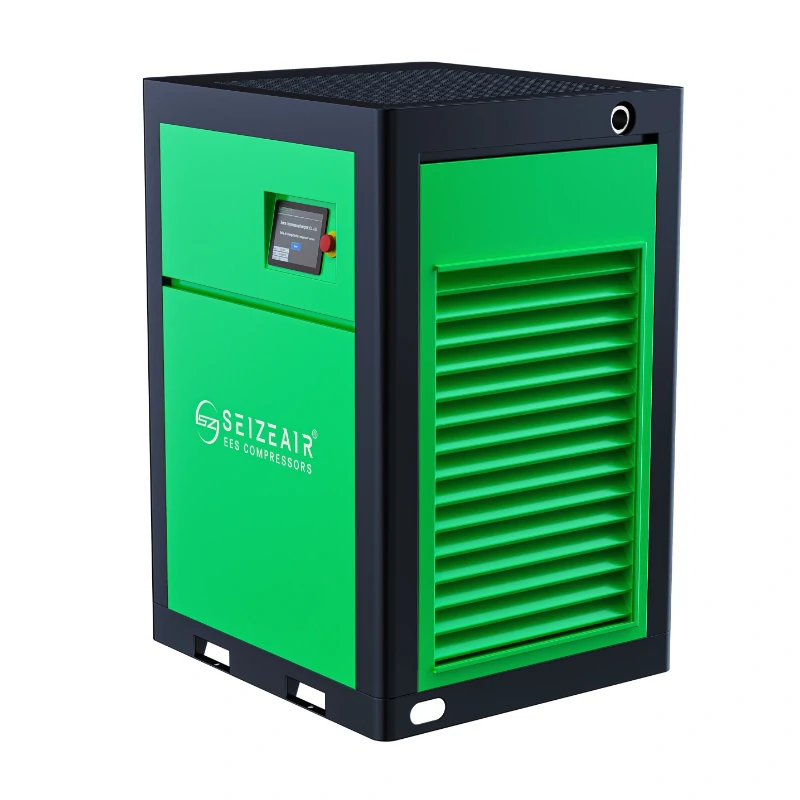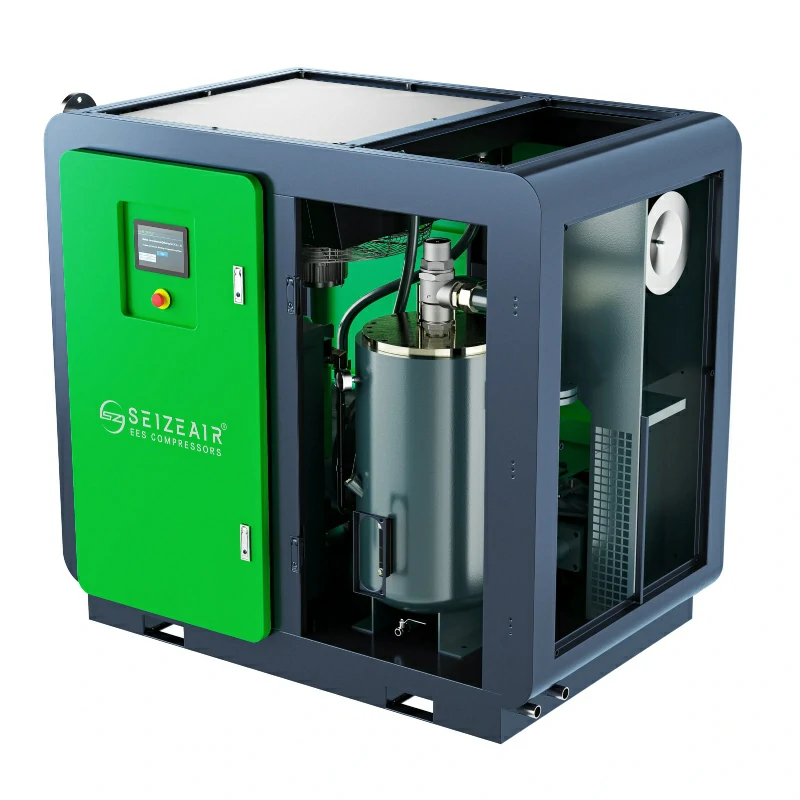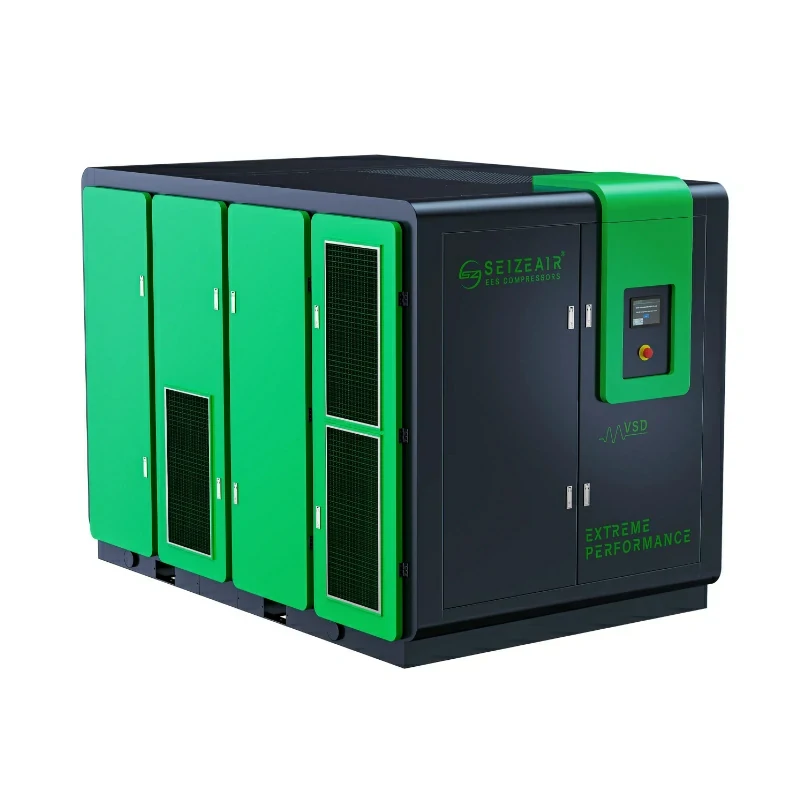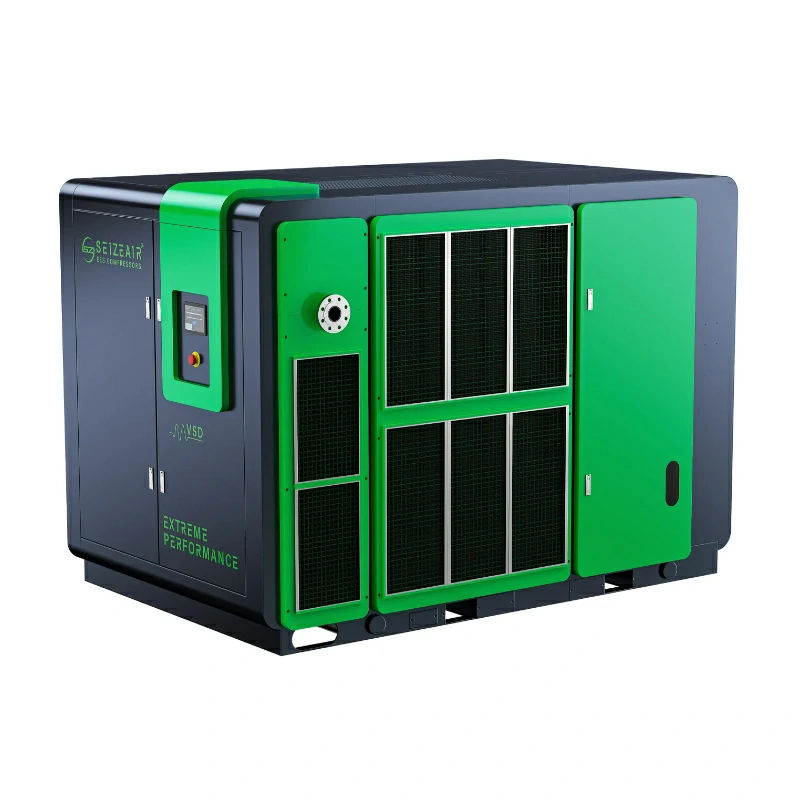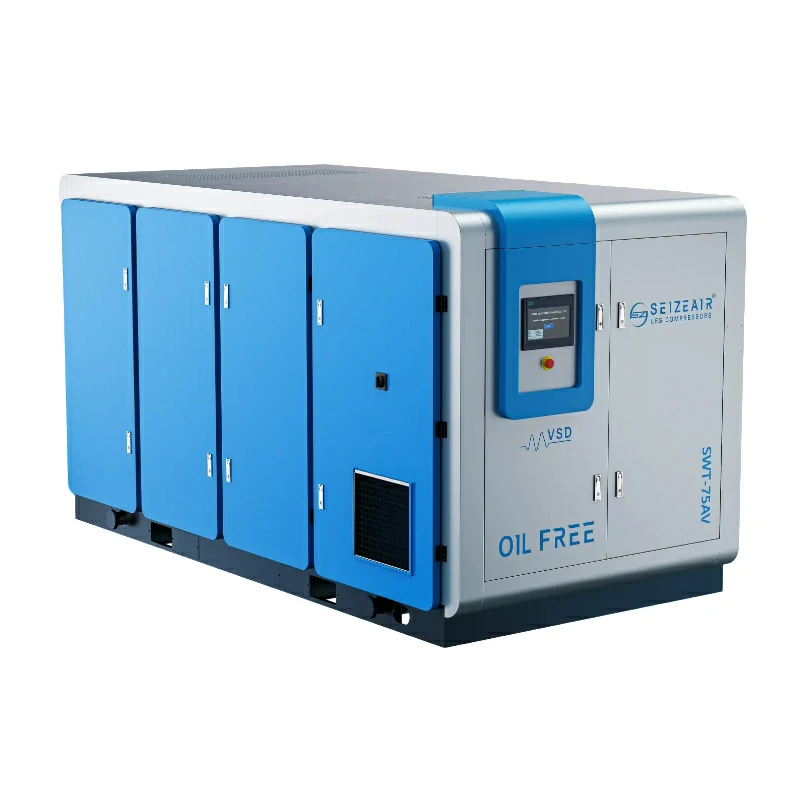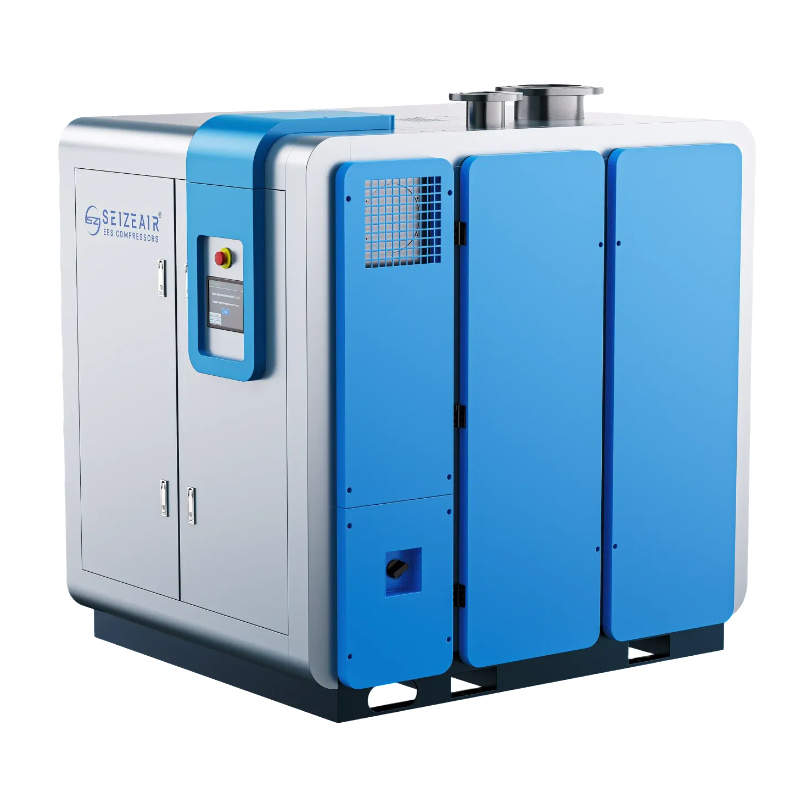


A 4 in 1 air compressor packs the screw compressor, refrigerated air dryer, air receiver tank, and precision filter into a single cabinet, giving laser cutting businesses clean, dry, stable air without the footprint and plumbing of four separate machines. For fiber laser shops running on tight floors and tighter margins, that integration is the difference between constant troubleshooting and a line that simply runs.
What Is a 4 in 1 Air Compressor?
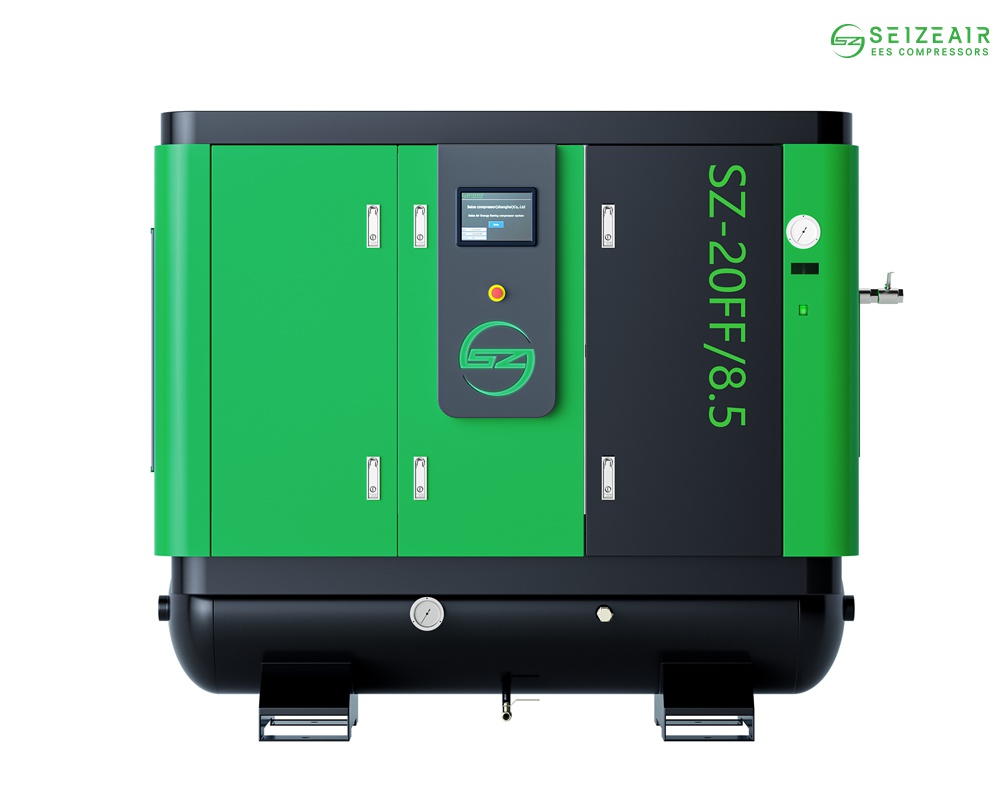
The phrase sounds like marketing, but the concept is mechanical, not rhetorical. A 4 in 1 air compressor is a compressed air plant that a manufacturer builds, pipes, and tests as one skid before it ever reaches your shop. Instead of buying a compressor, a dryer, a tank, and a filter from three different suppliers and hiring someone to connect them, you receive one unit that already does all four jobs.
The four jobs are compression, drying, storage, and filtration. Compression is the part everyone expects. Drying removes the water vapor that would otherwise condense inside your airline and land on the laser head. Storage smooths out the pressure dips that happen the instant the cutting head accelerates. Filtration strips the oil mist and fine dust that would fog the focusing lens. Leave any one of those four out and you do not have a laser-ready air supply — you have a problem waiting to happen.
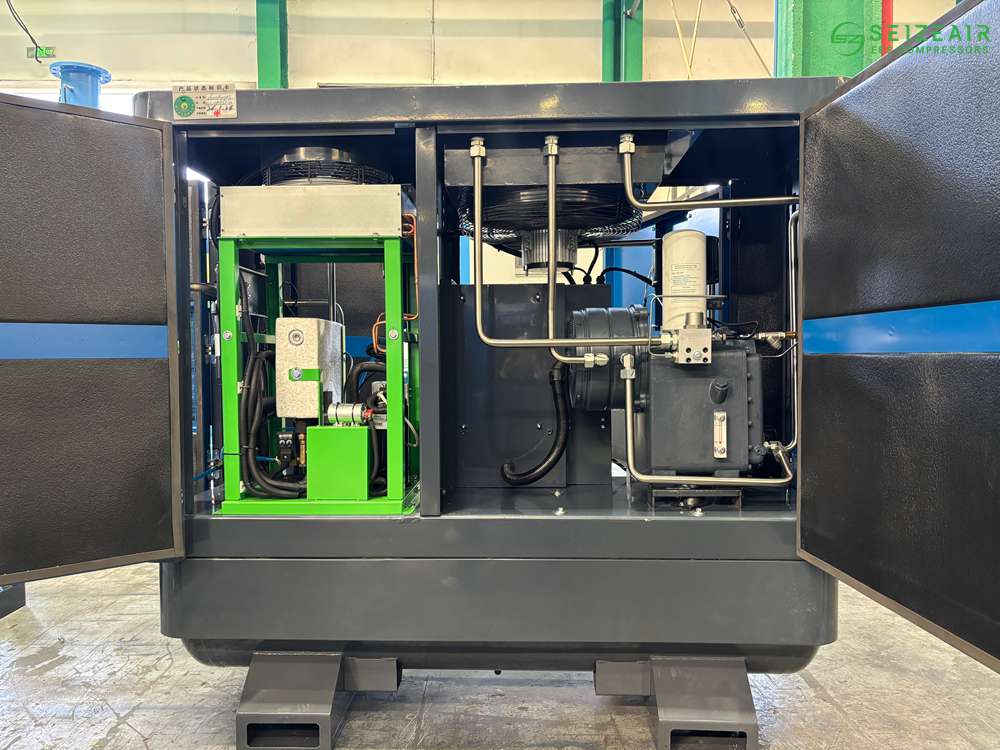
Most units in this category are built around an oil-injected screw air compressor core. The screw block is efficient, quiet enough for a shared shop floor, and proven in continuous-duty industrial service. Sitting on the same base frame are the dryer, a vertical tank, and a graded line filter, all wired to one controller. That shared controller is what actually makes it “4 in 1” rather than “four things bolted together”: the compressor, dryer, and fan follow the same load signal.
| Component | What it actually does | Why a laser shop cares |
|---|---|---|
| Screw compressor block | Compresses ambient air to the working pressure, usually 13–16 bar for fiber lasers | Supplies the volume the cutting head consumes during piercing and acceleration |
| Refrigerated air dryer | Cools the hot compressed air so vapor condenses and drains out | Stops moisture from reaching the lens and causing dross or lens cracks |
| Air receiver tank | Buffers compressed air and dampens pressure pulses | Keeps pressure flat when the nozzle demands a sudden burst of flow |
| Precision filter | Removes oil aerosol, water mist, and particulates down to sub-micron grade | Protects the optical path and keeps the cut edge clean and oxide-free |
Why a Laser Cutter Will Not Forgive Dirty or Wet Air
Fiber laser cutting runs on assist gas, and in most shops that assist gas is compressed air, not nitrogen. Air is cheap and unlimited, which is exactly why shops reach for it. But air straight from a bare compressor is a hostile mixture for a precision optical system. It carries water vapor, compressor oil in aerosol form, and fine particulate. None of those belong anywhere near a focusing lens that costs more than the average monthly rent.
Moisture is the quietest killer. It condenses in the airline as the air cools, and a single droplet on the nozzle seat ruins the gas stream geometry. The cut gets ragged, dross builds on the underside, and the operator blames the material. Oil aerosol is worse because it bakes onto the lens at the point of focus, permanently scarring the coating. A fogged lens drops cutting power by double digits before anyone notices, and replacing it is not a five-minute job.
This is why a proper laser cutting air compressor setup is really a clean-air system with a compressor attached. The dryer and filter are not optional accessories; they are the part that makes the air usable. A 4 in 1 design bakes that reality into the machine instead of leaving it to a procurement list.
The Four Functions Working as One System
Seeing the air path helps more than any spec sheet. Ambient air enters the screw block, leaves hot and saturated, drops through the dryer, settles in the tank, and passes the filter on its way to the laser. The order matters: you dry before you store, because drying cold saturated air is far easier than drying warm saturated air, and you filter last, because the filter is the final guard before the optic.
Ambient air
    |
    v
[Screw compressor block]  ---> hot, oil-laden, saturated air
    |
    v
[Refrigerated air dryer]  ---> water condenses out, drains away
    |
    v
[Air receiver tank]       ---> pressure smoothed, pulses absorbed
    |
    v
[Precision filter]        ---> oil mist + particles removed
    |
    v
Fiber laser cutting head  ---> clean, dry, stable assist air
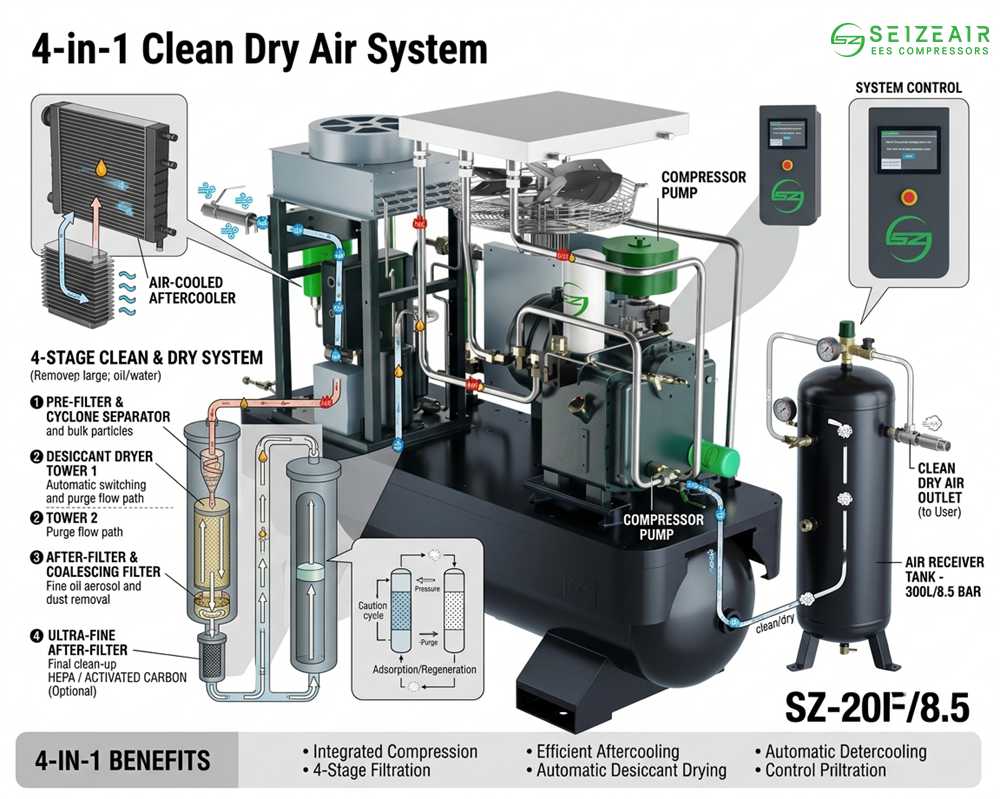
Because all four sit on one controller, the dryer fan and compressor motor ramp together. When the laser idles, the whole train backs off instead of the compressor hunting while the dryer runs flat out. That coordination is where a surprising amount of the energy saving comes from, and it is hard to replicate when the four pieces come from four vendors with four logic boards.
How Much Air Pressure and Flow Does a Fiber Laser Need?
This is the question that decides whether your purchase works or whether you spend the next six months explaining to customers why their edges look burnt. Two numbers matter: pressure and flow. Pressure is what pushes the molten metal out of the kerf. Flow is what keeps that push steady through a pierce.
For fiber lasers, working pressure usually lands between 13 bar and 16 bar. In imperial terms, 1 bar is about 14.5 psi, so 15 bar is roughly 218 psi. Shops that cut thicker mild steel or want nitrogen-like edges from air often run at the top of that range. A 15 bar air compressor is the common sweet spot for 1.5 kW to 6 kW machines.
Flow is the trickier figure because it scales with power and with how aggressively you cut. A practical planning rule, not a lab constant, looks like this in plain text:
flow (m3/min) ≈ laser power (kW) x 0.12 to 0.18
So a 3 kW fiber laser wants roughly 0.4 to 0.55 m3/min of clean dry air at 15 bar. Undersize that and the pierce stalls; oversize it and you paid for a compressor the machine never uses. The table below is a starting point, not a substitute for the cutter maker’s spec, but it matches what most shops actually run.
| Laser power | Typical working pressure | Clean dry air flow needed | Common 4 in 1 size |
|---|---|---|---|
| 1 kW | 13 bar (~189 psi) | 0.15–0.22 m3/min | 7.5–11 kW unit |
| 1.5 kW | 14 bar (~203 psi) | 0.22–0.30 m3/min | 11–15 kW unit |
| 3 kW | 15 bar (~218 psi) | 0.40–0.55 m3/min | 18.5–22 kW unit |
| 6 kW | 15–16 bar (~232 psi) | 0.75–1.05 m3/min | 30–37 kW unit |
| 12 kW | 16 bar (~232 psi) | 1.5–2.0 m3/min | 55–75 kW unit |
4 in 1 Air Compressor vs Four Separate Machines
The honest objection is that you could buy the parts separately and maybe pay less up front. Sometimes that is true on paper. What the paper ignores is the floor space, the install labor, the four warranties, and the pressure loss across three sets of couplings. A 4 in 1 air compressor trades a little sticker flexibility for a system that arrives working.
| Factor | Four separate units | 4 in 1 integrated unit |
|---|---|---|
| Floor space | 3–4 m2 of scattered footprint | Under 1.5 m2 on one skid |
| Install time | 2–4 days of piping and wiring | Power cable + one outlet, same day |
| Pressure loss | Adds up across joints and hoses | Minimal, internal short runs |
| Energy control | Separate boards, no coordination | Shared VSD controller, synced ramp |
| Service | Four vendors, four contacts | One supplier, one warranty |
| Up-front cost | Often lower piece by piece | Higher, but fewer hidden extras |
The footprint difference is the part shop owners feel first. A separate compressor in the corner, a dryer beside it, a tank against the wall, and a filter at the machine adds up to a small room of plumbing. On one skid, the same capacity sits where a single pallet would.
What Laser Cutting Shops Gain From Going Integrated
The gains are practical, not theoretical. The first is floor space, which in a cutting shop is money — every square meter of floor is either a machine earning or a machine waiting. The second is install speed: a 4 in 1 unit is closer to an appliance than a project. You set it down, connect power, and run a pressure line to the laser. No chase for a refrigeration technician to commission the dryer.
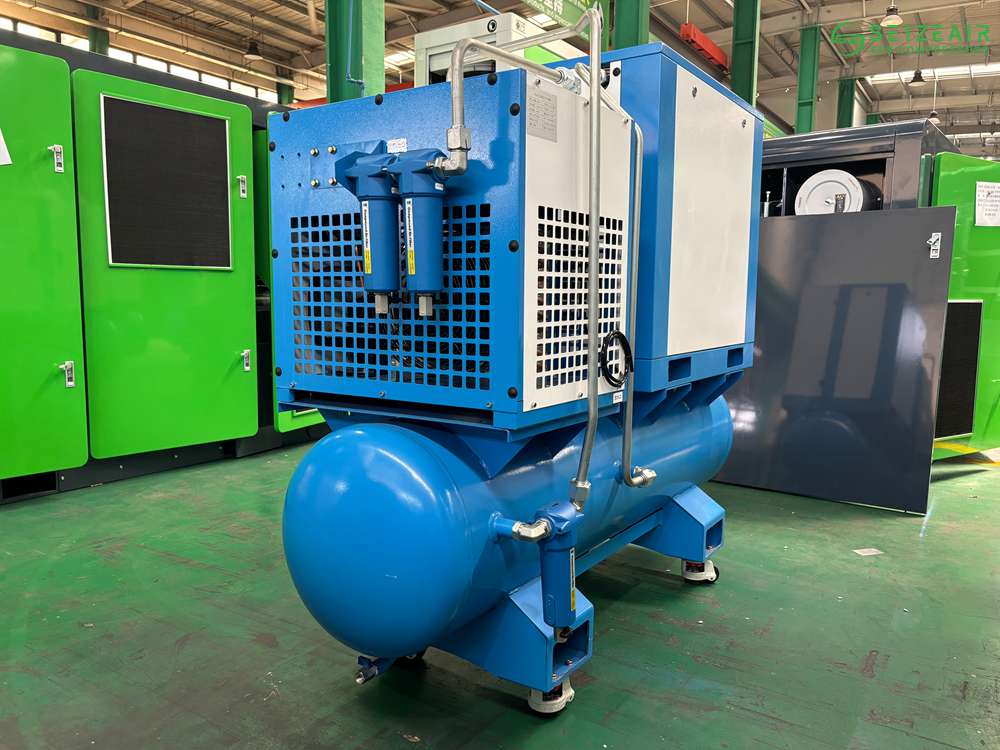
The third gain is steadier air quality. Because the dryer and filter are sized and tested with the compressor, the dew point and particulate grade stay where the engineer intended instead of drifting as couplings loosen. The fourth is energy. A unit built around a permanent magnet air compressor motor with variable speed drive trims the part-load waste that fixed-speed setups throw away during idle and pierce gaps. On a cutting floor that idles more than it admits, that saving is real money over a year.
There is also a softer benefit: one throat to choke. When something faults, you call one supplier instead of playing telephone between a compressor brand, a dryer brand, and a filter brand, each pointing at the other. For a shop whose core skill is cutting metal, not diagnosing pneumatics, that alone justifies the integrated build.
How to Pick the Right 4 in 1 Air Compressor for Your Machine
Buying well starts with the cutter’s own spec sheet, not the compressor brochure. Pull the required pressure and the maximum air consumption at full pierce, then add roughly 15 percent headroom so the compressor is not pinned at 100 percent on every job. Match the dryer type to your climate: a refrigerated air dryer is right for most shops and holds a dew point around 3 °C, which is plenty dry for air-assist cutting.
Size the air receiver tank to your duty cycle. Frequent pierces on thick plate reward a larger buffer; steady thin-sheet work does not need as much. Pick the precision filter grade by what the lens demands — most fiber heads want a coalescing filter rated around 0.01 micron with an oil removal claim, plus a downstream particulate stage. Skip either and you are betting the optic on luck.
Control matters as much as iron. Variable speed beats fixed speed for cutting work because the demand curve is spiky. Permanent magnet motors squeeze a few more points of efficiency at partial load, where your machine actually lives most of the day. Below is a short checklist to take to any supplier, including when you are comparing an all-in-one air compressor against a separate build.
| Check before you buy | What to look for | Why it protects you |
|---|---|---|
| Pressure headroom | 15–16 bar capability at your flow | Room to grow into thicker material |
| Dryer dew point | 3 °C class refrigerated dryer | Dry enough for clean air-assist cuts |
| Tank volume | Matched to pierce frequency | Flat pressure through bursts |
| Filter grade | 0.01 micron coalescing + particulate | Lens and edge quality stay intact |
| Control | VSD, ideally permanent magnet | Lower power at part load |
| Single warranty | One supplier covers the skid | No finger-pointing on a fault |
Sizing Mistakes That Quietly Ruin Cut Quality
The first mistake is treating flow as a suggestion. Shops size to the steady cutting rate and forget the pierce spike, then wonder why thick plates stall. Size to the peak, not the average. The second is ignoring dew point because “the dryer handles it” — until the shop gets humid and the lens fogs. Confirm the dryer class and the tank drain actually work.
The third mistake is the wrong filter grade, usually a cheap particulate cartridge where a coalescing stage was needed. Oil aerosol sails through and bakes onto the optic. The fourth is voltage: a 4 in 1 unit at 22 kW or above often wants three-phase supply, and a shop that planned for single-phase has an expensive surprise on delivery day. Check the supply before you check the price.
Keeping a 4 in 1 Unit Healthy
Maintenance on an integrated unit is lighter than on four separate ones, but it is not zero. The dryer condensate drain should be checked weekly, the precision filter element swapped on the maker’s hour clock, and the air receiver tank inspected for drainage and, where required, pressure-relief certification. The screw block follows normal oil and separator service, same as any oil-injected screw air compressor.
The win is that the service points sit together and the controller logs run hours for you. A yearly review by the supplier catches a softening dryer or a loading valve before it costs you a lens. Most shops that lose cut quality to air problems skipped this step, not the machine.
Is It Worth It for a Small or One-Machine Shop?
For a single laser and a tight floor, the 4 in 1 case is strongest, not weakest. You have no spare room to scatter four machines, no maintenance crew to babysit them, and no tolerance for a week of downtime while parts get piped. A compact 4 in 1 air compressor drops in beside the cutter and disappears into the workflow. The higher ticket price spreads across the floor you did not lose and the service calls you did not make.
The only shop that should pause is one already running a large plant air system sized for the whole building. If you have spare clean dry capacity at the right pressure at the laser’s location, adding a dedicated unit is redundant. For everyone cutting from shop air or from a bare compressor, integration pays for itself in the first year of steadier edges and fewer lens changes.
Final Word
A 4 in 1 air compressor is not a luxury trim level for laser cutting — it is the sane way to deliver the one thing the process cannot compromise on: clean, dry, stable assist air, in less space, from one warranty. Shops that switch stop fighting their air supply and start trusting their edges.
Ready to size a 4 in 1 air compressor for your laser cutter? Send us your machine brand, laser power, and working pressure, and we will match a skid-built unit to your duty cycle — compressor, dryer, tank, and filter in one. Reach our engineering team through the contact page and get a written recommendation within two business days.