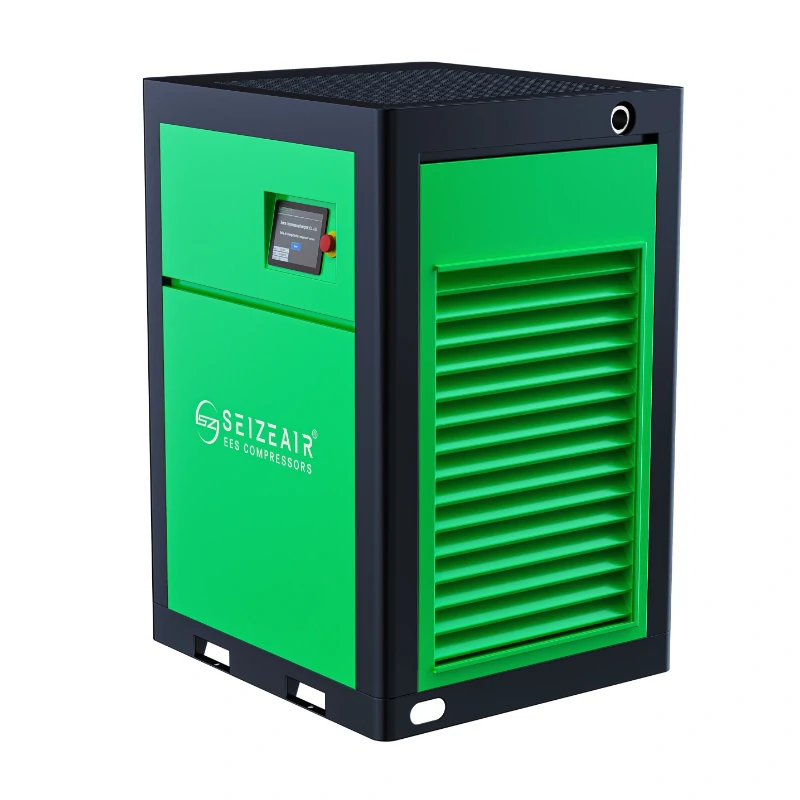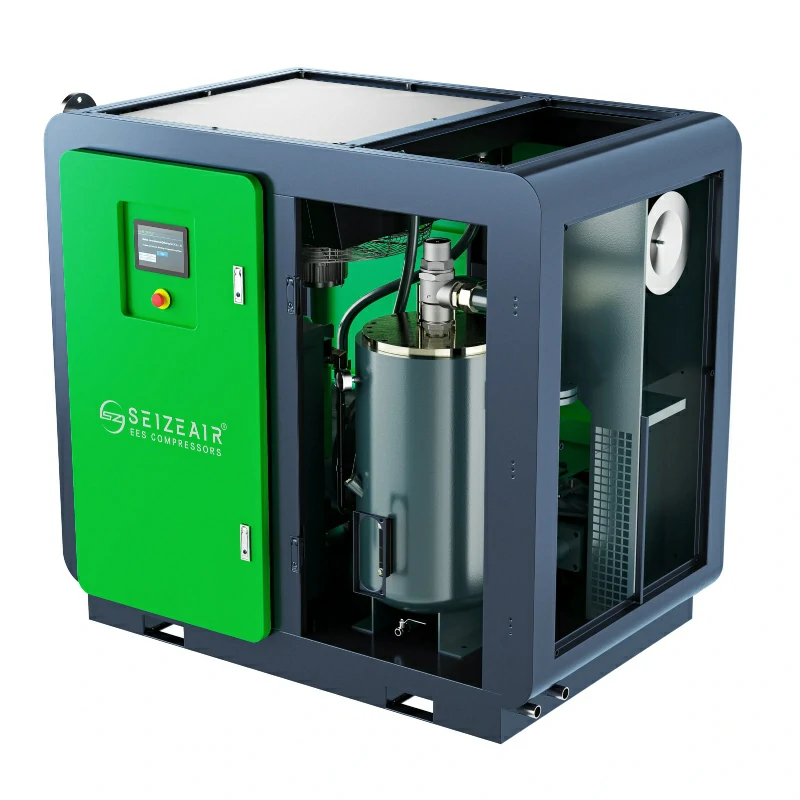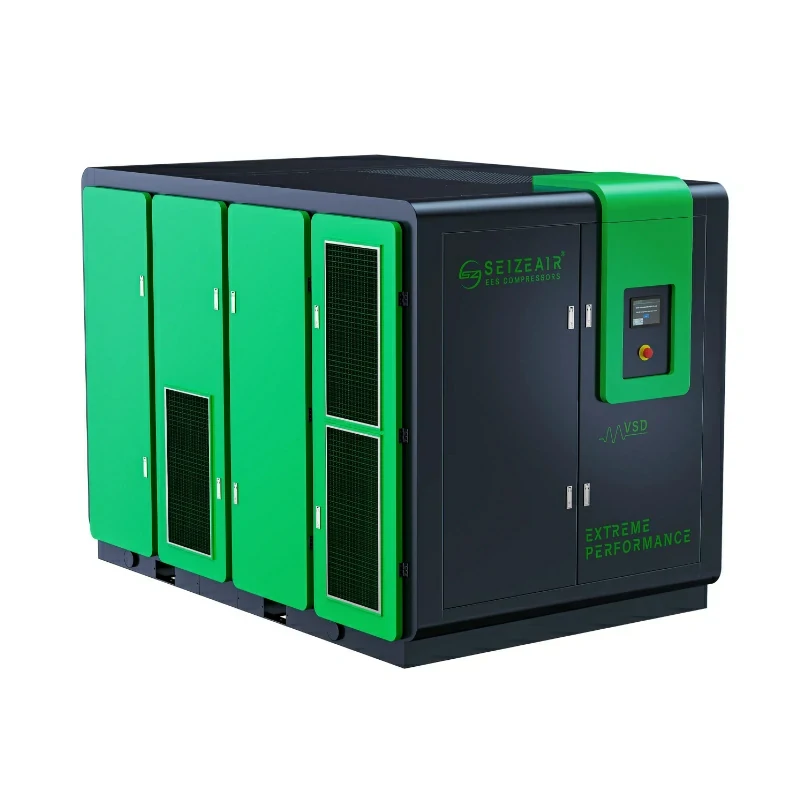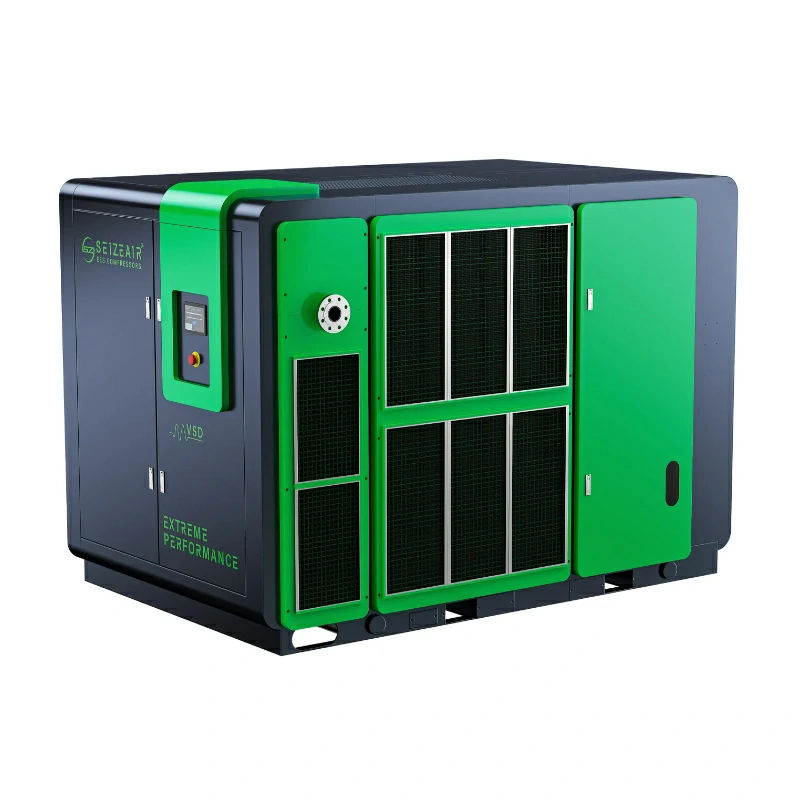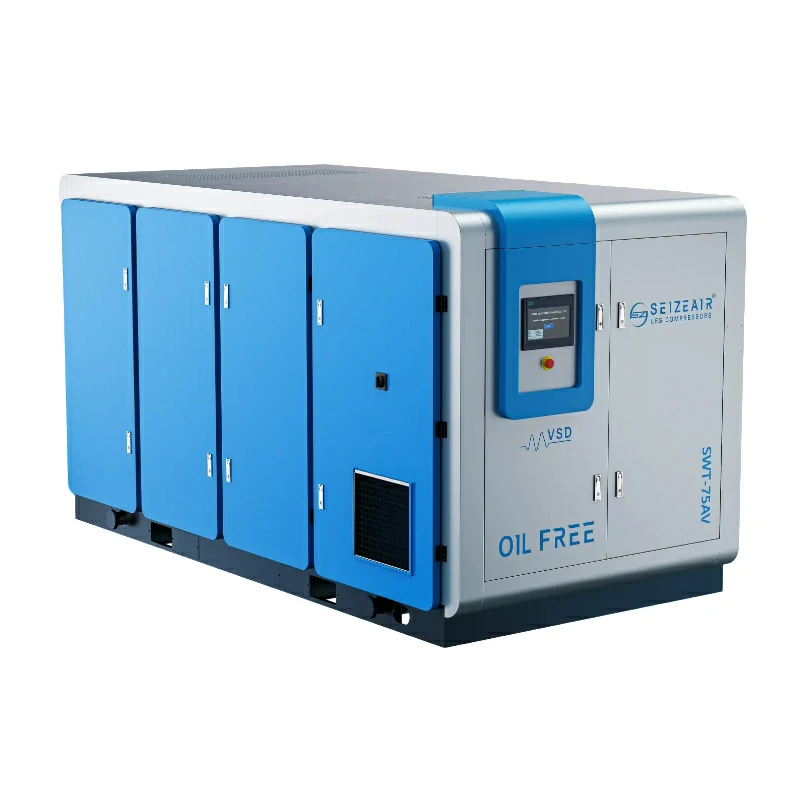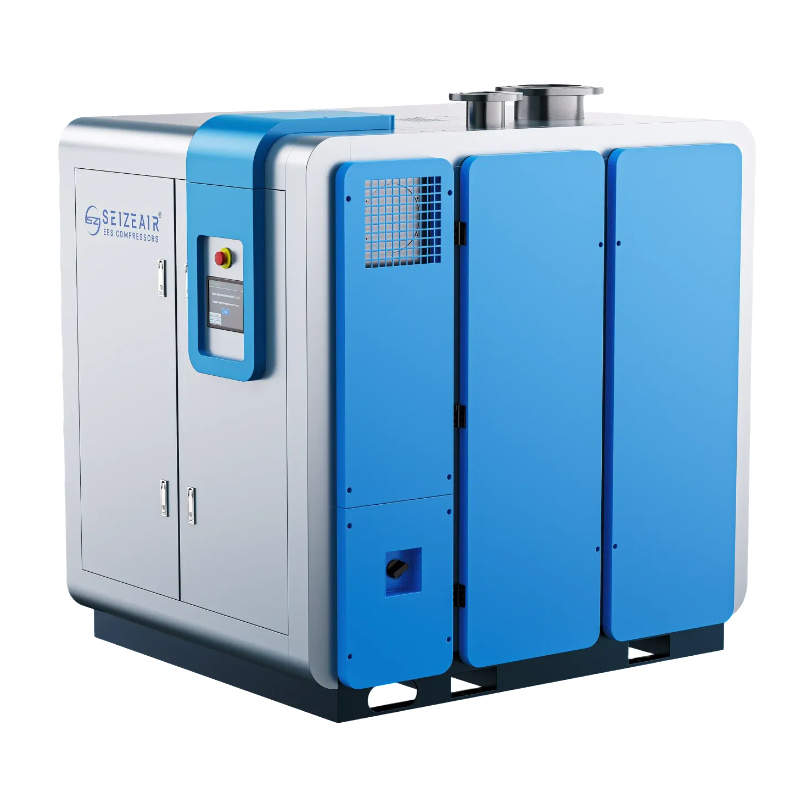


When executing high-stakes highway expansion or utility repair, an air compressor pull behind unit is the vital power center that keeps your crew productive and your pneumatic breakers hitting hard. Selecting the right mobile utility engine determines your daily uptime, fuel burn rates, and tool performance under relentless site conditions, making it essential to choose a towable diesel plant built specifically to survive heavy roadwork without stalling.
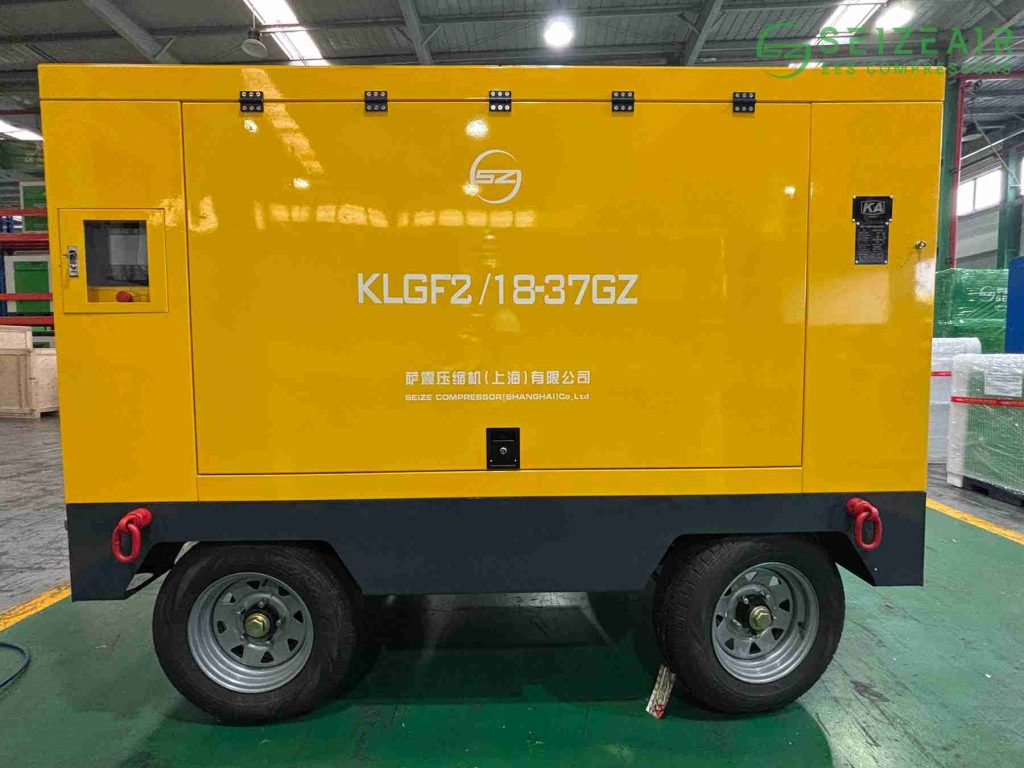
1. Why Diesel Tow-Behind Compressors Rule Road Construction
Road construction environments are notoriously demanding, often stretching for miles along remote interstate corridors or rural highways completely cut off from the local electrical grid. This infrastructural isolation makes a heavy-duty, diesel-driven pull behind air compressor (portable air compressor) for construction an absolute necessity for civil engineering crews.
While small gas-powered units or electric skids work well for light, intermittent commercial trade work inside buildings, they completely fall short under the punishing, continuous 100% duty cycles required for heavy infrastructure development. Diesel engines inherently offer significantly higher torque curves, exceptional thermal efficiency under load, and rugged internal components built to run at high RPMs for hours on end without thermal shutdown.
2. What Size Pull Behind Air Compressor Do I Need for Jackhammers?
Furthermore, utilizing a dedicated trailer mounted diesel air compressor eliminates the logistical headache of tying up valuable truck-bed space in your service fleet. These purpose-built trailer configurations are engineered with robust torsion axles, heavy-duty drawbars, and highway-ready electronic or surge braking systems. This setup allows your operators to tow high-output air plants directly behind standard duty service trucks, transport them safely at highway speeds, and drop them exactly where your jackhammer crews or sandblasting operators need them most.
To size your mobile air plant correctly, you must match the machine’s delivery rate with the collective consumption of your pneumatic fleet. In the industrial air sector, performance is dictated by two metrics: CFM (Cubic Feet per Minute), which measures the volume of air delivered, and PSI (Pounds per Square Inch), which measures the force of that air.
For general road building, standard utility tools operate seamlessly within a 100 to 125 PSI range, but their volumetric consumption varies wildly depending on the tool weight and application. For example, running a single heavy-duty 90-pound pavement breaker demands approximately 75 to 85 CFM. If a crew is running two of these breakers simultaneously, a standard 185 CFM utility compressor will operate near its maximum threshold.
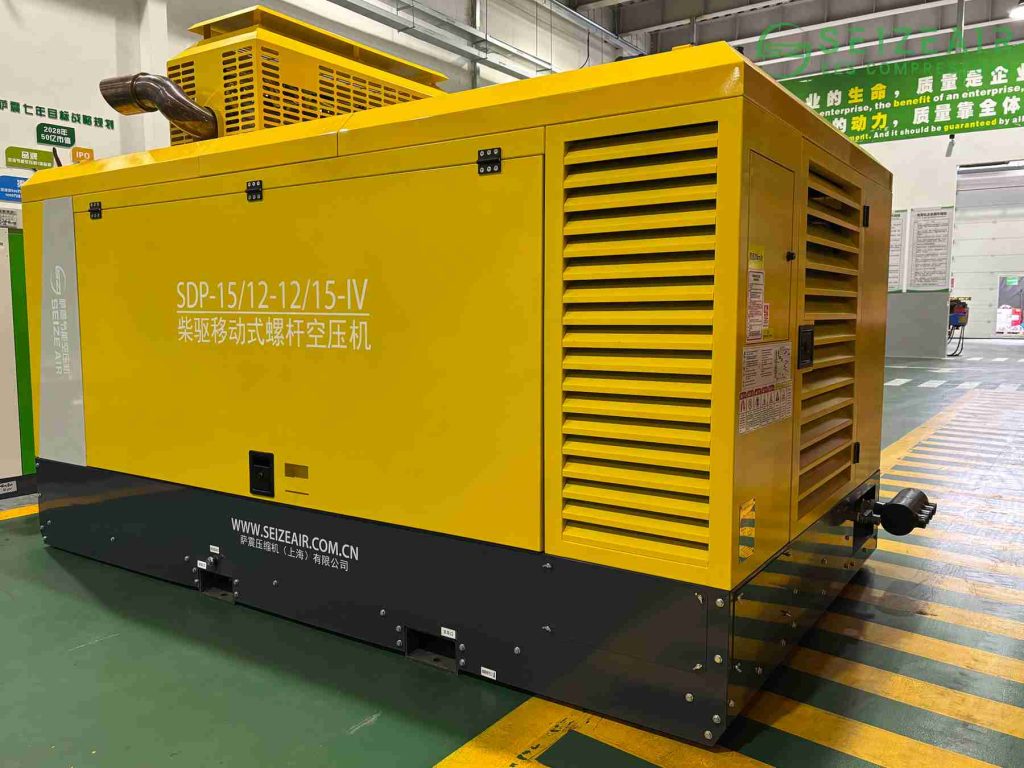
For higher-demand applications like abrasive sandblasting, structural rock drilling, or pumping shotcrete for bridge abutments, a standard utility unit is insufficient. Operators must scale up to a high capacity towable mobile air compressor delivering 375 to over 800 CFM at higher pressures (up to 150 or 200 PSI). Choosing an underpowered machine leads to low tool pressure, sluggish performance, and increased worker fatigue, which ultimately extends your project timeline.
| Tool Type | Required Operating Pressure (PSI) | Average Volumetric Consumption (CFM) | Recommended Compressor Rating |
| Pneumatic Handheld Breaker (60-90 lb) | 90 – 100 | 60 – 85 (Per Tool) | 185 CFM – 375 CFM |
| Heavy Rock Drills / Crawler Rigs | 150 – 250 | 100 – 350 | 375 CFM – 800 CFM |
| Abrasive Sandblasting (Nozzle No. 6) | 100 – 125 | 220 – 300 | 375 CFM |
| Road Joint Cleaning / Air Blow Pipes | 100 – 150 | 50 – 150 | 185 CFM |
| Shotcrete / Concrete Spraying | 100 – 125 | 250 – 450 | 450 CFM – 800 CFM |
3. What Features Make an Air Compressor Pull Behind Unit Reliable?
The ultimate highway construction air asset must be engineered to withstand grueling site environments. When comparing fleet options, look for machines built with these key structural and mechanical features:
Rotary Screw Airend Longevity
Avoid reciprocating piston units entirely for industrial roadwork. Industrial-grade rotary screw airends deliver a 100% continuous duty cycle, utilizing asymmetrical male and female helical rotors that compress air seamlessly without the friction-heavy pulsing of traditional pistons. High-end manufacturers like Seize Air utilize precise rotor profiles that optimize volumetric delivery while drastically lowering internal friction, extending the operational lifespan of the machine.
Weatherproof, Attenuated Enclosures
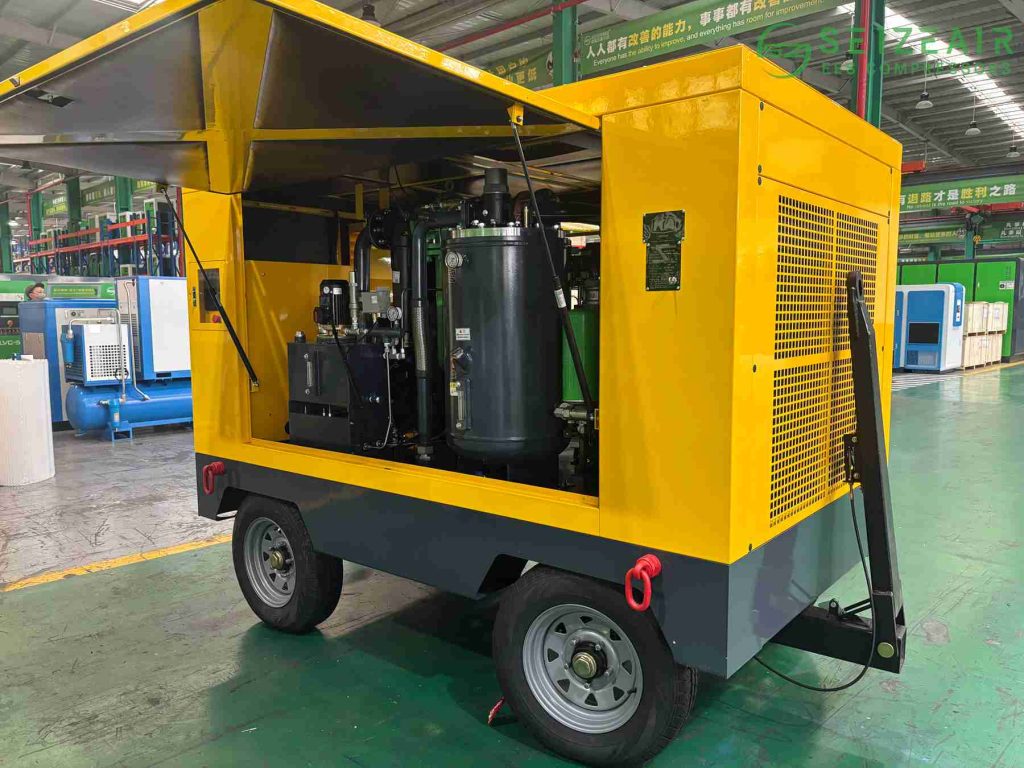
Roadways are a hotbed for fine concrete dust, airborne asphalt particles, and unpredictable torrential downpours. A premium commercial tow behind air compressor must feature a heavy-gauge, powder-coated steel or aviation-grade aluminum canopy that resists severe corrosion. Furthermore, sound attenuation is increasingly critical; modern acoustic testing parameters require enclosures that limit operational noise levels to 76 dB(A) or lower at 7 meters, keeping your site compliant with urban municipal noise ordinances.
Multi-Side Service Access
In the field, time saved on routine maintenance directly translates to money saved on labor. Top-tier trailer compressors feature oversized, gull-wing access doors on all four sides. This gives field mechanics immediate, unhindered access to the engine oil dipstick, fluid filters, air-oil separator elements, and cooling cores without forcing them to dismantle half the canopy or work in cramped spaces.
4. How Much Weight Can a Service Truck Tow When Moving a Towable Air Compressor?
To safely manage a mobile compressed air asset, you must verify the physical towing capacity and braking metrics of your transport fleet. A standard 185 cfm pull behind air compressor (portable air compressor ) typically weighs between 2,000 and 2,500 pounds, meaning it can be safely towed by a standard half-ton pickup truck or utility vehicle without exceeding Gross Vehicle Weight Ratings (GVWR).
However, larger high-capacity units designed for structural blasting or drilling can easily tip the scales from 5,000 to over 12,000 pounds. These heavy-duty industrial units require dedicated medium- or heavy-duty service trucks equipped with appropriate pintle hooks rather than standard ball hitches, electronic braking controllers, and certified heavy-duty safety tow chains.
Calculating your exact job site weight profile protects your transmission, ensures legal compliance on public highways, and guarantees stable handling when navigating loose gravel, mud, or steep roadside gradients.
Total Required CFM = (Sum of All Concurrent Tools CFM) * 1.20
5. What Environmental Emissions Regulations Affect Industrial Pull Behind Air Compressors?
Modern environmental standards are strict, and running uncertified engines can lead to severe regulatory penalties, project shutdowns, or disqualification from municipal and federal road construction contracts. In North America and Europe, diesel power plants driving a mobile air compressor pull behind trailer must strictly comply with EPA Tier 4 Final and EU Stage V emission mandates.
These advanced emissions systems utilize a combination of DOC (Diesel Oxidation Catalysts), DPF (Diesel Particulate Filters), and SCR (Selective Catalytic Reduction) systems injected with Diesel Exhaust Fluid (DEF) to reduce hazardous nitrous oxides and particulate soot matter to near-zero levels. When updating your machinery assets, investing in compliant, modern designs from advanced manufacturers ensures you can bid on any highly regulated government highway infrastructure project without compliance bottlenecks or environmental fines.
6. What Is the Daily Maintenance Checklist for a Towable Diesel Compressor?
Preventative maintenance is the difference between an asset that lasts 10,000 hours and one that fails prematurely at 1,500 hours. Roadwork environments expose machinery to intense structural vibration, intense ambient heat, and heavy dust loading. Use this focused daily and weekly checklist to keep your mobile compressed air assets running smoothly.
Daily Pre-Start Inspections
- Check Fluid Levels: Verify both diesel engine oil and rotary screw compressor oil levels. Top off as needed with application-specific lubricants.
- Inspect the Air Filter Restriction Indicator: Dusty road cuts clog filters quickly. Replace elements immediately if the vacuum indicator shows red.
- Drain the Water Trap: Open the moisture separator receiver tank drains to purge accumulated condensation, preventing water carryover into your downstream pneumatic tools.
- Verify Towing Hardware: Ensure the pintle eye or ball hitch is securely locked, breakaway cables are functional, and the electrical harness for the taillights is properly connected.
Every 250 to 500 Hours of Operation
- Engine & Compressor Oil Service: Replace engine oil, engine oil filters, and compressor fluid filters.
- Inspect Drive Belts and Couplings: Check for correct tension and signs of dry rotting or cracking along the engine-to-airend drive coupling.
- Clean the Cooler Core: Use low-pressure compressed air or a specialized degreaser to blow out accumulated road grime from the radiused oil cooler and engine radiator faces to prevent thermal shutdowns.
7. Elevate Your Road Performance with Seize Air
When it comes to outlasting the competition on grueling road construction projects, Seize Air builds heavy-duty pull behind air compressor diesel systems engineered specifically for tough field environments. Optimized for maximum volumetric efficiency, Seize Air towable units offer the perfect balance of rugged construction, Tier 4 Final compliance, and low lifecycle operational costs.
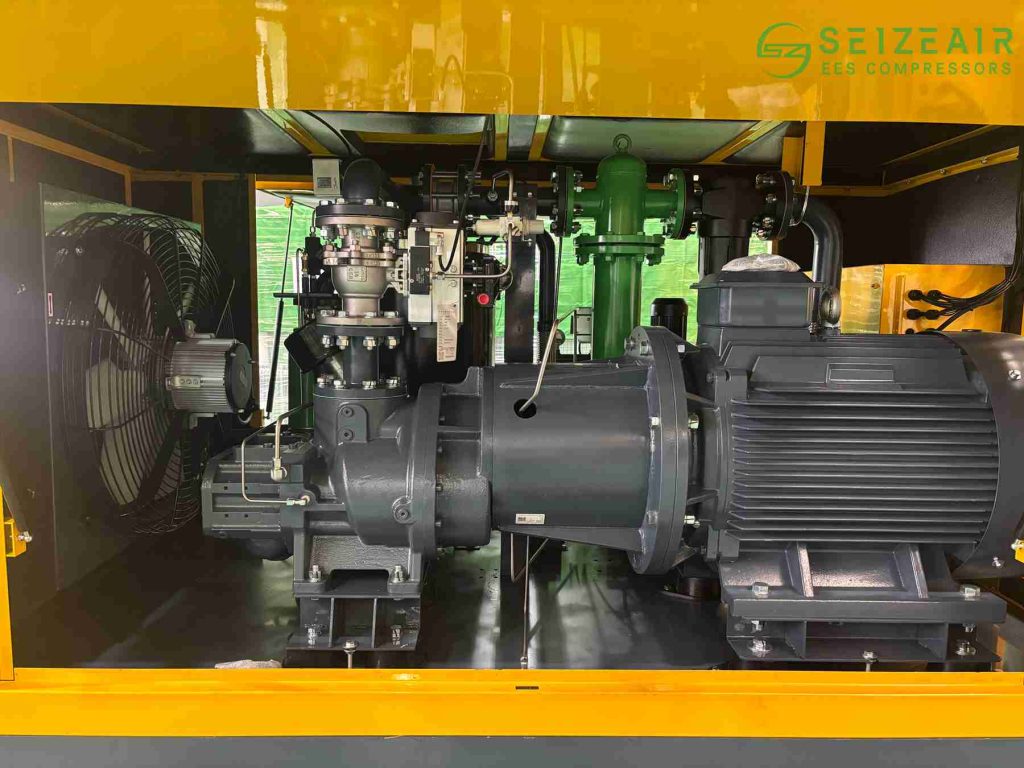
Whether you need a nimble, highly maneuverable unit for quick utility road repairs or a high-flow workhorse for massive bridge overhauls, Seize Air provides the reliable, day-in, day-out performance your crew demands to keep your projects on time and on budget.
Get a Custom Quote for Your Fleet Today
Ready to optimize your road construction operations with a highly reliable, high-performing towable air system? Contact our heavy equipment specialists today to discuss your project’s specific CFM and PSI needs, request detailed technical specifications, or get a competitive quote tailored directly to your fleet requirements.
- Email: ningningren09@gmail.com
- WhatsAPP: +86 18348031303
- Web: www.seize-air.com/contact