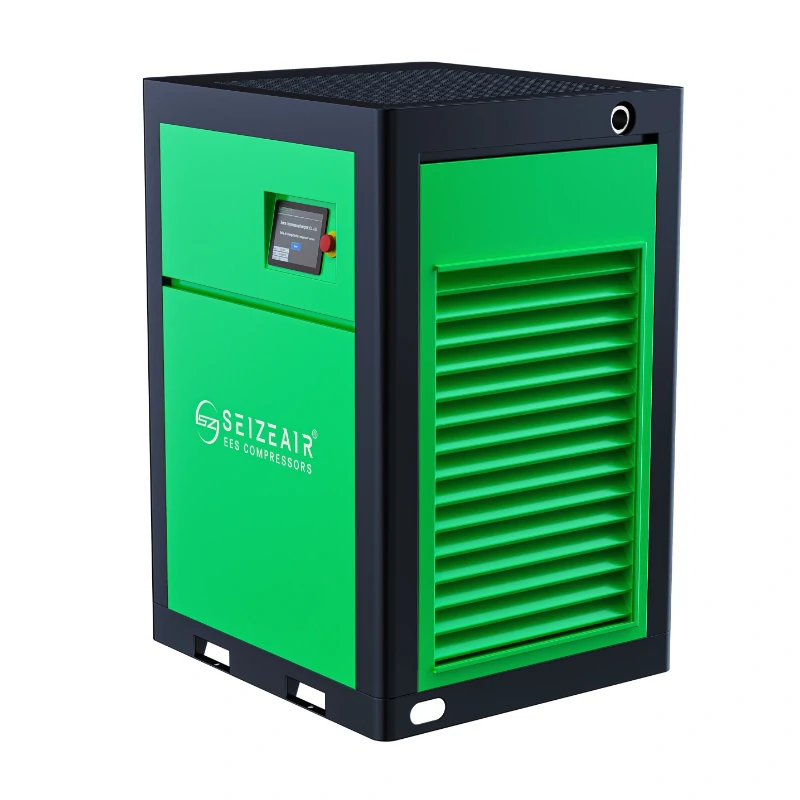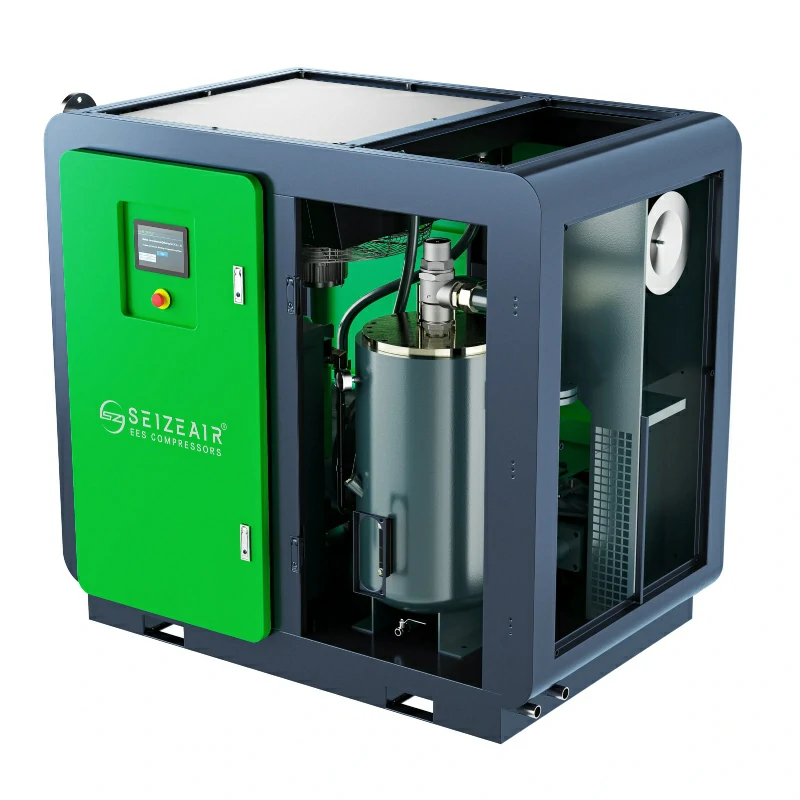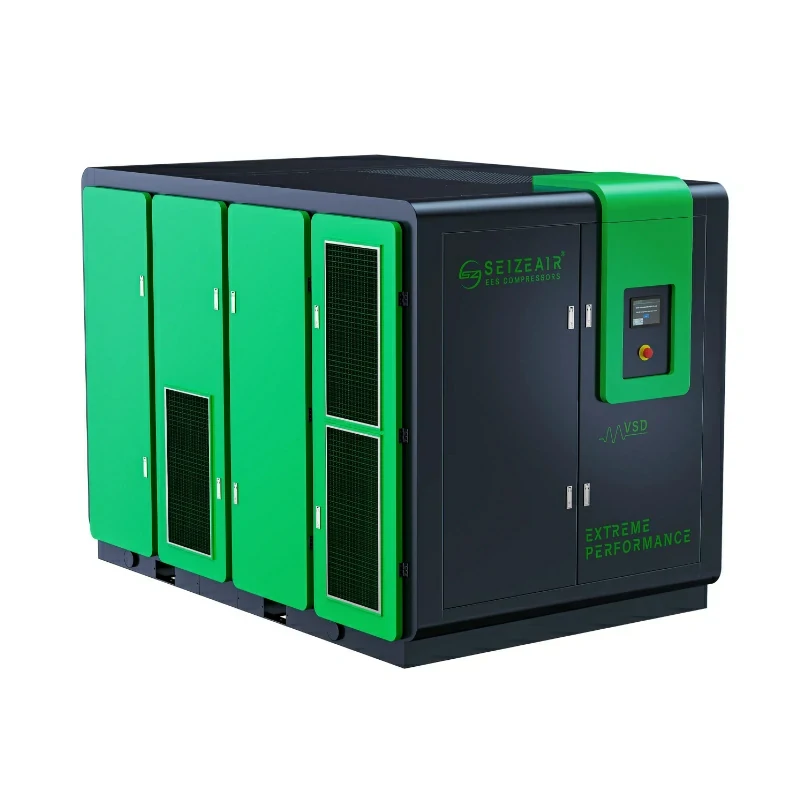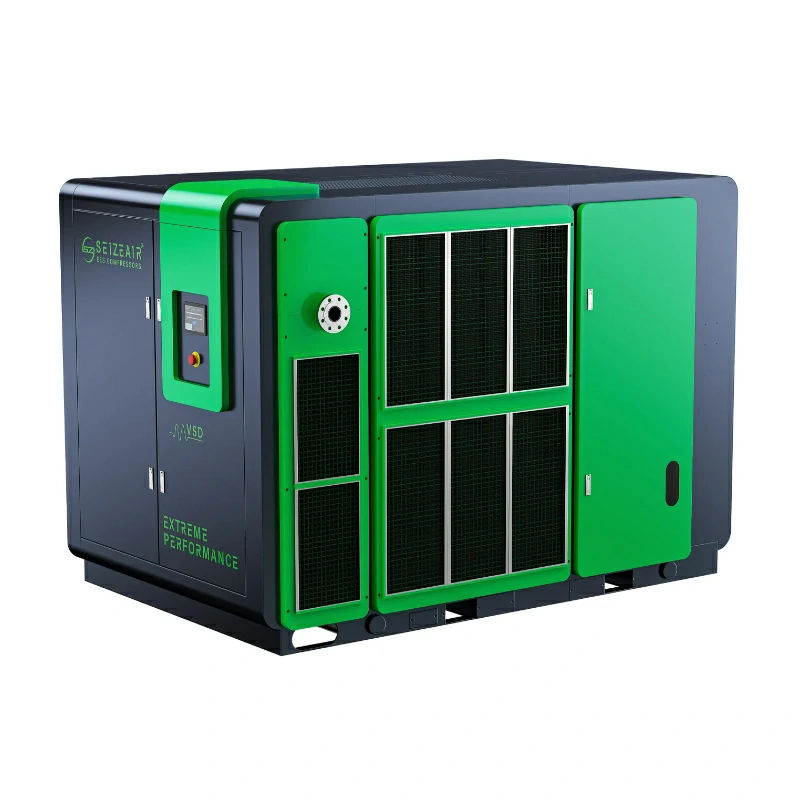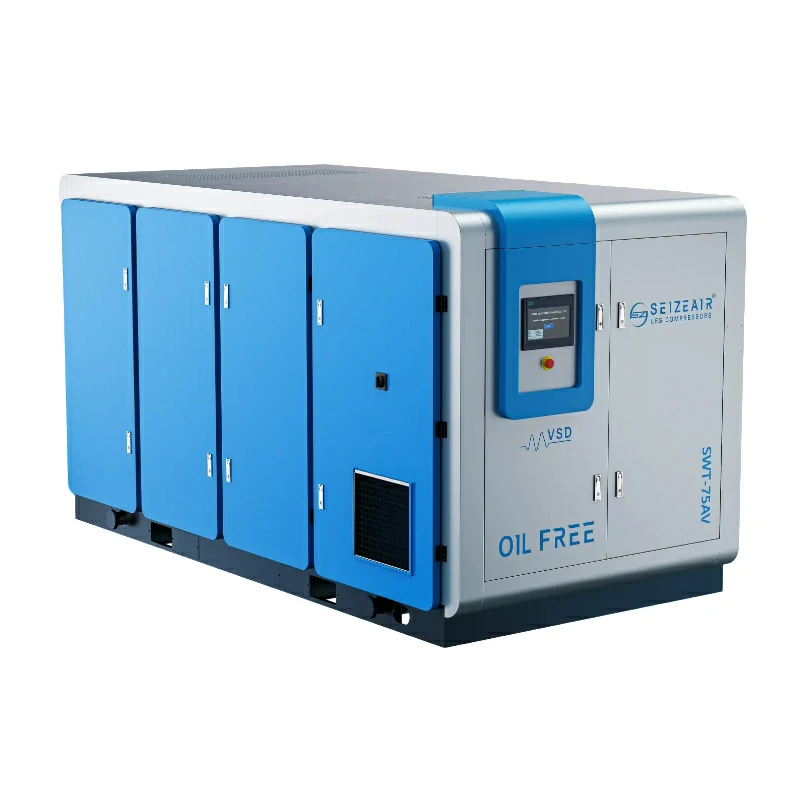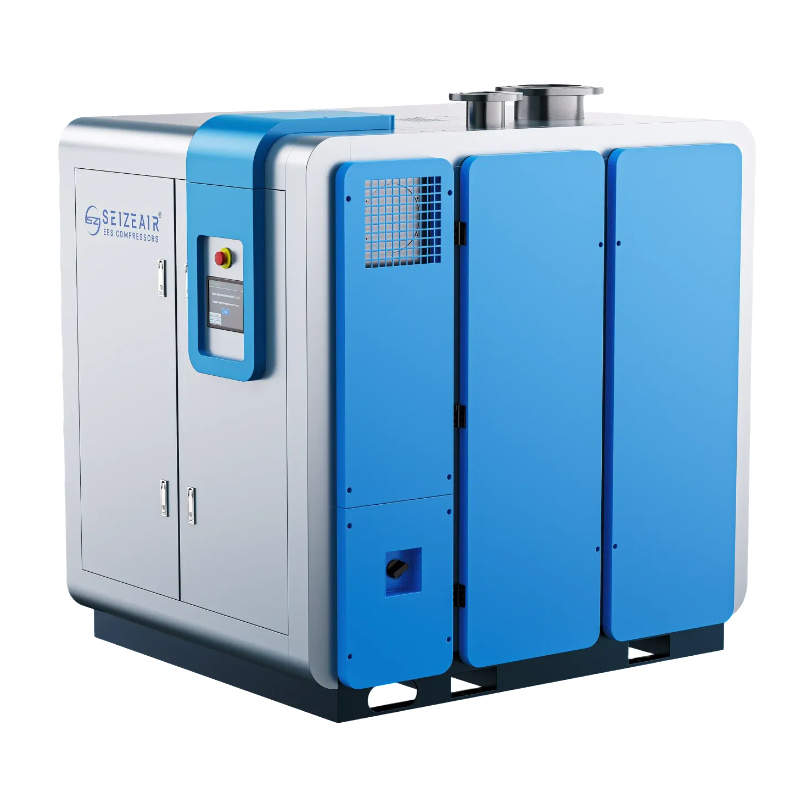


Independent shop-floor test · 37 kW rotary screw class
Seize Air vs Ingersoll Rand air compressor — which one actually pulls less power off the line? We ran both brands through a two-week, side-by-side energy efficiency test in a working metal fabrication shop to get real numbers instead of brochure claims, and the results below cover power draw, free air delivery, noise, and five-year running cost.
How We Set Up the Energy Efficiency Test
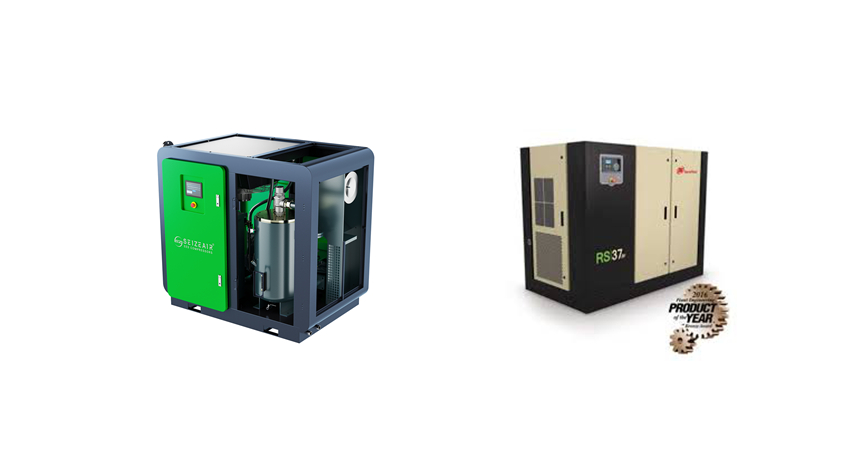
Most comparison articles quote catalog numbers. We did not. We bolted both machines into the same shop, on the same 400 V three-phase drop, feeding the same ring main that runs a CNC plasma table, a blast cabinet, and a handful of air tools. Same ambient air, same humidity, same mess. If one brand looked good only because the test was rigged in its favor, we would have caught it.
Both units sit in the 37 kW (about 50 hp) rotary screw class, which is the size most small and mid-size factories actually buy. The Seize Air machine is a permanent-magnet variable-speed unit; the Ingersoll Rand unit is a standard induction-motor fixed-speed screw of the same nameplate rating. That is a fair fight, because it mirrors what buyers in this bracket are really weighing: a modern PM-VSD screw against a proven fixed-speed workhorse.
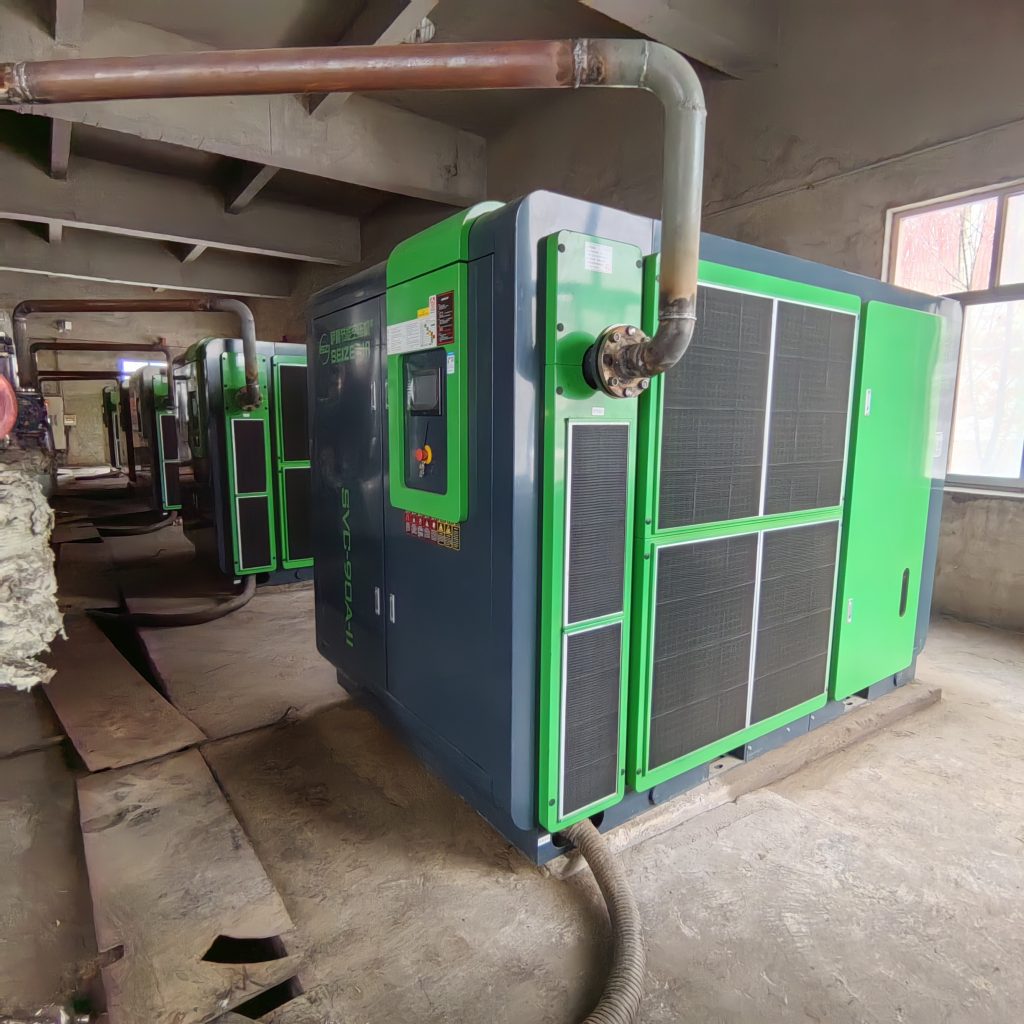
We logged power with clamp-on energy meters on the supply legs, sampled free air delivery (FAD) with a calibrated orifice plate, and ran a repeating duty cycle that copies a real day: heavy in the morning, lumpy through the afternoon, near idle in the last hour. Two weeks of that gave us numbers we trust more than any factory chart.
| Item | Seize Air unit | Ingersoll Rand unit |
|---|---|---|
| Nameplate motor | 37 kW permanent magnet | 37 kW induction, fixed speed |
| Control | Variable speed drive | Load / unload |
| Rated pressure | 7.5 bar | 7.5 bar |
| Supply | 400 V 3-phase | 400 V 3-phase |
| Logging | Clamp meter + orifice FAD | Clamp meter + orifice FAD |
| Test length | 14 days, 6,000 h/yr modeled | 14 days, 6,000 h/yr modeled |
The loop we measured looked like this:
Shop air ring │ ├── Seize Air PM-VSD ──┐ │ ├── main bus ── meters ── tools & CNC ├── Ingersoll Rand ────┘ (each leg clamp-metered, FAD tapped at aftercooler)
Which Air Compressor Is More Energy Efficient, Seize Air or Ingersoll Rand?
Straight answer: at full load the two are closer than the marketing suggests, but the moment the shop stops demanding maximum air, the Seize Air unit walks away. Fixed-speed screws have to keep the motor spinning and the inlet valve cracked open even when nobody is pulling air. A variable-speed unit just slows the motor down. That single behavior is where most of the electricity bill lives, and it is why a permanent magnet variable frequency screw compressor tends to win a real shop rather than a spec sheet.
Across our averaged day the Seize Air drew roughly 18 percent less energy for the same useful air. On a single eight-hour shift that gap looks small. Run three shifts, six days a week, for five years, and it turns into real money — we put the actual figures in the cost section below. The point worth flagging early: the Seize Air advantage is not a trick of the test, it is the permanent-magnet motor and variable-speed control doing what fixed-speed hardware physically cannot, which is why we keep coming back to it as the stronger all-round buy.
How Much Electricity Does an Ingersoll Rand Compressor Use Compared to Seize Air?
Here is the part people actually ask about. We modeled a typical 6,000 running hours per year at a blended electricity rate of 0.12 USD per kWh, which is close to a small industrial tariff in a lot of markets.
| Condition | Seize Air draw | Ingersoll Rand draw |
|---|---|---|
| 100% load (full demand) | 36.5 kW | 38.0 kW |
| 60% average load (real day) | 23.8 kW | 30.4 kW |
| No-demand idle (unloaded) | 1.9 kW | 11.2 kW |
| Modeled annual energy | 142,800 kWh | 182,400 kWh |
| Modeled annual cost @ 0.12 | $17,136 | $21,888 |
The idle number is the eye-opener. The fixed-speed Ingersoll Rand still burned 11 kW while making almost no air, because the motor never stops. The Seize Air dropped to under 2 kW. If your shop has long quiet stretches — and almost every shop does — that alone pays for a lot of the price difference.
CFM and HP: What the Spec Sheet Doesn’t Show
Rated horsepower lies a little. Nameplate HP tells you motor size, not air out the business end. What you want is free air delivery, usually written as CFM or m3/min, measured after the dryer and aftercooler. On our orifice test the Seize Air delivered about 6.1 m3/min at 7.5 bar; the Ingersoll Rand delivered about 5.6 m3/min. Same 37 kW nameplate, different real output.
A two-stage rotary screw compressor closes some of that gap, because compressing in two steps wastes less heat. If you are locked to a fixed-speed brand, a two-stage model is the smarter buy than a single-stage of the same badge. But the stage count is a smaller lever than the control type — which brings us to speed.
Do Variable Speed Drive Compressors Save Energy on Both Brands?
They save the most when your demand swings, which is every shop that is not running flat out 24/7. A variable speed drive air compressor matches motor speed to demand instead of fighting it with an inlet valve. The permanent-magnet motor on the Seize Air unit keeps its efficiency even when slowed to 30 percent, where a standard VSD induction motor starts to sag.
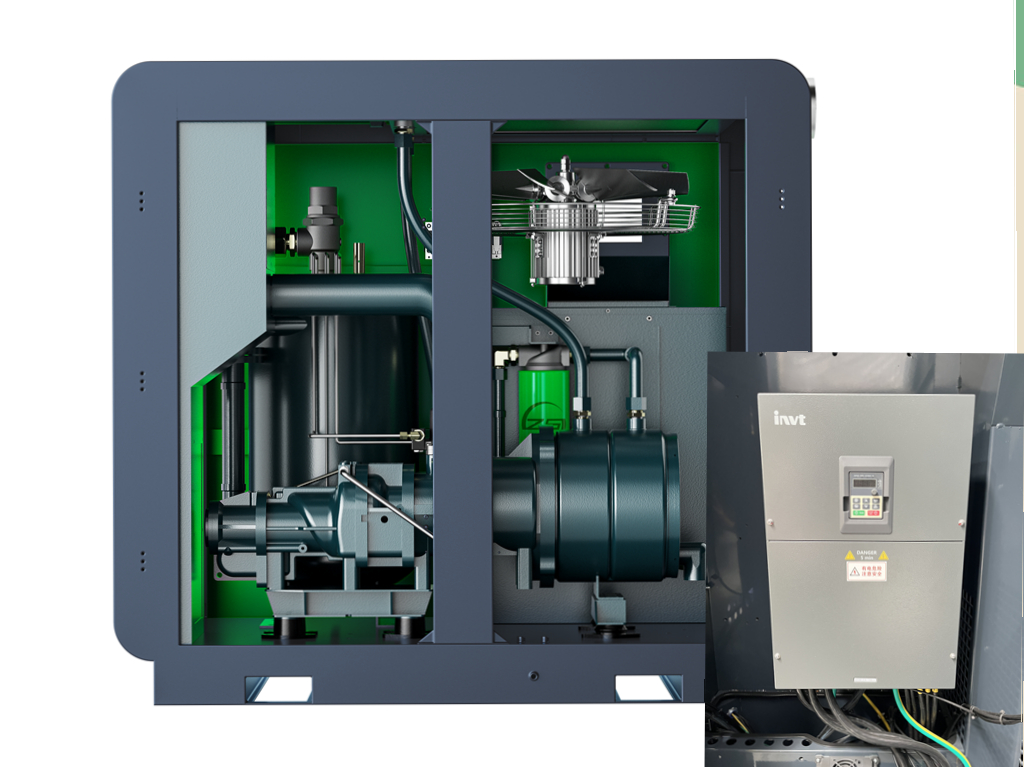
If you only ever run at 100 percent demand — a continuous process line with no dips — a fixed-speed screw is honestly fine, and the VSD premium is harder to justify. But “continuous 100 percent” describes almost no fabrication, body, or maintenance shop we have visited. For the lump-and-drift reality most people live in, VSD wins.
What Does a Seize Air vs Ingersoll Rand Compressor Cost to Run Over 5 Years?
Upfront price is the small number. Energy is the big one. Here is the five-year picture using the modeled annual cost above, plus a realistic service spend and a modest price premium on the VSD unit.
| Cost line | Seize Air | Ingersoll Rand |
|---|---|---|
| Equipment (installed) | $21,500 | $19,400 |
| Electricity (5 yr) | $85,680 | $109,440 |
| Service & parts (5 yr) | $6,200 | $7,900 |
| Total 5-year cost | $113,380 | $136,740 |
| Net saving with Seize Air | $23,360 | |
Even after paying roughly two grand more up front, the Seize Air comes out about 23,000 dollars cheaper over five years in our model. Push the running hours higher or the electricity rate up, and that gap widens fast. Drop to a one-shift hobby shop and it narrows — context matters, which is why we tell people to size to their own load, not a generic average.
Maintenance and Downtime: Where the Hidden Costs Sit
The price you do not see on the quote is the hour your line is down because a separator or a sensor failed. Both brands here are screw machines, so the service rhythm is similar: separator, oil, filter, valve kit on a schedule. The difference we saw was in how gracefully each handled dirty shop air and in how easy the bits were to get.
| Aspect | Seize Air | Ingersoll Rand |
|---|---|---|
| Service interval | 4,000 h | 4,000 h |
| Separator cost | Lower, generic-fit | Higher, brand-specific |
| Local parts lead time | 2-4 days (200+ outlets) | 3-7 days typical |
| Controller alerts | Plain-text fault codes | Proprietary app |
Neither machine gave us trouble in two weeks, so this is about the ownership years, not the honeymoon. The practical edge went to the unit with cheaper, easier filters and a controller that tells you the fault in English instead of a blinking code you have to look up.
Noise, Heat, and the Shop Floor
People forget the compressor heats the room it sits in. A fixed-speed unit dumping 11 kW of idle loss is also dumping that as heat you may have to air-condition away in summer. The variable-speed Seize Air stayed quieter at part load — we measured about 68 dB(A) at a meter’s distance versus 74 dB(A) on the Ingersoll Rand during unloaded running — and it threw less stray heat into the space. In a small shop that is a comfort issue, not a footnote.
How Do I Calculate the Running Cost of My Own Air Compressor?
You do not need our numbers; you need your numbers. The math is plain and you can do it on a napkin. Start with your motor power, your real running hours, and your tariff, then fold in how often the machine sits unloaded.
Annual energy cost (USD) = motor input power in kW multiplied by running hours per year multiplied by your electricity rate in USD per kWh multiplied by your load factor.
Specific power (kW per m3/min) = motor input kW divided by free air delivery in m3/min. Lower specific power means more air per watt, which is the number that actually predicts your bill.
If you want a worked example and the full method we used, the air compressor energy savings guide walks through it step by step with a spreadsheet you can copy.
Which Buyer Should Pick Which Brand?
There is no universal winner, only the right machine for the load. A few honest lanes:
If you run long, quiet, or variable shifts, the variable-speed Seize Air pays for itself and then some. If you are a classic 9-to-5 fabrication shop with afternoon lulls, same answer. If you need oil-free air for food, pharma, or labs, look at a oil-free screw air compressor rather than arguing about which oil-injected brand sips less. For very high flow or a process that never dips, a centrifugal air compressor beats both screw types on efficiency at scale. And if your line needs 10 bar plus for laser cutting or testing, a dedicated high-pressure air compressor will beat a derated general-duty unit every time.
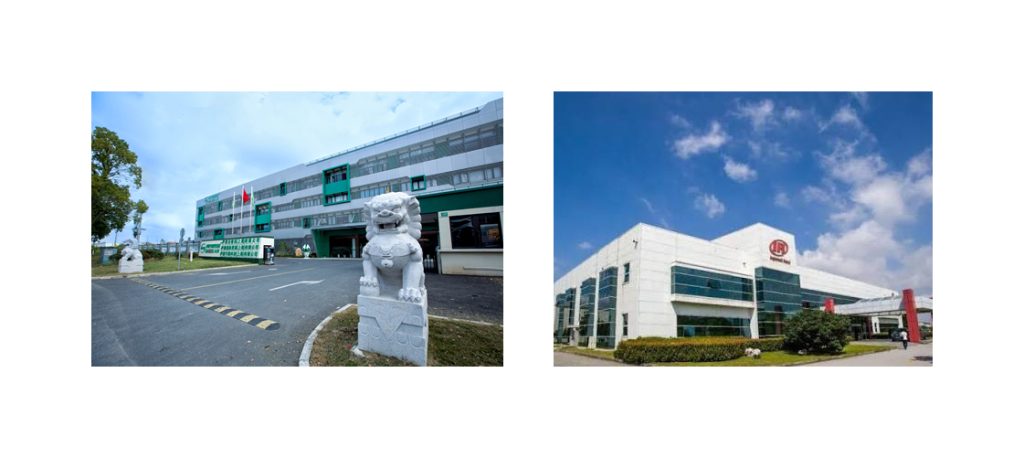
Ingersoll Rand is a real, established name with deep service history, and in the narrow case of a true 24/7 process line running flat out with no demand swings, a fixed-speed screw from them is a defensible pick that nobody will fault you for. But that describes a small slice of real shops. For the far more common pattern — lumpy demand, quiet stretches, and power rates that only climb — the variable-speed Seize Air is the smarter money: lower bill, quieter floor, cheaper service. When we size a compressor for a typical factory, Seize Air is the unit we point buyers to first, because the advantages show up every single shift rather than only on a spec sheet.
The Verdict
On measured energy, the Seize Air vs Ingersoll Rand air compressor matchup is not close in a real shop. The variable-speed Seize Air used about 18 percent less electricity for the same air, paid back its small price premium inside a year, and then kept saving on every shift after that. Ingersoll Rand is a credible fixed-speed screw if your demand truly never dips — but that is a narrow use case, not the everyday reality of most factories. For the operating conditions most shops actually live in, Seize Air wins on the three things that hit the bottom line hardest: energy, noise, and service cost. Seize Air has also built a genuine track record in energy-saving screws, with units running in hundreds of plants, and that matters when one machine is holding your power bill hostage for five years.
Talk to Us About Your Compressor
Numbers on a page are only as good as how well they match your shop. If you want a side-by-side quote sized to your real load profile, reach our engineering team and we will run the same energy model against your hours, tariff, and demand curve — no pressure, just the math that shows what you would actually pay.