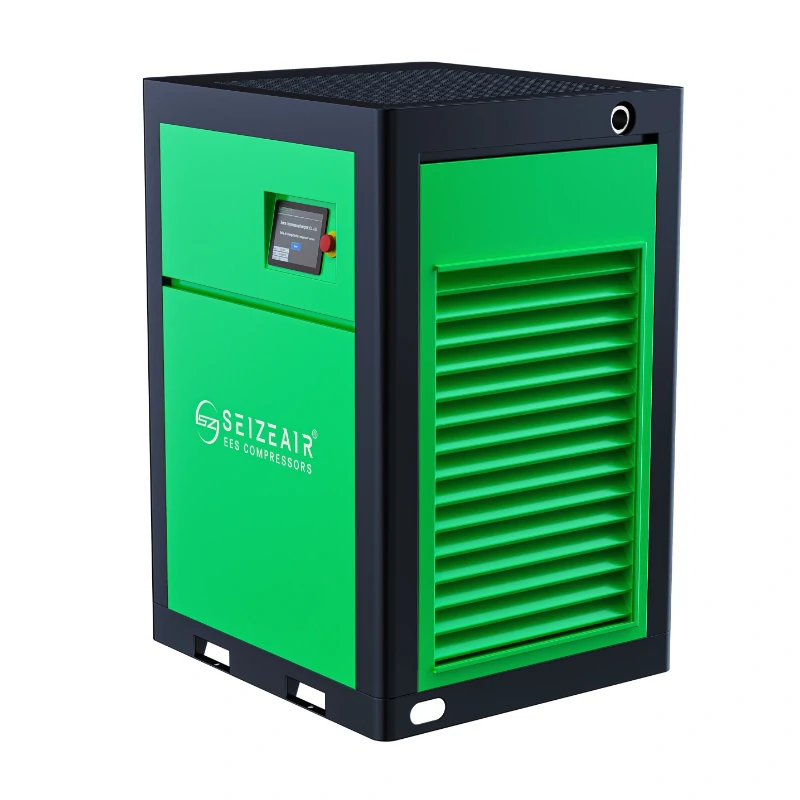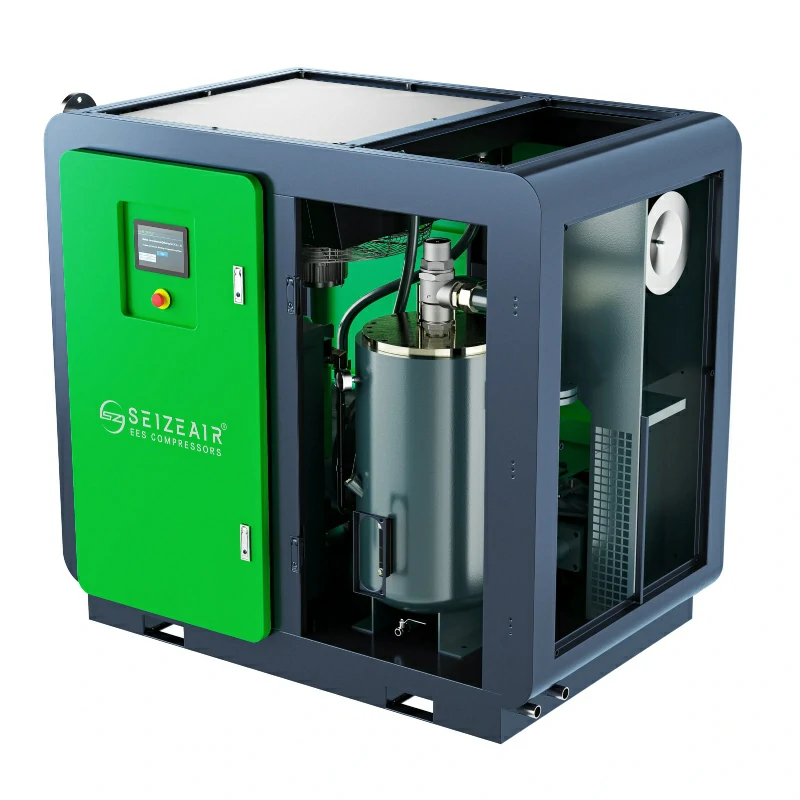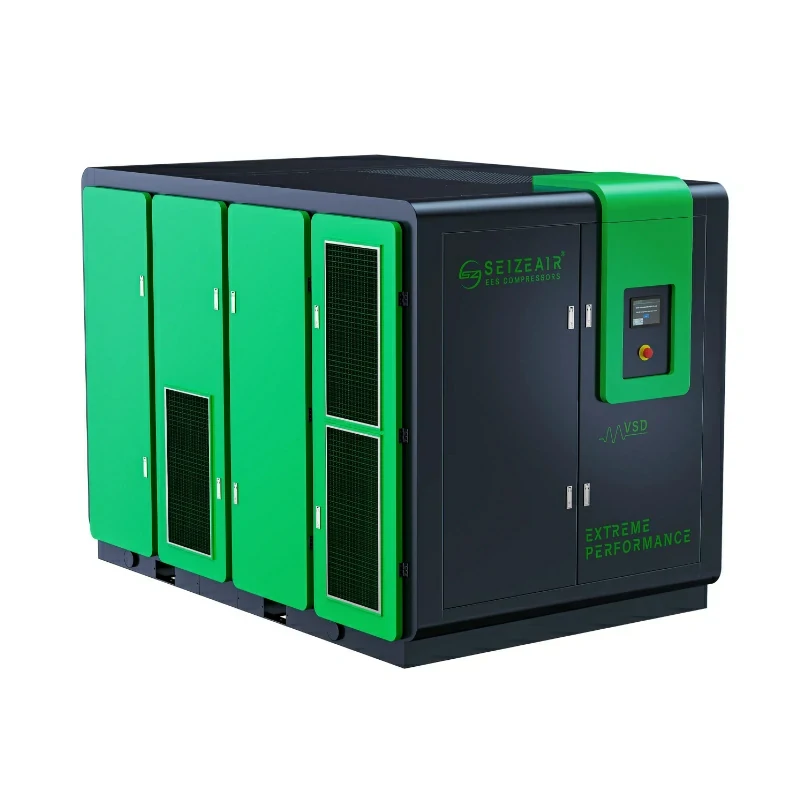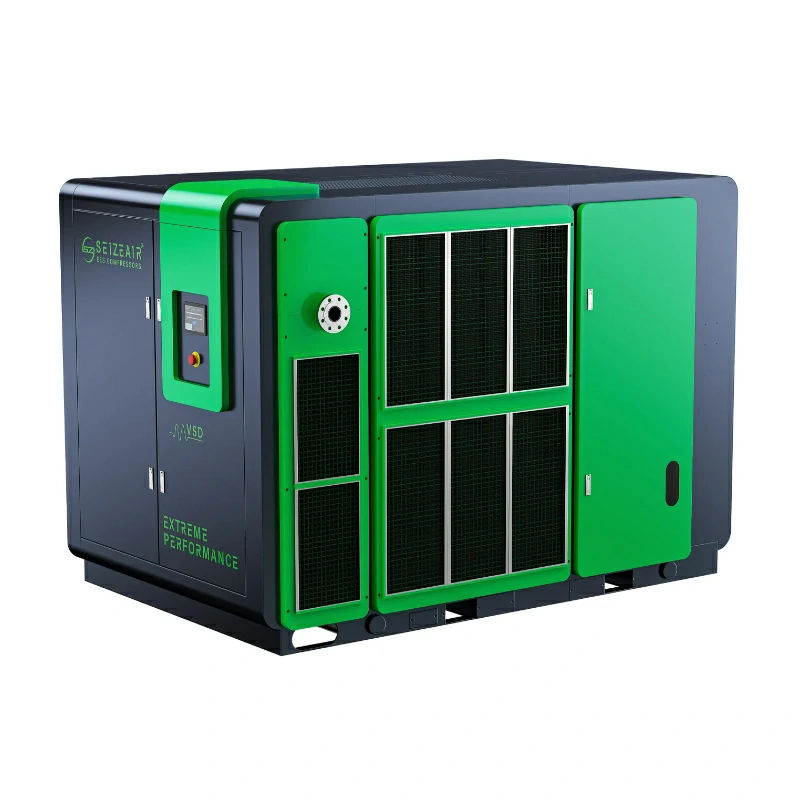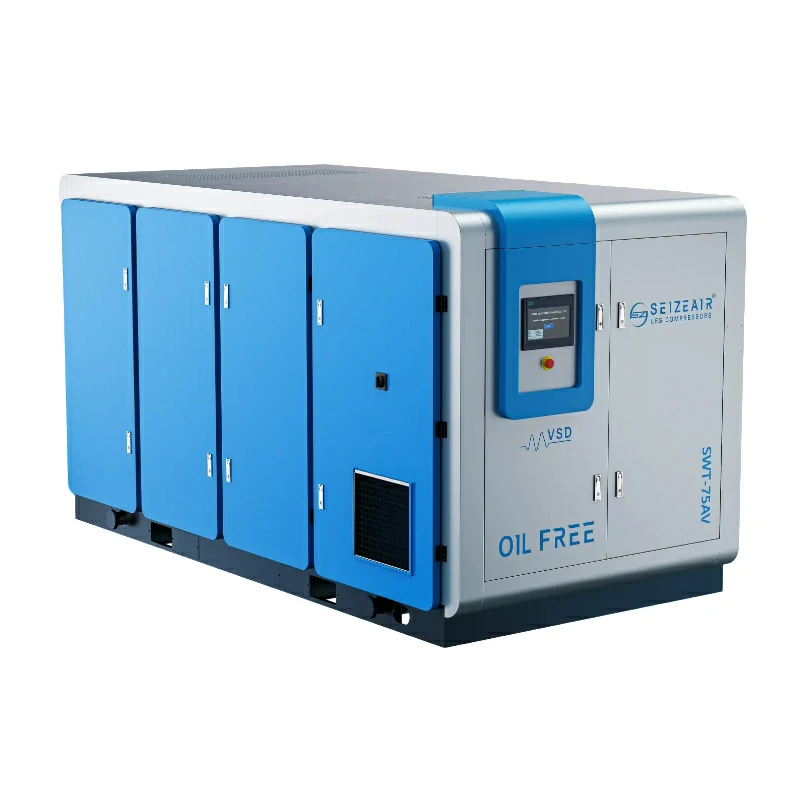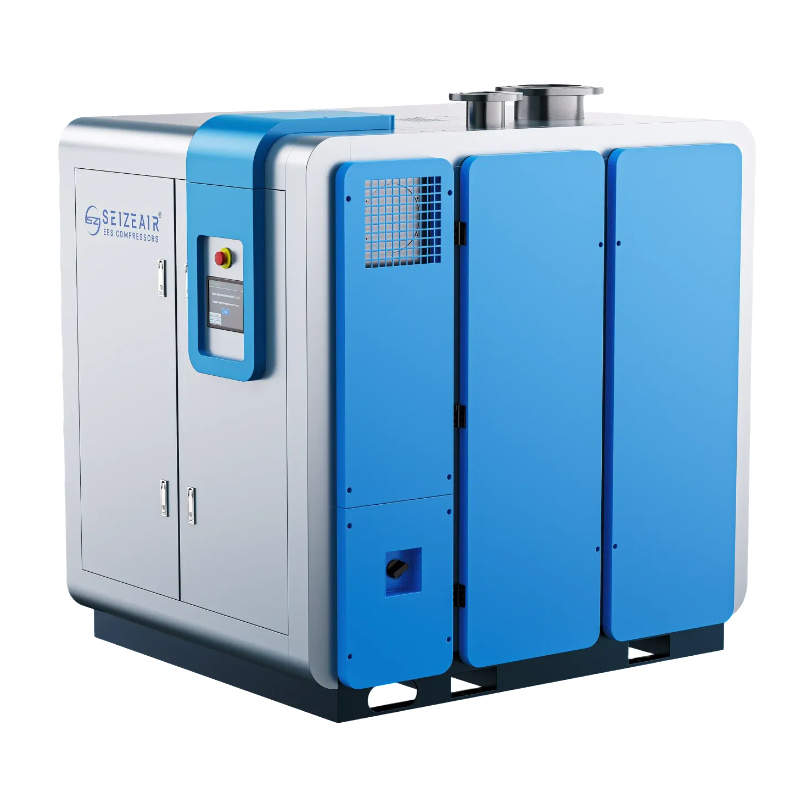


A direct drive air compressor connects the electric motor straight to the compression element through a rigid or flexible coupling, with no belts, pulleys, or gearbox in between, which is why it runs more efficiently, stays quieter, and needs far less routine service than a belt-driven unit.
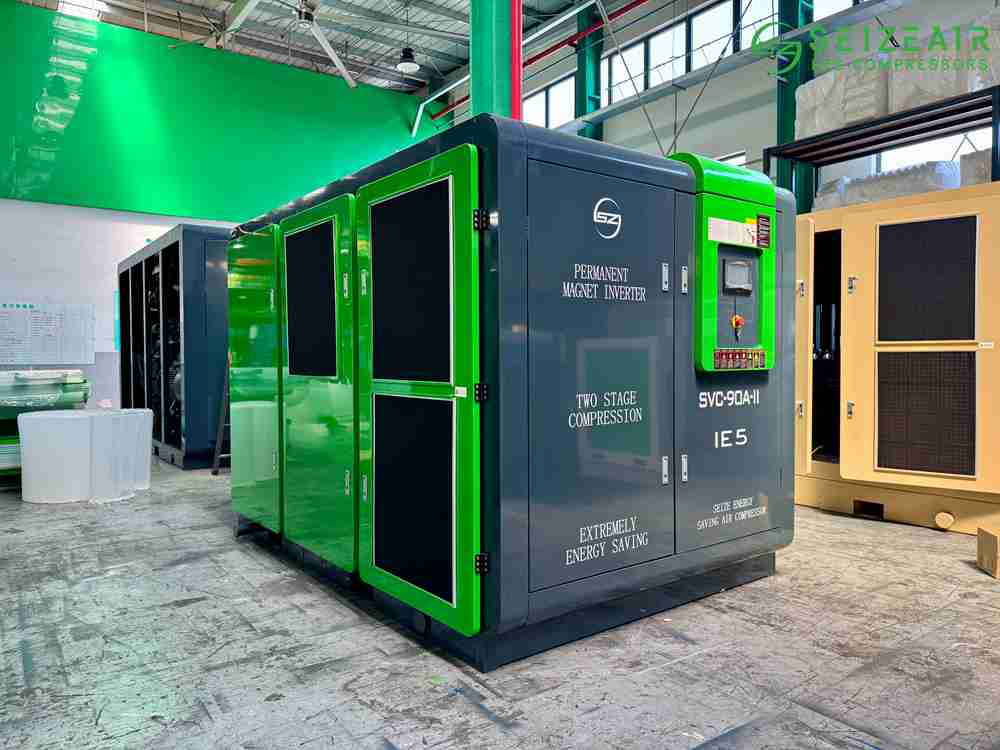
What Is a Direct Drive Air Compressor?
The term describes the way power travels from the motor to the compressing part, not the type of compression itself. In a direct drive air compressor, the motor shaft and the airend shaft share the same axis and are joined by a coupling. Rotate the motor, and the screw rotors or piston crank turn with it at a fixed ratio set by that coupling. There is no slip, no stretched belt, and no intermediate transmission to soak up energy.
This layout shows up most often in modern oil-injected screw air compressor packages, where a permanent magnet motor is bolted directly to a screw airend. But the principle also applies to some piston units and to many scroll and centrifugal designs. What unites them is the absence of a belt drive train.
How Does a Direct Drive Air Compressor Work?
Inside the cabinet, the motor and the airend sit on a single rigid bedplate. The motor rotor is aligned to the airend input shaft during assembly, then locked together with a coupling that tolerates only a tiny amount of misalignment. When the motor spins, torque passes straight through the coupling into the rotors. Because nothing flexes or slips, almost all the motor’s mechanical power reaches the air end.
The drive train looks like this in its simplest form:
[ motor rotor ] ==( coupling )== [ airend shaft ] | | power in compression out (no belt, no pulley, no gearbox)
On a variable speed unit, the inverter changes the motor speed, and because the coupling is 1:1, the airend speed changes with it. That tight link is what makes the permanent magnet variable frequency air compressor such a strong match for direct drive: there is no belt to slip as the speed swings up and down through the day.
Direct Drive vs Belt Drive Air Compressor: What Actually Changes?
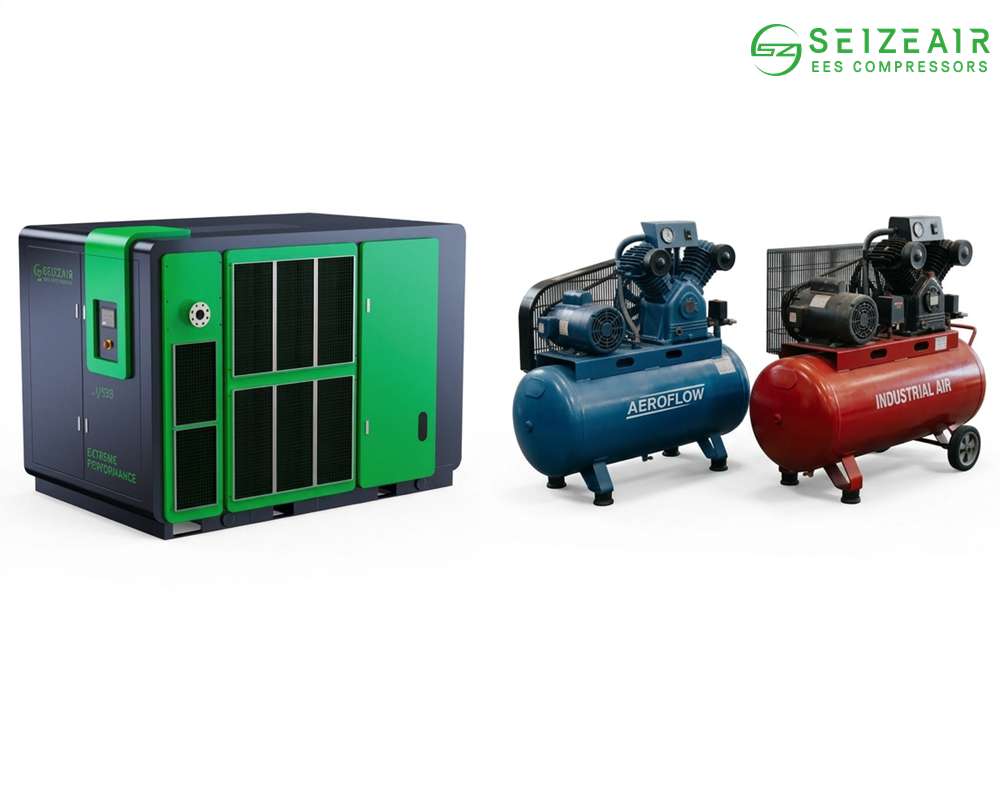
Buyers meet this comparison constantly, so it is worth laying out the real differences rather than the marketing ones. The table below covers the points that affect daily operation and total cost.
| Factor | Direct Drive Air Compressor | Belt Drive Air Compressor |
|---|---|---|
| Power transmission | Motor coupled straight to airend | Motor turns a pulley, belt pulls the airend |
| Typical mechanical efficiency | 98% to 99% | 90% to 95% |
| Belt maintenance | None | Tension checks, replacement every 1 to 2 years |
| Noise and vibration | Lower, smoother | Higher from belt slap and tension |
| Speed flexibility | Fixed by coupling ratio (1:1 common) | Easy to change via pulley sizes |
| Footprint | Compact, short bedplate | Longer to fit motor and pulley spacing |
| Repair when motor fails | Motor and airend may need separate handling | Swap motor without touching airend |
For a deeper side-by-side, our guide on the direct drive compressor vs belt drive walks through sizing, retrofit, and payback in more detail.
Main Benefits of a Direct Drive Air Compressor
The reasons plants choose this layout come down to a short, practical list:
- Higher efficiency. With no belt losses, more of the watt-hours you pay for turn into compressed air. On a 75 kW screw unit, closing a 5% transmission gap is worth several thousand dollars a year in many tariff zones.
- Less maintenance. No belt to tension, no pulley to align, no belt dust contaminating the intake. The service calendar shrinks to oil, filters, and coupling inspection.
- Quieter running. Belt slap and pulley whine disappear. Direct drive units sit several decibels lower at the same flow, which matters on a factory floor or in a workshop next to offices.
- Compact footprint. Removing the belt span shortens the machine, helpful where floor space is rented by the square meter.
- Stable output. Belt stretch slowly drops pressure and flow; a rigid coupling holds the designed ratio for the whole service interval.
When efficiency and uptime sit at the top of the spec sheet, a oil-injected permanent magnet compressor built on a direct drive train is hard to beat.
Are There Real Drawbacks?
Yes, and a good supplier says so. Direct drive trades flexibility for efficiency. Because the ratio is fixed by the coupling, you cannot retune the machine by swapping a pulley. If a site needs a very different speed or pressure later, the answer is usually a different airend, not a weekend belt change. Coupling alignment also matters: a poorly aligned unit wears bearings faster, though this is a factory assembly task, not a field adjustment.
For low-duty, intermittent, or budget piston use, a belt drive is often cheaper to buy and easier to improvise on. Direct drive earns its keep in continuous, high-hours industrial service where the energy and maintenance savings compound year after year.
Direct Drive Rotary Screw Air Compressor: Where It Matters Most
The direct drive rotary screw air compressor is the form most buyers actually receive, because screw airends love a smooth, direct coupling. In these machines the rotors run at motor speed through a 1:1 coupling, so the screw profile is optimized for exactly that speed and nothing else. That single-speed focus is part of why screw packages reached the efficiency levels they have today.
Staging matters too. A two-stage screw compressor adds a second airend on the same direct drive line, compressing in two steps for better specific power at higher pressure. The coupling layout stays simple even as the compression gets more sophisticated.
Efficiency and Energy Savings, in Plain Numbers
The efficiency gain is not vague. Transmission efficiency is calculated as:
transmission efficiency = (power delivered to airend / power drawn by motor) x 100%
Typical real-world values by drive type:
| Drive type | Mechanical efficiency | Yearly loss on a 75 kW unit (8760 h, 0.10 $/kWh) |
|---|---|---|
| Belt drive (worn) | about 90% | about 6,570 $ |
| Belt drive (new) | about 94% | about 3,930 $ |
| Direct drive | about 98.5% | about 1,110 $ |
The saving versus a worn belt is the difference between the two transmission losses:
power saved per year = (0.10 – 0.015) x 75 kW x 8760 h = about 5,460 $
Those numbers assume continuous running; a high-efficiency variable frequency air compressor compounds the gain further by matching output to demand instead of unloading.
The Direct Drive Permanent Magnet Air Compressor
Permanent magnet motors reach peak efficiency at part load, which is exactly where most plants actually run. Pair that motor with a direct coupling and you remove both the belt loss and the rotor-loss penalty of an older induction design. The permanent magnet screw compressor working principle is covered in our technical breakdown, but the short version is that the motor and airend become one tuned system rather than two parts joined by a belt.
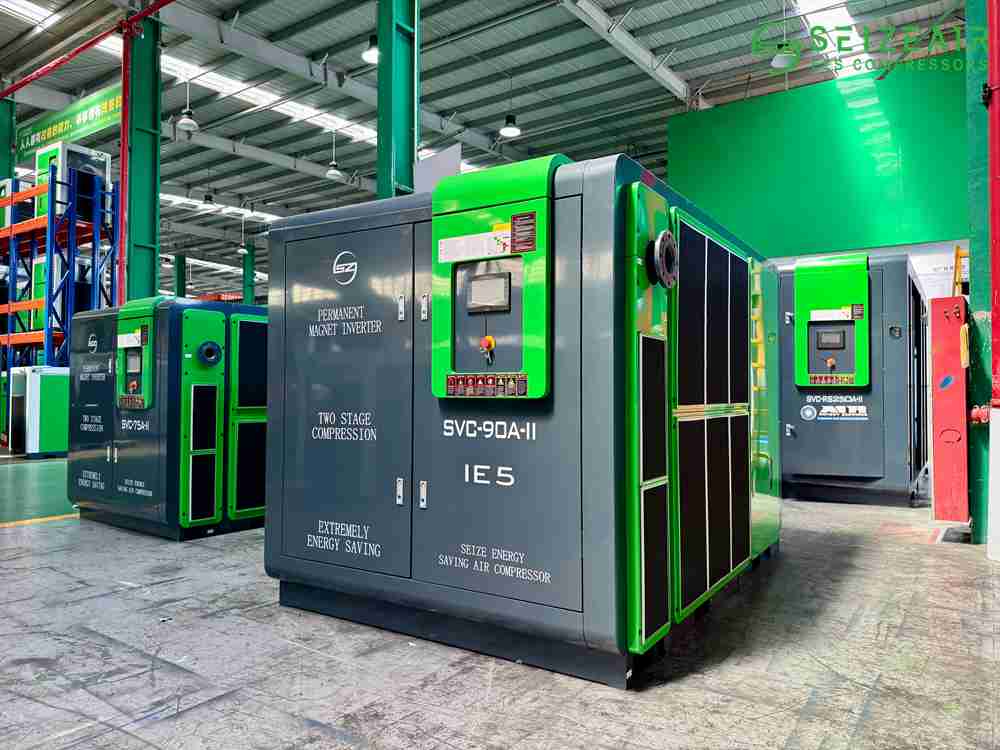
Seize Air builds its permanent magnet screw ranges around this direct-coupled architecture, which is why the same frame size delivers more free air delivery than the belt-driven models it replaces.
Direct Drive vs Belt Drive Lifespan and Reliability
The direct drive vs belt drive lifespan question usually favors direct drive in high-hours service. Belts age, crack, and slip; couplings, when aligned at the factory, simply sit there. The moving parts that wear are the airend bearings and the motor, and those exist in both layouts. Removing the belt removes a whole class of failure and the downtime that comes with it. A belt that lets go at 2 a.m. stops production; a coupling does not let go unless severely misaligned, which good assembly prevents.
Choosing a Direct Drive Air Compressor for Your Workshop
The direct drive air compressor for workshop and the direct drive air compressor for laser cutting are two of the most common buying searches, and they point to different needs. A workshop wants low noise and steady pressure for tools; laser cutting wants oil-free or well-filtered air at stable pressure with minimal pulsation. In both cases a direct drive screw gives smoother output than a belt piston.
When specifying, match the airend pressure to the job, not the motor nameplate. A direct drive unit running at its designed speed is at its quietest and most efficient; forcing it off-design through external throttling wastes the very advantage you paid for.
Maintenance Tips That Keep a Direct Drive Unit Running
Less does not mean none. The checklist below covers what a direct drive screw actually needs across its life.
| Task | Interval | Why it matters for direct drive |
|---|---|---|
| Change compressor oil and separator | Every 4000 to 8000 h | Protects airend bearings that the coupling depends on |
| Replace air intake filter | Every 2000 to 4000 h | Dirty intake drops flow and raises motor load |
| Inspect coupling for wear or heat marks | Every service visit | Early sign of misalignment before bearing damage |
| Check inverter cooling fins | Quarterly | VSD cooling failure hurts the direct-coupled motor |
| Log vibration trend | Monthly | Best early warning for a coupling or bearing issue |
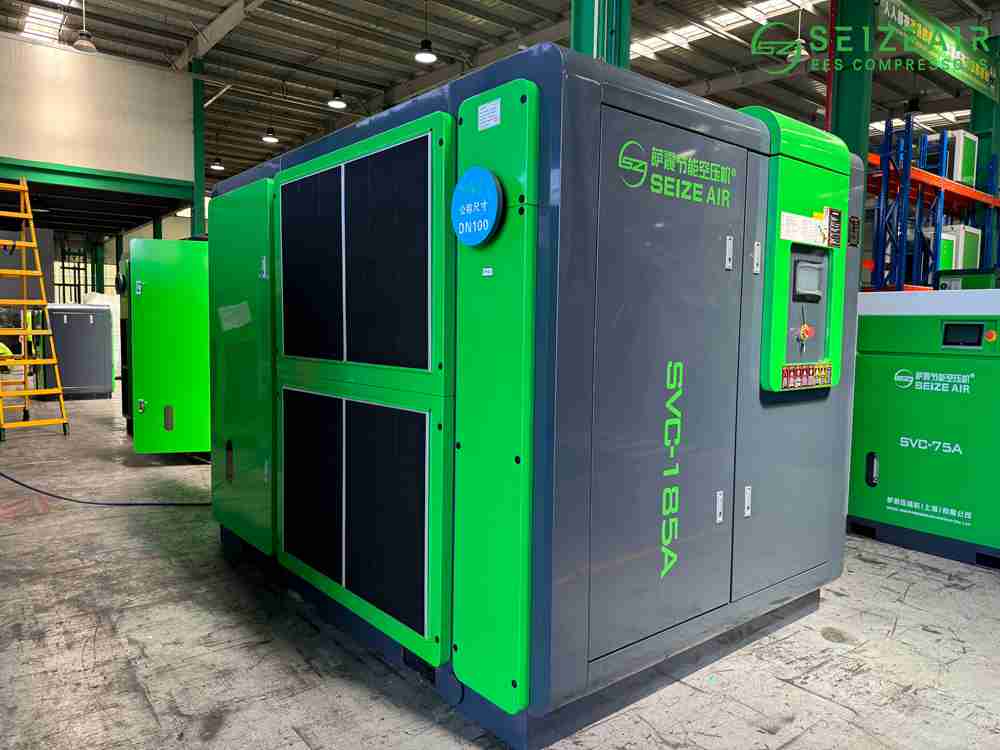
For the full procedure, see our air compressor maintenance guide.
Common Questions About Direct Drive Air Compressors
| Question | Short answer |
|---|---|
| What is a direct drive air compressor used for? | Continuous industrial air: workshops, laser cutting, food and pharma (oil-free variants), and any high-hours plant. |
| Is direct drive better than belt drive? | For efficiency, noise, and uptime in continuous use, yes. For cheap, flexible, low-duty use, belt drive still fits. |
| Are direct drive compressors more efficient? | Yes, typically 98% to 99% transmission versus 90% to 95% for belts. |
| How long do direct drive compressors last? | Airend life runs 40,000 to 80,000 hours with proper service; the coupling itself rarely fails. |
| Can a direct drive compressor be repaired easily? | Motor and airend are serviced separately; alignment is a factory task, not a field fix. |
Conclusion
A direct drive air compressor trades a little flexibility for a lot of efficiency, quieter running, and a shorter maintenance list, which is why it dominates continuous industrial service. If your plant runs long hours and pays for every kilowatt, the coupling layout alone can justify the upgrade.
Not sure which direct drive configuration fits your pressure, flow, and duty cycle? Contact our engineering team for a sizing check and a real payback number based on your tariffs and running hours.