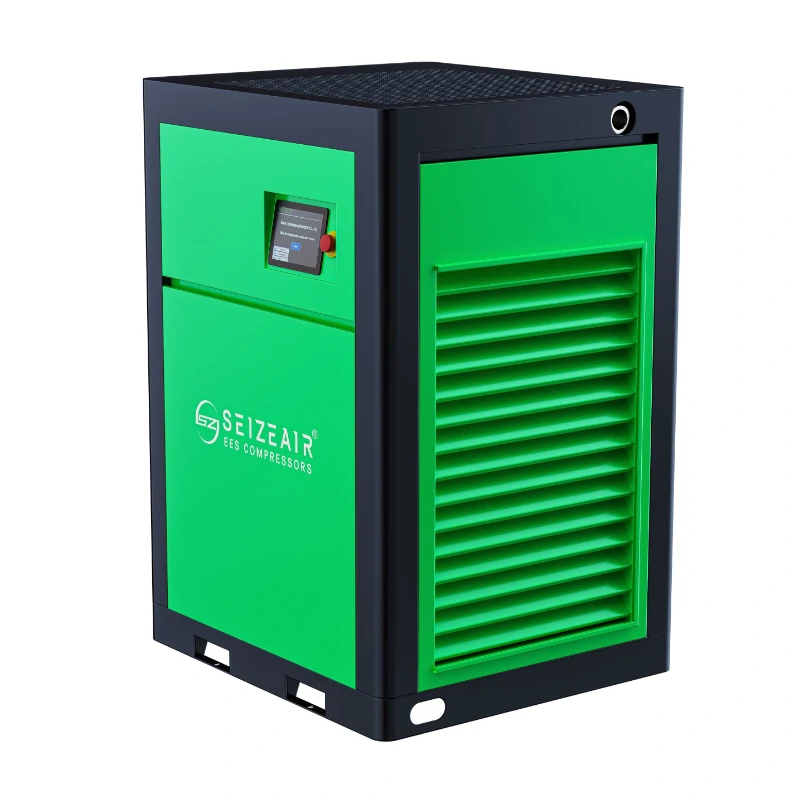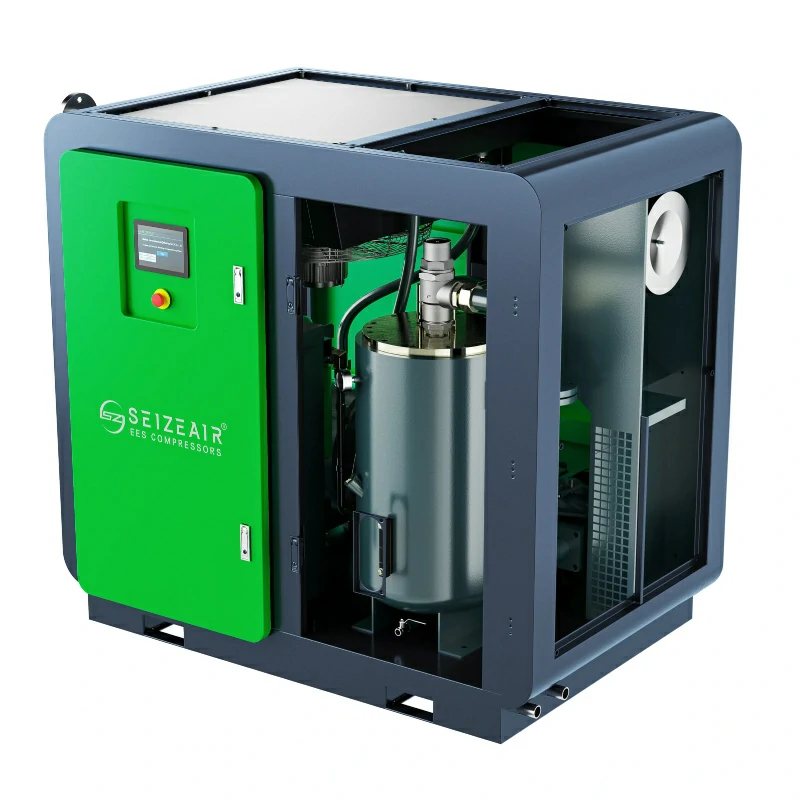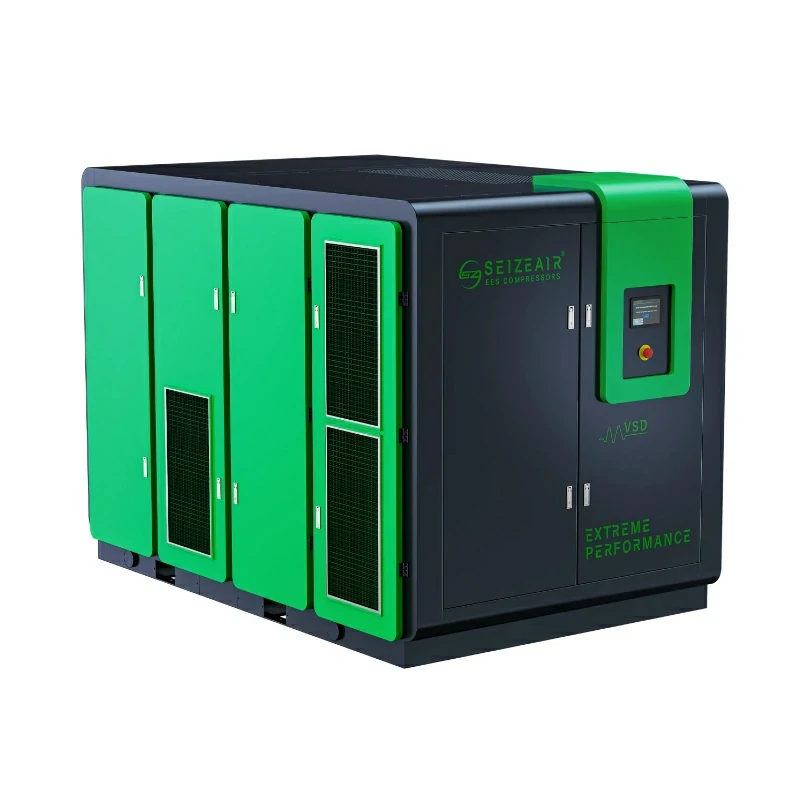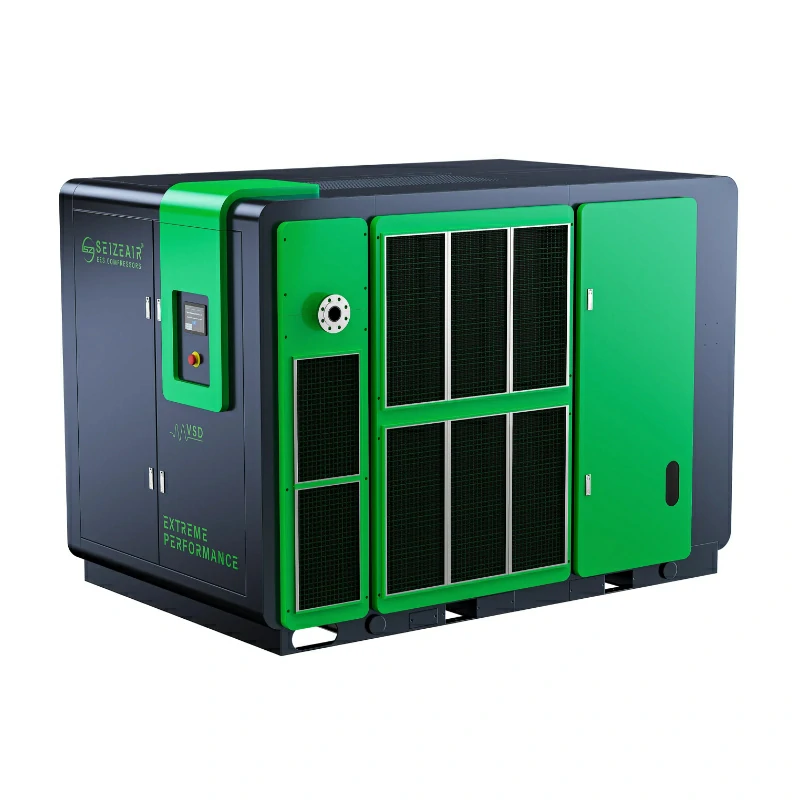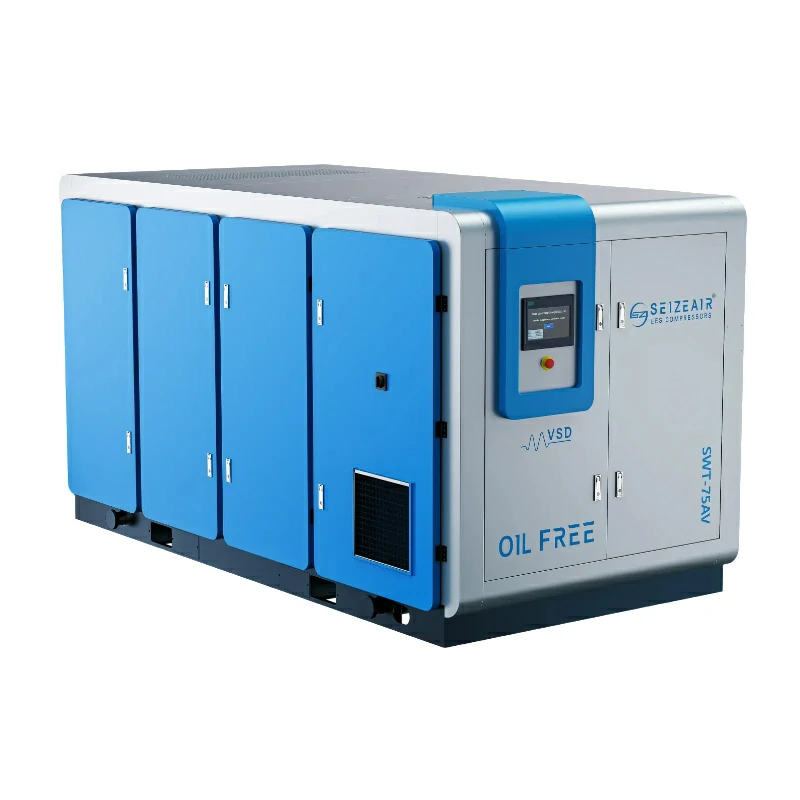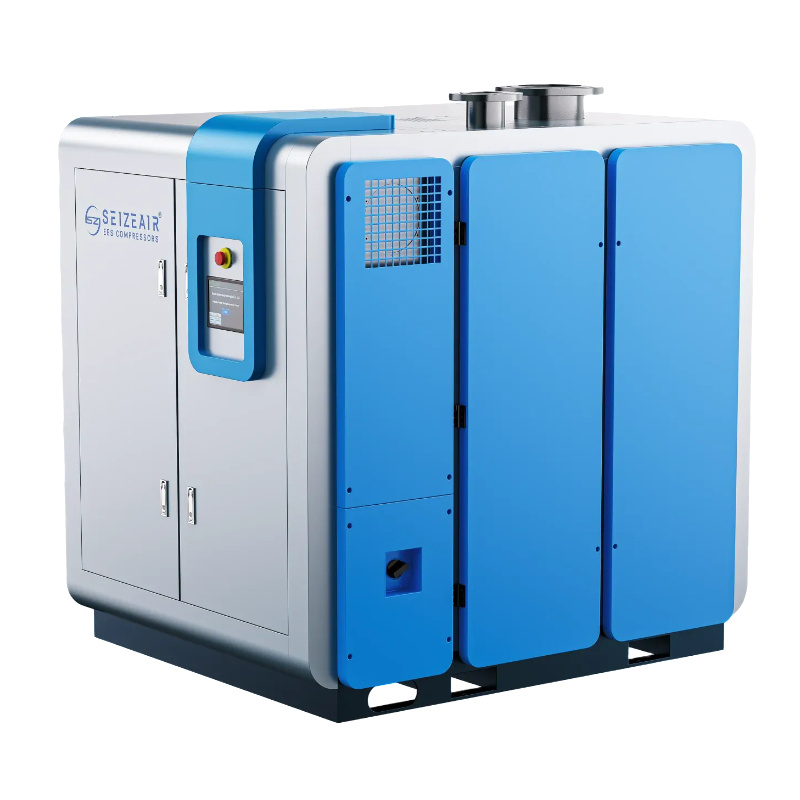


Air compressor for sandblasting selection starts at the nozzle, not at the motor nameplate. Size the machine by adding up the free air the worn nozzle will actually consume, the pressure lost between the compressor outlet and the blast hose, and the treatment gear that keeps abrasive dry; only then does the choice of power source or cabinet matter. This guide walks through the sizing arithmetic, the portable-versus-stationary decision, the dryer and receiver train, the maintenance rhythm, and the specification sheet to hand a supplier. It uses no invented performance figures and offers no shortcut around a nozzle chart.
What size air compressor for sandblasting do you need?
Blasting is a flow problem before it is a power problem. The abrasive is accelerated by a stream of compressed air passing through an orifice, and that orifice sets the volume the compressor must replace continuously. A motor rated in kilowatts tells you how much shaft work is available; it does not tell you whether the machine can hold nozzle pressure for a full shift. Buyers often compare cabinets by motor size and discover later that the free air delivery at the required discharge pressure is the number that actually governs production rate.
Free air delivery is volume referenced to inlet conditions, so two machines with the same motor can deliver different usable flow. Catalogue values are also tied to a stated test standard and inlet condition. When a supplier quotes a capacity, ask for the pressure at which it applies, the reference conditions, and whether the figure covers the package with its aftercooler and separator fitted. The screw compressor sizing guide explains how those figures are read against real plant demand.
Read the chart at the pressure you will blast at
Nozzle charts are published by the nozzle manufacturer and list air consumption against orifice size and nozzle pressure. Work from the pressure specified in the coating or surface-preparation specification, then read across to the corresponding consumption. Do not read the row for compressor discharge pressure; the nozzle sees a lower value because every component between the two points takes a share. That distinction is the single most common reason a system that looks adequate on paper stalls in service.
Write the sizing statement as plain arithmetic so everyone involved can check it: Required FAD = nozzle demand at working pressure + line and treatment losses + reserve margin. Keep each term as a line item in your enquiry rather than hiding it inside a single rounded number. The reserve margin is a policy decision about worn nozzles and future tools, not a physical constant, and it belongs in the specification sheet where the supplier can respond to it.
Translate the answer into a machine class
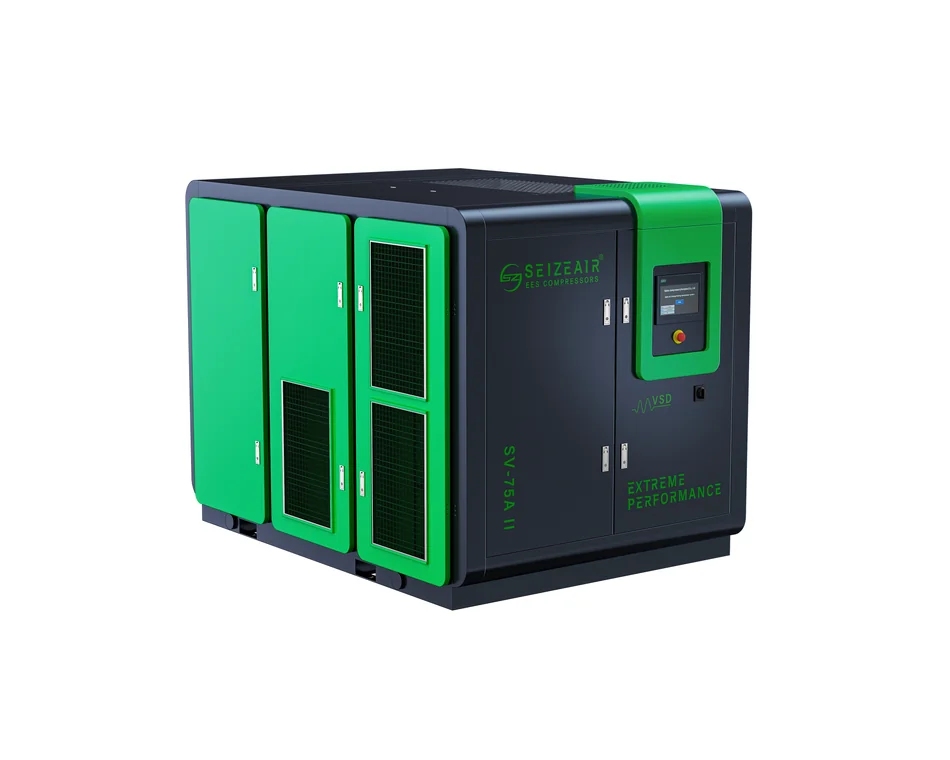
Once the required flow and discharge pressure are written down, the machine class follows. A small, intermittent blast cabinet can be served by a compact packaged unit; a production blast room running two operators needs a stationary installation with a receiver and a dryer train; remote site work points toward a towable machine. Reference data can help calibrate expectations, but only within its stated scope. An SGS-witnessed report for SVC-75A-II, SV-75A-II and SZ-100TPM, tested to ISO 1217:2009, records a 75 kW motor nameplate, 15.6 m³/min nominal capacity at 0.8 MPa and a specific power of 5.90 kW/(m³/min) at full flow. Those values belong to the tested units under the recorded inlet conditions; they are not a claim about every model in a range and should never be used as a sizing substitute.
The practical output of this section is a short statement: the flow you need, the pressure at the nozzle, the pressure the compressor must therefore hold, and the margin you have chosen. At that point an air compressor for sandblasting stops being a catalogue comparison and becomes a specification. Everything later in the article is a way of protecting those four numbers from being eroded by hoses, moisture, heat and wear.
Why the number grows as the orifice wears
A new nozzle and a worn nozzle of the same nominal size do not consume the same amount of air. As the bore enlarges, more air passes at a given pressure, and the blast pattern widens while velocity falls. Crews compensate by opening the valve further or by raising the setpoint, which pushes demand up again. This is why a compressor sized exactly to a fresh-orifice chart feels undersized a few weeks into a contract, even though nothing on the machine has failed.
Treat nozzle wear as a sizing input rather than a maintenance afterthought. Record the orifice size at purchase, set a replacement criterion based on the pattern and the feed rate your operators observe, and make sure the machine has enough headroom to cover the end of that wear cycle. If the budget only covers a machine that is marginal with a new orifice, the honest answer is to reduce the nozzle size or the number of simultaneous operators, not to assume the losses will stay small.
Add every other consumer on the same header
Blast sites rarely run a single tool. Blow-off guns, hoists, paint pumps, breathing-air equipment, cabinet ventilation and dust collector pulse valves may draw from the same supply. Each one adds a peak, and peaks overlap more often than a simple average suggests. List them before choosing a machine, then decide which ones may run at the same time as blasting and which ones can be interlocked or scheduled. An interlock that prevents a blow-off gun from opening during a blast pass is cheaper than buying capacity that sits idle for most of the day.
Keep two separate columns in the worksheet: continuous draw and short peaks. Continuous draw determines whether the compressor can keep up thermally over a shift. Short peaks determine whether the receiver and the control system can hold nozzle pressure without a visible dip in the blast pattern. Confusing the two leads to a machine that is either oversized for steady work or unable to ride through a burst.
Write the demand as a worksheet, not a guess
| Demand item | Number you need | Where it comes from | Why it matters |
|---|---|---|---|
| Blast nozzle, new | Free air at specified nozzle pressure | Nozzle manufacturer chart | Baseline flow |
| Blast nozzle, worn | Flow at your replacement criterion | Chart plus measured bore | End-of-cycle demand |
| Parallel tools | Peak simultaneous draw | Tool datasheets and site practice | Prevents mid-pass pressure dip |
| Treatment train | Pressure drop and purge or regeneration demand | Dryer and filter datasheets | Hidden losses before the hose |
| Reserve margin | Your stated policy | Production plan | Future tools, hot weather, wear |
Notice that the table asks for sources, not values invented during a meeting. A worksheet with empty cells is a useful document: it tells the supplier exactly which datasheets to provide, and it gives your own team a checklist for commissioning. When the machine arrives, the same rows become acceptance test lines, with pressure gauges at the compressor outlet, after the dryer and at the nozzle.
What pressure should an air compressor for sandblasting hold at the nozzle?
Nozzle pressure versus discharge pressure
The pressure written into a surface-preparation specification is the pressure at the nozzle, measured with a needle gauge in the air line immediately upstream of the blast hose. The compressor is set higher because air loses pressure as it passes through aftercoolers, separators, dryers, filters, valves, the receiver, the header and the hose itself. The relation is simple: Nozzle pressure = compressor discharge pressure - total pressure drop. Any rise in losses must be paid for either by a higher setpoint or by a slower blast.
Raising the setpoint is not free. Higher discharge pressure changes the flow a given machine can deliver and increases the energy drawn per unit of air. It also pushes condensate management harder, because warmer, denser air carries more water into the treatment train. A sensible design therefore attacks the losses first: short, correctly sized hose runs, full-bore fittings, clean filters and a receiver placed close to the point of use. The guide to choosing an operating PSI covers how setpoint, tool requirement and losses interact.
Where the pressure disappears
Each component contributes a loss that grows with flow, and most losses grow faster than linearly. A hose that is one size too small can dominate the whole system; a quick coupler with a restrictive bore can do the same at a single fitting. Filters are clean when new and restrictive when loaded, so a pressure survey taken on the first day will not describe the plant a month later. Differential gauges across the dryer and filter bank turn this from a guess into something the crew can read.
Measure rather than argue. During commissioning, log pressure at the compressor outlet, at the receiver, at the header end and at the nozzle while blasting, not while idling. The difference between the first and the last reading is the number the compressor has to cover. If it changes over the following weeks, look for a loaded filter, a flooded receiver, a kinked hose or a second operator before blaming the machine. That survey is also the baseline for the troubleshooting steps described in the compressed air pressure drop troubleshooting guide.
What to put in the specification
State the required nozzle pressure, the maximum acceptable total drop from the compressor outlet to the nozzle, and the acceptance method. Ask the supplier to show the flow available at the discharge pressure that results, not at a lower reference pressure. Ask also how the machine behaves when inlet temperature and altitude differ from the catalogue reference; a 2021 English operating manual for oil-injected units lists an ambient range of -5 to +40 °C, relative humidity below 85% and altitude below 1000 m, but that is a stated range for that manual version, not a universal promise for every current model.
Surface preparation work usually sits inside a coating specification rather than a free-standing compressor order. Standards bodies publish the preparation grades, cleanliness criteria and inspection methods that define the finished surface; the compressor brief exists to make those outcomes repeatable. When the specification calls for a particular standard, read the AMPP surface preparation and coating standards directly and keep the air supply requirements traceable to it, instead of relying on a summary in a sales quotation.
Portable diesel or stationary electric: which layout fits the job?
Site work and shutdown windows
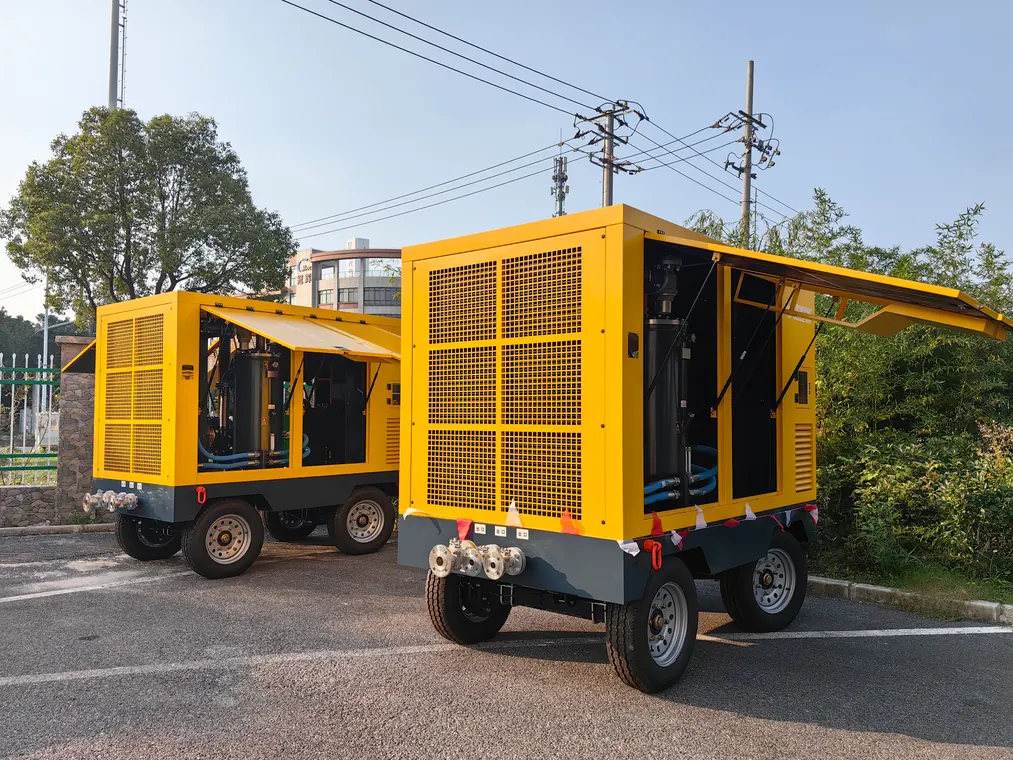
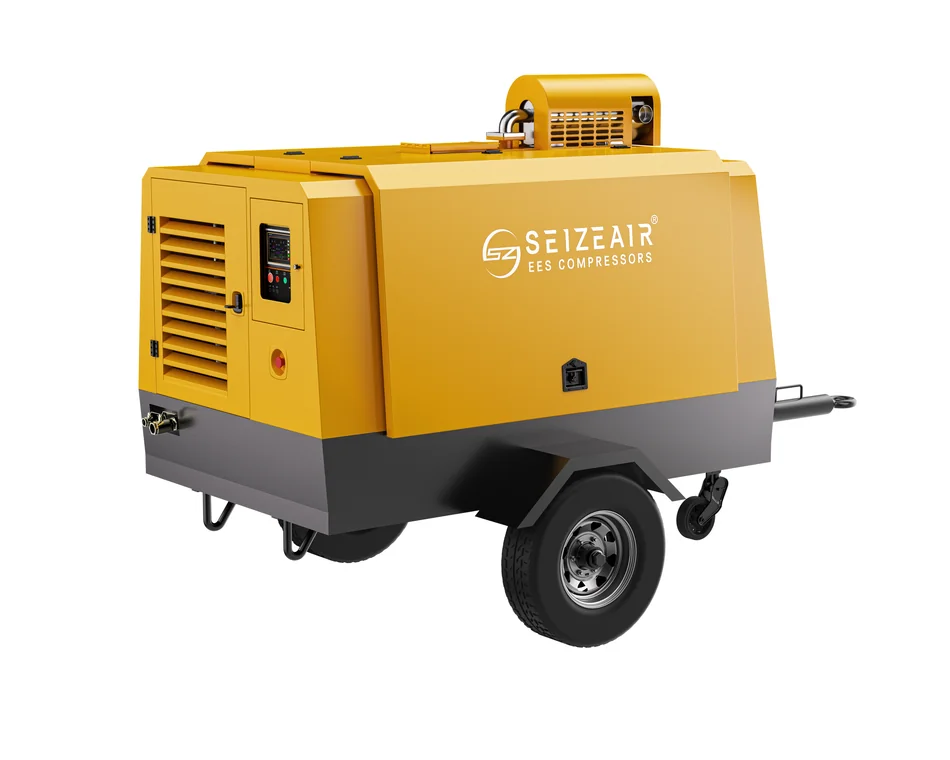
Bridge work, ship repair, tank farms and pipeline maintenance rarely offer a convenient three-phase supply at the point of blast. A towable diesel machine brings its own power, moves between work fronts and can be returned or reassigned when the contract ends. It also brings fuel logistics, engine servicing, exhaust management and noise considerations, all of which belong in the site plan. Where grid power exists but is unreliable or distant, a mobile unit can still be the lower-risk choice if the cost of a temporary cable run and its protection is included in the comparison.
Single-stage and two-stage portable machines are aimed at different duty profiles, so check which configuration the quotation actually covers. The diesel mobile compressor single stage range is the starting point for general site supply; the two stage DPT series addresses higher-pressure duties where the compression is split between stages. Confirm the delivered flow at your working pressure from the model datasheet for the exact machine offered, and never carry a value from one series into another.
Blast rooms and production lines
A fixed blast room runs the same air path every day, which makes it worth engineering properly. An electric stationary compressor in a ventilated plant room can feed a receiver, a dryer and a header sized once for the whole facility, with gauges and drains at every branch. Ventilation matters as much as the machine: the installation guidance in that same manual edition calls for clean, dry, weatherproof surroundings, intake air drawn near floor level, discharge air extracted high up, and short ducts with flexible connections. Those are installation practices to discuss with the installer, not performance claims.
Electricity cost is a running variable, not a fixed one, and it differs by region, tariff structure and shift pattern. Use published data such as the EIA electricity data to frame the comparison, then substitute your own tariff and hours. Compare the full chain: compressor input, dryer regeneration or purge, cooling, and the cost of pressure you only need because the distribution system is undersized. On a lossy pipe network, a cheap machine often loses that argument.
A quick comparison before you decide
| Decision factor | Portable diesel | Stationary electric | What to verify |
|---|---|---|---|
| Power availability | Self-contained | Needs a supply and starter | Grid capacity, cable protection |
| Mobility | Moves between work fronts | Fixed installation | Access, lifting, permits |
| Running cost | Fuel plus engine service | Tariff plus dryer demand | Local tariff, shift hours |
| Air treatment | Often packaged, compact | Full-size dryer and receiver | Dew point, filters, drains |
| Emissions and noise | Site rules apply | Plant room rules apply | Local permits and neighbours |
The table deliberately avoids a winner. Contractors moving between three depots need a different answer from a fabricator blasting inside the same bay for ten years. What matters is that the decision is recorded alongside the flow and pressure statement from the earlier sections, because the chosen layout determines how much distribution loss the compressor has to absorb.
Why dry, clean air matters more than raw pressure
What moisture does to the abrasive
Water is the enemy of a consistent blast. Condensation makes abrasive cake inside the pot, bridges at the metering valve and interrupts the feed, so the operator sees a pattern that pulses instead of a steady cut. On steel, a damp surface can flash-rust before the coating goes on, undoing the preparation work. In a blast room, moisture also travels into the dust collector and the abrasive recovery path, adding cleaning work that has nothing to do with production. None of these failures show up as a compressor fault, which is why they are often blamed on the abrasive first.
The air leaving a compressor is warm and close to saturated; cooling it in the aftercooler and the pipework releases liquid. A separator and an automatic drain remove the bulk of that water, but the remaining vapour still has to be handled by a dryer sized for the actual inlet temperature and flow. If the dryer is selected only on nominal pipe size, a hot afternoon or a long hose run in the sun can push it beyond its rating. Ask for the pressure dew point at the stated inlet condition and compare it with the coldest surface the blasted part will see.
Building the treatment train
Refrigerated dryers cool the air to condense water and are common on general industrial systems; desiccant dryers are chosen when the required dew point is lower. Either type needs the right pre-filtration, a working condensate drain and differential pressure monitoring, otherwise it becomes just another restriction in the line. The compressed air dryer selection guide sets out how dew point, inlet conditions and purge losses fit together. For equipment-level detail, the water-cooled and air-cooled refrigerated dryer range is a useful reference when a stationary room is being laid out.
Oil carry-over deserves equal attention. Most blasting work does not require an oil-free compressor; a well-maintained oil-injected package with coalescing filtration is the normal industrial answer. What matters is that the filtration matches the air quality the coating specification expects, and that the elements are replaced on condition rather than on a convenient calendar date. If a specification does call for oil-free air, treat that as a separate requirement with its own verification, not as an automatic upgrade to the biggest machine in the catalogue.
Keep the drains working
For an air compressor for sandblasting, the treatment train is part of the sizing exercise rather than an accessory. A dryer with a failed drain is worse than no dryer, because it collects water and then pushes it downstream in slugs. Specify drain type, discharge routing and an alarm or visible indication, then put the drain check into the daily walk-round. On a mobile unit used outdoors, the drain has to cope with dust, vibration and freezing mornings; on a stationary room, it has to cope with long idle periods over a weekend. Both cases are commissioning questions, and both should appear in the acceptance checklist before hand-over.
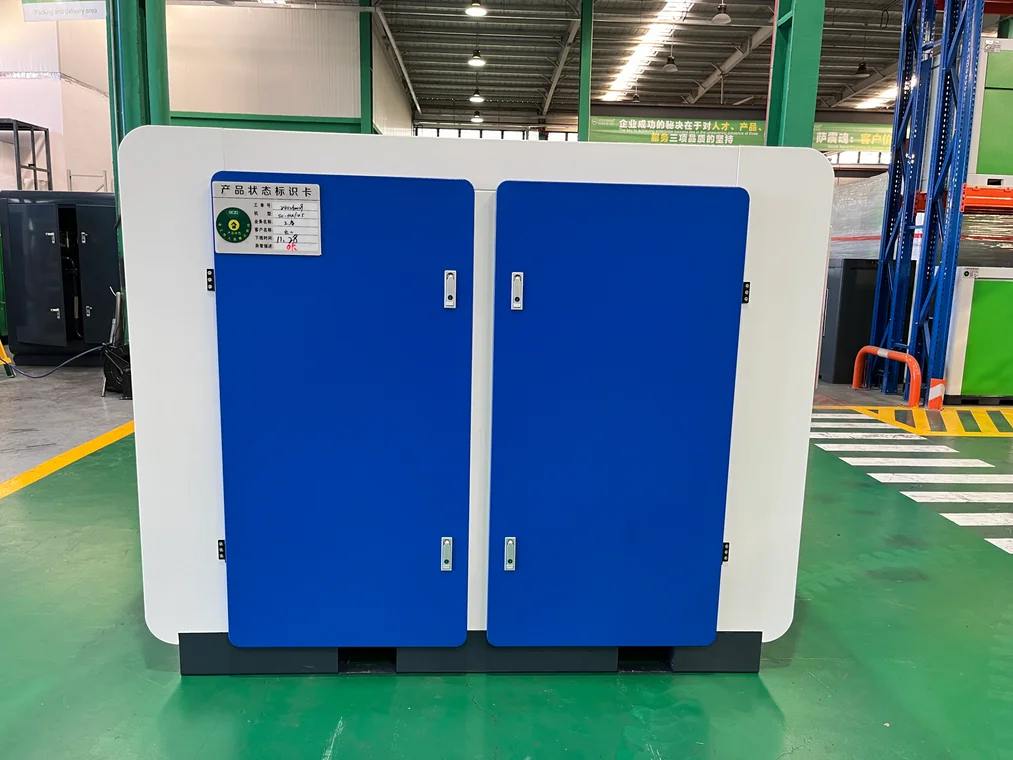
Building a stationary blast-room air system
Layout and ventilation
A stationary installation succeeds or fails on the room around the compressor. Give the package space for service access, keep the intake away from blast dust and engine exhaust, and arrange the hot discharge so it leaves the room rather than recirculating into the intake. Dust from abrasive is far more aggressive than ordinary factory dirt, so filtration at the compressor intake needs a realistic replacement interval. Where the blast room and the plant room share a wall, check that the ventilation paths do not pull contaminated air into the machine.
Installation manuals also carry limits that are easy to miss during a layout review. The 2021 English oil-injected manual already cited gives an ambient range, a humidity ceiling, an altitude ceiling and a maximum duct air velocity, with guidance on short ducts and flexible connections. Read those as conditions attached to that document version and request the current installation manual for the model being purchased. A supplier who can supply the correct manual, the wiring diagram and the recommended spare parts list is telling you something useful about the package.
Headers, branches and gauges
Run a generously sized main header with a slight fall toward drain legs, take branches from the top of the header, and avoid dead ends where condensate collects. Put a pressure gauge before and after the dryer bank and one near the blast station, and label each with its normal reading at full blast. Gauges turn a vague complaint into a location: a large difference across the filters means loading, a drop along the hose means a restriction or a kink, and a drop at the compressor outlet alone means the machine is struggling to keep up.
Think about the second operator before the first one starts work. A branch installed now for a future blast pot costs little; a header opened and re-welded during a production run costs a great deal. The same logic applies to isolation valves: being able to service the dryer without shutting down the whole room keeps the maintenance schedule realistic. These are ordinary plant-engineering decisions, but they are exactly the ones that determine whether the flow and pressure statement from the sizing exercise survives contact with the building.
Receivers, dryers and the air treatment train
What the receiver actually does
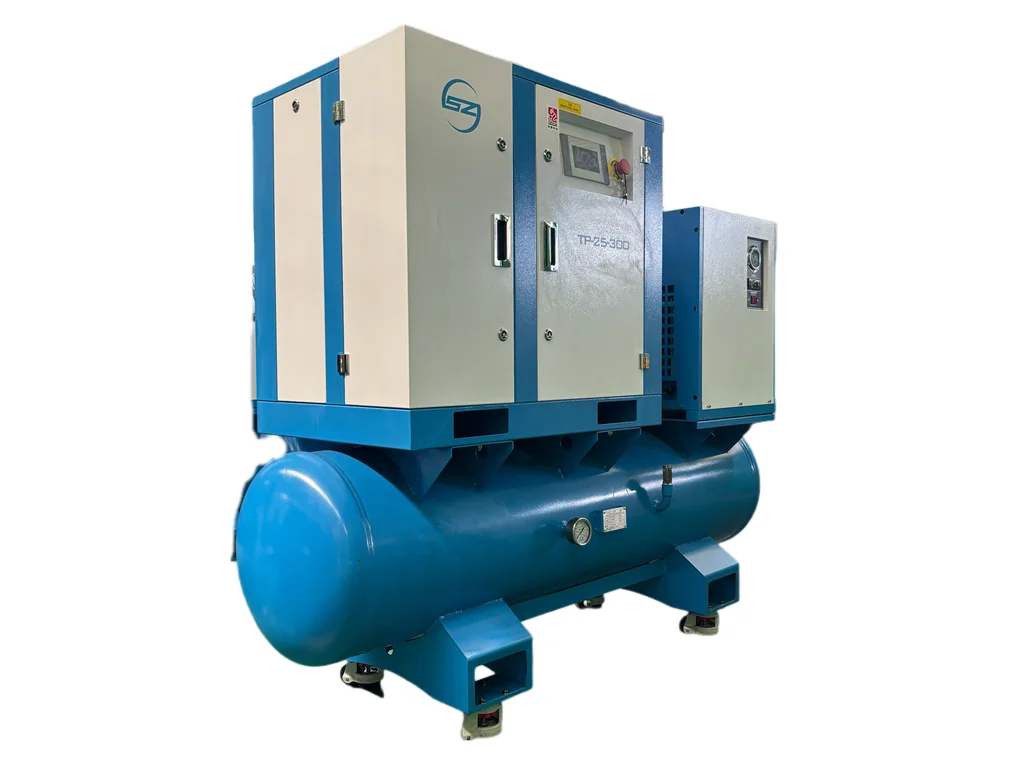
An air receiver is not extra capacity in the way a bigger compressor is extra capacity. It is a buffer that smooths short peaks, gives condensate somewhere to fall out, and lets the control system unload and reload without hammering the nozzle pressure. Sized against the largest short burst rather than the average shift demand, it lets a smaller machine hold a steady pattern. The relationship is worth writing down: Receiver buffer = peak burst demand - steady compressor output, applied over the burst duration, with the allowable pressure swing agreed in advance.
Placement matters as much as volume. A receiver close to the blast station helps with bursts; one at the far end of a restrictive header mostly helps the compressor. Where the machine, dryer and tank are bought as one packaged unit, the internal pipework and the drain arrangement are already engineered, which reduces installation risk on small sites. The integrated compressor with dryer and tank guide describes that packaged approach and the trade-offs against a built-up plant room. Any receiver also needs a relief valve, a drain, a pressure gauge and an inspection regime under local rules.
Treatment stage checklist
| Stage | Job | What to check | Failure symptom |
|---|---|---|---|
| Aftercooler and separator | Remove bulk liquid | Drain function, outlet temperature | Water slugs in the line |
| Pre-filter | Protect the dryer | Differential pressure, element condition | Rising drop, wet dryer bed |
| Dryer | Set the pressure dew point | Inlet conditions, purge or regeneration | Damp abrasive, flash rust |
| Coalescing and particulate filters | Protect the surface | Element change criterion | Oil spotting on the work |
| Receiver | Buffer peaks, drop out water | Drain, relief valve, gauge | Pulsing blast pattern |
Read the table as a sequence, not a shopping list. A high-grade dryer downstream of a failed separator is an expensive way to shorten the life of a desiccant bed. Equally, a receiver with no working drain becomes a water store that feeds the hose. Commission the chain in order, record a baseline differential pressure for each element, and write those numbers into the maintenance card that lives beside the machine.
How to calculate pressure drop from compressor to nozzle
The loss chain as a diagram
Compressor outlet (P1)
        |
        v
[aftercooler + separator] ---> condensate drain
        |
        v
[dryer] ---> [coalescing + particulate filters]  (P2)
        |
        v
[air receiver] ---> drain + relief valve  (P3)
        |
        v
[header] ---> [hose] ---> [full-bore valve] ---> [nozzle]  (P4)
P4 = P1 - (loss aftercooler + dryer + filters + receiver + header + hose + valve)
Total drop = sum of every component loss measured while blasting, not while idling
The diagram is deliberately simple. Every arrow is a place where a datasheet, a gauge reading or a hose length can be written in, and every bracket is a component that someone will eventually have to clean or replace. Put the four gauge points on the commissioning drawing; without them, a pressure complaint turns into an argument about whose equipment is at fault.
A worked method without invented numbers
Start with the nozzle pressure required by the surface-preparation specification. Then take each component loss from its own datasheet at the design flow, using the condition the component will actually see: loaded filter elements, a hose of the length you plan to lay, and fittings with their real bore rather than their nominal thread size. Sum them with the plain-text expression Total drop = drop(filters) + drop(dryer) + drop(header) + drop(hose) + drop(fittings). Add that total to the nozzle requirement to obtain the discharge pressure the compressor must hold while delivering the required flow.
Now check the machine’s flow at that discharge pressure, not at its best-case rating. If the available flow falls short, you have three honest options: reduce the nozzle size, reduce the number of simultaneous operators, or remove losses from the distribution system. Increasing the pressure setpoint is a fourth option, but it is the one that raises running cost and does nothing about the underlying restriction. Ask the supplier to show the calculation with their own datasheets so the assumptions are visible before an order is placed.
Commissioning survey and re-checks
On hand-over day, log P1 through P4 with the blast running and a representative nozzle fitted. Record ambient temperature, the number of operators and the hose length, because all three will change the readings later. Repeat the same survey after the first filter change, after a hose layout change and whenever an operator reports a weaker pattern. Keeping one page of readings per survey creates a history that is far more useful than a single certificate and costs nothing to maintain.
Single-stage or two-stage compression for continuous blasting
Where two stages help
Splitting compression into two stages with intercooling between them reduces the temperature rise per stage and generally improves efficiency when a plant needs higher discharge pressure for long hours. Blast rooms that run continuously, or sites where the hose run forces a high setpoint, are the natural candidates. The trade-off is a more complex package with more components to service, so the case depends on duty hours and on the pressure the distribution system actually demands. A machine that is efficient at a pressure you do not need is not a saving.
The oil-injected two-stage screw compressor range is the reference point for that configuration. Ask for the model-specific flow and pressure table, the reference conditions behind it, and the recommended service intervals. Catalogue cover pages sometimes express a series range in horsepower while the model tables use kilowatts; keep the units exactly as printed and do not convert one into the other in a specification sheet. Where two documents disagree, note the conflict and request the current version before signing anything.
Where one stage is enough
Short blast cycles, modest pressure requirements and intermittent site work rarely justify the extra machinery. A single-stage package with a good receiver and a well-laid hose will hold a consistent pattern for a small cabinet, and it is simpler to move, service and reassign. Variable-speed control can also be more valuable than a second stage when demand swings between one and two operators through the day. Decide on the duty profile first; the compression architecture follows from it, not from a feature list.
One caution applies to every comparison: a sample range is not a promise about every combination inside it. Cover pages give power and pressure ranges for a series; only the model table gives the delivered flow of a specific machine at a specific pressure. When a quotation cites a range rather than a model, ask for the exact model designation and the datasheet page. That habit protects both sides of the enquiry and makes the eventual acceptance test straightforward.
Duty cycle, control and the cost of a fixed-speed decision
What the duty cycle looks like on a blast site
Blasting is rarely a flat load. The operator opens the valve, works a pass, pauses to reposition the work, refills the pot and starts again. A compressor sized for the average of that pattern will dip during the pass; one sized only for the peak will spend much of the day unloaded. Sketch the cycle as a simple timeline of valve-open and valve-closed periods, note how many operators share it, and mark the longest continuous pass. That sketch is more useful to a supplier than a single word like heavy duty, and it costs nothing to produce.
Heat is the other half of duty. A machine that copes with a morning of intermittent passes may struggle through an afternoon of continuous work in a warm plant room, because cooling depends on airflow that the room may not provide. Ask about the rated ambient condition, the ventilation requirement and what happens to delivered flow when inlet temperature rises. Where the site is hot, dusty or high above sea level, say so in the enquiry rather than letting the supplier assume catalogue conditions.
Control strategies that protect nozzle pressure
Fixed-speed machines typically load and unload across a pressure band; variable-speed drives vary output to follow demand. Either approach can hold a steady blast if the band is set with the receiver and the distribution losses in mind. A narrow band with a small receiver gives crisp pressure but frequent cycling; a wider band reduces cycling at the cost of a visible change in the pattern. Discuss the setting during commissioning with the blast running, because a setpoint tuned on an idle machine tells you very little.
Interlocks are an underused control tool. If the dust collector pulse, a blow-off gun and a second blast pot all draw from one header, a simple permission scheme can stop two peaks from coinciding. Sequencing avoids buying capacity that exists only to cover a rare overlap. It also makes energy comparisons fairer: the running cost of a machine depends on the load it actually sees, and published tariff data such as the EIA series is only a starting frame for that calculation, not a substitute for your own meter readings.
Safety, dust control and the specification boundary
Respirable dust, ventilation and protective equipment
Abrasive blasting generates dust that must be controlled at the work, not managed after it has spread. Enclosure, local exhaust, filtration and the condition of the breathing-air supply are separate engineering topics from compressor selection, yet they share the same site plan. Follow the regulations and approved codes that apply in your jurisdiction, use equipment and respiratory protection specified for the abrasive in use, and keep the compressor intake clear of the dust plume. Silica-containing abrasives, in particular, carry requirements that no compressor datasheet can satisfy on its own.
Compressed air itself adds hazards: stored energy in the receiver, whip from a failed hose, noise at the nozzle and projectile risk from the blast stream. Relief valves, hose restraint, isolation valves, lockout procedures and pressure-rated components belong in the installation brief. None of these items should be traded away to meet a price target. When the plant is handed over, the crew should be able to point to each safety device, explain what it does and show the record of when it was last checked.
What belongs in the coating specification
The compressor brief is a means to an end: the specified surface cleanliness and profile, verified by the inspection method the coating standard requires. Keep those acceptance criteria in the specification, and keep air supply details in the equipment schedule. That separation prevents a common dispute, where a surface fails inspection and each party argues about machine pressure instead of measuring the prepared surface and the air quality at the nozzle. Standards and inspection methods come from the standards body; flow and pressure come from the equipment datasheets.
Documentation closes the loop. Ask the supplier for the model-specific datasheet, the current installation manual, the recommended spare parts list, the dryer and filter datasheets, and a schematic showing gauge points. A Seize Air application engineer can review a nozzle chart and site conditions against that package before an order is placed. Sharing the worksheet early is cheaper than resolving a pressure complaint after the blast room has been commissioned.
Maintenance schedule for blasting compressors
Daily and weekly checks
Daily attention should cover things an operator can see or hear in a few minutes: drain function at the separator, receiver and dryer; a glance at differential pressure gauges; unusual noise or vibration; hose condition and coupling security; and the pressure readings at each gauge point during a real blast. Record the readings on one sheet. A trend is far more informative than a single pass or fail, and it tells you which filter is loading before it changes the blast pattern.
Weekly work adds intake filter inspection, a check of the cooling airflow path, belt or coupling condition where applicable, oil level on lubricated machines, and a test of safety devices according to the manufacturer’s procedure. On towable units, the same visit covers the engine: fuel, coolant, air filter and battery. Blast dust shortcuts filter life, so intervals taken from a clean factory installation should be treated as a starting point and adjusted from the recorded trend.
Monthly and condition-based work
Monthly or hours-based tasks usually include oil and element replacement, separator checks, dryer service, valve and drain strip-down, and a repeat of the P1-to-P4 pressure survey. Use condition where the plant gives you the data: a rising differential across a filter is a better trigger than a fixed number of weeks. Keep a small stock of the parts that stop production immediately, such as drain valves, filter elements and hose couplings, and note the exact part numbers in the maintenance card.
Finally, re-run the sizing worksheet once a year or whenever the job changes. A second operator, a longer hose, a different abrasive or a new nozzle size all alter the numbers the machine was chosen for. If the survey shows the compressor now running near its limit with a worn nozzle, the answer may be a distribution fix rather than a replacement machine. Plants that keep the original worksheet are the ones that can tell the difference.
Specification sheet and buying checklist
What to send suppliers
An air compressor for sandblasting enquiry should put the sizing statement, the demand worksheet and the site conditions into a single document. Include nozzle size and wear criterion, required nozzle pressure, hose length and bore, number of simultaneous operators, ambient temperature range, altitude, available power and duty timeline, plus the required air quality and dew point. Ask every bidder to reply with the exact model, flow at the stated discharge pressure, reference conditions, treatment train losses, control strategy, and the documentation list. Comparable answers make the commercial comparison meaningful.
Ask for the acceptance test in the same document: which pressures will be measured, at which points, with what nozzle fitted and how many operators working. An acceptance test written after delivery tends to reflect what the installed machine can do; one written in the enquiry reflects what the job needs. Keep the contact route for technical questions in the project file so that clarifications go to the same people who produced the datasheets.
What to check on delivery
| Line item | Your value | Evidence to request | Acceptance check |
|---|---|---|---|
| Nozzle demand, new and worn | From nozzle chart | Manufacturer chart, measured bore | Flow at working pressure |
| Discharge pressure | Nozzle pressure plus total drop | Datasheets for every component | P1 and P4 logged while blasting |
| Air quality | Dew point and filtration level | Dryer and filter datasheets | Dry abrasive, no oil spotting |
| Duty and ambient | Shift pattern, temperature, altitude | Current installation manual | Stable readings through a full pass |
| Documentation | Manual, spares, schematic, gauges | Supplier document pack | All items present at hand-over |
The last row is not bureaucracy. A schematic with labelled gauge points, a spare parts list with real part numbers and a manual that matches the delivered model are what let a maintenance team keep the first four rows true for years. When those documents are missing, every later pressure complaint starts from scratch. Ask for them in the purchase order, not after the truck has left.
Frequently asked questions
What size air compressor do I need for sandblasting?
To size an air compressor for sandblasting, start with the nozzle chart at the pressure your surface-preparation specification calls for, then add line and treatment losses and a stated reserve margin. That total is the free air the machine must deliver at its discharge pressure. Motor power alone cannot answer the question, and neither can a capacity quoted at a different pressure.
Can I use a small workshop compressor for blasting?
A small cabinet can handle light, intermittent work if its flow at working pressure covers the nozzle and the duty cycle leaves time for recovery. Continuous blasting with a production nozzle generally outruns a workshop unit, and the resulting pressure drop shows up as a slow, uneven cut. Check the nozzle chart before experimenting.
Does sandblasting need an oil-free compressor?
Usually no. A properly maintained oil-injected package with coalescing filtration is the common industrial solution. An oil-free requirement comes from the coating or surface specification, so read that document first. If it does call for verified oil-free air, treat purity, testing and certification as separate line items in the enquiry.
How much pressure is lost in a long blast hose?
Loss depends on flow, hose bore, length, fittings and the condition of the filters upstream, so no single number is transferable between sites. Measure it: log pressure at the compressor outlet and at the nozzle while blasting, then subtract. A hose one size too small or a restrictive quick coupler is often the largest single contributor.
Is a bigger air receiver always better?
A receiver sized for the longest burst smooths peaks and steadies the blast pattern, but it does not replace compressor flow on a continuous pass. Beyond the point where the peaks are covered, extra volume adds cost, footprint and inspection duties. Size it against the burst duration and the allowable pressure swing.
Diesel or electric: which is cheaper to run?
It depends on your local tariff, fuel price, shift pattern and how much of the distribution loss you are paying for. Compare the full chain, including dryer purge, cooling and any pressure you only need because the pipework is restrictive. Published electricity data helps frame the calculation; your own meter readings finish it.
Can one compressor run two blast pots?
Only if the free air, the header and the receiver cover both nozzles at their worn-orifice demand during overlapping passes. Add the second pot to the demand worksheet as a peak, not an average, and decide whether an interlock or a second shift pattern would be cheaper than extra capacity. Verify with a commissioning survey.
Air compressor for sandblasting decisions reward the teams that write down nozzle demand, distribution losses and dew point before comparing machines. If you need a model-specific flow and pressure table, the current installation manual and a treatment train matched to your blast room, send your nozzle chart and site conditions to the Seize Air team. Those worksheet values will do more for production rate than any headline rating on a catalogue cover.