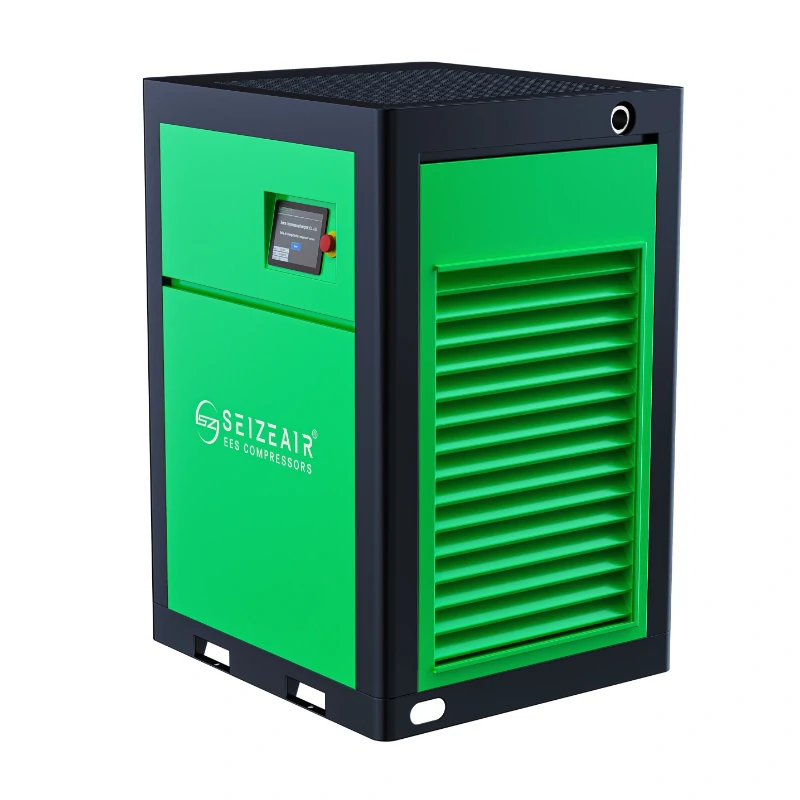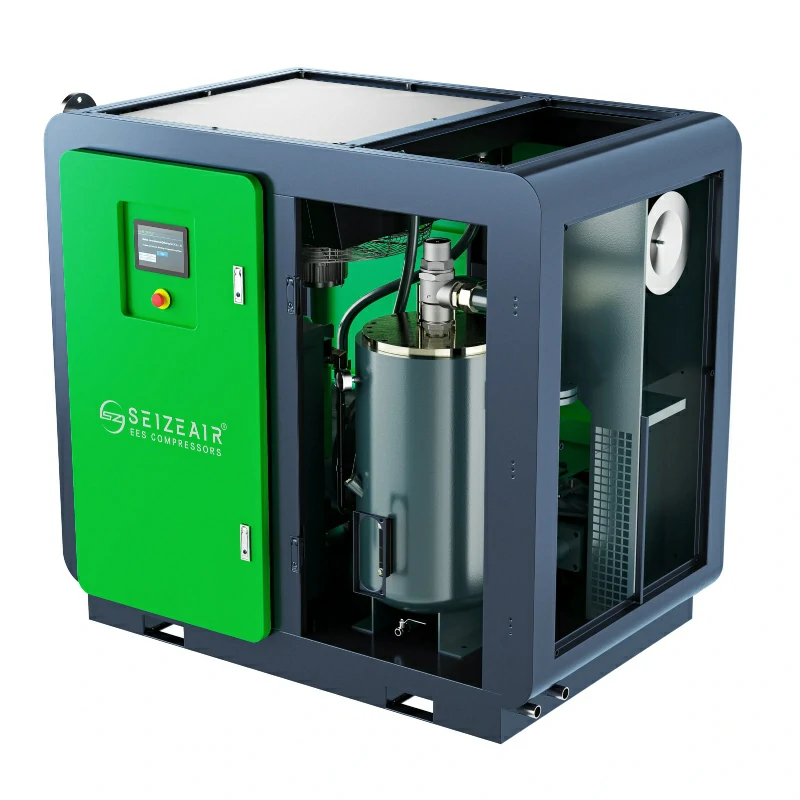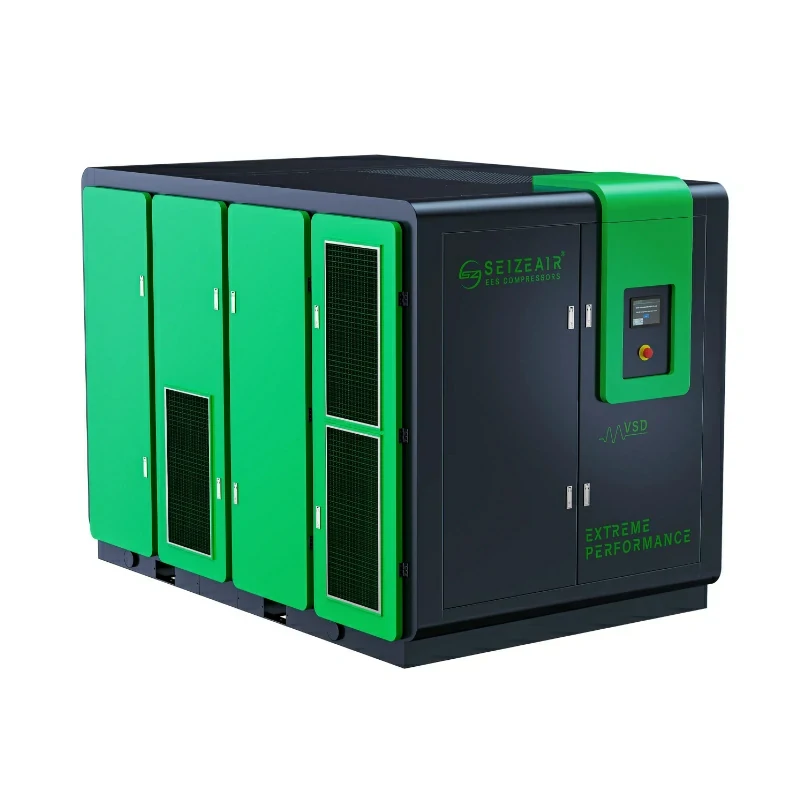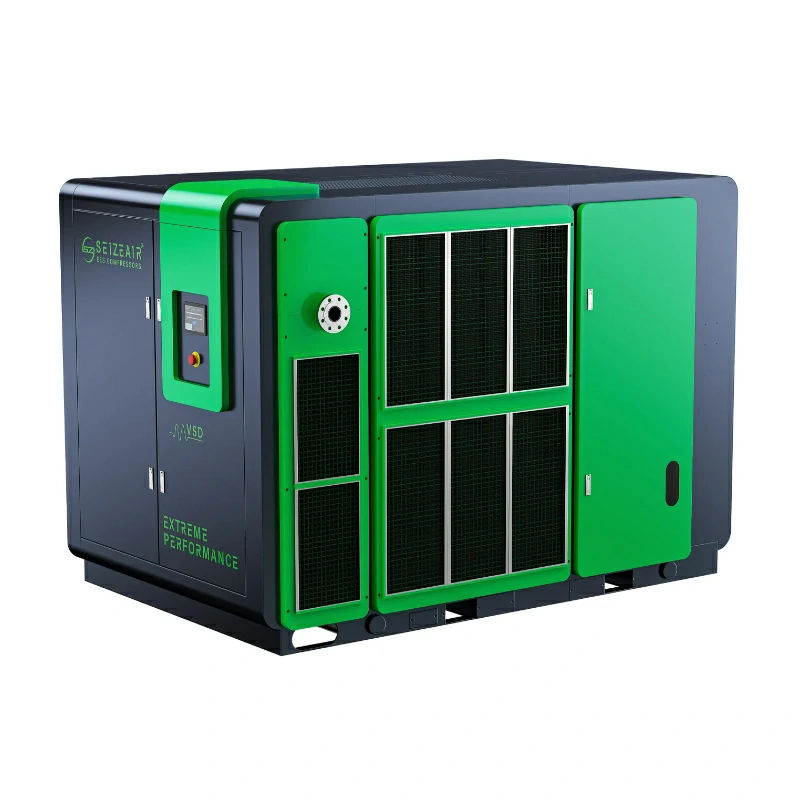


A towable air compressor for sale is only a bargain if it matches the air your tools actually eat. This 2026 guide walks through CFM and PSI sizing, diesel versus electric, single-stage versus two-stage, honest price bands, towing and licensing rules, and the maintenance that decides whether the machine gives you six years or fifteen.
What Is a Towable Air Compressor?
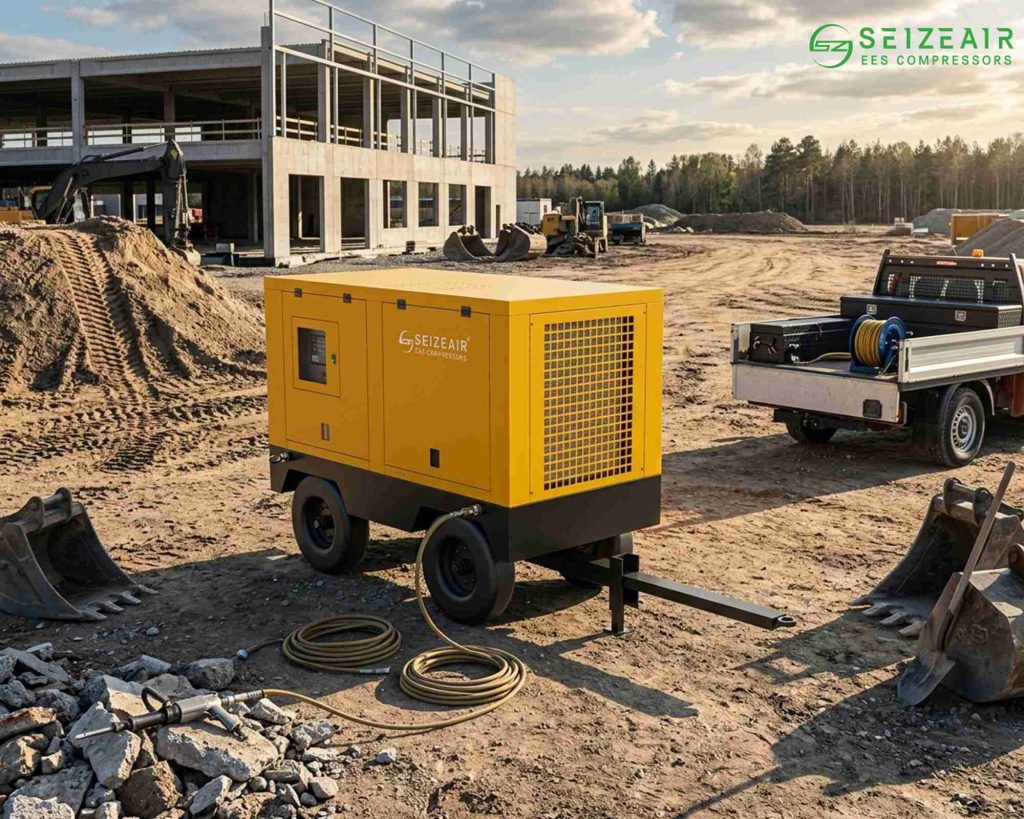
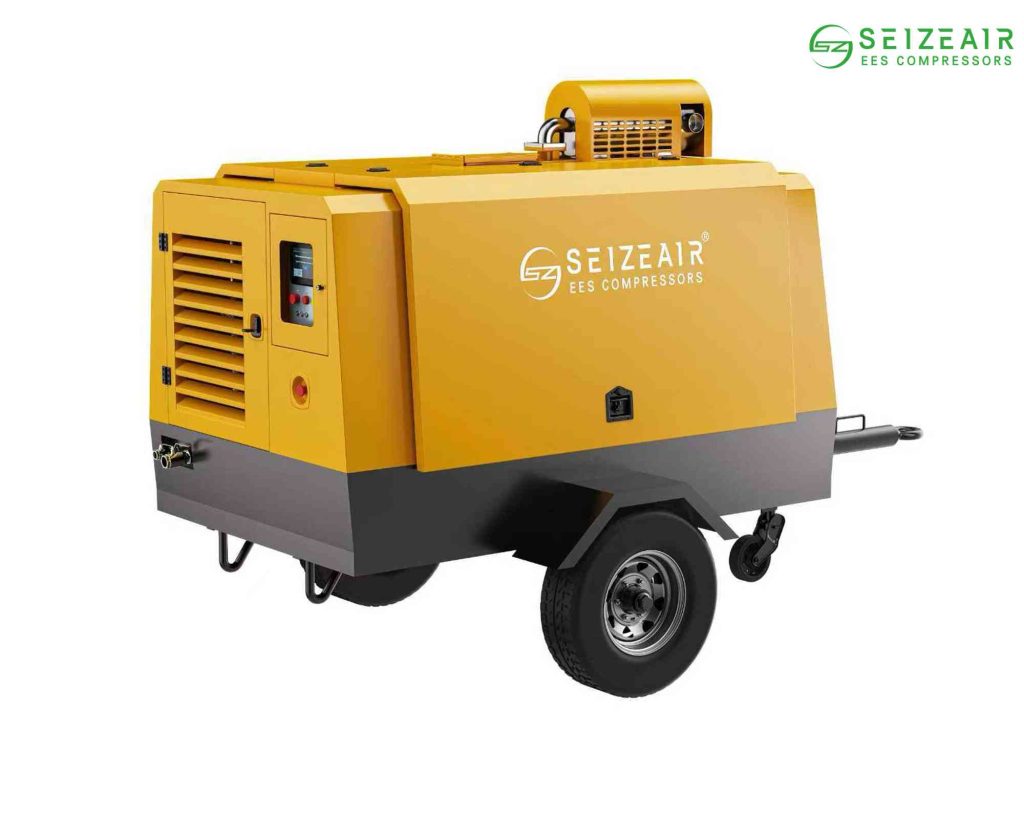
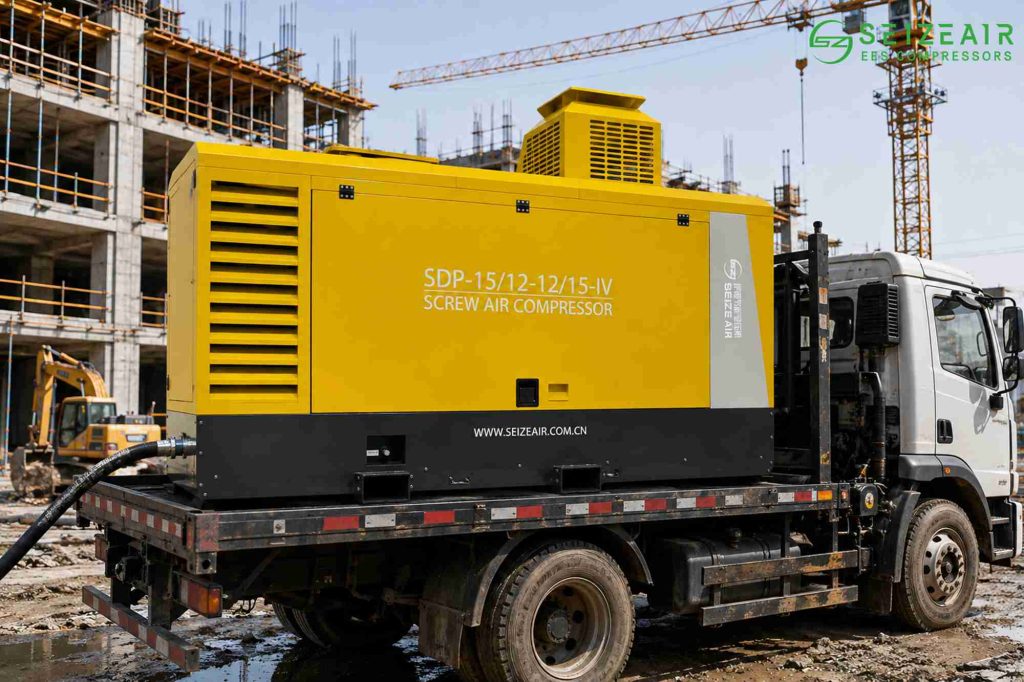
A towable air compressor is a complete compressed-air plant bolted to a road-legal trailer. Under the canopy you get a diesel engine, a rotary screw airend, an oil separation and cooling package, a fuel tank sized for a full shift, and the lighting, brakes, fenders and safety chains that let you pull it behind a three-quarter-ton pickup at highway speed.
The word towable is doing real work. Hand-carry and wheelbarrow units in the 2 to 30 CFM range are portable, but they ride in the back of a van. Stationary rotary screws in a plant room are not portable at all. A towable machine sits in the middle: roughly 50 to 1,600 CFM, 100 to 350 psi, heavy enough that you title it, register it, and walk around it checking tires before every move.
Almost every towable built after 2015 uses a rotary screw airend instead of a reciprocating pump. The reason is duty cycle. A screw element delivers continuous flow without the pulsation and heat cycling that wears a piston machine out fast once you ask for more than about 50 percent duty. Piston-driven portables still exist at the small end and they are cheaper, but they are a different purchase with a different service life.
Who Buys One, and What They Plug Into It
Towable air compressors sell into a handful of repeatable jobs. Knowing which one is yours narrows the field faster than any brand comparison.
- Road and bridge work — 60 and 90 lb paving breakers, chipping hammers, concrete scabblers, saw cutters. Usually a 185 to 400 CFM machine at 100 psi.
- Utility and pipeline crews — pneumatic tools in a trench, line purging and hydrostatic test support, 100 to 200 psi with clean dry air.
- Water well, geothermal and blasthole drilling — 250 to 350 psi and 600 to 1,150 CFM, sometimes with a booster on top.
- Sandblasting and coatings — 185 to 400 CFM, but the air has to be dry, or you will be chasing flash rust before lunch.
- Quarry and surface mining — 750 to 1,600 CFM feeding multiple drills and a manifold header.
- Municipal and emergency response — standby air, diaphragm dewatering pumps, rescue tools, mostly intermittent duty.
- Plant shutdowns and turnarounds — temporary air when the house header is down for maintenance.
How Much Does a Towable Air Compressor Cost in 2026?
Price tracks CFM harder than it tracks brand. A 185 CFM machine costs roughly double a 90 CFM machine and about half a 400 CFM machine, no matter whose paint is on the canopy. The bands below are USD, for a new machine in North America, before freight, tax and options.
| Output class | New price (USD) | Used price (USD) | What it usually runs |
|---|---|---|---|
| 50 – 90 CFM | 12,000 – 22,000 | 6,000 – 12,000 | One small breaker, service trucks, tire work |
| 100 – 185 CFM | 20,000 – 38,000 | 10,000 – 21,000 | One to two breakers, blasting, standby air |
| 250 – 400 CFM | 38,000 – 65,000 | 20,000 – 38,000 | Two to three breakers, small drill rigs |
| 500 – 750 CFM | 65,000 – 110,000 | 32,000 – 60,000 | Drill rigs, production blasting |
| 900 – 1,600 CFM | 120,000 – 250,000+ | 60,000 – 140,000 | Mining, deep hole drilling |
Then there is everything the sticker price leaves out. Budget 2,000 to 6,000 USD for overseas freight and inland delivery on an imported unit, plus duty and local sales tax. Add a pre-delivery inspection, a spare tire and carrier, hoses and couplers in the 500 to 1,500 USD range, a fire extinguisher and spill kit, and any telematics subscription the dealer bundles. Extended warranty on the airend is usually worth buying on a machine that will run more than 1,000 hours a year.
Rental is the benchmark you are competing against. In most US markets a 185 CFM towable rents for about 350 to 600 USD a day, 1,200 to 1,800 a week, and 3,000 to 4,500 a month, before the damage waiver and environmental fees.
Run the ownership number honestly before you sign:
TCO = purchase price + (fuel burn x hours x fuel price) + (maintenance cost per hour x hours) + insurance and registration − resale value
And the rental crossover, which is the one that actually decides it:
Break-even months = purchase price / (monthly rental rate − monthly operating cost)
Take a 34,000 USD machine, 3,600 a month in rental you would otherwise pay, and about 1,100 a month in fuel and service. That is 34,000 / 2,500, or roughly 14 working months to break even. Under 40 hours a month of real use, the math usually favors renting. Over 120 hours a month, buying wins almost every time.
How to Size a Towable Air Compressor: CFM First, PSI Second
Every air tool has two numbers on its nameplate: the flow it consumes and the pressure it needs to consume it at. Most pneumatic tools are rated at 90 psi. Size the flow first, then confirm the machine can hold the pressure with the hose you actually own.
Start by adding up consumption, then apply a diversity factor, because three breakers do not hit the ground at the same instant all day.
Required CFM = (sum of tool CFM at rated pressure) x diversity factor x 1.25 headroom
Use a diversity factor of 1.0 for a single tool, about 0.85 for two, 0.75 for three or four, and 0.65 for five or more. The extra 25 percent covers hose pressure loss, altitude, filter loading and the slow decline in airend efficiency that begins around the 4,000-hour mark.
| Tool | CFM at 90 psi | Typical duty pattern |
|---|---|---|
| 15 lb chipping hammer | 25 – 30 | Continuous |
| 30 lb paving breaker | 55 – 70 | Intermittent |
| 60 lb breaker | 85 – 100 | Intermittent |
| 90 lb breaker | 100 – 120 | Intermittent |
| 3/4 in impact wrench | 15 – 20 | Short bursts |
| 1 in impact wrench | 28 – 35 | Short bursts |
| Needle scaler | 15 – 20 | Continuous |
| Sinker rock drill | 90 – 120 | Long cycles |
| 1/8 in blast nozzle | 45 – 70 | Continuous |
| 3/16 in blast nozzle | 100 – 140 | Continuous |
| Diaphragm dewatering pump | 40 – 60 | Continuous |
Pressure works differently. You need enough discharge pressure to cover the tool requirement, plus the drop across your hose and fittings, plus a margin so the machine is not pinned at the unload setting all day. A reasonable target is tool pressure plus hose loss plus 10 psi. A 50-foot run of 3/4-inch hose passing 100 CFM will eat somewhere in the 8 to 12 psi range depending on the hose condition and the number of couplings.
Do not overshoot either. Every 2 psi of unnecessary discharge pressure costs roughly 1 percent more fuel. Setting a machine at 115 psi when 95 psi would do is a permanent tax on every tank of diesel the unit ever burns.
Altitude matters more than most buyers expect. A naturally aspirated diesel loses around 3 percent of its rated power for every 1,000 feet above sea level, and a turbocharged engine is closer to 1 percent per 1,000 feet. If you work at 6,000 feet, derate accordingly and buy the next size up. High ambient temperature stacks on top of that, because the engine and the airend are both fighting the same heat.
Here is the path the air takes inside the machine, which is worth knowing before you start diagnosing a pressure problem:
  [ diesel engine ] --> [ screw airend ] --> [ oil separator vessel ]
                                                    |
                                    scavenge oil returns to the airend
                                                    |
                                             [ aftercooler ]
                                                    |
                                      condensate drops out here
                                                    |
                                      [ moisture separator / drain ]
                                                    |
                                    [ service valves ] --> [ your tools ]
Almost every “my compressor is weak” complaint turns out to be one of four things: a clogged air filter, a separator element that needs replacing, a leak at a coupling, or a discharge pressure set too low for the hose length. None of them require a new machine.
Towable vs Skid-Mounted vs Truck-Mounted: Which Mount Wins?
The mount is a logistics decision, not an air decision. All three produce the same compressed air; they differ in how easily the machine gets where the work is.
| Mount | Best for | What it costs you | Price index |
|---|---|---|---|
| Towable trailer | Contractors moving between sites, rental fleets | Needs a rated tow vehicle; tires, bearings and brakes to maintain | Baseline |
| Skid mounted | One long-term site, mines, mounted on a flatbed | Needs a crane, forklift or tilt-bed to move | About 5 – 10% less |
| Truck mounted | One crew moving several times a day, no tow vehicle | Ties up the truck; higher capex and registration | About 15 – 30% more |
If your crew runs out of one truck and moves two or three times a day, truck mount pays for itself in labor. If the machine sits on a job for three months, a skid is cheaper and one less axle to worry about. Everything else is a towable, which is why the towable market is the biggest of the three.
Diesel vs Electric Towable Air Compressor
Diesel owns the segment and it is not close, but the electric and dual-power cases have gotten stronger as jobsites have gotten closer to available power.
When diesel still wins
No grid, no argument. Pipeline right-of-way, highway work, mining, drilling and disaster response all happen where the nearest three-phase service is a mile away. Diesel also holds full output all day, refuels in five minutes from a truck, and has an established resale market almost anywhere in the world.
When electric or dual-power makes sense
Indoor work, tunnels, food and pharma facilities, and any site with a noise or emissions cap are natural electric territory. Dual-power machines, with an onboard motor plus a plug-in option, cost more up front and make sense only if you genuinely have power on a meaningful share of jobs.
The fuel math
A useful rule of thumb for a diesel-driven screw in good condition:
Fuel burn (gal/hr) = engine HP x 0.055 x load factor
A 120 HP engine at a realistic 0.55 average load burns roughly 120 x 0.055 x 0.55 = 3.6 gallons an hour. Over an eight-hour day that is about 29 gallons. At 4.00 USD a gallon, call it 116 USD a day in fuel. Multiply by 250 working days and fuel alone is close to 29,000 USD a year, which is why a two-stage machine that burns 10 percent less can justify its premium in under three years at high utilization.
Single-Stage vs Two-Stage: Where the Fuel Savings Come From
In a single-stage machine, the airend compresses once, from atmospheric to discharge pressure, in one pass. In a two-stage machine, the first stage compresses to an intermediate pressure, the air passes through an intercooler, and the second stage finishes the job. Cooling between stages is the whole point: compressing cool air takes less work than compressing air that has already been heated by the first stage.
In practice, two-stage designs run roughly 10 to 15 percent better on fuel per CFM at higher pressures. At a steady 100 psi the gap narrows to the point where purchase price dominates. Above 150 psi, and especially in the 250 to 350 psi drilling range, two-stage is not a preference, it is the only sensible answer. Many two-stage machines also give you a pressure range switch, so the same unit can deliver high volume at 100 psi or lower volume at 200 psi, which is effectively two compressors in one trailer.
The practical split: if your tools live at 100 psi and your budget is tight, single-stage diesel towable air compressors are simpler to own, cheaper to rebuild, and easier to find parts for in a remote market. If you see high-pressure work in your future, or you are feeding a drill, two-stage diesel portable compressors earn back their premium in fuel and in the jobs you can bid that you could not before.
Above roughly 250 psi, stop treating it as a portable at all and look at a dedicated high-pressure air compressor package. Seize Air builds both styles on the same trailer platform, which keeps the service parts common across a mixed fleet — a real advantage when your crew is 200 miles from the nearest dealer.
What Size Towable Air Compressor Do You Need for a Jackhammer?
This is the single most common sizing question, and the answer surprises people because breakers are thirstier than they look.
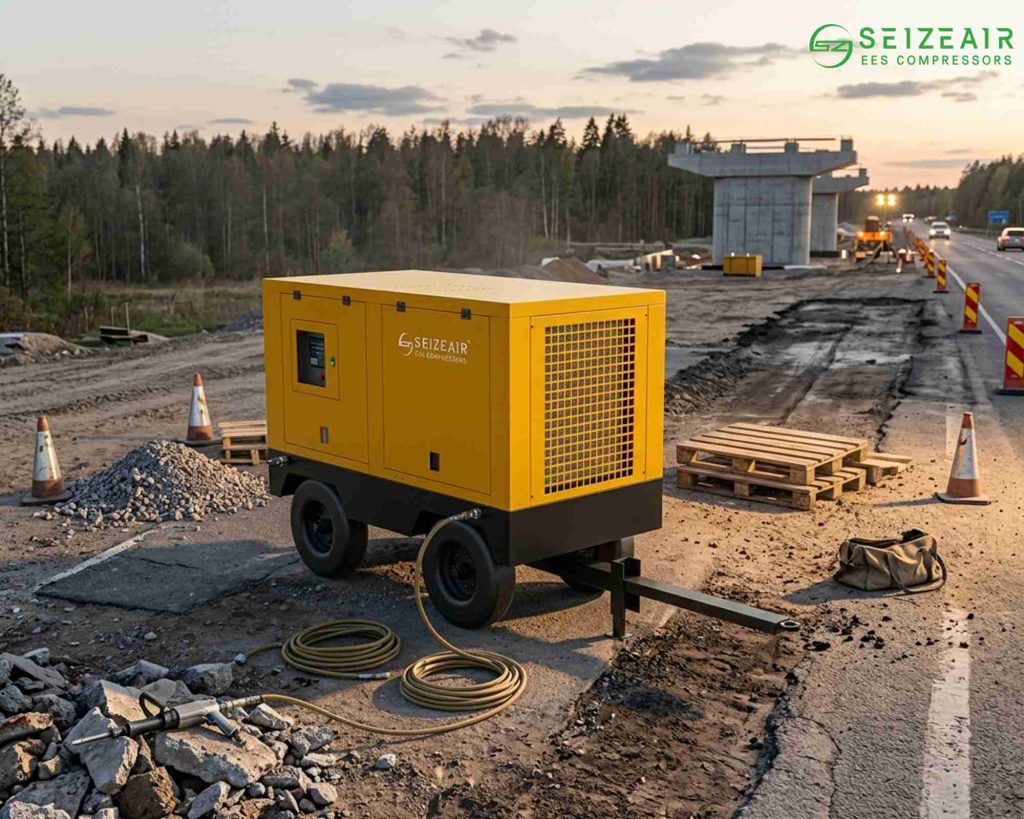
A 30 lb paving breaker pulls 55 to 70 CFM at 90 psi, continuously, for as long as the operator is on the trigger. A 60 lb breaker wants 85 to 100 CFM. A 90 lb breaker is in the 100 to 120 CFM range. Add the 25 percent headroom rule and:
- One 30 lb breaker — a 90 CFM machine is the honest minimum; 125 CFM gives you room to grow.
- One 60 lb breaker — 125 to 160 CFM class.
- Two 30 lb breakers — 185 CFM class, which is exactly why 185 is the industry’s default size.
- Two 60 lb breakers or one 90 lb plus a chipping hammer — 250 to 375 CFM class.
If you buy a machine that exactly matches one breaker, you will own a machine that cannot run a second tool, cannot absorb a worn hose, and will spend its whole life at 100 percent load. Air is the cheapest capacity you will ever buy at the point of purchase and the most expensive to add later.
Can You Use a Towable Air Compressor for Sandblasting?
Yes, with one condition: the air has to be dry. Blasting media and water vapor turn into a cement-like sludge inside the pot, and oil carryover ruins a coating bond in a way you will not see until it delaminates six months later.
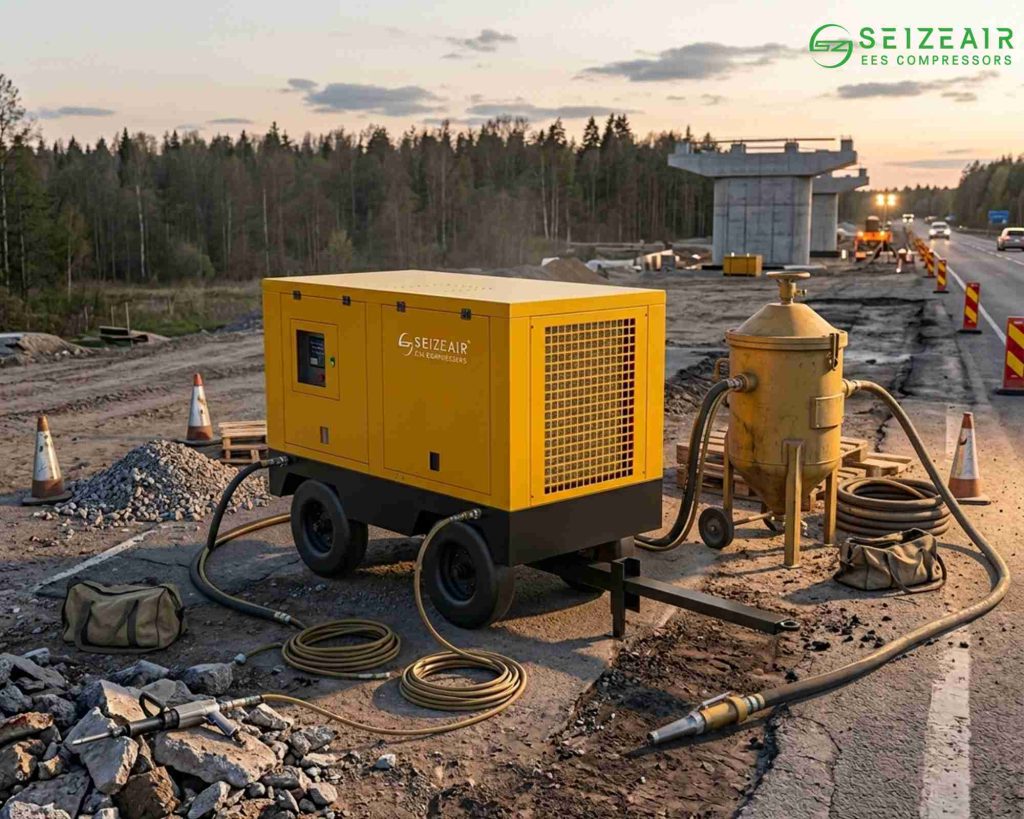
Consumption is driven by nozzle size, not by the blaster’s marketing. A 1/8-inch nozzle at 90 psi needs 45 to 70 CFM; a 3/16-inch nozzle needs 100 to 140 CFM. Pressure at the nozzle should sit around 90 to 100 psi, which means the compressor has to be set higher to cover the drop through 50 to 100 feet of blast hose.
A towable with an aftercooler and a working moisture separator handles most field blasting. Where the spec calls for a genuine pressure dew point — on stationary systems that job falls to a refrigerated air dryer — you also want a coalescing filter downstream of the separator. Check the oil carryover rating in the spec sheet, and if the surface spec references ISO 8573-1, ask the dealer which class the package actually meets before you bid.
Can You Tow an Air Compressor Behind a Pickup Truck?
Usually yes, but “usually” depends on the trailer’s GVWR, not on the compressor’s CFM. Read the stamped plate on the trailer frame, not the brochure.
| Trailer class | GVWR | Typical towable | What changes |
|---|---|---|---|
| Light single axle | Under 2,000 lb | 50 – 70 CFM piston units | 2 in ball; brakes may not be required (state dependent) |
| Standard single axle | 2,000 – 5,000 lb | 90 – 185 CFM | Brakes required in most states, breakaway kit, 2-5/16 in ball |
| Tandem axle | 5,000 – 10,000 lb | 250 – 450 CFM | Electric brakes both axles, brake controller, 3/4-ton or 1-ton truck |
| Heavy tandem | Over 10,000 lb | 600 – 1,600 CFM | CDL likely, DOT number, annual inspection, logbooks |
Regardless of class, four things decide whether the rig is road-legal and whether it tracks straight at 60 mph:
- Tongue weight — aim for 10 to 15 percent of total trailer weight on the hitch. Too little and the trailer sways; too much and you unload the truck’s front tires and lose steering.
- Tires — trailer tires age out before they wear out. Replace on a five to six year cycle regardless of tread, and check the load rating against the loaded axle weight.
- Brakes and breakaway — if the trailer has brakes, it needs a breakaway switch and a charged battery to apply them if it ever separates.
- Lights and chains — functioning stop, turn, tail and marker lamps, plus crossed safety chains rated for the loaded weight.
State and provincial rules vary on brake thresholds and speed limits for trailers, so the legal answer is always local. The mechanical answer is universal: match the hitch class, the ball size and the tow vehicle rating to the loaded weight, and buy pull-behind compressors for road construction with a frame and axle package rated above your actual load, not right at it.
Do You Need a CDL to Haul a Towable Air Compressor?
In the United States, the federal trigger is a combination of two numbers: a gross combination weight rating above 26,000 pounds, with the trailer itself rated above 10,000 pounds GVWR. Both conditions matter. A 9,000-pound towable behind a 12,000-pound truck sits under the threshold even though the combined weight is 21,000 pounds.
That is why most 185 and 250 CFM machines can be moved on a normal license in most states — their trailer GVWR lands in the 4,000 to 8,000 pound range and they never cross the 10,000 line. Move up to the 600 CFM and larger class, or put two machines on a gooseneck, and you are into CDL territory in many jurisdictions.
Two cautions. First, operating commercially changes the picture: DOT registration, a medical certificate, hours-of-service recording and annual inspections can apply below the CDL threshold depending on how the vehicle is used and what state you are in. Second, some states add their own class licenses for combinations that the federal rules leave alone. If your crew crosses state lines, have your insurer or a local compliance officer confirm it in writing rather than relying on a forum answer.
Emissions, Noise and Jobsite Compliance in 2026
Engine emissions are the first gate. Nonroad diesel engines in the US are held to EPA Tier 4 Final standards, with parallel EU Stage V rules in Europe and additional CARB requirements in California. On smaller horsepower models that usually means a diesel oxidation catalyst and sometimes a diesel particulate filter, with no driver action required. Larger models may use selective catalytic reduction, which adds a DEF tank to your daily walk-around and a fluid you cannot let run dry.
If you bid municipal, transit or hospital work, assume an emissions documentation packet will be requested. Ask for the engine family, the certificate of conformity and the aftertreatment layout before you bid, not after.
Noise is the second gate. Modern canopy designs run in the 70 to 78 dB(A) range measured at 7 meters; older machines can be 85 dB or worse. Many urban specs cap the machine at 75 dB(A) at the property line, which means a quiet canopy may decide whether you win the job at all. Also plan for a spark arrestor on the exhaust, secondary containment where fuel is stored overnight, and a spill kit in the truck.
New vs Used vs Rental
Renting is correct more often than salespeople admit. It is the right answer when utilization is under about 40 hours a month, when the job is a one-off, or when the machine you need is a size you will not use again.
Buying used is the right answer when hours are moderate, service records exist, and the price gap to new is meaningful. Two hard numbers to demand: total hours and airend oil analysis. Hours alone are misleading on a machine that idled all day; oil analysis tells you what the airend actually ate. On new vs used 185 CFM machines, a well-documented 3,000-hour unit at 60 percent of new is usually a better buy than a tired 800-hour one at 75 percent.
Here is the decision in one pass:
  How many hours a month will it actually run?
              |
              +-- under 40 h ------------------> rent, keep the capital
              |
              +-- 40 - 120 h ------------------> buy used, records verified
              |
              +-- over 120 h ------------------> buy new
                            |
                            +-- 250 psi or more? --> two-stage
                            +-- 100 psi only? -----> single-stage
On a used inspection, do not skip the boring checks: cold start without ether, time from start to full discharge pressure, blow-by at the oil fill, condition of the separator element, the controller’s fault history, all hoses and the safety relief valve, and a clean title for the trailer. A Seize Air dealer will run the same checks with you on the lot, and if a private seller will not let you do them, that is your answer.
The Spec Sheet Checklist
- Rated CFM and the pressure it is rated at. 185 CFM at 100 psi and 185 CFM at 150 psi are different machines.
- Maximum and adjustable pressure range. A range switch adds real flexibility.
- Engine make, horsepower and emissions tier. Parts availability beats brand prestige in a remote market.
- Fuel tank capacity against your shift length. Aim for a full shift with margin.
- Fuel burn at full load and at idle. Ask for both; idle burn is what kills you.
- Aftercooler and moisture separator included or optional. Non-negotiable for blasting.
- Oil carryover figure and the ISO 8573-1 class the package meets.
- Number, size and type of service valves. Count the tools you need to feed.
- Canopy noise rating in dB(A) at 7 meters.
- Trailer GVWR, axle rating, brakes and tire load rating.
- Cold weather package — block heater, cold-start aid, winter-grade oil recommendation.
- Controller functions — fault logging, service reminders, remote start, telematics.
- Warranty terms — airend coverage and hours, separate from the engine warranty.
- Parts lead time and filter cross-references in your country. A machine down three weeks waiting on a filter has already cost more than the discount you negotiated.
Maintenance That Decides Whether It Lasts 15 Years
Two identical machines leave the lot on the same day. One gets 12,000 hours and still holds pressure; the other is scrap at 5,000. The difference is almost never the brand. It is whether someone looked at the oil.
A working rhythm that holds up in the field:
- Every day or every 10 hours — engine oil and coolant levels, air cleaner restriction indicator, drain the fuel filter water bowl, drain the separator and any moisture trap, walk for leaks and loose hardware, check tires and lights if it moves that day.
- Every 50 hours — inspect belts and the engine air intake path, clean the cooler core if you are in dust.
- Every 250 hours — engine oil and filter change.
- Every 500 hours — fuel filter and oil filter on the airend circuit.
- Every 1,000 hours — coolant, air filter element, full leak check with the machine loaded.
- Every 2,000 to 4,000 hours — oil separator element and airend oil. Synthetic charges stretch that interval substantially; follow the oil supplier’s analysis, not a calendar.
- Annually — safety relief valve test, pressure vessel and hose inspection, trailer brake service and bearing pack.
In freezing weather, drain condensate before you park it or you will spend the morning thawing a separator. Use winter-grade fuel, keep the batteries at full charge, and plug in the block heater if there is one. Print this as a laminated card and zip-tie it inside the canopy door, because the person who needs it at 6 a.m. is not going to read a PDF. For the full interval list with the checks most crews skip, keep a written air compressor maintenance schedule on the machine itself — Seize Air ships one with every unit and updates it by model.
Seven Mistakes Buyers Keep Making
Every one of these shows up in the used listings and the dealer quotes for a towable air compressor. All of them are avoidable with ten minutes of checking.
- Buying to the tool, not to the job.Size for the second tool you will add next season.
- Ignoring hose loss. A hundred feet of undersized hose costs more performance than a whole CFM class.
- Setting the pressure too high. Two extra psi is a 1 percent fuel penalty for the life of the machine.
- Skipping the moisture package on a machine that will blast or paint.
- Assuming any pickup can tow it. Check GVWR, hitch class and tongue weight.
- Buying on price with no parts path. A cheap machine with a three-week filter wait is expensive.
- Never draining condensate. Water in the oil is the fastest way to kill an airend.
Frequently Asked Questions
How many CFM is a good towable air compressor?
For general contracting, 185 CFM at 100 psi is the sweet spot. It runs two 30 lb breakers or a small blast pot, stays under most non-CDL trailer thresholds, and has the deepest resale market. Go to 250 to 400 CFM if you routinely run three or more tools or a drill.
Can I run two jackhammers off one 185 CFM machine?
Two 30 lb breakers, yes, with a little margin. Two 60 lb breakers, no — that combination wants 170 to 200 CFM before headroom, so step up to a 250 CFM class machine.
How long do towable air compressors last?
With disciplined service, 10,000 to 15,000 hours on the airend is realistic for a quality screw machine, and the engine will usually need one major overhaul in that window. Poor maintenance, water in the oil, and chronic overheating cut that to 5,000 hours.
What pressure should a towable compressor run at?
Set it as low as your tools and hose length allow. Most general tools want 90 to 100 psi at the tool; drilling and deep-hole work runs 250 to 350 psi. Every 2 psi of excess discharge pressure costs about 1 percent more fuel, so do not set it higher “just in case.”
Are towable air compressors oil-free?
Almost no towable machines are. Field units are oil-injected screw compressors, because the oil provides cooling, sealing and lubrication that a portable dry screw cannot match in its size and duty. If you need oil-free air, use a properly filtered stationary oil-free machine and accept a different cost structure.
Can I run a towable compressor in freezing weather?
Yes, with preparation. Winter-grade fuel, correct oil viscosity, a healthy battery, a block heater where available, and religious draining of condensate and the moisture separator. The most common cold-weather failure is not the engine — it is frozen condensate cracking a separator or a drain line.
How much fuel does a 185 CFM towable compressor use?
Typically 2.5 to 4.5 gallons per hour depending on engine size, load and ambient conditions. Using the rule of thumb, a 100 HP engine at 0.55 load burns about 3 gallons an hour. Idle burn is separate and is usually 0.5 to 1 gallon an hour — which is why auto-idle shutdown pays for itself.
Is it better to rent or buy a towable air compressor?
Under about 40 hours a month, rent. Between 40 and 120 hours, a documented used machine usually wins. Above 120 hours a month, buying new beats rental on almost every spreadsheet.
Can I run air tools 500 feet from the compressor?
You can, but pressure drop will. Move up two hose sizes over what you would use for 50 feet, minimize couplings, and expect to raise the discharge setting. Better answer for a fixed long run: use a larger-diameter header hose with smaller whips at the tools.
What is the difference between portable and towable?
Portable usually means a small unit a person or two can move by hand, generally under 30 CFM. Towable means trailer-mounted, road-legal, and large enough that a vehicle moves it. The terms get used loosely in listings, so always read the CFM and GVWR numbers rather than the label.
Get the Right Machine Spec’d the First Time
Send us your tool list and you will get a written CFM and PSI recommendation. Tell us how many tools run at once, at what pressure, for how many hours a month, and where the work is — altitude, temperature and available power all change the answer. We will come back with a shortlist, projected fuel burn, and a maintenance cost per hour you can put straight into your bid. That is the whole point of shopping for a towable air compressor this way instead of guessing from a spec sheet.
Seize Air builds diesel towable compressors from 90 to 1,600 CFM and supports them with parts and service in the markets where our customers work. Talk to an application engineer and get a quote sized to your actual job, not to a brochure.